

 Preverite v realnem okolju
 Pošlji kot čestitko
 Deli
Deli
 Podrobnosti
 Priročnik

 Prenesi
 Podobni artefakti
 Rentgenski posnetek
 Predvajaj diaporama
 Statistika
Veslez


 Preberi več
Giclée tisk / Umetniški tisk
Giclée ali platnati odtis muzejske kakovosti z hitro proizvodnjo in prilagodljivimi možnostmi končne obdelave. ( Naročite ročno slikano reprodukcijo Preklop na digitalno sliko)




































Izberite eno od naših vnaprej določenih velikosti, ki ustrezajo prvotnim proporcijam umetničkega dela.

Vnesite širino in višino, ki jih potrebujete za svoj okvir ali steno. Tiskanje se lahko le odreže, vendar ga ni mogoče narediti večjega od slike, zato format z drugačno obliko pomeni izgubo dela slike. Pred tiskanjem vam pošljemo digitalni predogled za potrditev. Slika, prikazana na tej strani, ne prikazuje dejanskega izrezkov — le predogled to omogoča.
Globalna dostava () v 2 tednih namesto standardnih 4/5 tednov. (26 oktober)

Brezplačna ekspresna dostava po vsem svetu

Visokokakovostno laneno platno

Popolno zavarovanje pošiljke

Garancija povračila carine in uvoznih davkov

Garancija popolnega barvnega ujemanja

Politika vračila v 100 dneh (le v primeru okvar)

Garancija 100% povračila denarja

Popust pri večjem naročilu
 Možnost stekla je na voljo le za velikosti pod 110 cm

Veslez
Giclée tisk / Umetniški tisk
Velikost reprodukcije
-


Skupna cena
€ 70
A Glimpse of Rural Tranquility: "Veslez" by Gustave Loiseau
This charming painting, titled "Veslez," offers a serene glimpse into early 20th-century French countryside life. Painted in 1906, the artwork depicts a picturesque white house with a distinctive red roof nestled amongst lush trees and verdant grass. Two figures are subtly integrated into the scene – one positioned to the left and another near the center – adding a touch of human presence without disrupting the overall sense of peaceful solitude. The composition is carefully balanced, drawing the viewer's eye towards the central focal point: the inviting home, radiating warmth and domesticity.Post-Impressionist Style & Technique
"Veslez" exemplifies Gustave Loiseau’s signature Post-Impressionist style. While initially experimenting with Pointillism, Loiseau developed a unique approach characterized by his distinctive "cross-hatching" technique. This involved layering short, intersecting strokes of color to create texture and vibrancy. Observe how the artist uses this method to render the foliage, giving it a lively, almost shimmering quality. The application of paint isn't smooth; instead, the visible brushstrokes contribute to the painting’s dynamic energy and capture the fleeting effects of light on the landscape. This technique moves beyond mere representation, imbuing the scene with an emotional resonance that is characteristic of Post-Impressionism.Historical Context & Location
The title "Veslez" likely refers to Vesuzé, a commune in Essonne, just south of Paris. Loiseau frequently painted scenes from this region and others near Paris, capturing the changing landscapes and rural life that were increasingly valued as escapes from the rapidly industrializing urban centers. The painting reflects a growing appreciation for the beauty of the French countryside during the Belle Époque (roughly 1871-1914), a period marked by optimism, artistic innovation, and a renewed interest in nature. The depiction of a comfortable home suggests an idealized vision of rural living – one that resonated with many at the time.Emotional Impact & Symbolism
Beyond its aesthetic appeal, "Veslez" evokes a sense of tranquility and nostalgia. The bright colors—the white house against the red roof, contrasted by the greens of the surrounding landscape—create a visually pleasing harmony that is inherently calming. The presence of the figures suggests a simple, contented life lived in harmony with nature. While subtle, the painting hints at themes of home, family, and the enduring beauty of the French countryside – values that continue to resonate today. It’s an invitation to pause, reflect, and appreciate the quiet joys of everyday existence.Why Choose a Reproduction?
A hand-painted reproduction of "Veslez" offers a unique opportunity to bring this captivating scene into your own space. Whether you're an art enthusiast, a collector seeking to expand their repertoire, or an interior designer looking for a touch of French charm, our reproductions capture the essence and beauty of Loiseau’s original work with remarkable fidelity. Experience the emotional impact and visual delight of "Veslez" in your home – a timeless piece that will inspire and uplift for years to come.Vprašanja in odgovori
Od kod prihajajo obiskovalci dela "Veslez" avtorja Gustav Loisel?
Za delo "Veslez" obstaja stran Statistika. Ta prikazuje mesečno število obiskov tega dela in drugih del umetnika, s razdelitvijo po državah in jezikih.
Katere teme se pojavljajo v delu "Veslez" avtorja Gustav Loisel?
"Veslez" avtorja Gustav Loisel prikazuje: landscape, countryside, house, figures, trees, rural, parisian, daytime.
Koliko svetlobe se zdi, da odražajo barve dela "Veslez"?
"Veslez" avtorja Gustav Loisel ima Gentle Luminance luminanco. Luminanca opisuje, koliko svetlobe se zdi, da barve odražajo.
Biografija umetnika
A Parisian Vision: The Life and Art of Gustave Loiseau
Gustave Loiseau, a name perhaps less immediately recognized than some of his Post-Impressionist contemporaries, nevertheless occupies a significant place in the story of French painting at the turn of the 20th century. Born in Paris on October 3rd, 1865, and passing away there on October 10th, 1935, Loiseau’s life was deeply intertwined with the evolving artistic landscape of his city and the broader currents of modernism. His journey began not within the hallowed halls of an art academy—though he briefly attended the École des arts décoratifs—but amidst the practical world of his parents' butcher shop. This early exposure to everyday Parisian life, coupled with a subsequent apprenticeship with a family friend who was a decorator, would profoundly shape his artistic sensibilities. It instilled in him a keen observation of the city’s rhythms and textures, a fascination that would become central to his oeuvre. A modest inheritance from his grandmother proved pivotal, allowing Loiseau to dedicate himself fully to painting in 1887, though his formal training was cut short by a disagreement with a teacher—a testament to his independent spirit.From Brittany to ‘En Treillis’: The Development of a Unique Style
Loiseau’s artistic development wasn't immediate or straightforward. He initially experimented with Pointillism, the meticulous technique championed by Georges Seurat and Paul Signac, but ultimately found it too restrictive for his vision. A formative experience was his first visit to Pont-Aven in Brittany in 1890. This artist colony, already famed as a haven for those seeking alternatives to academic tradition—most notably Paul Gauguin and Émile Bernard—exposed Loiseau to new ideas about color, form, and the expressive potential of landscape. However, he didn’t simply adopt their styles; instead, he began forging his own path. This led to the development of his signature technique, *en treillis*, or cross-hatching. Unlike the broken brushstrokes of Impressionism or the systematic dots of Pointillism, Loiseau employed a network of fine, interwoven lines to build up form and capture the nuances of light and atmosphere. This created a distinctive textural quality in his paintings, almost a shimmering effect that set him apart. It was a technique born not from theory but from an intuitive understanding of how to translate his perceptions onto canvas. He wasn’t merely recording what he saw; he was conveying his emotional response to the scene, his sense of its inherent beauty and tranquility. This method allowed him to depict complex scenes with remarkable accuracy while maintaining a palpable feeling of warmth and depth.Parisian Streets and Rural Landscapes: Recurring Themes
Loiseau’s subject matter consistently revolved around two primary themes: the bustling streets of Paris and the serene landscapes of the French countryside. His Parisian scenes, such as *Rue de Clignancourt* and *Avenue de Fiedland*, are not grand panoramas but intimate glimpses into everyday life. He captured the energy of the city—the movement of carriages, the flow of pedestrians, the play of light on buildings—with a remarkable sensitivity to detail. Simultaneously, he developed a series of landscapes that often revisited the same motifs – orchards, gardens, fields – at different times of year and under varying weather conditions. These series echo the work of Claude Monet in their exploration of atmospheric effects and fleeting moments, but Loiseau’s *en treillis* technique imbues them with a unique character. He wasn't merely recording what he saw; he was conveying his emotional response to the scene, his sense of its inherent beauty and tranquility. His paintings are imbued with a quiet poetry, a celebration of the ordinary transformed through artistic vision. The artist’s meticulous attention to detail—the subtle gradations of color, the precise placement of lines—revealed an extraordinary ability to capture the essence of both urban and rural environments.Recognition and Legacy
Throughout his career, Loiseau exhibited regularly at prestigious venues such as the Salon des Indépendants and the Salon de la Société Nationale, gaining recognition from both critics and collectors. He benefited from the support of Paul Durand-Ruel, a prominent art dealer who championed many of the leading Impressionist and Post-Impressionist artists. While he never achieved the same level of fame as some of his peers, Loiseau’s work found its way into important museum collections, including the Musée Maurice Denis in France. Today, his paintings are increasingly appreciated for their distinctive style, their evocative atmosphere, and their insightful portrayal of French life during a period of rapid change. He stands as a testament to the power of individual vision—an artist who remained true to his own aesthetic principles while engaging with the artistic currents of his time. His legacy lies not in revolutionizing painting but in refining it, offering a uniquely personal and captivating perspective on the world around him.Further Exploration
- Discover more about Gustave Loiseau’s work: Visit OriginalUniqueArt.com/@@/gustave-loiseau
- Explore related artists: Learn about Evert Pieters at OriginalUniqueArt.com/@/evert-pieters
- Delve into Japanese art: See Ito Jakuchu’s bean vine painting at OriginalUniqueArt.com/@@/d2vr7s
- Learn more about the Beaverbrook Art Gallery: OriginalUniqueArt.com/@/a@d3c29v
- Read his Wikipedia entry: https://en.wikipedia.org/wiki/Gustave_Loiseau

Gustav Loisel
1865 - 1935 , Francija
Ključne informacije
- Artistic Movement Or Style: Positivizem
- Artists Or Movements Influenced By This Artist: ['Claude Monet']
- Artists Who Influenced This Artist:
- Paul Gauguin
- Émile Bernard
- Date Of Birth: 3. oktober 1865
- Date Of Death: 10. oktober 1935
- Full Name: Gustave Loiseau
- Nationality: Francoz
- Notable Artworks:
- Ulica Clignancourt
- Aveneu Fiedland
- Place Of Birth: Pariz, Francija
Sorodni članki
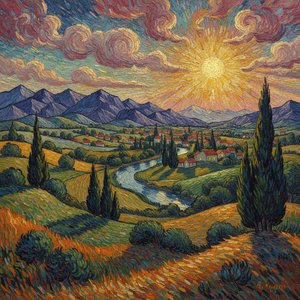
Beyond Impressionism: The Emotional Depth and Vibrant Evolution of Post-Impressionist Landscapes
Explore the profound evolution of Post-Impressionist landscapes. From Van Gogh's emotional brushwork to Cézanne's structural mastery, discover how these visionaries redefined art history through color and form in this expert guide for fine art enthusiasts.

Paul Cézanne: 25 Mojstrovin, ki so spremenile svet umetnosti | OriginalUniqueArt
Odkrijte 25 mojstrovin Paula Cézanna – od impresionističnih krajin do revolucionarnih tihožitij. Preberite zgodbe za vsako sliko, tehnike in navdih. Kvalitetne reprodukcije slik na OriginalUniqueArt.com!
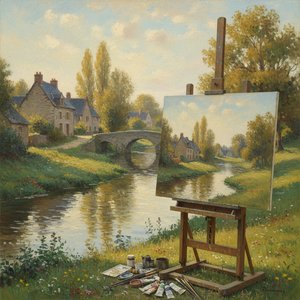
Gustave Loiseau: Capturing the Ephemeral Light of French Landscapes
Explore the captivating landscapes of Gustave Loiseau, a key Post-Impressionist painter. Discover his unique 'en treillis' technique and artistic legacy with our comprehensive guide.

John Constable: 25 Mojstrovskih Del Angelskega Krajinarja | OriginalUniqueArt.com
Odkrijte 25 mojstrovskih del Johna Constabla, angleškega slikarja romantizma. Preučite zgodbe za ikoničnimi krajinami, tehniko in lepoto narave. Kvalitetne reprodukcije slik na OriginalUniqueArt.com – idealno za dekoracijo doma!

Gustav Klimt: 25 Mojstrovin, ki Očarajo – Umetnost za Vaš Dom | OriginalUniqueArt
Odkrijte 25 čudovitih del Gustava Klimta – od zlate secesije do portretov in simbolizma. Preberite zgodbe za vsako umetnino in poiščite popolno reprodukcijo za vaš dom na OriginalUniqueArt.com.