Preklop na tiskanine
 Preberi več







































 Za umetniška dela ali reprodukcije, ki so po katerikoli strani širše od 105 cm (približno 41 palč), bo okvir poslan v razstavljeni obliki kot komplet. Ta metoda zagotavlja varno dostavo in preprečuje poškodbe med transportom.


Giuseppe Arcimboldo: A Symphony of Birds – Decoding ‘Air’
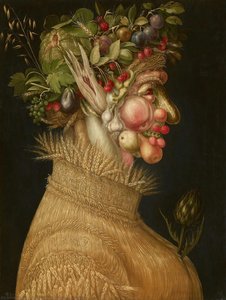
Giuseppe Arcimboldo's “Air,” completed in 1566, stands as an unparalleled achievement of Mannerist art and a testament to the Renaissance fascination with integrating nature into portraiture. More than just a visually arresting image—a meticulously constructed head formed entirely from feathers, fruits, vegetables, and flowers—it’s a profound meditation on symbolism, intellectual curiosity, and the ephemeral beauty of existence.
- Artistic Style & Technique: Arcimboldo's approach defies conventional artistic conventions. Rooted in Renaissance naturalism, he skillfully employs Mannerist principles – elongated form, complex composition, and subtle distortion – to elevate his work beyond mere representation. Executed likely in oil on canvas, the technique demonstrates remarkable precision; Arcimboldo achieves textural depth through delicate gradations of browns, golds, ochres, and vibrant plumage hues. The seamless incorporation of individual avian elements into a unified human visage represents a masterful feat of artistic execution.
- Historical Context & Courtly Life: Arcimboldo served as court painter to Ferdinand I, Maximilian II, and Rudolf II – rulers who championed humanist thought and embraced the grandeur of imperial patronage. “Air,” alongside his other elemental depictions (“Earth,” “Water,” “Fire”), functioned as an intellectual provocation intended to delight and stimulate the discerning tastes of the Habsburg court. The artwork’s playful yet intellectually stimulating character reflects the era's preoccupation with puzzles, allegorical narratives, and hidden meanings.
- Decoding the Symbolism: The imagery within “Air” pulsates with symbolic resonance. Birds universally symbolize freedom, spirituality, and the human soul. Arcimboldo’s transformation of these creatures into a cohesive portrait conveys concepts of metamorphosis, transcendence, or perhaps the interconnectedness of all living things. Notably prominent is the peacock—a creature revered for its iridescent plumage and association with royalty—further amplifying the artwork's symbolic richness.
- Material & Craftsmanship: The painting utilizes traditional oil painting techniques – canvas stretched tautly over a wooden frame, pigments meticulously blended to achieve luminous color saturation, and brushes skillfully manipulated to create nuanced textures. Arcimboldo’s meticulous attention to detail underscores his dedication to capturing the essence of his subject matter with breathtaking accuracy.
“Air” transcends its decorative function; it invites contemplation on themes of transformation, abundance, and the delicate balance between order and chaos. Its diffused lighting casts shadows that heighten visual depth, while curving lines mimic the movement of birds in flight—creating a dynamic composition that captures the spirit of the Renaissance imagination. This artwork remains an enduring emblem of artistic innovation and intellectual brilliance.
- Recommended Reproduction: Enhance your interior décor with a stunning high-quality reproduction of “Air.” Available on OriginalUniqueArt.com – experience the beauty and complexity of Arcimboldo’s masterpiece!
Vprašanja in odgovori
Katera postavitev najbolje ustreza formatu dela "Zračje" avtorja Giuseppe Arcimboldo?
Format (Vertikalno) in priporočena prostor (Dnevna soba) sta dve zapisani podrobnosti glede postavitve za "Zračje" avtorja Giuseppe Arcimboldo.
Kako se barve dela "Zračje" avtorja Giuseppe Arcimboldo odražajo v njegovem čustvenem izrazu?
Paleta Zemljani toni v delu "Zračje" avtorja Giuseppe Arcimboldo se dopolnjuje z njegovim Zoprno čustvenim tonom. Barva je eden od načinov, s katerimi umetniško delo izraža čustva.
Na katero obdobje v karieri Giuseppe Arcimboldo ustreza leto 1566 za delo "Zračje"?
"Zračje", ustvarjeno leta 1566, pripada Mature Period v karieri umetnika Giuseppe Arcimboldo.
 Predogled v realnem okolju
 Pošlji
 Deli
Deli
 Podrobnosti o delu
 Priročnik

 Prenesi sliko
 Podobni izdelki
 Rentgenski posnetek
 Predvajaj diaporama
 Q&A
Q&A Statistika