Preverite v realnem okolju
 Pošlji kot čestitko
 Deli
Deli
 Podrobnosti
 Priročnik

 Prenesi
 Podobni artefakti
 Rentgenski posnetek
 Predvajaj diaporama
 Statistika
Three Philosophers


 Preberi več
Giclée tisk / Umetniški tisk
Giclée ali platnati odtis muzejske kakovosti z hitro proizvodnjo in prilagodljivimi možnostmi končne obdelave. ( Naročite ročno slikano reprodukcijo Preklop na digitalno sliko)




P118B €10

P118H €10

P118W €10

P438Z €10

P508JH €12

P508YH €12

P805H €10

P805Z €10

P919BZ €10

P919G €10

P919XJ €10

P959ZH €10

P968JZ €12

W106C €8

W218G €10

W218JH €8

W218Y €10

W307PJ €10

W316G €10

W316PJ €8

W316Y €10

W398PJ €8

W4111J €10

W500HY €15

W500JH €15

W692G €12

W849H €8

W940BG €15

W953PJ €8




Izberite eno od naših vnaprej določenih velikosti, ki ustrezajo prvotnim proporcijam umetničkega dela.

Vnesite širino in višino, ki jih potrebujete za svoj okvir ali steno. Tiskanje se lahko le odreže, vendar ga ni mogoče narediti večjega od slike, zato format z drugačno obliko pomeni izgubo dela slike. Pred tiskanjem vam pošljemo digitalni predogled za potrditev. Slika, prikazana na tej strani, ne prikazuje dejanskega izrezkov — le predogled to omogoča.
Globalna dostava () v 2 tednih namesto standardnih 4/5 tednov. (26 oktober)

Brezplačna ekspresna dostava po vsem svetu

Visokokakovostno laneno platno

Popolno zavarovanje pošiljke

Garancija povračila carine in uvoznih davkov

Garancija popolnega barvnega ujemanja

Politika vračila v 100 dneh (le v primeru okvar)

Garancija 100% povračila denarja

Popust pri večjem naročilu
 Možnost stekla je na voljo le za velikosti pod 110 cm

Three Philosophers
Giclée tisk / Umetniški tisk
Velikost reprodukcije
-


Skupna cena
€ 70
A Venetian Enigma: Unraveling the Layers of “Three Philosophers”
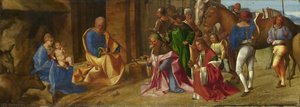
Giorgione’s “Three Philosophers,” painted around 1509, isn't merely a portrait; it’s an invitation to a silent conversation across centuries. The painting, shrouded in mystery and speculation, resides within a captivating web of historical accounts, artistic interpretations, and tantalizing symbolism. Originally conceived as a monumental work for the Venetian merchant Taddeo Contarini, its journey through time – from the opulent collections of Venice to the Brussels court – has subtly altered its appearance, notably with a significant reduction on the left side, diminishing the original expansive landscape but intensifying the focus on the figures themselves. This deliberate alteration speaks volumes about the artist’s intent and the evolving tastes of his patrons.
The scene unfolds within a carefully constructed space: three men, rendered in a palette dominated by earthy tones – ochre, umber, and subtle greens – stand before a rugged cliff face, its weathered rocks providing a dramatic backdrop. The figures are dressed in rich, crimson robes, a striking contrast to the muted landscape, drawing immediate attention to their presence. The youngest man, seated and holding compasses and a square—tools of a painter, perhaps?—suggests an engagement with artistic practice itself. His posture is contemplative, his gaze directed inward, while the central figure, clad in a dark robe, gestures towards the horizon, seemingly lost in thought. The eldest, identifiable by his flowing garments and the book he clutches, exudes an air of learned authority.
The Allure of *Sfumato* and Giorgione’s Unique Style
Giorgione's mastery lies not just in his subject matter but also in his revolutionary technique. He employed a masterful use of *sfumato*, a subtle blurring of lines and edges, creating an atmospheric haze that softens the forms and imbues the scene with a dreamlike quality. This is particularly evident in the rendering of the landscape – the rocks are not sharply defined but rather emerge from the mist, contributing to the painting’s overall sense of mystery. The figures themselves possess a remarkable softness, their features rendered with an almost ethereal grace. Giorgione's approach departed significantly from the more linear and precise styles prevalent at the time, prioritizing mood and atmosphere over strict anatomical accuracy.
The interplay of light and shadow is crucial to the painting’s impact. Giorgione expertly manipulates chiaroscuro – the dramatic contrast between light and dark – to sculpt the forms and create a sense of depth. The figures are bathed in a diffused, golden light that seems to emanate from an unseen source, casting long shadows across the landscape and highlighting their contemplative postures. This masterful use of light not only enhances the painting’s visual appeal but also contributes to its evocative atmosphere.
Decoding the Symbols: Who Are These Philosophers?
The enduring fascination with “Three Philosophers” stems from the persistent debate surrounding the identity of the figures depicted. While initially identified as "philosophers," a multitude of interpretations have been proposed over the centuries, each offering a compelling narrative. The most common theories suggest they represent the Three Kings, astronomers, or even representatives of three distinct religions. More recently, the Pythagorean school – Pythagoras, Thales, and Pherecydes—has gained traction, fueled by the presence of the painter’s tools and astronomical texts.
The compasses and square, undeniably significant, have been interpreted as symbols of artistic creation, but their placement also hints at a deeper intellectual engagement. The varied attire of the figures – suggesting origins from different lands—could represent diverse philosophical schools or cultural influences. The book held by the eldest figure further reinforces this notion of learned discourse and contemplation. Ultimately, Giorgione’s deliberate ambiguity invites viewers to project their own interpretations onto the scene, transforming it into a mirror reflecting the viewer's own intellectual curiosity.
A Timeless Masterpiece: Reproduction and Artistic Legacy
"Three Philosophers" remains a testament to Giorgione’s genius—a painting that transcends its historical context and continues to captivate audiences today. OriginalUniqueArt offers meticulously crafted, hand-painted reproductions of this iconic work, allowing you to experience the depth, nuance, and emotional resonance of Giorgione's masterpiece in your own space. Our reproductions faithfully capture the *sfumato* technique, the atmospheric lighting, and the subtle symbolism that define this enigmatic portrait. Whether for a grand salon or a personal study, a OriginalUniqueArt reproduction of “Three Philosophers” is an investment in art history, a celebration of Venetian artistry, and a window into a world of timeless contemplation.
Vprašanja in odgovori
Kakšna je percepcija svetlobe pri delu "Three Philosophers" avtorja Giorgione?
Splošno je "Three Philosophers" zabeleženo kot deep_shadow. Zaznana svetlina opisuje, kako svetlo ali temno delo deluje.
Ali se lahko slika dela "Three Philosophers" avtorja Giorgione prosto reproducira?
"Three Philosophers" avtorja Giorgione je v v javni domeni – njegova avtorska pravica je zastarela. Ta status določa način, kako se lahko reproducira slika dela.
Katero temo in vzdušje združuje "Three Philosophers" avtorja Giorgione?
"Three Philosophers" avtorja Giorgione prikazuje philosophy, renaissance, landscape, figures, composition, mystery, color v Calm vzdušju. Motiv in atmosfera skupaj opisujeta delo.
Biografija umetnika
Giorgione: Beneškega Slikarstva Poetična Duša
V zgodovini umetnosti je le malo imen tako obdano z skrivnostjo in hkrati imelo tako globok vpliv kot Giorgione. Giorgio Barbarelli da Castelfranco, rojen okoli leta 1477 ali 1478 v majhni vasici Castelfranco Veneto blizu Benetk, je bil slikar visoke renesanse, čigar življenje in delo sta precej kratkočasna, a izjemno pomembna. Kljub skromnemu številu ohranjenih slik – le za približno šest jih z gotovostjo pripisujemo Giorgioneju – je njegov umetniški pečat zaznamoval beneško šolo slikarstva in utiral pot naslednikom, kot je bil Tizian. O njegovem življenju vemo malo; zgodnje podatke o njem najdemo v delu Giorgio Vasarija, ki pa je pogosto prežeta z romantičnimi pripovedmi. Verjame se, da se je izučil pri Giovanniju Belliniju, mojstru beneškega slikarstva, kjer je osvojil temeljne tehnike in tradicije, a kmalu začel razvijati svoj edinstven stil. Že zgodnje portrete, kot je tisti Agostina Barbariga, so pokazale njegovo nadarjenost za upodabljanje človeške podobe in družbenega statusa, vendar je bila njegova prava genialnost očitna v odstopanju od konvencionalnih tem in revolucionarnem pristopu k slikanju.Beneška Barva in Atmosfera: Giorgionejev Stil
Giorgionejev umetniški slog je predstavljal radikalno spremembo glede na florentinski poudarek na linearni perspektivi in natančni risbi. Namesto tega je slavil barvo, atmosfero in izrazito razpoloženje, ki so postali značilnosti beneškega slikarstva. Njegova tehnika je vključevala mehčanje obrisov, uporabo subtilnih odtenkov – *sfumata* – za ustvarjanje atmosferskih učinkov in prednost celotne harmonije pred natančnostjo podrobnosti. Ta pristop ni bil le tehnična izbira, temveč odraz temeljne umetniške občutljivosti. Giorgione ni želel posnemati resničnosti, ampak zajeti njeno bistvo, minljiva čustva in poetično resonanco. Njegove slike pogosto prikazujejo skrivnostne subjekte in dvoumnate pripovedi, ki gledalca vabijo v svet kontemplacije namesto jasnih zgodb. *Nevesta*, morda njegovo najbolj znano delo, to popolnoma ponazori. Scena – vojak in doječa mati sredi nevihtne pokrajine – je stoletja ugibanj umetnostnih zgodovinarjev zbodla, njeno pomen pa ostaja privlačna nedorečenost. Podobno *Pastoralni koncert* predstavlja idilično srečanje glasbenikov v pastirski okolici, ki je cenjeno ne zaradi specifične pripovedi, temveč zaradi harmonične kompozicije in lirične kvalitete. Te slike niso bile namenjene reševanju ugank; morale so izzvati čustva, razpoloženja in občutek osuplosti.Delo in Dediščina: Giorgionejev Vpliv
Kljub kratkemu življenju je Giorgione za seboj pustil majhen, a globoko vpliven opus. *Speča Venera*, ki jo je verjetno dokončal Tizian po Giorgionejevi smrti, je ikonična upodobitva boginje, ki kaže njegovo mojstrstvo barve in oblike. Lenoba poze in mehke telesne tone utelešajo beneško cenitev čutnosti in lepote. Druga pomembna dela vključujejo *Judito*, zgodnji primer njegove rastoče tehnike, in portrete, ki razkrivajo njegovo izjemno sposobnost zajeti značaj in bistvo svojih subjektov. Giorgionejev vpliv se je razširil daleč onkraj njegovih lastnih slik. Bil je mentor Tiziana, ki je postal eden najbolj slavnih umetnikov visoke renesanse in nadaljeval Giorgionejeve inovacije na področju barve in atmosferskega slikarstva. Poudarek na barvi in atmosferi je globoko vplival na razvoj beneškega slikarstva, ga ločil od florentinske tradicije in uveljavil Benetke kot pomemben center umetniške inovacije.Giorgione: Umetnik Skrivnosti in Vzornik
Kljub kratki karieri Giorgione zaseda ključno mesto v zgodovini umetnosti. On je most med starejšimi beneškimi tradicijami in inovacijami Tiziana ter drugih kasnejših mojstrov, s tem da je temeljalno spremenil pot italijanskega slikarstva. Njegov poudarek na poetičnem razpoloženju, atmosferskih učinkih in dvoumnih pripovedih je odprl vrata novim umetniškim raziskavam in navdihnila generacije umetnikov. Prav skrivnost okoli njegovega življenja in dela pa je prispevala k njegovi trajni mistiki in privlačnosti. Ostaja simbol umetniške svobode, inovativnosti in moči predpostavke – slikar, ki se je pogumno odločil dati prednost čustevom obliki, atmosferi natančnosti in poeziji pripovedovanju.Ključna Dela Giorgioneja
- Nevesta (okoli 1506-1508)
- Pastoralni koncert (Fête champêtre) (okoli 1509)
- Speča Venera (okoli 1510)
- Judita (1504)
- Portret beneškega plemiča

Giorgione
1477 - 1510 , Italija
Ključne informacije
- Datum Rojstva: 1477/78 ali 1473/74
- Datum Smrti: 1510
- Kraj Rojstva: Castelfranco Veneto, Italija
- Nacionalnost: Italijan
- Pod Vplivom:
- Tizian
- Beneška šola
- Polno Ime: Giorgio Barbarelli da Castelfranco
- Umetniški Slog: Visoka renesansa, Beneška šola
- Vplivneži:
- Giovanni Bellini
- Mantegna
- Znani Dela:
- Nevihta
- Pastoralni koncert
- Speča Venera
- Judita
- Portret
Sorodni članki

Romantična pokrajina: 10 mojstrovin, ki so definirale gibanje | Umetnost za vaš dom z OriginalUniqueArt.com
Odkrijte 10 mojstrovin romantizma v slikarstvu! Caspar David Friedrich, Turner in drugi. Preučite zgodbe, tehnike in čustva teh ikoničnih krajinskih slik. Kvalitetne reprodukcije za vaš dom na OriginalUniqueArt.com

Giorgione: Enigma and Innovation in Early Venetian Renaissance Painting
Explore the enigmatic world of Giorgione, a pivotal figure in the Venetian Renaissance. Discover his innovative techniques, iconic paintings like 'The Tempest', and lasting influence on art history. Learn more at OriginalUniqueArt.

Evocations of Place: A Historical Journey Through Landscape Art
Explore the rich history of landscape art with OriginalUniqueArt. Discover renowned artists, movements like Impressionism & Romanticism, and expert guidance for collecting timeless pieces. Find your perfect serene escape today!

John Constable: 25 Mojstrovskih Del Angelskega Krajinarja | OriginalUniqueArt.com
Odkrijte 25 mojstrovskih del Johna Constabla, angleškega slikarja romantizma. Preučite zgodbe za ikoničnimi krajinami, tehniko in lepoto narave. Kvalitetne reprodukcije slik na OriginalUniqueArt.com – idealno za dekoracijo doma!

Venetian Renaissance: The Mastery of Color, Light, and the Art of Colorito
Explore the luminous mastery of the Venetian Renaissance. Discover how masters like Titian and Giorgione revolutionized art through colorito, light, and atmosphere. An expert guide to the golden age of Italian painting for collectors and enthusiasts.