

 Predogled
 Pošlji
 Deli
Deli
 Podrobnosti o delu

 Prenesi
 Podobni izdelki
 Rentgenski posnetek
 Predvajaj diaporama
 Stats
StatsJohn Shaw
 Acrylic On Canvas
- WallArt
- Romanticism
 1793
1793 91.0 x 71.0 cm
 Metropolitanski muzej umetnosti
 Razviljaj več
Ročno izdelana oljna reprodukcija
Ročno slikano olje na platnu v vaši izbiri velikosti in okvirja, izdelano po naročilu naših umetnikov. ( Switch to Print Switch to Digital Image)




P118B $10

P118H $10

P118W $10

P438Z $10

P508JH $12

P508YH $12

P805H $10

P805Z $10

P919BZ $10

P919G $10

P919XJ $10

P959ZH $10

P968JZ $12

W106C $8

W218G $10

W218JH $8

W218Y $10

W307PJ $10

W316G $10

W316PJ $8

W316Y $10

W398PJ $8

W4111J $10

W500HY $15

W500JH $15

W692G $12

W849H $8

W940BG $15

W953PJ $8




Izberite eno od naših vnaprej določenih velikosti, ki ustrezajo prvotnim proporcijam umetničkega dela.

Svoje dimenzije lahko vnesete tako, da se prilagodite določenemu okvirju ali prostoru. Če izbrana velikost ne ustreza razmerjem originalne slike, bomo umetniško delo obrezali ali sliko dopolnili z dodatnimi ročno naslikanimi elementi. Pred začetkom proizvodnje vam bo poslan digitalni osnutek v odobritev.
Upoštevajte, da predogled na zaslonu ne odraža dejanskega obrezovanja ali podaljšanja. Le osnutek bo natančno prikazal končno kompozicijo.
Čeprav so na voljo velikosti po meri, priporočamo izbiro dimenzije s preddefiniranega seznama, da ohranimo originalne razmere.
Po oddaji naročila bo ekipa OriginalUniqueArt.com stranki po e-pošti poslala navodila in predogled digitalnega predogleda.
Svetska dostava () za 3/4 nedelje umesto uobičajenih 5 nedelja. (8 september). Bez kompromisa po pitanju kvaliteta.

Brezplačna ekspresna dostava po vsem svetu

Visokokakovostno laneno platno

Popolno zavarovanje pošiljke

Garancija povračila carine in uvoznih davkov

Garancija popolnega ujemanja barv

Politika vračilo v 100 dneh (le v primeru okvar)

Garancija 100% povračila denarja

Popust pri večjem naročilu
 Možnost stekla je na voljo le za velikosti pod 110 cm

John Shaw
Tehnika reprodukcije
Velikost reprodukcije
-


Skupna končna cena
$ 300
A Portrait of Quiet Dignity: John Shaw by Gilbert Stuart Newton
Gilbert Stuart Newton’s “John Shaw” isn't merely a likeness; it’s a carefully constructed tableau of 18th-century English life, imbued with the subtle grace and contemplative spirit characteristic of the Romantic movement. Completed in 1793, this oil painting captures a gentleman of considerable standing – though his precise identity remains somewhat shrouded in historical mystery – seated within a richly appointed interior, radiating an aura of quiet dignity and intellectual curiosity. Newton’s skill lies not just in replicating physical features but in conveying a profound sense of character through gesture, expression, and the meticulous rendering of textures and light.
Newton's artistic lineage is deeply intertwined with that of his uncle, the celebrated Gilbert Stuart, though he forged his own distinct path. Trained initially for a commercial career, Newton’s apprenticeship under Stuart proved transformative, introducing him to the Neoclassical techniques favored by the elder master while simultaneously nurturing a burgeoning interest in capturing emotional depth and narrative complexity. This dual influence is evident in “John Shaw,” where the formal structure of portraiture—the carefully arranged pose, the precise detailing of clothing—is subtly infused with a Romantic sensibility, particularly in the painting’s evocative use of light and shadow to create an atmosphere of intimacy and reflection.
The Language of Form and Texture
Newton's technique is characterized by a remarkable sensitivity to detail and a masterful command of oil paint. He employs a layered approach, building up color gradually through numerous thin glazes, creating a luminous surface that seems to shimmer with reflected light. The rich velvet of Shaw’s coat, the intricate embroidery on his waistcoat, and the subtle sheen of the polished wood paneling all contribute to an overwhelming sense of tactile realism. Notice particularly the way Newton captures the play of light across Shaw's face—the delicate highlights on his forehead, the shadowed recesses beneath his eyes—revealing a wealth of emotion hidden beneath a composed exterior.
The composition itself is carefully balanced, drawing the eye to Shaw’s central figure while simultaneously establishing a sense of depth and spatial awareness. The arrangement of objects within the room – the books on the shelves, the writing desk, the partially obscured landscape visible through the window—suggests a life devoted to intellectual pursuits and quiet contemplation. These elements aren't merely decorative; they serve as symbolic anchors, grounding Shaw’s character within a specific social and cultural context.
Symbolism and Historical Context
“John Shaw” is more than just a portrait; it’s a window into the world of 18th-century England. The gentleman depicted likely represents a member of the landed gentry or perhaps a prominent merchant, judging by his attire and surroundings. The inclusion of books and writing implements speaks to the importance of education and intellectual discourse during this period. Furthermore, the painting’s overall mood—a blend of serenity, sophistication, and subtle melancholy—reflects the prevailing sensibilities of the Romantic era, which emphasized emotion, imagination, and the beauty of nature.
Interestingly, the identity of “John Shaw” remains elusive. While scholars have proposed various possibilities – including a member of the aristocracy or a prominent literary figure – his true identity has never been definitively established. This ambiguity adds to the painting’s enduring appeal, inviting viewers to project their own interpretations and emotions onto the subject's face.
Bringing “John Shaw” Home
OriginalUniqueArt offers high-quality reproductions of Gilbert Stuart Newton’s “John Shaw,” allowing you to bring this captivating work of art into your home or office. Whether you are an art collector, a design enthusiast, or simply someone seeking to add a touch of timeless elegance to your space, our meticulously crafted prints and canvases will faithfully capture the painting's original beauty and emotional resonance. Explore our range of sizes and framing options to find the perfect way to display this remarkable portrait—a testament to Newton’s artistic skill and a poignant glimpse into the world of 18th-century England.
Biografija umetnika
Gilbert Stuart Newton: Life & Legacy
Early Life and Family Background
- Birth and Origins: Gilbert Stuart Newton was born on September 2, 1795, in Halifax, Nova Scotia. He was the youngest of twelve children.
- Family Connections: His father, Henry Newton, was a customs official, and his mother, Ann, held a significant artistic lineage – she was the daughter of Gilbert Stuart, the renowned American portrait painter.
- Early Years & Return to America: The family initially resided in Boston but returned to Charlestown near Boston in 1803 following his father’s death.
Artistic Training and Influences
- Initial Path & Uncle's Guidance: Though initially intended for a commercial career, Newton was apprenticed to his uncle, Gilbert Stuart, marking the beginning of his artistic journey.
- European Studies: He traveled to Europe with an elder brother and studied painting in Florence. Later visits to Paris (1817) introduced him to artists like Charles Robert Leslie, Washington Allston, and David Wilkie.
- Royal Academy & Formal Training: Newton continued his education at the Royal Academy in London after a period spent in the Netherlands.
Artistic Style and Major Themes
- Romantic Sensibilities: Newton’s work is generally categorized within the Romantic movement, characterized by emotional intensity and dramatic narratives.
- Literary & Poetic Inspirations: He became particularly known for paintings inspired by literature and poetry. Subjects drawn from works like *Don Quixote* and Shakespeare were prominent in his oeuvre.
- Portraiture & Genre Scenes: While he painted portraits, including those of notable figures such as Washington Irving, Newton also excelled in genre scenes depicting moments from literary narratives.
Key Achievements and Recognition
- Royal Academy Affiliation: Newton was elected an Honorary Academician of the National Academy of Design (1827), an Associate of the Royal Academy (1829), and a full Academician in 1832.
- Exhibitions & Patronage: He regularly exhibited at the Royal Academy from 1818 onwards, gaining recognition and attracting patrons like the Marquis of Lansdowne.
- Public Collections: His works found their way into prominent public collections, including the National Gallery and the South Kensington Museum (now V&A).
Later Life and Legacy
- Mental Health & Final Years: Shortly after his election to the Royal Academy, Newton began to suffer from mental illness. He was admitted to an asylum at Chelsea where he continued to paint until his death on August 5, 1835.
- Burial Site: He is buried in St Mary’s Church Wimbledon, London.
- Historical Significance: Though overshadowed by his uncle Gilbert Stuart, Newton carved a niche for himself as a skilled and imaginative artist of the Romantic period. His literary-inspired paintings offer insights into the cultural tastes and artistic trends of 19th-century Britain.

gilbert stuart newton
1795 - 1835
Hitri podatki
- Birth_Date: 1795
- Birth_Place: Halifax, Nova Scotia
- Death_Date: 1835
- Influenced_By: Gilbert Stuart (uncle)
- Movement: Romanticism
- Name: Gilbert Stuart Newton
- Nationality: British
- Notable_Works:
- Don Quixote in his Study
- Captain Macheath upbraided by Polly and Lucy
- Yorick and the Grisette
- The Window or the Dutch Girl
- Portia and Bassanio
Sorodni članki
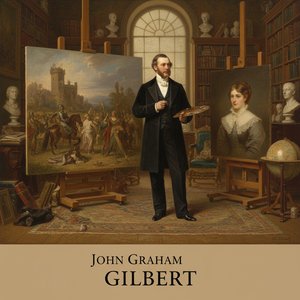
John Graham Gilbert: Rediscovering a Victorian Master of Narrative & Portraiture
Discover the captivating world of John Graham Gilbert, a Victorian master! Explore his portraits, genre scenes & illustrations. Learn about his influences, legacy & find high-quality reproductions at OriginalUniqueArt.
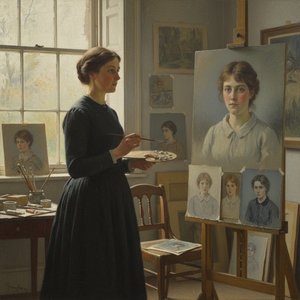
Gwen John: Intimacy, Modernity & the Quiet Power of Welsh Portraiture
Explore the captivating world of Gwen John, a pioneering Welsh artist renowned for her intimate portraits & subtle style. Discover her life, legacy, and how to bring her timeless beauty into your home with OriginalUniqueArt.

John Singer Sargent's 25 Masterpieces: Portraits & Beyond | OriginalUniqueArt
Explore 25 iconic John Singer Sargent paintings – from dazzling portraits to Impressionist landscapes. Discover the stories behind Madame X, El Jaleo & more! Find museum-quality art reproductions and elevate your home decor with OriginalUniqueArt.com.

John Gilbert: A Comprehensive Exploration of Technique, Context, and Enduring Legacy in Victorian Genre Painting
Explore the life & art of John Gilbert, a prolific Victorian painter renowned for his captivating genre scenes and Venetian-inspired style. Discover his legacy with OriginalUniqueArt.

John Constable: 25 Mojstrovskih Del Angelskega Krajinarja | OriginalUniqueArt.com
Odkrijte 25 mojstrovskih del Johna Constabla, angleškega slikarja romantizma. Preučite zgodbe za ikoničnimi krajinami, tehniko in lepoto narave. Kvalitetne reprodukcije slik na OriginalUniqueArt.com – idealno za dekoracijo doma!