- Domov

- Digitalna slika
- Gerhard Michalski
- Cathedral Corner
 Preview
 Kupi tiskanino Naročite reprodukcijo
 Pošlji
 Deli
Deli
 Podrobnosti o delu
 Dodaj v priljubljene

 Prenesi
 Podobni izdelki
 Rentgenski posnetek
 Predvajaj diaporama
Cathedral Corner
 Oil On Canvas
- WallArt
- Contemporary Realism
 1987
1987 122.0 x 87.0 cm
 Razviljaj več
Kupite digitalno sliko visoke ločljivosti z izboljšano kakovostjo, ki je precej boljša od spletnega predogleda.
Vsaka datoteka je pod natančnim nadzorom naših strokovnjakov, ki uporabljajo napredna orodja in strokovno ročno obdelavo. Zagotovimo, da ima vsaka slika izjemno jasnost, natančnost barv in fine podrobnosti.
Končna datoteka je po e-pošti dostavljena v 72 urah, optimizirana za takojšnjo uporabo v profesionalnem, uredniškem in tiskarskem okolju. To je kakovost, ki ji zaupajo vrhunska oblikovalna studia, založniki in galerije.
Digitalna slika
Prenesite datoteko visoke ločljivosti za osebno uporabo, tiskanje in kreativne projekte.
Vključeno v vsako naročilo digitalne slike
Zagotovljena strokovna digitalna dostava
Ko izberete OriginalUniqueArt.com, ne prejmete le slike – prejmete digitalno umetniško delo, ki je profesionalno urejeno, izdelano z natančnostostjo in zavestno zagotovljeno z garancijo za zadovoljstvo. Tukaj je vse, kar samodejno prejmete z vašim naročilom:

Hitra dostava prek e-pošte
Vaša digitalna slika visoke ločljivosti bo na vaš e-naslov poslana v roku 72 ur od zaklopa naročila – pripravljena za takojšnjo uporabo.

Digitalna datoteka z umetno inteligenco
Vaše umetniško delo je strokovno optimizirano z uporabo naprednih orodij umetne inteligence in ročne obdelave, kar zagotavlja največjo stopnjo podrobnosti, jasnosti in barvne natančnosti.

Brezplačna ponovna dostava za vse življenje
Ste zaradi nespremietne napake izgubili ali izbrisali svojo datoteko? Ni težav – vam jo bomo ponovno poslali kadar koli in brezplačno.

Brez uvoznih pristojbin – vedno
Uživajte v svojem umetniškem delu takoj, brez carin, davkov ali stroškov dostave – digitalni prenosi so vedno brezdavčni.

Zagotovilo natančnosti barv
Z uporabo profesionalnih orodij in upravljanja barv zagotavljamo, da vaša digitalna slika čim bolj natančno odraža prvotne barve.

60-dnevna garancija zadovoljstva
Če niste zadovoljni s svojo digitalno sliko, jo bomo uredili ali vam v 60 dneh povrnili 100% denarja – brez kakršnih koli vprašanj.

100% Garancija povračila denarja
Niste zadovoljni? Zagovрите popoln povračilo sredstev v 60 dneh po prejemu digitalne datoteke – brez kakršnih koli vprašanj.

Popusti pri večjem številu naročil
Kupite 3 slike, prihranite 10% - Kupite 5 slik, prihranite 15% - Kupite 10+ slik, prihranite 20%. Odlično za kreativne projekte, galerije in agencije.
Opis digitalnega artefakta
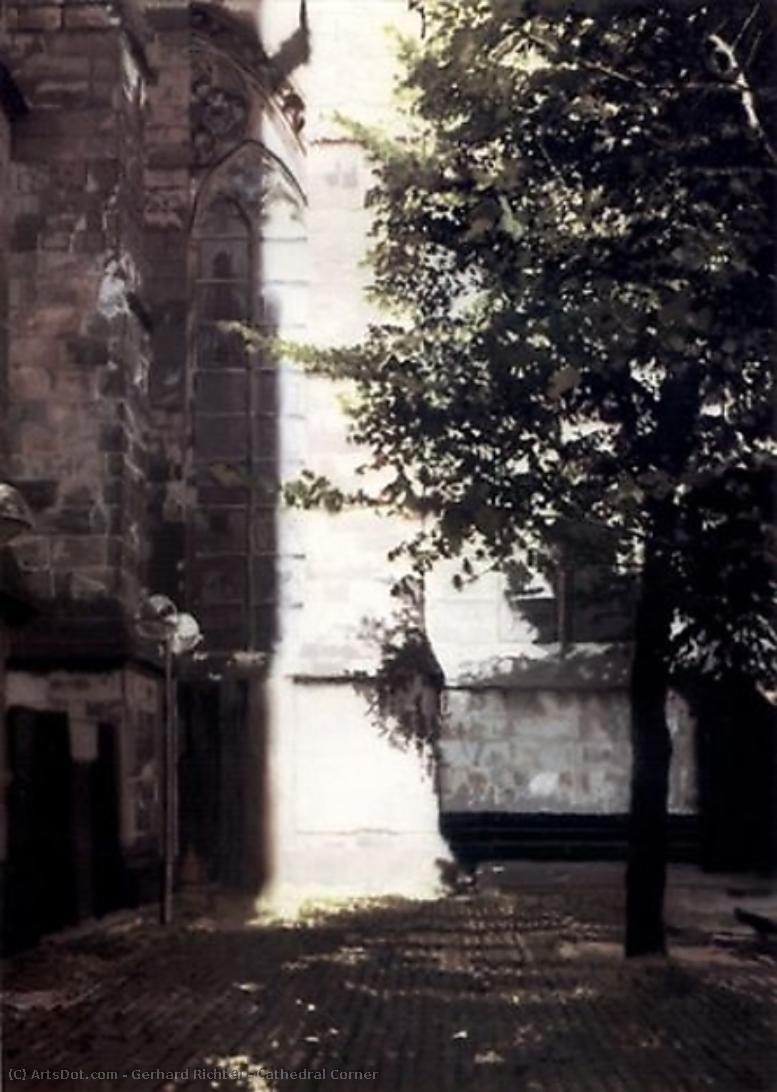
Cathedral Corner: A Meditation on Light and Texture by Gerhard Richter
Gerhard Richter’s “Cathedral Corner,” painted in 1987, isn't merely a depiction of a cathedral courtyard; it’s an embodiment of Richter’s signature approach to painting – a masterful blend of photographic observation and artistic abstraction that invites contemplation. The photograph itself captures the essence of this artwork, presenting a grainy image that subtly underscores the materiality of the original canvas. This deliberate imperfection isn't a flaw but rather integral to Richter’s aesthetic philosophy, mirroring the elusive nature of memory and perception.Composition and Perspective: Embracing Uncertainty
The painting’s vertical orientation immediately draws attention upwards towards the cathedral’s imposing spire, establishing a dominant visual hierarchy. Richter skillfully employs linear perspective to create depth, guiding the viewer's gaze from the courtyard floor toward the distant building. However, this perspectival rigor is tempered by an overarching sense of ambiguity—the blurring and softening characteristic of Richter’s technique deliberately obscures sharp edges and precise details. This stylistic choice reflects a broader preoccupation with capturing fleeting moments and conveying emotional resonance rather than striving for photographic realism. The placement of trees flanking the cathedral introduces organic forms that contrast with the geometric precision of architectural elements, symbolizing resilience and growth amidst grandeur.Technique and Materiality: Layers of Texture and Color
Richter’s technique is rooted in layering oil paint onto canvas—a process he often replicates using photographic prints as a guide. This method allows him to achieve remarkable tonal range, transitioning from deep shadows to luminous highlights that illuminate the cathedral façade. The grainy texture of the photograph itself subtly hints at the surface quality of the painting, reminding us that Richter isn’t simply reproducing an image but transforming it into something new. He achieves this textural effect through meticulous brushwork and glazing techniques—applying thin layers of paint over thicker undercoats to build up depth and luminosity.Symbolism and Emotional Resonance: Tranquility Amidst History
“Cathedral Corner” speaks volumes about the artist’s fascination with capturing atmosphere and emotion. The stillness of the courtyard scene evokes a profound sense of serenity, mirroring the enduring presence of faith and tradition symbolized by the cathedral itself. Richter's deliberate blurring contributes to this dreamlike quality, inviting viewers to engage in imaginative interpretation rather than passively accepting visual information. The absence of human figures amplifies this contemplative mood, emphasizing the grandeur of the architectural space and its connection to the natural world—a harmonious juxtaposition that encapsulates Richter’s artistic vision.Historical Context: Richter's Photorealistic Exploration
Painted during a period marked by significant social upheaval in Germany following reunification, “Cathedral Corner” represents a pivotal moment in Richter’s oeuvre. It exemplifies his pioneering exploration of photorealism combined with abstract expressionist principles—a stylistic fusion that distinguishes him from many of his contemporaries. This approach reflects Richter's broader engagement with the complexities of representing reality while simultaneously interrogating its subjective experience, cementing his legacy as one of the most influential artists of his generation.Biografija umetnika
A Life Shaped by Division: The Early Years and Artistic Formation of Gerhard Richter
Gerhard Richter’s story is inextricably linked to the fractured history of 20th-century Germany. Born in Dresden in 1932, his childhood unfolded under the shadow of a rising National Socialist regime. This formative period, marked by displacement – his family moved several times during the war years – instilled within him a profound sense of uncertainty and a questioning spirit that would permeate his artistic practice for decades to come. The idyllic landscapes of his early upbringing in Reichenau and Waltersdorf were soon disrupted by conflict, leaving an indelible mark on his psyche. His father, though not a fervent supporter of the Nazi party, navigated the complexities of life under authoritarian rule as a schoolteacher, while his mother fostered a love for literature and music within the family. This duality – a pragmatic acceptance of circumstance alongside a yearning for cultural expression – became a defining characteristic of Richter’s own artistic approach. He began formal training at the Dresden Academy of Fine Arts in 1951, initially immersed in the tradition of socialist realism demanded by the East German state. However, even within this constrained environment, a desire for artistic freedom simmered beneath the surface, fueled by a growing dissatisfaction with ideological constraints and a longing to explore more expansive creative possibilities.Escaping Constraints: Düsseldorf and the Exploration of Style
The year 1961 proved pivotal. Richter, along with his wife Marianne Eufinger, made the daring decision to flee East Germany, seeking refuge in the burgeoning art scene of Düsseldorf. This move marked a radical shift in his artistic trajectory. The West German landscape offered a liberating environment where experimentation and innovation were not only permitted but actively encouraged. In Düsseldorf, he encountered a vibrant community of artists grappling with questions of identity, representation, and the legacy of history. He quickly began to dismantle the rigid stylistic conventions of socialist realism, embarking on a period of intense exploration that would define his early mature work. This era saw him oscillate between seemingly disparate approaches – from photorealism, meticulously recreating photographic images with astonishing precision, to abstract compositions characterized by bold colors and dynamic brushstrokes. His collaboration with Sigmar Polke led to the coining of the term ‘Capitalist Realism,’ a deliberately ambiguous label that reflected their shared skepticism towards established artistic norms and their appropriation of imagery from advertising and mass media. This period wasn’t about finding *a* style, but rather questioning the very notion of stylistic coherence, embracing contradiction as a fundamental principle.Blurring Boundaries: Photorealism, Abstraction, and the Power of Chance
Richter's artistic vocabulary expanded throughout the 1960s and beyond, encompassing a remarkable range of techniques and themes. His photorealistic paintings, often based on family photographs or newspaper images, are not merely copies of reality but rather investigations into the nature of perception and representation. By meticulously rendering these images with an almost clinical detachment, he forces viewers to confront the inherent ambiguity of photographic truth. Simultaneously, Richter delved deeper into abstraction, creating canvases layered with vibrant colors and gestural marks. These abstract works are often created using a unique technique involving squeegees – tools typically used for cleaning windows – which he drags across the surface of the canvas, manipulating the paint in unpredictable ways. This embrace of chance and spontaneity is central to his artistic philosophy, allowing him to relinquish control and invite unexpected outcomes. His ‘Color Charts,’ systematic arrangements of colored squares, further challenge traditional notions of artistic expression, questioning the very definition of painting itself. These works are not about individual aesthetic preferences but rather about exploring the inherent properties of color and its organizational possibilities.Major Achievements and Artistic Influence
Richter’s contribution to contemporary art is undeniable. He has consistently resisted easy categorization, defying attempts to pigeonhole his work into a single stylistic framework. This refusal to be defined, coupled with his technical virtuosity and intellectual rigor, has earned him widespread critical acclaim and commercial success – his paintings regularly fetch record prices at auction. Beyond the market value, however, lies a deeper significance. Richter’s art speaks to the complexities of modern existence, grappling with issues of memory, identity, and the search for meaning in a fragmented world. He doesn't offer answers but rather poses questions, prompting viewers to confront their own preconceptions and engage in critical dialogue. His influence can be seen in the work of countless artists who have followed in his footsteps, drawn to his innovative techniques and his unwavering commitment to artistic exploration. Richter’s legacy is not simply about creating beautiful objects; it's about expanding the possibilities of painting itself. He remains a vital force in contemporary art, continuing to inspire and provoke audiences with his challenging and deeply resonant work.
Gerhard Michalski
1932 - , Nemčija
Ključne informacije
- Artistic Movement Or Style:
- Lovski pilot
- Fotorealizem
- Artists Or Movements Influenced By This Artist: ['Sigmar Polke']
- Artists Who Influenced This Artist:
- Pablo Picasso
- Jean Arp
- Date Of Birth: 25. junij 1917
- Full Name: Gerhard Michalski
- Nationality: Nemški
- Notable Artworks:
- Lovski pilot
- Živo barvo
- Place Of Birth: Augsdorf, Nemčija

