

 Preverite v realnem okolju
 Pošlji kot čestitko
 Deli
Deli
 Podrobnosti
 Priročnik

 Prenesi
 Podobni artefakti
 Rentgenski posnetek
 Predvajaj diaporama
 Statistika
Street Scene
 Oil
Oil- WallArt
- Social Realism
 1939
1939- Modern
 40.0 x 30.0 cm
 Iziko South African National Gallery
 Preberi več
Ročno izdelana oljna reprodukcija
Ročno slikano olje na platnu v vaši izbiri velikosti in okvirja, izdelano po naročilu naših umetnikov. ( Preklop na tiskanine Preklop na digitalno sliko)




P118B €10

P118H €10

P118W €10

P438Z €10

P508JH €12

P508YH €12

P805H €10

P805Z €10

P919BZ €10

P919G €10

P919XJ €10

P959ZH €10

P968JZ €12

W106C €8

W218G €10

W218JH €8

W218Y €10

W307PJ €10

W316G €10

W316PJ €8

W316Y €10

W398PJ €8

W4111J €10

W500HY €15

W500JH €15

W692G €12

W849H €8

W940BG €15

W953PJ €8




Izberite eno od naših vnaprej določenih velikosti, ki ustrezajo prvotnim proporcijam umetničkega dela.

Svoje dimenzije lahko vnesete tako, da se prilagodite določenemu okvirju ali prostoru. Če izbrana velikost ne ustreza razmerjem originalne slike, bomo umetniško delo obrezali ali sliko dopolnili z dodatnimi ročno naslikanimi elementi. Pred začetkom proizvodnje vam bo poslan digitalni osnutek v odobritev.
Upoštevajte, da predogled na zaslonu ne odraža dejanskega obrezovanja ali podaljšanja. Le osnutek bo natančno prikazal končno kompozicijo.
Čeprav so na voljo velikosti po meri, priporočamo izbiro dimenzije s preddefiniranega seznama, da ohranimo originalne razmere.
Po oddaji naročila bo ekipa OriginalUniqueArt.com stranki po e-pošti poslala navodila in predogled digitalnega predogleda.
Mednarodna dostava () v 3/4 tednih namesto običajnih 5 tednov. (5 oktober). Brez kompromisov pri kakovosti.

Brezplačna ekspresna dostava po vsem svetu

Visokokakovostno laneno platno

Popolno zavarovanje pošiljke

Garancija povračila carine in uvoznih davkov

Garancija popolnega barvnega ujemanja

Politika vračila v 100 dneh (le v primeru okvar)

Garancija 100% povračila denarja

Popust pri večjem naročilu
 Možnost stekla je na voljo le za velikosti pod 110 cm

Street Scene
Tehnika reprodukcije
Velikost reprodukcije
-


Skupna cena
€ 258
A Window into the Soul of Sophiatown
In the quiet, rhythmic pulse of 1939, Gerard Sekoto captured a moment that transcends mere observation, offering instead a profound meditation on human existence. Street Scene is not simply a depiction of urban movement; it is a lyrical composition of daily life, where the mundane becomes monumental. Through his masterful lens, we are transported to a bustling corner where the labor of two men—one clutching a bucket, the and another holding a shovel—serves as the grounded, tactile foundation of the piece. This scene of construction and toil is juxtaposed with the casual stillness of a seated figure, creating a beautiful tension between progress and repose. The painting breathes with the vitality of a community in motion, inviting the viewer to step into a world where every gesture tells a story of resilience and shared humanity.
The technique employed by Sekoto reflects his deep roots in social realism, a style that demands both technical precision and emotional honesty. The artist utilizes a palette that captures the dusty, sun-drenched atmosphere of the street, using light to define form and create depth within the canvas. There is a rhythmic quality to the placement of the figures; the background characters—one burdened by a large object, another navigating the crowd with a backpack—act as echoes of the foreground activity, weaving a complex tapestry of social interaction. The brushwork, while controlled, possesses an organic warmth that softens the edges of the urban environment, turning a simple street corner into a stage for a timeless human drama.
Historical Resonance and Artistic Legacy
For the discerning collector or interior designer, Street Scene offers much more than aesthetic beauty; it provides a profound historical and emotional anchor. As a pioneer who reshaped the perception of Black identity in South Africa, Sekoto’s work carries an inherent dignity that is palpable on the canvas. The painting captures the essence of daily life on a street corner with people going about their business, serving as a vital record of a community's spirit. This piece stands as a testament to the artist's ability to find the extraordinary within the ordinary, making it a significant acquisition for those looking to bring a sense of historical depth and soulful narrative into a curated space.
Vprašanja in odgovori
Kdaj je bilo ustvarjeno delo "Street Scene" avtorja Gerard Sekoto?
"Street Scene" izvira iz 1939. Ta datum delo situira v okvir Gerard Sekotoove kariere in obdobja, v katerem je nastalo.
Ali ima "Street Scene" predogled v augmented reality?
Delo "Street Scene" ima predogled z augmented reality: stran AR predogled za to umetnino prikazuje delo v vašem lastnem prostoru na združljivi napravi.
Hvilušna barvna tonina, kateri se nagiba "Street Scene"?
Golden Yellow Range odtenek prežema celotno skladbo "Street Scene" avtorja Gerard Sekoto.
Kdaj je "Street Scene" pripisano kateremu umetniku?
"Street Scene" pripisujemo Gerard Sekoto.
Koliko je bil star/a Gerard Sekoto, ko je ustvaril/a "Street Scene"?
Gerard Sekoto je ustvaril "Street Scene" v starostih 26 let. Umetnik se je rodil leta 1913, delovni datum pa je 1939.
Kakšne so dimenzije izvornega dela "Street Scene" avtorja Gerard Sekoto?
Originalne dimenzije dela "Street Scene" znašajo 40 x 30 cm. Prvotne mere so koristna referenca pri izbiri velikosti reprodukcije.
Kakšen čustveni ton spremlja slog Social Realism pri delu "Street Scene"?
Nostalgic čustvo dela "Street Scene" spremlja njegov Social Realism slog.
Biografija umetnika
A Voice of Sophiatown: The Legacy of Gerard Sekoto
Gerard Sekoto (1913-1993) stands as a monumental figure in South African art history, recognized not merely for his artistic output but for fundamentally reshaping perceptions of Black identity and experience during the turbulent era of apartheid. Born in the quiet Lutheran Mission Station of Botshabelo, Mpumalanga, he emerged from humble beginnings—the son of Andreas Sekoto, a clergyman deeply involved in establishing the Wonderhoek Diocesan School—to become one of the foremost champions of urban black art and social realism. His early life was a tapestry woven with religious faith and musical tradition; introduced to the family harmonium at a young age, he cultivated a lifelong passion for music that would forever inform the rhythmic soul of his visual compositions. His formative years in the Eastern Transvaal provided a foundation of intellectual discipline, as his education at Wonderhoek prepared him for a vocation as a teacher. However, the call of the canvas proved irresistible. Sekoto’s artistic journey began to gain formal momentum during his studies at Diocesan Teachers Training College in Pietersburg, where he honed his skills and gained recognition through art competitions. A pivotal moment arrived when he secured second prize in the May Esther Bedford Competition, an achievement that propelled him into the spotlight and solidified his determination to pursue a career dedicated to visual storytelling.The Pulse of the City and the Dawn of Social Realism
In 1938, driven by an ambition to immerse himself within the burgeoning Black artistic community, Sekoto relocated to Johannesburg. This move proved transformative. In the vibrant, multi-racial energy of the city, he began to capture the essence of urban life with an unflinching honesty that would define his legacy. It was during this period that he encountered influential figures such as Judith Gluckman, who introduced him to the techniques of oil painting, allowing his work to transition from simple sketches to rich, textured explorations of light and human emotion. His arrival in Johannesburg marked a historic milestone for South African institutions; in 1940, the Johannesburg Art Gallery acquired one of his works, making him the first Black artist to have his art entered into a museum collection in the country. His paintings became vital historical records of pre-apartheid communities, specifically the lively, bustling neighborhoods of Sophiatown and later District Six in Cape Town. Through his brush, the everyday struggles and joys of ordinary people were elevated to the status of high art. He utilized social realism not just as a technique, but as a profound tool for dignity, portraying the humanity of the impoverished Black population with a grace that defied the dehumanizing laws of the era.Exile, Evolution, and Eternal Significance
As the political landscape of South Africa darkened under the imposition of apartheid, Sekoto’s life took a more nomadic and bittersweet path. Leaving South Africa in 1947, he spent much of his later life in Europe, most notably in Paris. While physical distance separated him from his homeland, the spirit of South Africa remained the heartbeat of his work. Even while living abroad, he continued to draw profound inspiration from the landscapes and people of his birthright, ensuring that the memory of the vibrant townships remained etched in the global art consciousness. The significance of Gerard Sekoto’s oeuvre extends far beyond the borders of South Africa. His work has been exhibited internationally, from Stockholm and Venice to Washington and Senegal, earning him a place among the great modernists of the twentieth century. His legacy is defined by several enduring contributions:- Pioneering Urban Black Art: He broke the silence of the colonial era by centering the Black urban experience in fine art.
- Mastery of Social Realism: He used realistic depictions to document social truths and advocate for the visibility of marginalized communities.
- Cultural Bridge-Building: His ability to navigate both the rural traditions of his youth and the cosmopolitan influences of Paris created a unique, hybrid aesthetic.
- Historical Preservation: His paintings serve as irreplaceable visual archives of South African neighborhoods that were later destroyed by forced removals.

Gerard Sekoto
1913 - 1993 , South Africa
Ključne informacije
- Full Name: Gerard Sekoto
- Nationality: South African
- Date Of Birth: 1913
- Date Of Death: 1993
- Place Of Birth: Botshabelo, South Africa
- Notable Artworks:
- Washerwomen
- The Jazz Band
- Prayer in Church
- Artistic Movement Or Style: Urban Black Art & Social Realism
Sorodni članki
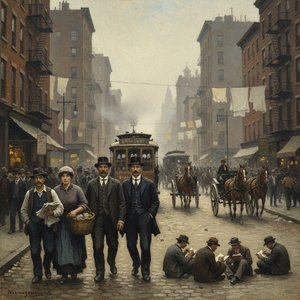
The Ashcan School: Realism, Urban Life & the Democratization of American Art
Explore the revolutionary Ashcan School! Discover how artists like Henri & Sloan challenged tradition with gritty realism, capturing urban life in early 20th-century America. Learn about their impact on American art history.
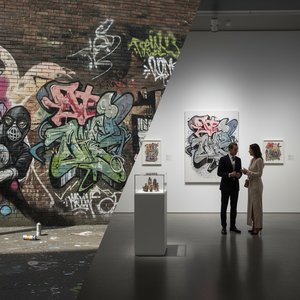
From Walls to Galleries: The Bold Evolution of Street Art and Its Rise into High-End Collectibles
Explore the captivating journey of street art from urban walls to prestigious galleries. Discover how contemporary graffiti has evolved into a high-end collectible movement, redefining modern interior design and global art culture.

Romantic Realism's Finest: 10 Masterpieces for Your Home | OriginalUniqueArt
Explore 10 defining masterpieces of Romantic Realism! Discover Courbet, Millet & Daumier's powerful paintings—capturing emotion and social realities. Find museum-quality reproductions for your home at OriginalUniqueArt.com.

Concrete Visions: Exploring the Urban Landscape in Painting – From Realism to Contemporary Art
Explore the evolution of cityscape painting from Realism to contemporary art with OriginalUniqueArt. Discover key artists & invest in timeless urban visions. Expert guidance, museum-quality reproductions.
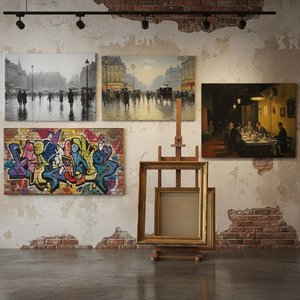
Echoes of Urban Life: A Visual Exploration of Street Scenes in Art History
Explore the captivating world of realism in art history! Discover iconic street scenes & genre paintings from masters like Courbet & Brown. Expert analysis & museum-quality reproductions at OriginalUniqueArt.