- Domov

- Reprodukcija oljne slike
- Žorž Braq
- untitled (1420)
 Preview
 Kupi tiskanino Kupi digitalno sliko
 Pošlji
 Deli
Deli
 Podrobnosti o delu
 Dodaj v priljubljene

 Prenesi
 Podobni izdelki
 Rentgenski posnetek
 Predvajaj diaporama
untitled (1420)

 Razviljaj več
Ročno izdelana oljna reprodukcija
Ročno slikano olje na platnu v vaši izbiri velikosti in okvirja, izdelano po naročilu naših umetnikov.




P118B $10

P118H $10

P118W $10

P438Z $10

P508JH $12

P508YH $12

P805H $10

P805Z $10

P919BZ $10

P919G $10

P919XJ $10

P959ZH $10

P968JZ $12

W106C $8

W218G $10

W218JH $8

W218Y $10

W307PJ $10

W316G $10

W316PJ $8

W316Y $10

W398PJ $8

W4111J $10

W500HY $15

W500JH $15

W692G $12

W849H $8

W940BG $15

W953PJ $8




Izberite eno od naših vnaprej določenih velikosti, ki ustrezajo prvotnim proporcijam umetničkega dela.

Svoje dimenzije lahko vnesete tako, da se prilagodite določenemu okvirju ali prostoru. Če izbrana velikost ne ustreza razmerjem originalne slike, bomo umetniško delo obrezali ali sliko dopolnili z dodatnimi ročno naslikanimi elementi. Pred začetkom proizvodnje vam bo poslan digitalni osnutek v odobritev.
Upoštevajte, da predogled na zaslonu ne odraža dejanskega obrezovanja ali podaljšanja. Le osnutek bo natančno prikazal končno kompozicijo.
Čeprav so na voljo velikosti po meri, priporočamo izbiro dimenzije s preddefiniranega seznama, da ohranimo originalne razmere.
Po oddaji naročila bo ekipa OriginalUniqueArt.com stranki po e-pošti poslala navodila in predogled digitalnega predogleda.
Svetska dostava () za 3/4 nedelje umesto uobičajenih 5 nedelja. (23 julij). Bez kompromisa po pitanju kvaliteta.

Brezplačna ekspresna dostava po vsem svetu

Visokokakovostno laneno platno

Popolno zavarovanje pošiljke

Garancija povračila carine in uvoznih davkov

Garancija popolnega ujemanja barv

60-dnevna politika vračanja (le v primeru napak)

Garancija 100% povračila denarja

Popust pri večjem naročilu
 Možnost stekla je na voljo le za velikosti pod 110 cm

untitled (1420)
Tehnika reprodukcije
Velikost reprodukcije
-


Skupna končna cena
-
Opis umetninine
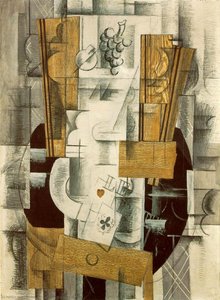
Georges Braque’s Still Life Reverie: A Fragmented Portrait of Abundance
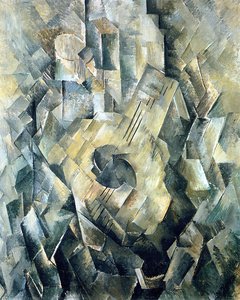
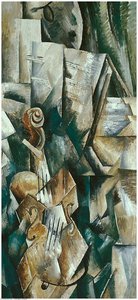
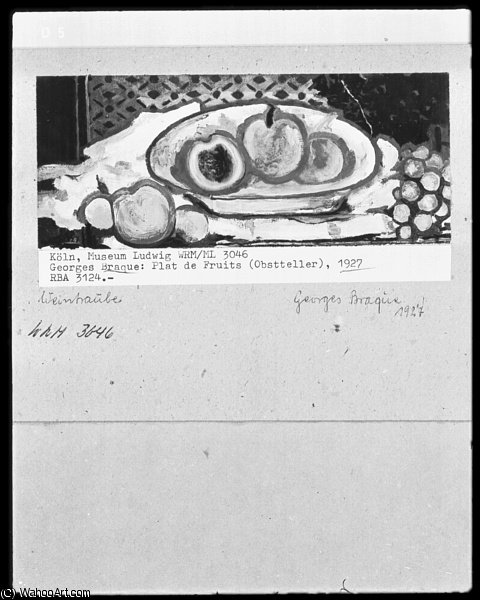
The photograph captures Georges Braque's "untitled (1420)," a deceptively simple painting that embodies the core tenets of Cubism and speaks volumes about its era. Executed around 1910-11, this piece resides within the Philadelphia Museum of Art’s collection, meticulously documented in archival materials exploring illuminated manuscripts from the fifteenth century – an intriguing juxtaposition highlighting Braque's radical departure from traditional artistic conventions. The image itself reveals subtle signs of age—a delicate graininess—suggesting its enduring presence and inviting contemplation alongside the artwork’s profound aesthetic qualities.Composition and Style: Cubist Fragmentation
At first glance, “untitled (1420)” presents a seemingly straightforward depiction of fruit arranged in a shallow bowl. However, Braque's masterful application of Cubist principles dismantles any illusion of conventional perspective. Lines dissect the forms of the peaches, pears, and plums—and crucially, the bowl itself—creating fractured planes that simultaneously reveal multiple viewpoints. This technique isn’t merely stylistic; it reflects Braque’s intellectual engagement with theories of relativity championed by Einstein at the time, mirroring a broader shift toward challenging established visual hierarchies. The flattened composition emphasizes geometric shapes – circles, squares, and triangles – prioritizing structure over realistic representation.Technique: Oil Paint on Canvas - A Delicate Balance
The painting utilizes oil paint on canvas—a standard medium for Braque during his Cubist period—allowing for nuanced tonal variations that convey texture and depth despite the absence of traditional shading. Careful observation reveals subtle gradations of color, hinting at shadows cast by the fruit and bowl, demonstrating Braque’s meticulous attention to detail. The artist skillfully blends pigments to create an impressionistic effect, capturing not just what is seen but also how it feels—a quiet contemplation of natural beauty amidst a period of intense artistic experimentation.Historical Context: Embracing Modernity Amidst Tradition
“untitled (1420)” emerged during the formative years of Cubism, alongside Pablo Picasso and Juan Gris, marking a pivotal moment in art history. Braque’s exploration of geometric abstraction responded to the influence of Cézanne's work on form and structure—particularly his emphasis on underlying geometric forms beneath observable surfaces. Simultaneously, it engaged with developments in scientific thought, mirroring the broader cultural anxieties surrounding rapid industrialization and urbanization. The painting stands as a testament to Braque’s courage in rejecting academic realism and forging new paths toward artistic expression.Symbolism: An Ode to Everyday Beauty
Beyond its formal innovations, “untitled (1420)” carries subtle symbolic resonance. The arrangement of fruit—a recurring motif in Braque's oeuvre—represents abundance and fertility, yet it’s presented in a fragmented manner, suggesting that beauty resides not solely in visual perfection but also in capturing multiple perspectives on reality. This deliberate ambiguity invites viewers to consider the complexities inherent in perceiving the world around them – a contemplative gesture perfectly aligned with the spirit of Cubism's intellectual ambition.Biografija umetnika
Georges Braque
Georges Braque was born in Argenteuil, Val-d'Oise, France, on May 13, 1882. He grew up in Le Havre and trained to be a house painter and decorator like his father and grandfather. However, he also studied artistic painting during evenings at the École supérieure d’art et design Le Havre-Rouen, previously known as the École supérieure des Arts in Le Havre, from about 1897 to 1899. In Paris, he apprenticed with a decorator and was awarded his certificate in 1902. The next year, he attended the Académie Humbert, also in Paris, and painted there until 1904. It was here that he met Marie Laurencin and Francis Picabia, forging connections that would shape his early development. His initial works reflected the prevailing influences of Impressionism and Post-Impressionism, but a pivotal encounter with the bold colors and expressive freedom of Fauvism in 1905 ignited a new direction in his artistic exploration.Fauvism
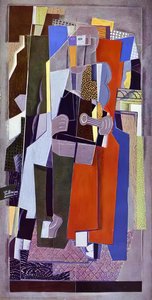
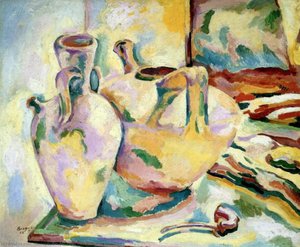
Braque’s adoption of Fauvist principles—characterized by intense, non-naturalistic color and emotional expression—is vividly exemplified in paintings like *The Patience*. This period saw him working alongside artists such as Henri Matisse and André Derain, experimenting with vibrant palettes and simplified forms. However, Braque's engagement with Fauvism was not merely imitative; he infused it with a unique sensibility, tempering the movement’s unrestrained exuberance with a more restrained and analytical approach. He worked most closely with the artists Raoul Dufy and Othon Friesz, who shared Braque's hometown of Le Havre, to develop a somewhat more subdued Fauvist style. In 1906, he traveled with Friesz to L’Estaque, to Antwerp, and home to Le Havre to paint. The Fauves, a group that included Henri Matisse and André Derain among others, used brilliant colors and loose structures of forms to capture the most intense emotional response. Braque showed this in the oil painting “Houses at L'estaque”.The Dawn of Cubism
A turning point arrived in 1907 with his exposure to the retrospective exhibition of Paul Cézanne's work. Cézanne’s emphasis on geometric forms and multiple perspectives profoundly impacted Braque, setting the stage for his groundbreaking collaboration with Pablo Picasso. Beginning in 1908, these two artistic titans embarked on an intense intellectual exchange that would give birth to Cubism—a revolutionary movement that shattered traditional notions of representation. Together, Braque and Picasso developed Analytical Cubism, dissecting objects into fragmented geometric shapes and presenting multiple viewpoints simultaneously. Works like *Houses at L'Estaque* demonstrate this early phase, showcasing a radical departure from conventional perspective and a focus on the underlying structure of forms. Their palette became deliberately muted, emphasizing form over color, as they sought to represent the totality of an object’s presence rather than merely its appearance.Collaboration with Picasso
Braque's partnership with Pablo Picasso continued to push the boundaries of artistic expression, leading to the development of Synthetic Cubism around 1912. This phase saw the introduction of collage—the incorporation of real-world materials such as newspaper clippings, wallpaper, and fabric into paintings. This innovation challenged the traditional hierarchy between painting and sculpture, blurring the lines between art and life. Braque’s pioneering use of *papier collé* (pasted paper) marked a significant turning point in his artistic evolution. By integrating fragments of everyday objects into his compositions, he disrupted the illusionistic space of traditional painting and introduced a new level of materiality and texture. This technique not only expanded the formal possibilities of art but also reflected a growing interest in the relationship between representation and reality.Legacy
Throughout his career, Braque remained committed to exploring the fundamental principles of form, space, and representation. He continued to experiment with different materials and techniques, pushing the boundaries of artistic expression until his death in 1963. His influence on subsequent generations of artists is immeasurable, shaping the course of modern art and inspiring countless painters, sculptors, and collagists. Georges Braque’s legacy extends beyond his individual artworks; he fundamentally altered our understanding of how we perceive and represent the world around us. His collaborative spirit with Picasso, coupled with his own unique artistic vision, cemented his place as a true pioneer of modern art—a master who dared to challenge conventions and redefine the possibilities of painting.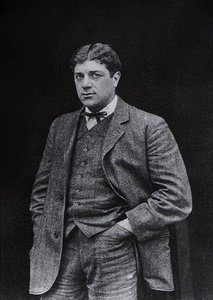
Žorž Braq
1882 - 1963 , Francija
Hitri podatki
- Artistic Movement Or Style: Kubizem
- Artists Who Influenced This Artist:
- Henri Matisse
- André Derain
- Paul Cézanne
- Date Of Birth: 13 maj 1882
- Date Of Death: 31 avgust 1963
- Full Name: Georges Braque
- Nationality: Francoz
- Notable Artworks:
- Živali na L'Estaque
- Četrtičje
- Violino in pipa
- Place Of Birth: Argenteuil, Francija
Sorodni članki
Deconstructing Reality: A Comprehensive Exploration of Cubist Still Life
Explore the revolutionary world of Cubist Still Life with OriginalUniqueArt. Discover Picasso & Braque's groundbreaking techniques, its philosophical roots, and lasting impact on modern art. Expert insights for collectors.
Večnost v Kapljicah: Prilagojene Slike za Luksuzno Kuhinjo ali Jedilnico
Ustvarite edinstveno kuhinjo ali jedilnico s prilagojenimi slikami OriginalUniqueArt! Ročno narisane reprodukcije, vrhunska kakovost in personaliziran dizajn. Vaša osebna umetnostna zgodovina na platnu.

The Bountiful Still Life: Symbolism & Artistic Representation of Fruit Across Art History
Explore the rich history of still life painting & the symbolism of fruit across art movements. Discover masterpieces from Caravaggio to Cézanne with OriginalUniqueArt – expert guidance & museum-quality reproductions.
Cubism's Revolution: 10 Masterpieces That Redefined Modern Art | OriginalUniqueArt
Explore 10 Cubist masterpieces by Picasso, Braque & more! Delve into the history of this revolutionary art movement. Find museum-quality reproductions and elevate your home decor with OriginalUniqueArt. Discover all masterpieces on OriginalUniqueArt.com
The Enduring Appeal of Still Life: A Historical & Contemporary Exploration
Explore the rich history & symbolism of still life painting with OriginalUniqueArt. Discover masterpieces from the Dutch Golden Age, learn about vanitas art, and find expert guidance for collecting timeless artworks.