

 Predogled
 Pošlji
 Deli
Deli
 Podrobnosti o delu

 Prenesi
 Podobni izdelki
 Rentgenski posnetek
 Predvajaj diaporama
 Statistika
Bistre bird


 Razviljaj več
Kupite digitalno sliko visoke ločljivosti z izboljšano kakovostjo, ki je precej boljša od spletnega predogleda.
Vsaka datoteka je pod natančnim nadzorom naših strokovnjakov, ki uporabljajo napredna orodja in strokovno ročno obdelavo. Zagotovimo, da ima vsaka slika izjemno jasnost, natančnost barv in fine podrobnosti.
Končna datoteka je po e-pošti dostavljena v 72 urah, optimizirana za takojšnjo uporabo v profesionalnem, uredniškem in tiskarskem okolju. To je kakovost, ki ji zaupajo vrhunska oblikovalna studia, založniki in galerije.
Digitalna slika
Prenesite datoteko visoke ločljivosti za osebno uporabo, tiskanje in kreativne projekte. ( Preklop na tiskanine Kupi ročno naslikano sliko)
Vključeno v vsako naročilo digitalne slike
Zagotovljena strokovna digitalna dostava
Ko izberete OriginalUniqueArt.com, ne prejmete le slike – prejmete digitalno umetniško delo, ki je profesionalno urejeno, izdelano z natančnostostjo in zavestno zagotovljeno z garancijo za zadovoljstvo. Tukaj je vse, kar samodejno prejmete z vašim naročilom:

Hitra dostava prek e-pošte
Vaša digitalna slika visoke ločljivosti bo na vaš e-naslov poslana v roku 72 ur od zaklopa naročila – pripravljena za takojšnjo uporabo.

Digitalna datoteka z umetno inteligenco
Vaše umetniško delo je strokovno optimizirano z uporabo naprednih orodij umetne inteligence in ročne obdelave, kar zagotavlja največjo stopnjo podrobnosti, jasnosti in barvne natančnosti.

Brezplačna ponovna dostava za vse življenje
Ste zaradi nespremietne napake izgubili ali izbrisali svojo datoteko? Ni težav – vam jo bomo ponovno poslali kadar koli in brezplačno.

Brez uvoznih pristojbin – vedno
Uživajte v svojem umetniškem delu takoj, brez carin, davkov ali stroškov dostave – digitalni prenosi so vedno brezdavčni.

Zagotovilo natančnosti barv
Z uporabo profesionalnih orodij in upravljanja barv zagotavljamo, da vaša digitalna slika čim bolj natančno odraža prvotne barve.

100-dnevna garancija zadovoljstva
Če niste zadovoljni s svojo digitalno sliko, jo bomo uredili ali povrnili 100% zate v 100 dneh – brez kakršnih koli vprašanj.

100% Garancija povračila denarja
Niste zadovoljni? Zagotavljamo vam popoln povračilo sredstev v 100 dneh po prejemu digitalne datoteke – brez dodatnih vprašanj.

Popusti pri večjem številu naročil
Kupite 3 slike, prihranite 10% - Kupite 5 slik, prihranite 15% - Kupite 10+ slik, prihranite 20%. Odlično za kreativne projekte, galerije in agencije.
Georges Braque’s “Bistre Bird”: A Study in Form and Flight
Georges Braque's "Bistre Bird," a captivating study in avian form, offers a glimpse into the artist’s pivotal role in the development of Cubism. Painted around 1908-1912 – a period of intense experimentation and collaboration with Pablo Picasso – this work transcends mere representation, becoming a profound exploration of perception and spatial relationships. The painting depicts a bird in mid-flight, its wings outstretched as if caught in an eternal moment of propulsion. Its plumage is rendered in shades of brown—a “bistre” hue that lends the piece a quiet dignity and earthy resonance – contrasting beautifully against the vibrant blue expanse of the sky. Noticeably, Braque doesn’t aim for photographic realism; instead, he dissects the bird's form into fragmented geometric shapes, mirroring the core tenets of Cubism. This approach wasn’t born in isolation; Braque’s early training as a house painter instilled within him an acute awareness of structure and perspective – skills that would prove invaluable as he dismantled traditional artistic conventions.
The Dawn of Cubism: Deconstructing Reality
“Bistre Bird” is inextricably linked to the revolutionary movement of Cubism, a style that emerged in Paris around 1907. Braque and Picasso, driven by a shared desire to challenge established notions of perspective and representation, began to break down objects into their constituent parts and reassemble them on the canvas from multiple viewpoints simultaneously. This wasn’t simply an aesthetic choice; it was a philosophical one, reflecting a growing interest in scientific theories of optics and the way our eyes perceive depth. The painting exemplifies this approach – the bird's wings are not presented as a single, continuous surface but rather as a series of overlapping planes, each rendered with careful attention to light and shadow. The background sky is similarly fragmented, suggesting an infinite space beyond the confines of the canvas. This deliberate distortion of reality aimed to capture the essence of an object – its underlying structure – rather than merely imitating its appearance.
Influences and Techniques: Cézanne’s Legacy
Braque's artistic journey leading up to "Bistre Bird" was profoundly shaped by the work of Paul Cézanne, a Post-Impressionist painter whose emphasis on geometric forms and multiple perspectives served as a crucial precursor to Cubism. Cézanne’s meticulous studies of landscapes and still lifes, particularly his exploration of how light interacts with solid objects, deeply influenced Braque's approach to composition and form. The artist spent considerable time studying Cézanne’s retrospective exhibition in 1907, recognizing the profound impact it would have on the avant-garde movement. Technically, Braque employed a technique known as “Analytical Cubism,” characterized by monochromatic color palettes – predominantly browns, grays, and ochres – and a focus on dissecting objects into their basic geometric components. The brushstrokes are often subtle and precise, contributing to the painting’s overall sense of controlled fragmentation.
Symbolic Resonance: Flight, Freedom, and Observation
Beyond its formal innovations, “Bistre Bird” carries a potent symbolic weight. The act of flight itself represents freedom, aspiration, and transcendence – themes that resonated deeply with the artists of the early 20th century. The bird’s poised stance suggests both vulnerability and strength, inviting contemplation on the delicate balance between observation and interpretation. Braque's choice of “bistre,” a muted brown tone, adds to this sense of quiet introspection. It evokes the earth, grounding the soaring image while simultaneously hinting at the vastness of the sky. Ultimately, "Bistre Bird" is not simply a depiction of a bird in flight; it’s an invitation to engage with the complexities of perception and the enduring power of art to transform our understanding of the world.
Biografija umetnika
Zgodna mladost in umetniške temelji
Georges Braque, rojen v Argenteuilu v Franciji leta 1882, se je odzivno vključil v pot, ki je bila globoko prepletena z razvijajočo se pokrajino moderne umetnosti. Njegovo vzgojeno okolje v družini molerjev in dekoraterjev mu ni podarilo le tehničnega znanja o materialih, temveč tudi zgodnje razumevanje forme in strukture. Čeprav je sprva sledil očetovem poklicu, so ga Braqueove naravne umetniške nagnjenosti kmalu vodile na formalno izobraževanje na École des Beaux-ts-Arts v Le Havreju, kar je označilo začetek njegove poti do postajanja enega najvplivnejših slikarjev 20. stoletja. Ta temelj—mešanica praktičnega krojevanja in akademskega študija—se bo kasneje izkazal ključnega, ko bo dekonstruiral in ponovno zamislil tradicionalne umetnostne konvencije.
Z preselitvom v Par way leta 1902 je Braque nadaljeval svoje študije na Académie Humbert in se potopil v živahno umetniško okolje mesta. Prav tukaj je spoznal umetnike, kot sta Marie Laurencin in Francis Picabia, ter vzpostavil povezave, ki bodo oblikovale njegov zgodnji razvoj. Njegova začetna dela so odražala prevladujoče vlive impresionizma in postimpresionizma, toda ključni srečanje z drznimi barvami in izrazno svobodo fauvizma leta eksplicitno je v njegovo umetniško raziskovanje vneslo novo smer.
Objem fauvizma in vprašanje kubizma
Braqueova sprejetje načel fauvizma—ki jih zaznamujejo intenzivne, nenaturalistične barve in čustvena ekspresija—je živopisno prikazano v slikah, kot je Potrpežljivost. V tem obdobju je sodeloval z umetniki, kot sta Henri Matisse in André Derain, pri eksperimentiranju z živahnimi paletami in poenostavljenimi oblikami. Vendar Braqueova vpletenost v fauvizm ni bila zgolj imitativna; v hareket je vnesel edinstveno občutljivost, s čimer je neobazano obilje gibanja ublažil z bolj vzdržnim in analitičnim pristopom.
Prelomnica je prišla leta 1907 z izpostavljenostjo retrospektivne izložbe dela Paula Cézanneja. Cézannejev poudarek na geometričnih oblikah in več perspektiv je globoko vplivnal na Braqueja in postavil odro v njegovo revolucionarno sodelovanje s Pablo Picasssom. Od leta _1908_ sta ta dva umetniška titan začela obdobje intenzivnega intelektualnega izmenjavanja, ki se je rodilo v kubizmu—revolucionarnem gibanju, ki je razbilo tradicionalne predstave。
Skupaj sta Braque in Picasso razvijala analitični kubizem, s čimer so razložili predmete v razdrobljene geometrične oblike in hkrati predstavljali več pogledov. Dela, kot so Hiše pri L'Estaque, prikazujejo to zgodnjo fazo, ki kaže radikalno odstopanje od konvencionalne perspektive in osredotočenost na podložno strukturo oblik. Njuna paleta je postala namerno utišana, s poudarkom na formi namesto barve, saj sta želela predstaviti celovitost prisotnosti predmeta namesto le njegovega videza.
Inovacija skozi fragmentacijo in kolaž
Partnerstvo med Braqueom in Picasssom je še naprej premikalo meje umetniške izraznosti, kar je vodilo do razvoja sintetičnega kubizma okoli leta 1912. Ta faza je prinesla uvedbo kolaža—vključevanje materialov iz realnega sveta, kot so koščki časopisov, tapete in tkanine, v slike. Ta inovacija je izzivala tradicionalno hierarhijo med slikarstvom in kiparstvom ter zameglila meje med umetnostjo in življenjem.
Braqueova pionirska uporaba *papier collé* (lepljen papir) je označila pomembno obr_{[n]t_v} v njegovi umetniški evoluciji. Z integracijo fragmentov vsakdanjih predmetov v svoje kompozicije je pretrgel iluzionistični prostor tradicionalnega slikarstva in uvedel novo raven materialnosti in teksture. Ta tehnika ni le razširila formalnih možnosti umetnosti, temveč je odražala tudi naraščajoče zanimanje za odnos med predstavljanjem in realnostjo.
Izbruh Prve svetovne vojne leta 1914 je prinesel prekinitev te intenzivne sodelovanja, saj je bil Braque poklican v vojski. Njegove vojenjske izkušnje so globoko vplivale na njegovo umetniško vizijo in ga vodile k raziskovanju bolj osebnih in lirskih tem v njegovemdovojnem delu.
Pozne leta in trajna dediščina
Po vojni se je Braqueov slog razvijal dlje od strogih okvirov kubizma, vključujoč elemente klasične kompozicije in obnovljeno zanimanje za življenjsko sliko. Čeprav je ohranil geometrične vlive, ki so definirali njegovo zgodnje delo, je razvil bolj poglobljen in kontemplativen pristop k slikarstvu. Njegove pozne pejzage in notranji prostori so značilni po svojem mirnem vzdušju in subtilnih harmonijah barv.
skozi celotno svojo kariero je Braque ostal predan raziskovanju temeljnih načel forme, prostora in predstavljanja. Nadaljeval je z eksperimentiranjem z različnimi materiali in tehnikami ter premikal meje umetniške izraznosti vse do svoje smrti leta _1963_. Njegov vpliv na naslednje generacije umetnikov je neizmeren; oblikoval je pot moderne umetnosti in navdihoval štejne slikarje, kiparje in kolažiste.
Dediščina Georges Braquea presega njegova individualna dela; fundamentalno je spremenil naše razumevanje tega, kako zaznavamo in predstavljamo svet okoli nas. Njegov sodelovalni duh s Picasssom, v kombinaciji z njegovo lastno edinstveno umetniško vizijo, je utrdil njegovo mesto pravega pionirja moderne umetnosti—mojstra, ki se je upal izzvati konvencije in ponovno definirati možnosti slikarstva.
Vplivi in pomembna dela
- Vplivavali mu: Henri Matisse, André Derain, Paul Cézanne
- Ključna dela: Houses at L'Estaque, The Patience, Violin and Palette, Mandola
- Vpliv na umetnostno zgodovino: Revolucioniral umetnost 20. stoletja skozi kubizem; izzval tradicionalne predstave perspektive in predstavljanja.
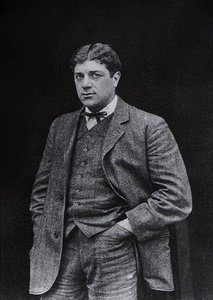
Žorž Braq
1882 - 1963 , Francija
Ključne informacije
- Artistic Movement Or Style: Kubizem
- Artists Who Influenced This Artist:
- Henri Matisse
- André Derain
- Paul Cézanne
- Date Of Birth: 13 maj 1882
- Date Of Death: 31 avgust 1963
- Full Name: Georges Braque
- Nationality: Francoz
- Notable Artworks:
- Živali na L'Estaque
- Četrtičje
- Violino in pipa
- Place Of Birth: Argenteuil, Francija