

 Preverite v realnem okolju
 Pošlji kot čestitko
 Deli
Deli
 Podrobnosti
 Priročnik

 Prenesi
 Podobni artefakti
 Rentgenski posnetek
 Predvajaj diaporama
 Statistika
The Apothecary (The Chemist)
 Acrylic On Canvas
- WallArt
- Dutch Golden Age
 1661
1661 27.0 x 23.0 cm
 Louvre
 Preberi več
Giclée tisk / Umetniški tisk
Giclée ali platnati odtis muzejske kakovosti z hitro proizvodnjo in prilagodljivimi možnostmi končne obdelave. ( Naročite ročno slikano reprodukcijo Preklop na digitalno sliko)




P118B €10

P118H €10

P118W €10

P438Z €10

P508JH €12

P508YH €12

P805H €10

P805Z €10

P919BZ €10

P919G €10

P919XJ €10

P959ZH €10

P968JZ €12

W106C €8

W218G €10

W218JH €8

W218Y €10

W307PJ €10

W316G €10

W316PJ €8

W316Y €10

W398PJ €8

W4111J €10

W500HY €15

W500JH €15

W692G €12

W849H €8

W940BG €15

W953PJ €8




Izberite eno od naših vnaprej določenih velikosti, ki ustrezajo prvotnim proporcijam umetničkega dela.

Vnesite širino in višino, ki jih potrebujete za svoj okvir ali steno. Tiskanje se lahko le odreže, vendar ga ni mogoče narediti večjega od slike, zato format z drugačno obliko pomeni izgubo dela slike. Pred tiskanjem vam pošljemo digitalni predogled za potrditev. Slika, prikazana na tej strani, ne prikazuje dejanskega izrezkov — le predogled to omogoča.
Globalna dostava () v 2 tednih namesto standardnih 4/5 tednov. (23 oktober)

Brezplačna ekspresna dostava po vsem svetu

Visokokakovostno laneno platno

Popolno zavarovanje pošiljke

Garancija povračila carine in uvoznih davkov

Garancija popolnega barvnega ujemanja

Politika vračila v 100 dneh (le v primeru okvar)

Garancija 100% povračila denarja

Popust pri večjem naročilu
 Možnost stekla je na voljo le za velikosti pod 110 cm

The Apothecary (The Chemist)
Giclée tisk / Umetniški tisk
Velikost reprodukcije
-


Skupna cena
€ 70
A Window into 17th-Century Dutch Life
Gabriel Metsu’s “The Apothecary,” painted in Leiden around 1661, isn't merely a portrait; it’s a meticulously crafted snapshot of a specific moment within the vibrant tapestry of 17th-century Holland. More than just depicting a man at his desk, Metsu has created an intimate scene brimming with quiet contemplation and subtle symbolism – a window into the intellectual and domestic life of a Dutch scholar. The painting immediately draws the eye to its subject: a distinguished gentleman, clad in a rich red coat, seated amidst a carefully arranged study. His posture suggests absorption, his gaze directed towards a book or perhaps a document spread before him, hinting at scholarly pursuits.
Metsu’s genius lies not just in his realistic depiction of the figure but also in the masterful orchestration of the surrounding details. The room itself is bathed in soft, natural light streaming through an arched window, illuminating dust motes dancing in the air and casting a warm glow on the various objects within. A scattering of books – one resting at his feet, another upon the table – speaks to his intellectual life, while a cup suggests a moment’s respite. The inclusion of a small dog, curled up near his feet, adds a touch of domesticity and companionship, grounding the scene in everyday reality.
The Painter's Palette: Technique and Style
Metsu was renowned for his “eclectic” style – a refusal to adhere rigidly to any single artistic convention. This is vividly apparent in "The Apothecary," where elements of portraiture, genre painting, and still life converge seamlessly. His brushwork is remarkably delicate and precise, particularly evident in the rendering of fabrics and textures. The subtle gradations of light and shadow create a sense of depth and volume, while the muted color palette – dominated by browns, reds, and creams – contributes to the painting’s overall atmosphere of quiet contemplation.
Notably, Metsu employed a technique known as “clair-obscur,” utilizing strong contrasts between light and dark to model forms and create dramatic effects. This is particularly evident in the way he highlights the figure's face and hands, drawing attention to his features and gestures. The use of oil paint allowed for incredible detail and luminosity, capturing the textures of the books, the sheen of the fabrics, and the subtle nuances of light on surfaces.
Symbolism and Context: A Scholar’s World
Beyond its immediate visual appeal, “The Apothecary” is rich in symbolic meaning. The scholar's attire – the red coat, a symbol of status and learning – suggests his position within Dutch society. The books represent knowledge, wisdom, and intellectual pursuits, central values during the Golden Age. The inclusion of the dog can be interpreted as a symbol of loyalty and fidelity, qualities valued in both human relationships and scholarly endeavors.
Painted in 1661, the work reflects the burgeoning intellectual climate of the Dutch Republic, a period marked by religious tolerance, scientific inquiry, and economic prosperity. Leiden, where Metsu resided, was a center of learning and innovation, home to prominent universities and a thriving community of scholars. The painting captures this atmosphere of intellectual curiosity and quiet contemplation – a testament to the importance of knowledge and scholarship in Dutch society.
A Timeless Masterpiece: Emotional Resonance
“The Apothecary” transcends its historical context, offering a timeless portrayal of human intellect and domestic tranquility. The painting’s serene atmosphere invites viewers to pause and reflect on the simple pleasures of learning, companionship, and quiet contemplation. There's an undeniable sense of intimacy within the scene, as if we are privileged witnesses to a private moment in the scholar’s life. Metsu masterfully captures not just a likeness but also a mood – a feeling of thoughtful engagement with the world around him.
Vprašanja in odgovori
Kje je danes razstavljeno "The Apothecary (The Chemist)" avtorja Gabriel Metsu?
Originalno delo "The Apothecary (The Chemist)" lahko vidite v muzeju Louvre, Pariz, Francija.
Kaj ima "The Apothecary (The Chemist)" skupnega z ostalo celotno tvorbino umetnika Gabriel Metsu?
"The Apothecary (The Chemist)" z ostalimi deli Gabriel Metsu deli svoj Dutch Golden Age slog in zastopljene teme: rembrandt, vermeer influences, domestic life, everyday scenes, symbolic, moral narratives, genre paintings, intimate moments.
Iz katere države izvira del Dutch Golden Age z naslovom "The Apothecary (The Chemist)"?
"The Apothecary (The Chemist)" je ustvaril/a Gabriel Metsu, rojen/a v državi Nizozemska, v okviru gibanja Dutch Golden Age. Umetnikovo poreklo povezuje del z Dutch Golden Age, kot ga je praticirali umetniki iz države Nizozemska.
Biografija umetnika
**življenje, polno umetniškega raziskovanja**
gabriël metsu, nizozemski slikar, je živlel življenje, ki ga je zaznamovalo neustavljivo umetniško raziskovanje in inovativnost. Rodjen leta 1629, je Metsujevo delo utripalo z duhom nizozemske zlate dobe, obdobja, ki je znano po svoji izjemni umetniški zastavnosti. Ta biografija se poglobi v življenje in dela te enigmatične osebe, katere prispevek k umetniškemu svetu še vedno navdušuje obiskovalce muzejev po vsem svetu.**zgodnje leto in vplivi**
Metsu je prišel na svet leta 1629 kot sin jacquesa metsuja, tapiserista in slikarja, ki je prvotno izrazil svoje korenine v hainaultu. Ta eklektična družinska ozadnina je verjetno vplivala na Gabrielovo zgodnje zanimanje za raznolike umetniške tehnike. Preselitev družine v leiden, kjer je metsu odrastel, mu je omogočila izpostavljenost različnim kulturnim vplivom, ki so oblikovali njegovo umetniško oko.**umetniška pot**
Metsujeva kariera ni bila vezana na en sam slog ali tehniko, zaradi česar je zaslužil vtis "izjemno eklektičnega umetnika". Njegovo delo obsega zgodovinske slike, življenjske slike, portrete in žanrska dela. Zanimivo je, da je le 14 njegovih 133 del datiranih, kar pomeni, da je še veliko skrivnosti v njegovem ustvarjalnem procesu še vedno čakalo na odkrito.- V Metsujevem zgodnjem delu je jasno čutiti vpliv umetnika rembrandta van rijna, še posebej pri njegovi uporabi svetlobe in barv.
- Metsujevo selitev v amsterdam leta 1655 je prinesla pomembno spremembo sloga, s poudarkom na domačih notranjih prostorih in žanrskih prizorih.
- Njegovo izobraževanje pod vodstvom michiela van musscherja in joosta van geela odraža njegovo globoko povezavo z umetniško skupnosto.
**izpostavljena dela in dediščina**
Metsujeve slike pogosto prikazujejo mlade ženske, tržne prizore in stare ljudi, pri čemer črpa iz takratnih priljubljenih simbolov. Odlično primer je prodajalca ptic, ki s svojo globino prikazuje njegovo mojstvo uporabe simbolike. Ključna dela:- bolno otrok (okolo leta 1664), ki odraža Metsujevo občudovanje za delo vermeera.
- portret družine hinlopen, mojstrovina, ki združuje žanrsko in portretno slikarstvo.
**muzeji in zbirke**
Metsujeva dela lahko najdemo v različnih prestižnih muzejih, vključno z rijksmuseumom v amsterdamu. Za več informacij o njegovi umetnosti in raziskovanje drugih slikarjev nizozemske zlate dobe obiščite /sl/art/show/art-d3c627-sl/ za celovit pregled. Zaključek: življenje in umetnost gabriela metsuja sta spomenik inovativnemu duhu nizozemske zlate dobe. Njegov eklektični slog, čeprav včasih enigmatičen, je pustil neizbrisno sled v svetovni umetnosti. Ko še naprej odkrivamo nove plasti njegovega življenja in dela, se spominjamo na globok vpliv, ki ga je imel na razvoj zahodne umetnosti.- Za globlje razumevanje nizozemske zlate dobe si preberite [https://en.wikipedia.org/wiki/dutch_golden_age_painting](https://en.wikipedia.org/wiki/dutch_golden_age_painting).
- Raziskujte več Metsujevih del in del njegovih sodobnikov na [https://OriginalUniqueArt.com/@/gabriel-metsu](https://OriginalUniqueArt.com/@/gabriel-metsu).
**reference:**
- the house of orange-nassau historic collection trust (the hague, netherlands), [https://OriginalUniqueArt.com/@@/a@d3ccx5](https://OriginalUniqueArt.com/@@/a@d3ccx5).
- van gogh museum (netherlands) - zatočišče za ljubitelje umetnosti, [https://OriginalUniqueArt.com/@@/a@d3c8x3](https://OriginalUniqueArt.com/@@/a@d3c8x3).
- nizozemsko slikarstvo zlate dobe, [https://en.wikipedia.org/wiki/dutch_golden_age_painting](https://en.wikipedia.org/wiki/dutch_golden_age_painting).

Gabriel Metsu
1629 - 1667 , Nizozemska
Ključne informacije
- Datum Rojstva: 1629
- Datum Smrti: 1667
- Državljanstvo: Nizozemec
- Kraj Rojstva: Leiden, Nizozemska
- Polno Ime: Gabriel Metsu
- Pomembna Dela:
- Bolni otrok
- Prodajalec perutnine
- Portret družine Hinlopen
- Umetniki Pod Vplivom:
- Michiel van Musscher
- Joost van Geel
- Umetniški Smer: Zlata doba nizozemskega slikarstva
- Vplivi Umetnikov:
- Rembrandt van Rijn
- Johannes Vermeer
Sorodni članki

Golden Light & Dutch Skies: The Timeless Magic of Dutch Golden Age Landscapes
Discover the breathtaking beauty of Dutch Golden Age landscapes. Explore the mastery of light, chiaroscuro, and 17th-century realism through an expert art history lens, celebrating the enduring legacy of the Dutch Masters for discerning collectors and art lovers.
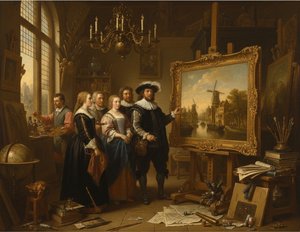
Illuminating Innovation: Exploring the Dutch Golden Age of Painting
Explore the Dutch Golden Age of painting with OriginalUniqueArt. Discover Rembrandt, Vermeer & other Masters. Learn about key characteristics, iconic artworks, and lasting influence. Expert insights for collectors & enthusiasts.

Crimson Threads of Narrative: Exploring Symbolism & Representation in Artworks Featuring the Red Dress
Explore the rich symbolism of the red dress in art history! From ancient power displays to iconic portraits like Cézanne’s 'Madame Cezanne', discover the cultural and artistic significance behind this captivating color. Expert analysis & insights.

Gabriel Metsu: Illuminating Dutch Daily Life with Exquisite Detail
Explore the captivating world of Gabriel Metsu, a leading Dutch Golden Age painter. Discover his exquisite genre scenes, masterful realism, and insightful social commentary. Learn about key works & his lasting legacy.

10 Mojstrovin Nizozemske Zlate dobe: Umjetnost, ki je definirala svojo dobo
Odkrijte 10 mojstrovin Nizozemske zlate dobe! Rembrandt, Vermeer & več – spoznajte zgodbe za temi ikoničnih umetnin. Inspirirajte se za notranji dizajn in poiščite reprodukcije na OriginalUniqueArt.com!
