 Preklop na tiskanine
 Preberi več







































 Za umetniška dela ali reprodukcije, ki so po katerikoli strani širše od 105 cm (približno 41 palč), bo okvir poslan v razstavljeni obliki kot komplet. Ta metoda zagotavlja varno dostavo in preprečuje poškodbe med transportom.


Florinda: A Celebration of Aristocratic Beauty in Nature
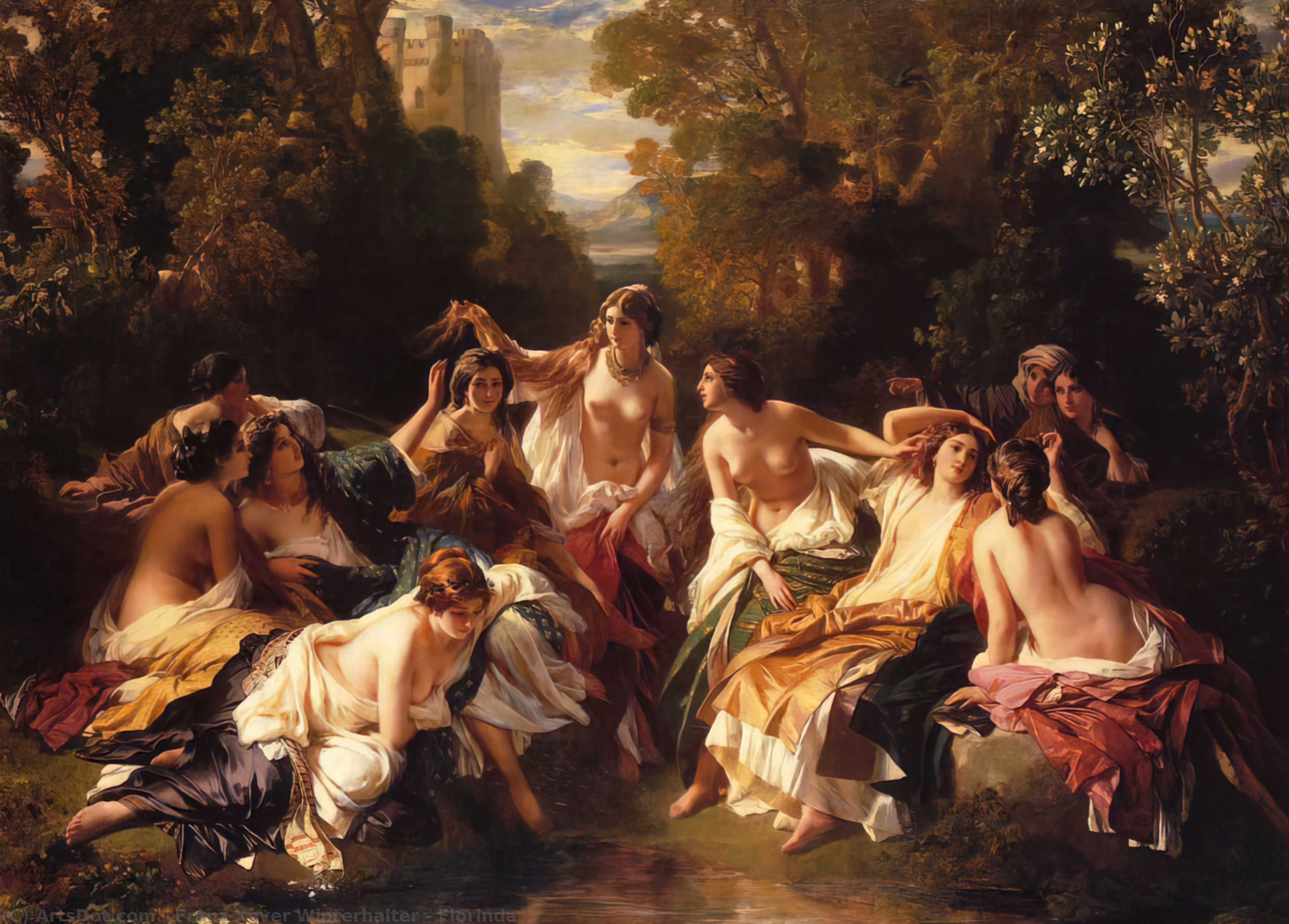
Franz Xaver Winterhalter’s “Florinda” (1853) stands as an emblem of Romanticism's zenith – a breathtaking oil painting that transcends mere visual representation to embody an entire epoch. More than just a portrait, it’s an invitation into a meticulously crafted tableau vivant, capturing the essence of leisure and refinement within the embrace of a verdant landscape.
The artwork depicts a group of nude women reclining gracefully on a riverbank, bathed in diffused sunlight. Their poses are relaxed yet imbued with dignity, reflecting the idealized beauty championed by artists of the era. Dominating the scene is a stately castle perched atop distant hills—a symbol of power and tradition juxtaposed against the tranquil serenity of the natural world.
Masterful Composition and Technique
Winterhalter’s compositional genius lies in its harmonious balance between dynamism and stillness. The figures are arranged in a loose circular pattern, creating movement while maintaining visual stability. Delicate lines define the curves of the women's bodies and the contours of the foliage, skillfully conveying texture and depth. The artist employs chiaroscuro—the dramatic interplay of light and shadow—to sculpt form and heighten emotional impact.
The meticulous layering of paint contributes to a rich textural surface – from the smooth skin tones to the flowing drapery—demonstrating Winterhalter’s unparalleled technical prowess. Attention to detail is paramount, reflecting the artist's commitment to capturing not just likeness but also conveying an atmosphere of opulent elegance.
Historical Context and Royal Connections
"Florinda" exemplifies Winterhalter’s mastery as a royal portraitist, aligning perfectly with the artistic sensibilities of Victorian England. He skillfully blends realism with romantic idealism—a hallmark of his style—creating images that resonate with both historical accuracy and emotional resonance.
Winterhalter's reputation rested on his ability to flatter his subjects while simultaneously conveying their status within the social hierarchy. This approach cemented his position as a favorite among European monarchs, securing commissions that solidified his legacy as one of the era’s foremost artistic innovators.
Symbolism and Emotional Impact
The landscape setting—characterized by lush greenery and distant hills—may symbolize purity or an affirmation of connection to the earth. Simultaneously, it serves as a counterpoint to the figures' nude vulnerability, highlighting their beauty and grace.
"Florinda" evokes feelings of serenity, contemplation, and understated grandeur. It’s a testament to Winterhalter’s ability to transform visual elements into powerful expressions of emotion—a timeless masterpiece that continues to inspire admiration for its artistic merit and aesthetic appeal.
Vprašanja in odgovori
Ali obstaja informativni list o delu "Florinda" avtorja Franz Ksaver Winterhalter za študente?
Stran Informacije za učence za delo "Florinda" avtorja Franz Ksaver Winterhalter ponuja datoteko z informacijami v dveh straneh, ki je pripravljena za tiskanje: sliko umetninine z identifikacijsko tabelo, časovni obroč, ki delo postavlja v obdobje umetnikovega življenja, druge umetninine tega umetnika, izmerjeno paleto barv ter citate v štirih slogih, pripravljene za kopiranje.
V kateri umetniški smer spada "Florinda" avtorja Franz Ksaver Winterhalter?
"Florinda" je del umetniškega sloga Romantic Classical Elegance, ki predstavlja umetniško tradicijo, v katero je delo vključeno.
Kdo je ustvaril "Florinda" in leta kdaj?
Avtor dela "Florinda" je Franz Ksaver Winterhalter, delo pa je datirano v 1853.
 Predogled v realnem okolju
 Pošlji
 Deli
Deli
 Podrobnosti o delu
 Priročnik

 Prenesi sliko
 Podobni izdelki
 Rentgenski posnetek
 Predvajaj diaporama
 Vprašanja in odgovori
 Statistika