

 Preverite v realnem okolju
 Pošlji kot čestitko
 Deli
Deli
 Podrobnosti
 Priročnik

 Prenesi
 Podobni artefakti
 Rentgenski posnetek
 Predvajaj diaporama
 Statistika
Head constructor
 Oil On Canvas
- WallArt
- Cubist
 1950
1950- Early Medieval
 50.0 x 45.0 cm
 Preberi več
Ročno izdelana oljna reprodukcija
Ročno slikano olje na platnu v vaši izbiri velikosti in okvirja, izdelano po naročilu naših umetnikov. ( Preklop na tiskanine Preklop na digitalno sliko)




P118B €10

P118H €10

P118W €10

P438Z €10

P508JH €12

P508YH €12

P805H €10

P805Z €10

P919BZ €10

P919G €10

P919XJ €10

P959ZH €10

P968JZ €12

W106C €8

W218G €10

W218JH €8

W218Y €10

W307PJ €10

W316G €10

W316PJ €8

W316Y €10

W398PJ €8

W4111J €10

W500HY €15

W500JH €15

W692G €12

W849H €8

W940BG €15

W953PJ €8




Izberite eno od naših vnaprej določenih velikosti, ki ustrezajo prvotnim proporcijam umetničkega dela.

Vnesite širino in višino, ki jih potrebujete, da se slika prilega vašemu okviru ali steni. Ker je delo ročno slikano, lahko umetnik pri različnih oblikih slik pri robovih doda malo več barve ali pa jih malo odreže — izberite sami. Pred začetkom slikanja vam pošljemo digitalni predogled za potrditev. Slika, prikazana na tej strani, ni končni rezultat — le predogled prikazuje dejansko podobo.
Po oddaji naročila bo ekipa OriginalUniqueArt.com stranki po e-pošti poslala navodila in predogled digitalnega predogleda.
Mednarodna dostava () v 3/4 tednih namesto običajnih 5 tednov. (22 oktober). Brez kompromisov pri kakovosti.

Brezplačna ekspresna dostava po vsem svetu

Visokokakovostno laneno platno

Popolno zavarovanje pošiljke

Garancija povračila carine in uvoznih davkov

Garancija popolnega barvnega ujemanja

Politika vračila v 100 dneh (le v primeru okvar)

Garancija 100% povračila denarja

Popust pri večjem naročilu
 Možnost stekla je na voljo le za velikosti pod 110 cm

Head constructor
Tehnika reprodukcije
Velikost reprodukcije
-


Skupna cena
€ 262
A Fragmented Portrait of the Machine Age
Fernand Léger’s “Head Constructor,” painted in 1950, isn't merely a portrait; it’s a distilled essence of the burgeoning modernity that gripped Europe after World War I. This striking monochrome work, rendered in a bold and assertive Cubist style, immediately commands attention with its stark contrast between the solid black outlines and the pristine white background – a deliberate choice that emphasizes the geometric forms at the heart of Léger's vision. The image presents a stylized human head, partially obscured by a simple hat or cap, a subtle detail hinting at a profession or perhaps even anonymity within the rapidly changing urban landscape.
Léger’s approach to Cubism wasn’t about deconstructing reality into an abstract puzzle; rather, he sought to integrate the dynamism and structure of the machine age directly into his representation of the human figure. He viewed industrialization not as a destructive force but as a new form of beauty – one characterized by clean lines, precise angles, and a sense of mechanical order. This is powerfully evident in “Head Constructor,” where the head itself is broken down into a series of interlocking squares, rectangles, and triangles—a deliberate rejection of traditional perspective and a celebration of geometric abstraction. The work feels less like a depiction of an individual and more like a schematic diagram, a blueprint for a new kind of human being shaped by the tools and technologies of his time.
The Language of Form: Cubism and Léger’s Vision
To understand “Head Constructor,” it's crucial to grasp the principles of Cubism as Léger embraced them. Unlike Picasso and Braque, who initially focused on dismantling objects into fragmented planes, Léger retained a sense of volume and three-dimensionality within his compositions. He didn’t entirely abandon representation; instead, he simplified forms to their most essential geometric components, creating an effect that is both abstract and strangely familiar. The thick black lines defining the head, hat, and facial features aren't delicate or subtle—they are assertive and deliberate, conveying a sense of construction and engineering. This bold use of line is characteristic of Léger’s style, which he termed “Tubism,” referencing his fascination with cylindrical forms – a visual echo of the pipes and machinery that dominated the industrial world.
The choice of monochrome—black lines on white—further amplifies this sense of construction. It eliminates any distractions from color, forcing the viewer to focus entirely on the interplay of shapes and lines. This deliberate austerity reflects Léger’s desire to strip away sentimentality and emotionalism, presenting a purely rational and objective view of the human figure. The work evokes a feeling of detachment, almost as if we are observing a machine rather than a person—a powerful statement about the increasing mechanization of modern life.
Symbolism and the Modern Condition
The title itself, “Head Constructor,” offers valuable insight into Léger’s intentions. He was deeply interested in the role of labor and industry in shaping society, and he saw the construction worker as a symbol of progress and innovation. The hat or cap worn by the figure could be interpreted as a uniform—a badge of membership within this new industrial order. The overall effect is one of both celebration and unease; Léger acknowledges the beauty and efficiency of modern technology but also hints at its potential to dehumanize individuals.
“Head Constructor” isn’t simply a depiction of a head; it's a meditation on the nature of humanity in an age of rapid technological change. It’s a work that continues to resonate today, prompting us to consider our relationship with machines and the evolving definition of what it means to be human.
Vprašanja in odgovori
Kakšna je barvna identiteta dela "Head constructor" avtorja Fernand Léger?
Barvna identiteta dela "Head constructor" avtorja Fernand Léger: paleta Neutrals, ki prevladuje z barvo Putty (#e1e1e1).
Za kakšno velikost se za Living Room priporoča "Head constructor"?
Priporočena kombinacija za "Head constructor" avtorja Fernand Léger: tiskanec v velikosti Medium v Living Room.
Kakšen je zgodovinski pomen dela "Head constructor"?
"Head constructor" avtorja Fernand Léger pripada gibanju Cubist, v obdobju Early Medieval. Skupaj delu omogočata njegovo mesto v zgodovini umetnosti.
Biografija umetnika
Fernand Léger: Izoblikovano v Oblikah – Življenje in Ustvarjanje
Joseph Fernand Henri Léger, rojen leta 1881 v Argentanu, Normandiji, je bil francoski slikar, kipar in filmski ustvarjalec, ki se je uveljavil kot ključna figura moderne umetnosti. Njegovo potovanje od ruralnega podeželja do epicentra pariškega avantgardizma priča o neomajni viziji in nenehni želji po zajemanju duha industrijske dobe. Za razliko od mnogih sodobnikov, ki so abstraktnost razumeli kot pobeg od realnosti, je Léger iskal integracijo moderne – njene dinamike, mehanskih oblik, bistva – v nov vizualni jezik, ki je bil hkrati močno abstrakten in globoko zakoreninjen v opazovalnem svetu. Njegovo zgodnje življenje, prežeto s fizičnostjo kmetijskega dela, mu je nudilo trdno podlago, ki jo je kontrirala strastna priprostranost industrijske prihodnosti, ki jo je tako navdušeno prikazoval. Sprva namenjen arhitekturi se je Léger po prihodu v Pariz leta 1900 usmeril k slikarstvu in si služil s tehnično risbo, medtem ko je izpopolnjeval svoje umetniške veščine. Ta čas je bil zaznamovan z akademskim usposabljanjem, vendar se je prava preobrazba začela šele ob srečanju z revolucionarnim delom Paula Cézanna.Tubizem in Razcvet Nove Estetike
Cézannova retrospektiva leta 1907 je bila katalizator, ki je Legerja osvobodil od konvencionalne reprezentacije in ga potisnil k bolj geometrijskemu in strukturnemu pristopu. Začel je razgrajevati oblike, analizirati njihove temeljne strukture in jih ponovno sestavljati na platnu s poudarkom na trdnosti in prostornosti. Ta raziskava ga je hitro pripeljala v orbiti kubizma, vendar Léger ni želel le posnemati stilov Picassa ali Braquea. Namesto tega je razvil svojo značilno idiom – osebno obliko kubizma, ki jo so kritiki šaljivo poimenovali "tubizem". Značilen za tubizem so cilindrične oblike, sploščene ravnine in krepke barvne kontraste. Ta stil je slavil mehansko estetiko še preden je postala razširjena umetniška obsedenost. Léger se je v tem obdobju aktivno udeleževal avantgardističnega okolja, združil s takratnimi pomembnimi umetniki kot so Jean Metzinger, Henri Le Fauconnier, Francis Picabia in Marcel Duchamp znotraj skupine Puteaux, znane tudi kot Section d’Or (Zlati prerezi). Skupina je raziskovala matematične načela harmonije in sorazmerja ter si prizadevala, da bi njihovo umetnost prežeta s čutom reda in racionalnosti.Vpliv Vojne in Razvoj Mehanskega Estetizma
Izbruh prve svetovne vojne je globoko vplival na Légerjevo življenje in delo. Služba na fronti od leta 1914 do 1916 ga je izpostavila brutalni resničnosti moderne vojne – topniški palubi, zračnemu boju in dehumanizacijskim učinkom mehaniziranega konflikta. Ta izkušnja ni vodila v razočarovanje ali zavrnitev modernosti; nasprotno pa je okrepila njegovo fascinacijo za stroje in njihovo moč. Skice, narisane med službo, so dokumentirale surovno lepoto vojaške tehnologije, ki jo je preobrazile v predmete umetniškega razmišljanja. Po vrnitvi v civilno življenje se je Légerjeva estetika še naprej razvijala. Njegove slike so začele odražati bolj racionalizirano mehansko občutljivost, ki je slavila dinamiko in učinkovitost industrijskega sveta. *Vojak s pištolo* (1916) to preslikavo uteleša, saj prikazuje poenostavljene oblike in krepke barve, ki evocirajo občutek mehanske natančnosti. To ni bila le estetska izbira; bil je filozofski izraz – potrditev potenciala moderne za napredek in obnovitveno moč, celo v odzvu uničujoče vojne.Zapuščina in Trajni Vpliv
V svojih povojnih letih je Léger še naprej raziskoval presek med umetnostjo in industrijo ter ustvarjal dela, ki so slavila moderno življenje s edinstvenim mešanico abstrakcije in figuracije. Njegova serija *Paysages animés* (Animirani kraji) iz leta 1921 je prikazala figure in živali brezhibno vključene v racionalizirane kompozicije, kar je zameglilo meje med organskimi in neorganskimi oblikami. Eksperimentiral je tudi s kiparstvom in filmom, razširivši svojo umetniško prakso izven tradicionalnega slikarstva. Légerjev vpliv na prihodnje generacije umetnikov je nesporno velik. Njegova drzna poenostavitev oblike, sprejetje industrijske tematike in praznovanje popularne kulture so napovedali nastanek pop arta desetletja kasneje. Umetniki kot Roy Lichtenstein in Andy Warhol dolgujejo jasen dolg Légerju in njegovem pionirskem delu. On je premostil razkorak med abstraktno umetnostjo in figurativno reprezentacijo, dokazal pa, da je mogoče ustvariti dela, ki so hkrati intelektualno rigorozna in vizualno privlačna. Danes se Légerjeva dela hranijo v pomembnih muzejih po vsem svetu, med drugim v Musée d'Art et d'Histoire na Franciji in Musée National Fernand Léger, posvečen izključno njegovemu delu. Ostaja kot velikan 20. stoletja – vizionar, ki se je upal najti lepoto v industrijski dobi in jo s brezprimerne drznosti in originalnosti prenesti na platno. Njegova zapuščina ni le slikarstva, temveč tudi preroka moderne. Pravi pionir, katerega delo še danes odzvanja pri občinstvu.
Fernand Léger
1881 - 1955 , Francija
Ključne informacije
- Datum Rojstva: 4. februar 1881
- Ime Pri Rojstvu: Joseph Fernand Henri Léger
- Kraj Rojstva: Argentan, Francija
- Nacionalnost: Francoska
- Polno Ime: Fernand Léger
- Umetniki Pod Vplivom: ['Pop Art']
- Umetniški Slog: Kubizem, Tubizem
- Vplivne Umetnike: ['Paul Cézanne']
- Znani Dela:
- The Sitted Woman
- Machine Element
- The Great Parade
- The City
Sorodni članki

Neo-Abstract Art: The High-Impact Evolution of Modern Visual Energy and Geometric Sophistication
Discover the power of Neo-Abstract art. Explore how bold geometric forms and high-impact visual energy are redefining modern design. Learn to curate sophisticated, high-energy spaces with the latest trends in contemporary abstraction and structural color.
Beyond Form & Color: Geometric Abstraction's Enduring Legacy in Art History
Explore the captivating world of geometric abstraction! Discover its origins, key artists like Malevich & Mondrian, and why this movement remains highly valued by art collectors today. Expert insights at OriginalUniqueArt.
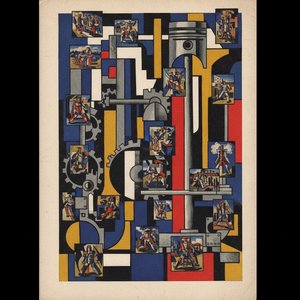
Fernand Léger: 25 Mojstrovin Modernizma za Vaš Dom | OriginalUniqueArt
Odkrijte 25 mojstrovin Fernanda Légerja – pionirja kubizma in tubizma. Raziskajte zgodbe, tehnike in navdih za ikonične slike tega modernističnega umetnika. Kvalitetne reprodukcije slik na OriginalUniqueArt.com.

Beyond Form & Color: Geometric Abstraction's Evolution in 20th/21st Century Art
Explore the evolution of geometric abstraction from Cubism to contemporary art. Discover key artists like Malevich & Mondrian, investment insights, and expert collecting advice at OriginalUniqueArt.

Geometrična Abstraktna Umetnost: 10 Mojstrovin za Vaš Dom | OriginalUniqueArt.com
Odkrijte 10 mojstrovin geometrične abstrakcije! Mondrian, Malevich, Kandinsky in drugi. Zgodbe umetnikov, tehnike ter navdih za vaš dom. Kvalitetne reprodukcije slik na OriginalUniqueArt.com. Raziskajte celotno zbirko online!


