

 Pošlji kot čestitko
 Deli
Deli
 Podrobnosti
 Priročnik

 Prenesi
 Podobni artefakti
 Predvajaj diaporama
 Statistika
Jean le Rond d'Alembert


 Preberi več
Ročno izdelana oljna reprodukcija
Ročno slikano olje na platnu v vaši izbiri velikosti in okvirja, izdelano po naročilu naših umetnikov. ( Preklop na tiskanine Preklop na digitalno sliko)




































Izberite eno od naših vnaprej določenih velikosti, ki ustrezajo prvotnim proporcijam umetničkega dela.

Svoje dimenzije lahko vnesete tako, da se prilagodite določenemu okvirju ali prostoru. Če izbrana velikost ne ustreza razmerjem originalne slike, bomo umetniško delo obrezali ali sliko dopolnili z dodatnimi ročno naslikanimi elementi. Pred začetkom proizvodnje vam bo poslan digitalni osnutek v odobritev.
Upoštevajte, da predogled na zaslonu ne odraža dejanskega obrezovanja ali podaljšanja. Le osnutek bo natančno prikazal končno kompozicijo.
Čeprav so na voljo velikosti po meri, priporočamo izbiro dimenzije s preddefiniranega seznama, da ohranimo originalne razmere.
Po oddaji naročila bo ekipa OriginalUniqueArt.com stranki po e-pošti poslala navodila in predogled digitalnega predogleda.
Mednarodna dostava () v 3/4 tednih namesto običajnih 5 tednov. (26 september). Brez kompromisov pri kakovosti.

Brezplačna ekspresna dostava po vsem svetu

Visokokakovostno laneno platno

Popolno zavarovanje pošiljke

Garancija povračila carine in uvoznih davkov

Garancija popolnega barvnega ujemanja

Politika vračila v 100 dneh (le v primeru okvar)

Garancija 100% povračila denarja

Popust pri večjem naročilu
 Možnost stekla je na voljo le za velikosti pod 110 cm

Jean le Rond d'Alembert
Tehnika reprodukcije
Velikost reprodukcije
-


Skupna cena
$ 300
Jean le Rond d'Alembert: A Sculptor’s Ode to Reason
Félix Lecomte’s marble bust of Jean le Rond d’Alembert stands as a testament to the burgeoning Neoclassical spirit that wrestled with the grandeur of Baroque aesthetics in late 18th-century France. Crafted between 1791 and 1808, this monumental sculpture transcends mere portraiture; it embodies the intellectual fervor of an era striving for clarity and order amidst turbulent political upheaval. Lecomte’s meticulous attention to detail—the subtly shaded musculature capturing the essence of human form, the delicately rendered hair reflecting the texture of natural wool—demonstrates a profound respect for classical ideals inherited from artists like Michelangelo and Bernini.The Sculptor's Technique: Mastering Marble
Lecomte employed a masterful technique honed over decades of experience. He began by painstakingly sketching the subject’s likeness, utilizing charcoal to establish proportions and capturing nuanced expressions. Subsequent modeling involved applying layers of plaster bandages—a process known as “cire perdue”—to create a hollow mold from which he cast the marble sculpture. This method ensured exceptional accuracy and allowed for intricate detailing that would have been impossible with conventional carving techniques. The resulting surface possesses a remarkable smoothness, achieved through polishing with abrasive powders – pumice stone and Tripoli – revealing the luminous quality inherent in the stone itself.A Portrait of Enlightenment Thought
The bust’s pose—seated with one hand resting on his knee and the other holding what appears to be a manuscript—is deliberately symbolic. It reflects d'Alembert’s intellectual pursuits, representing him as engaged in contemplation and scholarly discourse. The contemplative gaze directs upwards, suggesting an aspiration towards universal knowledge and philosophical inquiry – core tenets of the Enlightenment movement that championed reason and challenged dogma. Lecomte skillfully conveyed this intellectual character through subtle gestures and facial expressions, elevating the sculpture beyond a mere likeness into a profound meditation on human intellect.Historical Context: Amidst Revolution’s Shadow
Created during the French Revolution (1789-1799), Lecomte's sculpture speaks to the anxieties and aspirations of a nation undergoing dramatic transformation. The neoclassical style—characterized by its emphasis on symmetry, proportion, and idealized beauty—represented a deliberate rejection of the opulent excesses of the Baroque period, which had been associated with absolutist monarchy. However, even within this framework of rational idealism, Lecomte’s work retains an emotional resonance – capturing the solemn dignity of d'Alembert as he confronts the challenges posed by revolutionary upheaval.Symbolism: The Marble Vessel of Wisdom
Marble itself holds symbolic significance—representing permanence, purity, and intellectual contemplation. Its cool, luminous surface mirrors the clarity of thought sought by philosophers like d’Alembert, reflecting his unwavering commitment to reason and scientific inquiry. Lecomte's masterful rendering of marble elevates the bust from a mere sculptural object into an emblem of enlightenment ideals – a timeless reminder of humanity’s capacity for intellectual brilliance and moral virtue.Emotional Impact: A Moment Frozen in Time
Ultimately, Lecomte’s Jean le Rond d’Alembert transcends its material form to evoke a powerful emotional response. The sculpture compels viewers to contemplate the complexities of human intellect—to consider the pursuit of knowledge as both an obligation and a privilege. It serves as a poignant reminder of the legacy of Enlightenment thinkers like d'Alembert, whose unwavering faith in reason continues to inspire generations of scholars and artists alike.Biografija umetnika
The Sculptor of Myth and Majesty
Félix Lecomte, a name that resonates with the quiet dignity of late 18th-century French artistry, stands as a profound figure in the evolution of European sculpture. Born in the vibrant heart of Paris in 1737, Lecomte’s life unfolded during an era of immense cultural transition, where the exuberant flourishes of the Rococo period began to yield to the disciplined, rational clarity of Neoclassicism. His journey was one of deep-rooted tradition and rigorous academic pursuit, shaped by a lineage of craftsmanship and a lifelong devotion to the classical ideals that sought to revive the grandeur of antiquity. Through his hands, cold marble and bronze were transformed into breathing narratives of myth, history, and human emotion.
The foundations of Lecomte’s mastery were laid through a unique blend of familial mentorship and institutional excellence. His early development was guided by the tutelage of his namesake and mentor, also Félix Lecomte, a connection that provided him with an intimate understanding of the sculptor's craft from a young age. This early immersion in the technical nuances of marble carving and anatomical precision prepared him for the rigors of the École des Beaux-Arts de Paris. It was here that his talent truly began to crystallize, leading to his most significant early triumph: winning the prestigious Prix de Rome in 1758. This scholarship served as a transformative gateway, transporting him to the eternal city of Rome, where the physical remnants of classical civilization acted as both his classroom and his greatest inspiration.
A Mastery of Form and Narrative
Lecomte’s body of work is characterized by an extraordinary versatility that allowed him to navigate between the intimate and the epic. While he was equally adept at capturing the delicate nuances of portraiture—rendering the likenesses of the era's nobility with a sensitive touch—he found his most profound expression in the dramatic reinterpretation of classical mythology. His sculptures often possess a theatrical vitality, where every sinew, fold of drapery, and expressive gesture is calculated to evoke a sense of movement and psychological depth. In works such as Oedipus et Phorbas, one can witness his ability to weave complex mythological tension into static stone, creating a sense of suspended animation that captivates the viewer.
The technical brilliance of Lecomte’s oeuvre lies in his meticulous attention to detail and his command over light and shadow. His approach to sculpture was not merely about replicating form, but about capturing the essence of the subject's spirit. This is evident in several key aspects of his technique:
- Anatomical Precision: A profound understanding of human musculature that lends a lifelike quality to his mythological figures.
- Textural Contrast: The ability to differentiate between the softness of skin, the weight of heavy fabrics, and the cold hardness of armor within a single composition.
- Dynamic Composition: The use of sweeping lines and dramatic poses to guide the eye through complex narrative scenes.
Legacy and Historical Significance
As the 18th century drew to a close, Lecomte’s role in the artistic landscape became increasingly pivotal. He acted as a vital bridge between two worlds, maintaining the decorative elegance of the previous century while embracing the emerging Neoclassical emphasis on order, reason, and moral gravity. His ability to synthesize these opposing aesthetics allowed his work to remain relevant during a period of intense political and social upheaval in France. By grounding his contemporary sensibilities in the timeless language of Greek and Roman myth, he contributed to a visual vocabulary that would influence generations of sculptors to follow.
Today, the legacy of Félix Lecomte is found in the enduring power of his compositions. He remains a testament to the era of the great masters, an artist who could command the monumental scale of history while never losing sight of the delicate human truth. His contributions to French sculpture helped define the aesthetic transition of his age, ensuring that the grandeur of the past would continue to inform the artistic innovations of the future.

félix lecomte
1737 - 1817 , France
Ključne informacije
- Artistic Movement Or Style: Rococo
- Artists Or Movements Influenced By This Artist: ['Lecomte']
- Artists Who Influenced This Artist:
- Falconet
- Vassé
- Date Of Birth: January 16, 1737
- Date Of Death: November 18, 1817
- Full Name: Félix Lecomte
- Nationality: French
- Notable Artworks:
- Œdipe et Phorbas
- Marie Antoinette
- Place Of Birth: Paris, France
Sorodni članki

Sculpting Eternity: Transform Your Most Cherished Memories into Bespoke 3D Marble Busts and Timeless Sculptural Masterpieces
Transform cherished photos into breathtaking 3D sculptures and marble busts with OriginalUniqueArt AI. Experience the pinnacle of luxury art commissions, blending cutting-edge technology with classical mastery to create timeless, museum-quality heirlooms for your private collection.

The Enduring Form: Exploring Themes & Techniques in Sculpture Across Historical Periods
Explore the rich history of sculpture from ancient masterpieces to contemporary innovations. Discover key techniques, influential artists & investment potential for discerning art collectors.

Bronze Sculptures That Defined Art History | OriginalUniqueArt
Journey through art history with our Top 10 bronze sculptures! Explore masterpieces by Rodin, Michelangelo & more. Discover stories behind iconic statues and find museum-quality reproductions for your home decor at OriginalUniqueArt.com.

The Enduring Allure of Marble in Art History: From Classical Sculpture to Modern Abstraction
Explore the captivating history of marble sculpture from ancient Greece to modern art. Discover renowned artists like Canova & Michelangelo, carving techniques, and investment insights at OriginalUniqueArt.
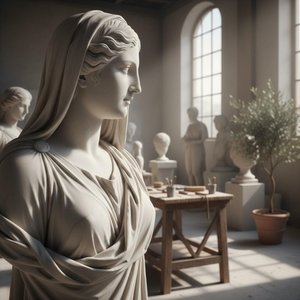
Timeless Elegance: A Complete Guide to the Sublime Beauty and Artistry of Marble Sculpture
Discover the sublime beauty of marble art through an expert exploration of Renaissance and Neoclassical masterpieces. From the delicate textures of Carpeaux to the grandeur of Sansovino, immerse yourself in a guide to timeless elegance and sculptural perfection.
