

 Predogled
 Pošlji
 Deli
Deli
 Podrobnosti o delu

 Prenesi
 Podobni izdelki
 Rentgenski posnetek
 Predvajaj diaporama
Laundresses by a Stream


 Razviljaj več
Giclée tisk / Umetniški tisk
Giclée ali platnati odtis muzejske kakovosti z hitro proizvodnjo in prilagodljivimi možnostmi končne obdelave. ( Kupi ročno naslikano sliko Kupi digitalno sliko)




P118B $10

P118H $10

P118W $10

P438Z $10

P508JH $12

P508YH $12

P805H $10

P805Z $10

P919BZ $10

P919G $10

P919XJ $10

P959ZH $10

P968JZ $12

W106C $8

W218G $10

W218JH $8

W218Y $10

W307PJ $10

W316G $10

W316PJ $8

W316Y $10

W398PJ $8

W4111J $10

W500HY $15

W500JH $15

W692G $12

W849H $8

W940BG $15

W953PJ $8




Izberite eno od naših vnaprej določenih velikosti, ki ustrezajo prvotnim proporcijam umetničkega dela.

Svoje dimenzije lahko vnesete sami, da bodo ustrezne za določen okvir ali prostor. Če izbrana velikost ne bo skladna z razmerji izvirne slike, bomo umetniško delo orezali ali podaljšali s pomočjo ogledalnega odraza ali barvno polnega roba. Pred začetkom proizvodnje vam bomo poslali digitalni predogled za potrditev.
Upoštevajte, da predogled na zaslonu ne prikazuje dejanskega orezovanja ali podaljševanja. Le digitalni predogled bo natančno prikazal končno kompozicijo.
Čeprav so na voljo prilagojene velikosti, priporočamo izbiro dimenzije s predhodno določenega seznama, da ohranite prvotna razmerja.
Globalna dostava () v 2 tednih namesto standardnih 4/5 tednov. (27 avgust)

Brezplačna ekspresna dostava po vsem svetu

Visokokakovostno laneno platno

Popolno zavarovanje pošiljke

Garancija povračila carine in uvoznih davkov

Garancija popolnega ujemanja barv

60-dnevna politika vračanja (le v primeru napak)

Garancija 100% povračila denarja

Popust pri večjem naročilu
 Možnost stekla je na voljo le za velikosti pod 110 cm

Laundresses by a Stream
Giclée tisk / Umetniški tisk
Velikost reprodukcije
-


Skupna končna cena
$ 80
A Moment Frozen in Time: Boudin’s Laundresses by a Stream
Eugène Louis Boudin's “Laundresses by a Stream,” painted circa 1860, isn’t merely a depiction of domestic labor; it’s a profound meditation on rural life and the subtle interplay between observation and artistic expression. Captured in oil paint with remarkable precision, this landscape scene transports us back to mid-Victorian France, offering a glimpse into the daily routines of ordinary people—a subject rarely explored with such sensitivity by Impressionist painters. Boudin's approach distinguishes him from his contemporaries who often prioritized grand vistas or idealized portraits; instead, he focused on capturing the immediacy of experience, prioritizing light and color above all else.The Painter’s Eye: Technique and Style
Boudin’s mastery lies in his masterful use of plein air painting—working directly outdoors—a technique championed by Impressionists like Monet and Renoir. He meticulously blended pigments onto canvas with brushstrokes that are loose yet controlled, creating a shimmering surface that mimics the dappled sunlight filtering through foliage overhanging a tranquil stream. The artist’s layering of thin glazes builds up tonal variations subtly, capturing the nuances of color and texture—a deliberate departure from the academic conventions of his time. Notice how Boudin skillfully renders the reflections on the water's surface, mirroring the sky above and enhancing the overall sense of atmosphere.A Window into Victorian Life
The scene depicts a group of women diligently washing clothes in a riverbed, an activity commonplace throughout rural France during the 1860s. Beyond the practical details—the horse hauling supplies, the simple fence delineating the laundry area—lies a deeper symbolic resonance. Boudin elevates this humble task to an artistic statement about perseverance and resilience. The figures are rendered with understated dignity, conveying not just physical labor but also a quiet connection to the natural world. This portrayal speaks volumes about the values of the era – community spirit and appreciation for the beauty found in everyday existence.Color Palette and Emotional Resonance
Boudin’s color palette is dominated by muted greens and blues—dominant hues reflecting the verdant landscape and flowing water—creating a serene and contemplative mood. However, flashes of warmer tones—particularly yellows—highlighted in the clothing and sunlight—inject moments of vibrancy into the composition. These subtle chromatic choices contribute significantly to the painting’s emotional impact, inviting viewers to contemplate the beauty inherent in simplicity and the dignity of labor. The artist's careful attention to light is paramount; it illuminates the faces of the women and casts delicate shadows across the stream, fostering a feeling of intimacy and realism.Contemporary Relevance: Inspiration for Artists Today
“Laundresses by a Stream” continues to inspire artists today who strive to capture authentic moments of human experience. Boudin’s commitment to observation—to faithfully representing what he sees—serves as a powerful reminder that art can find beauty in unexpected places. Its enduring appeal lies in its ability to evoke empathy and appreciation for the lives of ordinary individuals, cementing Boudin's legacy as one of Impressionism’s most perceptive chroniclers of rural life. OriginalUniqueArt.com offers exceptional reproductions of this iconic artwork, allowing collectors and designers alike to experience the sublime artistry of Eugène Louis Boudin firsthand.Biografija umetnika
Early Life and Artistic Beginnings
Eugène Louis Boudin, born in July 12th, 1824 in Honfleur, France, possessed a destiny inextricably linked to the sea. His father, a harbor pilot, instilled within him an early appreciation for the ever-changing moods and captivating beauty of the maritime world. This formative influence would become the cornerstone of Boudin’s artistic vision. Rather than pursuing a traditional academic path, young Eugène began his working life aboard a steamboat traversing between Le Havre and Honfleur at the tender age of ten. It was during these voyages that he first felt compelled to capture the fleeting impressions of light and water with sketches in the margins of his books—the nascent stirrings of a lifelong passion. The family’s subsequent move to Le Havre, where his father established a shop for stationery and picture frames, further immersed Boudin in an artistic environment. He worked alongside his father, eventually opening his own small shop, which brought him into contact with local artists like Constant Troyon and Jean-François Millet, who encouraged his burgeoning talent. These early encounters proved pivotal, steering him away from commerce and towards a dedicated life of painting.Developing a Unique Style: Plein Air Painting and Influences
Boudin’s artistic development was profoundly shaped by several key influences. A crucial turning point came with his introduction to Johan Jongkind, a Dutch painter who championed the practice of en plein air—painting outdoors directly from nature. This revolutionary approach allowed Boudin to capture the ephemeral qualities of light and atmosphere with unprecedented immediacy. He embraced this technique wholeheartedly, becoming adept at rendering the subtle nuances of sky and sea. His style also drew inspiration from the 17th-century Dutch masters, whose meticulous attention to detail and atmospheric perspective resonated deeply with his own artistic sensibilities. Boudin’s pastels, characterized by their summary yet evocative brushwork, quickly garnered recognition. Critics like Charles Baudelaire lauded his ability to convey the essence of a scene with remarkable economy, while Camille Corot affectionately dubbed him “the king of the skies,” acknowledging his mastery of atmospheric effects. He was particularly moved by the paintings of Jean Baptiste Camille Corot and Johan Jongkind who encouraged him to follow an artistic career.Impressionism and Lasting Legacy
Though often categorized alongside the Impressionists, Boudin’s relationship with the movement was nuanced. He participated in the first Impressionist exhibition of 1874, showcasing his work alongside Claude Monet and other avant-garde artists. However, he never fully identified as an “Impressionist,” maintaining a more traditional approach to composition and technique. Nevertheless, his influence on the development of Impressionism was undeniable. Most notably, Boudin served as a mentor to a young Claude Monet, instilling in him a love for painting outdoors and encouraging him to abandon academic conventions in favor of capturing fleeting impressions of light and color. Monet himself credited Boudin with fundamentally shaping his artistic vision, stating that Boudin had “torn the veil from my eyes” and revealed the true potential of landscape painting. Throughout his career, Boudin received numerous accolades, including a third-place medal at the Paris Salon in 1881 and a gold medal at the 1889 Exposition Universelle. In 1892, he was knighted into the Légion d’honneur—a testament to his enduring contribution to French art.Major Works and Artistic Themes
Boudin's oeuvre is characterized by a deep connection to the sea and coastal landscapes of Normandy. Still Life with Lobster on a White Tablecloth, now housed at the High Museum of Art in Atlanta, exemplifies his somber yet noble approach to still life painting, imbued with a sense of quiet contemplation. His beach scenes, populated with figures enjoying leisurely pursuits, capture the vibrancy and vitality of seaside life. Honfleur, the Saint Catherine Market Place, showcases his skill at depicting bustling urban environments bathed in natural light. Throughout his work, Boudin consistently explored themes of transience, atmosphere, and the interplay between humanity and nature. He possessed an exceptional ability to convey the subtle shifts in weather and light, creating paintings that evoke a powerful sense of place and mood. His dedication to capturing these fleeting moments solidified his reputation as a master of atmospheric perspective and a pioneer of plein air painting. ## Final Years and Enduring Influence In his later years, Boudin continued to travel extensively, seeking inspiration in Belgium, the Netherlands, and southern France. He also made several visits to Venice, captivated by its unique light and architectural beauty. Despite facing health challenges, he remained remarkably productive, consistently exhibiting his work and mentoring younger artists. Eugène Louis Boudin passed away in August 8th, 1898 at Deauville, overlooking the English Channel that had so profoundly shaped his life and art. His legacy extends far beyond his own paintings; the Eugène Boudin Prize, awarded by the Société Nationale des Beaux-Arts, stands as a lasting tribute to his enduring influence on generations of artists. Today, his works are celebrated in museums worldwide, including the Musée d’Orsay in Paris, which houses several of his most iconic paintings, such as Landscape with Sunset. Boudin's remarkable career serves as a testament to the power of observation, the beauty of nature, and the enduring allure of the sea.
Eugen Jožef Boudin
1824 - 1898 , Francija
Hitri podatki
- Artistic Movement Or Style: Impressionizem
- Artists Or Movements Influenced By This Artist: ['Constant Troyon']
- Artists Who Influenced This Artist:
- Johan Jongkind
- Claude Monet
- Date Of Birth: 12 julij 1824
- Date Of Death: 8 avgust 1898
- Full Name: Eugène Louis Boudin
- Nationality: Francoz
- Notable Artworks:
- Žitje z morsko površino
- Zlato obzorje
- Portret mladega dekleta
- Place Of Birth: Honfleur, Francija
Sorodni članki

The Enduring Legacy of Oil on Canvas: Technique, History & Aesthetic Impact
Explore the rich history & techniques of oil painting – from Renaissance masters to Impressionism. Discover pigments, layering methods, and why this timeless medium endures. Expert insights for artists & art enthusiasts.

Paul Cézanne: 25 Mojstrovin, ki so spremenile svet umetnosti | OriginalUniqueArt
Odkrijte 25 mojstrovin Paula Cézanna – od impresionističnih krajin do revolucionarnih tihožitij. Preberite zgodbe za vsako sliko, tehnike in navdih. Kvalitetne reprodukcije slik na OriginalUniqueArt.com!
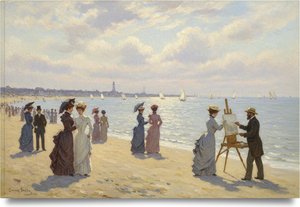
Eugène Boudin: Capturing Fleeting Moments – A Study of Light, Atmosphere & the Birth of Impressionism
Explore the life & art of Eugène Boudin, a pioneer of plein air painting and key influence on Impressionism. Discover his masterful light studies & atmospheric seascapes – a foundational figure in modern art history.

Léon Augustin L'Hermitte: Capturing the Soul of French Rural Life
Discover the captivating realist paintings of Léon Augustin L'Hermitte, masterfully depicting French rural life. Explore his technique, influences & legacy – a cornerstone of 19th-century art.

Oil on Canvas: A Historical & Technical Exploration of a Timeless Artistic Medium
Explore the rich history & enduring techniques of oil painting on canvas. Discover the science behind its longevity, conservation practices, and contemporary relevance. Expert insights for art enthusiasts.



