
 Predogled v realnem okolju
 Pošlji
 Deli
Deli
 Podrobnosti o delu
 Priročnik

 Prenesi sliko
 Podobni izdelki
 Rentgenski posnetek
 Predvajaj diaporama
 Q&A
Q&A Statistika
Old Church in Delft

- 95.0 x 82.0 cm


 Preberi več
Giclée tisk / Umetniški tisk
Giclée ali platnati odtis muzejske kakovosti z hitro proizvodnjo in prilagodljivimi možnostmi končne obdelave. ( Kupite ročno slikano delo Preklop na digitalno sliko)




P118B €10

P118H €10

P118W €10

P438Z €10

P508JH €12

P508YH €12

P805H €10

P805Z €10

P919BZ €10

P919G €10

P919XJ €10

P959ZH €10

P968JZ €12

W106C €8

W218G €10

W218JH €8

W218Y €10

W307PJ €10

W316G €10

W316PJ €8

W316Y €10

W398PJ €8

W4111J €10

W500HY €15

W500JH €15

W692G €12

W849H €8

W940BG €15

W953PJ €8




Izberite eno od naših vnaprej določenih velikosti, ki ustrezajo prvotnim proporcijam umetničkega dela.

Vnesite širino in višino, ki jih potrebujete za svoj okvir ali steno. Tiskanje se lahko le odreže, vendar ga ni mogoče narediti večjega od slike, zato format z drugačno obliko pomeni izgubo dela slike. Pred tiskanjem vam pošljemo digitalni predogled za potrditev. Slika, prikazana na tej strani, ne prikazuje dejanskega izrezka — le predogled to omogoča.
Globalna dostava () v 2 tednih namesto standardnih 4/5 tednov. (1 november)

Brezplačna ekspresna dostava po vsem svetu

Visokokakovostno laneno platno

Popolno zavarovanje pošiljke

Garancija povračila carine in uvoznih davkov

Garancija popolnega barvnega ujemanja

100-dnevna politika vračil (le v primeru okvar)

Garancija 100% povračila denarja

Popust pri večjem naročilu
 Možnost stekla je na voljo le za velikosti pod 110 cm

Old Church in Delft
Giclée tisk / Umetniški tisk
Velikost reprodukcije
-


Skupna cena
€ 71
A Breathless Reverie: The Luminous Soul of Delft
In the quiet corners of the Dutch Golden Age, where light performs its most delicate dances, Emanuel de Witte captured something far more profound than mere architecture. His masterpiece, Old Church in Delft, is not simply a record of stone and mortar; it is an invitation into a sacred stillness. While his contemporaries like Pieter Saenredam sought the rigorous precision of architectural truth, De Wiente embarked on a different journey—one of atmosphere and emotion. To stand before this canvas is to enter a world where the boundaries between the physical structure of the Oude Kerk and the spiritual essence of prayer begin to dissolve. The painting breathes with a palpable sense of peace, inviting the viewer to lose themselves in the soft, filtered light that spills through the Gothic windows, illuminating the dust motes of history.
The composition serves as a masterclass in the art of illusionism, a hallmark of De Witte’s unparalleled skill. Through the masterful application of chiaroscuro, he sculpts the vast interior space using nothing but the interplay of deep shadow and brilliant highlights. The eye is drawn through the expansive nave, guided by the rhythmic placement of light that catches the edges of white pillars and the subtle textures of the floor. De Witte does not merely depict a room; he constructs a three-dimensional experience. His brushwork, though remarkably subtle, possesses a decisive strength that lends a profound realism to the scene, making the heavy weight of the Gothic arches feel as tangible as the air itself.
The Human Element and the Drama of Light
Within this grand architectural stage, De Witte introduces a delicate human narrative. Scattered throughout the vastness of the church are small, carefully placed figures—individuals caught in moments of quiet contemplation or casual movement. These figures are not mere decorations; they provide the essential scale necessary to grasp the monumental height of the cathedral's tower and the soaring reaches of its ceiling. Their presence imbues the scene with a sense of lived history, suggesting that these hallowed halls have been the silent witnesses to generations of human hope, grief, and devotion. The way the light falls upon their forms—sometimes highlighting a shoulder, sometimes leaving a face in soft shadow—adds a layer of narrative mystery that keeps the viewer’s gaze wandering through the composition.
For the discerning collector or interior designer, Old Church in Delft offers much more than aesthetic beauty; it offers an atmosphere of timelessness. The painting’s palette, dominated by muted tones, whites, and deep, resonant shadows, provides a sophisticated anchor for any high-end interior. It possesses a unique ability to command attention through its quietude rather than through loud colors. Whether placed in a sunlit gallery or a moody, library-style study, this work brings with it an aura of intellectual depth and spiritual grace. Owning a reproduction of such a piece is an opportunity to curate a space that celebrates the enduring power of light, history, and the sublime beauty of the Dutch Baroque tradition.
Vprašanja in odgovori
Kdo je avtor dela "Old Church in Delft" in v katerem umetnostnem gibanju velja?
Za delom "Old Church in Delft" sta Emanuel De Witte in umetnostna smer Dutch Baroque.
Kdo je ustvaril "Old Church in Delft" in v letu katerega?
Emanuel De Witte je ustvaril "Old Church in Delft" leta 1642.
Kje se "Old Church in Delft" avtorja Emanuel De Witte uvršča v zgodovino umetnosti?
Zgodovinsko gledano je "Old Church in Delft" Dutch Baroque skladina iz širšega obdobja Early Modern.
Biografija umetnika
Življenje v perspektivi: Svet Emanuela de Witte
Emanuel de Witte, ime, ki ni morda takoj prepoznavno kot neki njegovi sodobniki z Zlati bratovščino Nizozemske, pa kljub temu zapoveduje pomemben in fascinanten kot vlogo v panteonu majstorjev 17. stoletja. Rojen je v Alkmaarju leta 1617, življenjska pot de Witte je bila označena z izjemnim talentom in precejšnjo osebno nemirje – dualnostjo, ki se zdijo subtilno vpleti v sam vzdušje njegovih slik. Ni bil pogojen z natančno arhitekturno dokumentacijo kot Pieter Saenredam; namesto tega je morel zgrabeti čutitev prostora, kakovost svetlobe in subtilen dramatik, ki se razspopaja v svetičkih notranjih prostorih. Njegove platna niso le predstavitev cerkvišč; so imerzivno izkušnje, ki namenejo gledalci v svet tihe kontemplacije in duhovne rezonance.Od usposabljanja v Delft do objema Amsterodama
De Witteje mladostni življenjski doživljaj je zagotovil črpan temelji za njegove umetniške ukrepe. Njegov oče, učitelj, mu je vzgojil spoštovanje do učenja in intelektualne radovednosti – lastnosti, ki so kasneje izrazile v njegovi premišljeni opazovanju perspektive in svetlobe. Formalno je v umetniško svet vstopil z pridobitvijo članstva v Gildijo sv. Luka v Alkmaarju leta 1636, vendar mu je bil še naprej usposabljanje pri Evertu van Aelstu v Delft bilo izjemno formativno. Van Aelst, znan namaljski slikar, je de Witteju prenesel ostra oko za podrobnosti in majstersko znanje svetlobe in bliskosti – veščine, ki so postale znaki njegove zrelega stila. Začetno je de Witte raziskoval različne žanre – portrete, mitološke scene, religijske narative – vendar pa je šele po preselitvi v Amsterdam leta 1651 našel resnično svojo voco. Bogatstvo čudovitih cerkvišč v mestu je ponudilo neizčrpno virilo inspiracije in začel je se specializirati na prikaz njihovih zahirujočih notranjih prostorov.Majstor atmosfere in domišljenih prostorov
Amsterdam je bil ključnega pomena za umetniški razvoj de Witteja. Ni smetno replikiral obstoječih cerkvenih prostorov; namesto tega je spretno sinteziral elemente iz različnih zgradb, ustvarjajoč idealizirane notranje prostore, ki so se čutila hkrati znano in subtilno drugačno. Oude Kerk v Amsterdamu je postal pogost motiv, ki se je ponavljajoče pojavljal na njegovih platnakh iz različnih vidikov. Vendar to niso bili preprosti prikazi. De Witte je manipuliral perspektivo, igral s svetlobo in bliskostjo in prostore naselil z natančno razpostavljenimi figurami, da bi sprožil specifičen razpoložje ali vzdušje. Kot je opazoval Walter Liedtke, je njegov glavni interes ležal ne v samih arhitekturnih elementih, tem videti „sam v prostoru – njegovi svetlobi, barvi, čisti obsežnosti in razpoloženju“. Ta poudarek na atmosferskem učinku ga razlikuje od bolj rigidno topografskih slikarev te epoh. Ni ga zanemarjal natančnega namere; zanimalo ga je ustvarjanje čutitve veličastnosti, časti in duhovne globine.Življenje označeno s bliskostjo
Kljub svojemu umetniškemu uspehu je osebno življenje de Witteja bilo zagoneto z težavami. Smrt njegove prve žene je prinesla globok žal, in kasnejše pravne težave, povezane z njegovo drugo ženo in dojilko, so namrščile dolga senca nad njegovimi kasnimi leti. Finančne težave so ga vodile v ponižujočo položaj iznajmljenega delavca za nakupovalca umetnina, Joris de Wijs, situacijo, ki jo je končno prekoračil, kar je povzročilo dodatne komplikacije. Sodobni zapiski namalovažujejo sliko nestabilnega razpoloženja – človeka, nagnjenega k vikanju na stranke in vključevanju v sporje. To notranje nemirje je morda prispevalo k neravnovesju njegovega kasnjega dela, vendar dodaja tudi še en drug sloj kompleksnosti v naše razumevanje umetnika in njegovih stvaritev. Tragično pa je življenje de Witteja doseglo katastrofalno potek na letu 1692, ko je poročeno poskušal samomorilstvo z vislanjem s mosta nad kanalom; žica se je prekotala in utopil. To je bilo mramorno zaključje za človeka, ki je svoje življenje posvetil zbiranju lepote in mirnosti svetiščnih prostorov.Nasledje in trajna vplivnost
Emanuel de Witte stoji kot pomemben osebnost v zadnji fazi arhitekturnega slikarstva na Nizozemskem, ki zapolni zaznam med natančno dokumentacijo in atmosfersko interpretacijo. Njegova inovativna uporaba svetlobe in perspektive je vplivala na kasnejše generacije umetnikov, in njegove slike še naprej ponujajo dragocene vpoglede v nizozemsko religijsko življenje in družbene običaje 17. stoletja. Danes so dela de Witteje shranjena v prestižnih zbirkah po vsej sveti – na Metropolitan Museum of Art, National Gallery of Art in Rijksmuseum med spominski, kar svedočijo o njegovem trajném nasledju kot majstra perspektive, atmosfere in čustvene rezonance. Spominja nas, da ni umetnost le v tem, kaj vidimo, ampak kako čutimo, ko gledamo.
Emanuel De Witte
1617 - 1692 , Nizozemska
Hitri podatki
- Artistic Movement Or Style: Baroksko umetnost
- Artists Or Movements Influenced By This Artist: ['Kasnejši umetniki']
- Artists Who Influenced This Artist: ['Evert van Aelst']
- Date Of Birth: 1617
- Date Of Death: 1692
- Full Name: Emanuel de Witte
- Nationality: Nizozemski
- Notable Artworks:
- Oude Kerk v Amsterdamu...
- Notranjost Oude Kerke
- Protestantska gotička cerkev
- Place Of Birth: Alkmaar, Nizozemska
Sorodni članki

Dutch Baroque Masters: 10 Paintings That Shaped an Era | OriginalUniqueArt
Journey through the Golden Age with our guide to the Top 10 Dutch Baroque masterpieces! Explore iconic paintings by Rembrandt, Vermeer & Frans Hals. Find museum-quality art reproductions and elevate your home decor at OriginalUniqueArt.com.

Golden Age Reflections: Dutch Baroque Painting & Cultural Innovation
Explore the Dutch Golden Age of painting! Discover key artists like Vermeer & ter Borch, their innovative techniques, and the rich cultural context behind these Baroque masterpieces. Learn about collecting & appreciating this iconic art period.
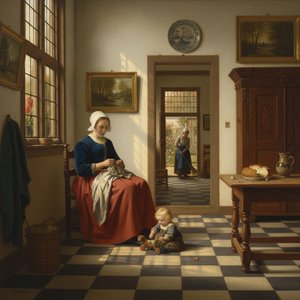
Pieter de Hooch: Illuminating Dutch Domestic Life & Golden Age Charm
Explore the captivating world of Pieter de Hooch, a master of Dutch Golden Age painting. Discover his innovative use of light, intimate domestic scenes, and lasting influence on art history. Learn more at OriginalUniqueArt.

Francisco Goya: 25 Mojstrovin Španskega Slikarja za Vaš Dom | OriginalUniqueArt
Odkrijte 25 mojstrovin Francisca Goye – od portretov do Črne serije. Preberite zgodbe za vsako sliko, tehnike in navdih. Kvalitetne reprodukcije slik za vaš dom na OriginalUniqueArt.com! Raziskajte celotno zbirko online.

Baročna Drama: Uvedba Velikosti in Čustvenosti v Sodobne Interierje
Odkrijte veličino baročne umetnosti! Nasveti za integracijo dramatičnosti in čustvenosti v vaš dom. Kvalitetne reprodukcije, naročila po meri pri OriginalUniqueArt.com – strokovno posvetovanje in vrhunska kakovost.