
 Predogled v realnem okolju
 Pošlji
 Deli
Deli
 Podrobnosti o delu
 Priročnik

 Prenesi sliko
 Podobni izdelki
 Rentgenski posnetek
 Predvajaj diaporama
 Q&A
Q&A Statistika
Announcer

- 51.0 x 42.0 cm


 Preberi več
Giclée tisk / Umetniški tisk
Giclée ali platnati odtis muzejske kakovosti z hitro proizvodnjo in prilagodljivimi možnostmi končne obdelave. ( Kupite ročno slikano delo Preklop na digitalno sliko)




P118B €10

P118H €10

P118W €10

P438Z €10

P508JH €12

P508YH €12

P805H €10

P805Z €10

P919BZ €10

P919G €10

P919XJ €10

P959ZH €10

P968JZ €12

W106C €8

W218G €10

W218JH €8

W218Y €10

W307PJ €10

W316G €10

W316PJ €8

W316Y €10

W398PJ €8

W4111J €10

W500HY €15

W500JH €15

W692G €12

W849H €8

W940BG €15

W953PJ €8




Izberite eno od naših vnaprej določenih velikosti, ki ustrezajo prvotnim proporcijam umetničkega dela.

Vnesite širino in višino, ki jih potrebujete za svoj okvir ali steno. Tiskanje se lahko le odreže, vendar ga ni mogoče narediti večjega od slike, zato format z drugačno obliko pomeni izgubo dela slike. Pred tiskanjem vam pošljemo digitalni predogled za potrditev. Slika, prikazana na tej strani, ne prikazuje dejanskega izrezka — le predogled to omogoča.
Globalna dostava () v 2 tednih namesto standardnih 4/5 tednov. (2 november)

Brezplačna ekspresna dostava po vsem svetu

Visokokakovostno laneno platno

Popolno zavarovanje pošiljke

Garancija povračila carine in uvoznih davkov

Garancija popolnega barvnega ujemanja

100-dnevna politika vračil (le v primeru okvar)

Garancija 100% povračila denarja

Popust pri večjem naročilu
 Možnost stekla je na voljo le za velikosti pod 110 cm

Announcer
Giclée tisk / Umetniški tisk
Velikost reprodukcije
-


Skupna cena
€ 71
Announcer by El Lissitzky: A Geometric Echo of Revolution
El Lissitzky’s “Announcer,” painted in 1923, is more than just a depiction of an object; it's a crystallized embodiment of the artistic fervor gripping Russia during the early years of Soviet rule. This striking piece—a vibrant red and white geometric form punctuated by a central circle—immediately draws the eye into its meticulously crafted composition.
- Subject Matter: The artwork presents a stylized horn, seemingly constructed from two interlocking segments. Its simplicity belies a profound conceptual underpinning rooted in Lissitzky’s exploration of visual communication and his unwavering belief in the transformative potential of abstraction.
- Style & Technique: Lissitzky championed Suprematism—a radical movement prioritizing pure geometric forms devoid of representational imagery—and “Announcer” exemplifies this aesthetic perfectly. Employing bold, contrasting colors against a stark white background, Lissitzky achieved an arresting visual impact through precise lines and planar surfaces. The technique is characterized by meticulous execution, reflecting the artist’s commitment to rational precision.
- Historical Context: Created during the height of the Bolshevik Revolution, “Announcer” speaks directly to the ideological currents shaping Soviet art and design. Lissitzky's work aligns with Constructivism—another influential movement advocating for art as a tool for social reform—emphasizing functionality and geometric abstraction as instruments for constructing a new visual language.
Geometric Abstraction: Lissitzky’s Suprematist Vision
Lissitzky's embrace of Suprematism wasn’t merely stylistic preference; it was a philosophical stance. Influenced by Kazimir Malevich—his mentor and fellow pioneer—he sought to liberate art from the constraints of illusionism, arguing that true expression resided in pure geometric forms like squares, circles, and rectangles. This approach mirrored broader intellectual debates concerning the role of art in shaping consciousness and promoting social progress.
- Malevich’s Influence: Malevich's iconic “Black Square,” completed in 1915, served as a catalyst for Lissitzky’s artistic explorations. Both artists rejected traditional representational conventions, prioritizing the fundamental elements of visual perception to convey emotional and intellectual ideas.
Symbolism Beyond Form: Communicating Revolution
While seemingly devoid of recognizable imagery, “Announcer” carries significant symbolic weight. The horn itself can be interpreted as representing sound—specifically broadcasting—a crucial element in disseminating revolutionary propaganda. Simultaneously, the central circle embodies unity and wholeness, symbolizing the aspiration for a harmonious society underpinned by rational thought and geometric order.
- Typography & Design: Lissitzky’s mastery extended beyond painting; he was also a prolific designer, applying Suprematist principles to typography and exhibition displays. His designs aimed to communicate complex ideas concisely and powerfully—a hallmark of Constructivist aesthetics.
Emotional Resonance: A Quiet Assertion of Ideals
"Announcer" possesses an understated elegance that belies its profound ideological significance. Lissitzky’s deliberate simplification of form invites contemplation, prompting viewers to consider the underlying principles of geometric abstraction and its capacity to convey enduring values—such as clarity, precision, and unwavering conviction in the pursuit of social transformation. It remains a testament to Lissitzky's artistic vision and his contribution to the history of modern art.
Vprašanja in odgovori
Ali so barve dela "Announcer" avtorja El Lissitzky živahne ali utemljene?
Barve dela "Announcer" avtorja El Lissitzky prikazujejo Muted zasičenost z intenzivnostjo Balanced.
V kateri letnici in v katerem umetnostnem slogu je nastalo "Announcer"?
"Announcer" je nastalo leta 1923 v okviru gibanja Suprematism.
Kje se "Announcer" uvršča v celotno stvar umetnika El Lissitzky?
"Announcer" z ostalimi deli El Lissitzky deli svoj Suprematism slog in zastopljene teme: geometric abstraction, malevich’s suprematism, social realism, soviet propaganda, constructivism principles, bauhaus impact, symbolic horn, artistic exploration.
Biografija umetnika
A Revolutionary Vision: The Life and Art of El Lissitzky
El Lissitzky, born Lazar Markovich Lissitzky in 1890 in the small Russian town of Pochinok, emerged as a pivotal figure in the tumultuous landscape of early 20th-century art. His journey was one of constant reinvention, driven by a fervent belief in the power of art to shape society and reflect the dynamism of the modern world. From his initial training as an architect and engineer – pursuits hampered by restrictions placed upon Jewish students – Lissitzky’s path diverged towards artistic expression, initially through illustrations steeped in Jewish folklore. These early works, like his cover for ‘Chad Gadya’, reveal a nascent talent already grappling with narrative and visual storytelling, hinting at the profound cultural roots that would continue to inform his aesthetic. A move to Berlin and Darmstadt broadened his horizons, but it was upon returning to Russia that Lissitzky truly found his artistic voice, becoming inextricably linked with the revolutionary fervor sweeping through the nation.The Embrace of Abstraction: Suprematism and Proun
A defining moment arrived with his encounter with Kazimir Malevich and the embrace of Suprematism. This radical movement, dedicated to pure geometric abstraction, resonated deeply with Lissitzky’s desire to transcend representational art and tap into a universal visual language. He became a key member of UNovis, the Suprematist group established in Vitebsk, actively disseminating its principles through teaching and artistic production. However, Lissitzky didn't simply replicate Malevich’s style; he forged his own distinct path with the development of *Proun*. This unique series, born from a fusion of Suprematism and Constructivism, explored spatial relationships and geometric forms in dynamic compositions that often resembled architectural blueprints or exploded diagrams. Proun wasn’t merely painting; it was an investigation into the very structure of space itself, a premonition of future architectural possibilities. These works, with their floating planes and intersecting lines, embodied Lissitzky’s belief in art as a force capable of constructing new realities. The influence of his engineering background is palpable here, lending a structural logic to the abstract forms. He sought to liberate visual language from traditional conventions, prioritizing clarity and geometric precision—a quest that would propel him toward groundbreaking innovations.Artistic Influences and Bauhaus Connection
Lissitzky’s artistic sensibilities were profoundly shaped by several key influences. Kazimir Malevich's Suprematism served as a catalyst for his radical departure from figurative representation, prompting him to embrace the austere beauty of pure geometric abstraction. Simultaneously, Constructivism—particularly the ideas championed by Vladimir Tatlin—provided him with a conceptual framework for exploring the relationship between art and technology. Lissitzky’s engagement with Bauhaus, Germany's influential design school, further solidified his commitment to functionalism and aesthetic innovation. He collaborated closely with Josef Albers and László Moholy-Nagy, absorbing their experimental techniques and sharing his vision of how art could contribute to social progress. These collaborations underscored the importance of interdisciplinary dialogue—a characteristic that would permeate his entire artistic practice.Typography and Photomontage: Mastering Visual Communication
Lissitzky possessed an exceptional understanding of visual communication, mastering both typography and photomontage with unparalleled skill. He revolutionized typographic design by experimenting with bold fonts, asymmetrical layouts, and innovative spacing techniques—challenging established conventions and elevating the expressive potential of text. His photomontages—such as ‘The Constructor’ (1924)—were particularly striking—self-portraits that blended photography with geometric abstraction, offering a complex commentary on identity and the role of the artist in society. Lissitzky skillfully juxtaposed disparate images to create visually arresting compositions that conveyed powerful messages about political ideology and social transformation. He recognized that visual language could transcend verbal articulation, communicating ideas and emotions directly—a conviction that underpinned his entire artistic endeavor.Legacy and Enduring Significance
El Lissitzky’s contribution to the history of art is undeniable. He stands as a towering figure in the vanguard of Russian avant-garde movement, embodying the spirit of experimentation, innovation, and social engagement. His pioneering explorations into abstraction, typography, and photomontage continue to inspire contemporary artists and designers—demonstrating the enduring relevance of his artistic vision. Lissitzky’s legacy extends beyond the realm of aesthetics; he championed the transformative power of art as a tool for shaping culture and advancing human understanding. He remains an exemplar of intellectual courage—a testament to the conviction that art can serve as a catalyst for social change—and his work continues to provoke reflection and inspire creativity across generations. His influence is visible in numerous international collections, and museums featuring his masterpieces include the Taganrog Art Museum and Novokuznetsk Art Museum.
El Lissitzky
1890 - 1941 , Rusija
Hitri podatki
- Artistic Movement Or Style:
- Suprematism
- Constructivism
- Artists Or Movements Influenced By This Artist: ['Bauhaus']
- Artists Who Influenced This Artist: ['Kazimir Malevich']
- Date Of Birth: Nov 23, 1890
- Date Of Death: Dec 30, 1941
- Full Name: El Lissitzky
- Nationality: Ruski
- Notable Artworks:
- The Constructor
- Chad Gadya cover
- Proun series
- Place Of Birth: Pochinki, Russia
Sorodni članki

Kazimir Malevich: 25 Mojstrovin Suprematizma za Navdih v Vašem Domu | OriginalUniqueArt
Odkrijte 25 mojstrovin Kazimirja Maleviča, pionirja suprematizma! Raziskajte zgodbe za črnim kvadratom in belo na belem. Umetniške reprodukcije vrhunske kakovosti za vaš dom – OriginalUniqueArt.

Beyond Form & Color: Geometric Abstraction's Evolution in 20th/21st Century Art
Explore the evolution of geometric abstraction from Cubism to contemporary art. Discover key artists like Malevich & Mondrian, investment insights, and expert collecting advice at OriginalUniqueArt.
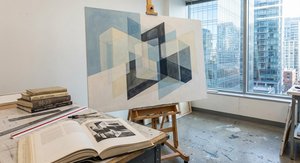
Beyond Form & Color: Geometric Abstraction's Enduring Legacy in Art History
Explore the captivating world of geometric abstraction! Discover its origins, key artists like Malevich & Mondrian, and why this movement remains highly valued by art collectors today. Expert insights at OriginalUniqueArt.

Geometrična Abstraktna Umetnost: 10 Mojstrovin za Vaš Dom | OriginalUniqueArt.com
Odkrijte 10 mojstrovin geometrične abstrakcije! Mondrian, Malevich, Kandinsky in drugi. Zgodbe umetnikov, tehnike ter navdih za vaš dom. Kvalitetne reprodukcije slik na OriginalUniqueArt.com. Raziskajte celotno zbirko online!

El Greco: 25 Mojstrovin za Navdih v Vašem Domu | OriginalUniqueArt
Odkrijte 25 mojstrovin El Greca! Preučite zgodbe, tehnike in navdih za njegove najbolj znane slike. Renesansa, manierizem & verske teme – vse na OriginalUniqueArt.com. Kupite reprodukcije visoke kakovosti in obogatite svoj dom z umetnostjo.


