
() ·
Slika, izdelana ročno posebej zanj
Ročno izdelana oljna reprodukcija
Ročno slikano olje na platnu v vaši izbiri velikosti in okvirja, izdelano po naročilu naših umetnikov. ( Preklop na tiskanine Preklop na digitalno sliko)
Opis zbirateljskega predmeta
Edward Armitage’s ‘Deputation to Faraday’ (1873) – a formal Victorian portrait showcasing meticulous detail & authority. Explore this significant artwork's style, symbolism & historical context.
Biografija umetnika
Discover Edward Armitage (1817-1896), a Victorian painter known for historical & biblical scenes, frescoes, and dramatic works like 'Retribution'.
 Preberi več
od ·
Poglavje 1
Katere velikosti naj bi bila?
Drleč po drslenici spremenite velikost; slika na levi strani prikazuje okvir v njegovi dejanski širini. Razmerja originala so ohranjena.
Izberite eno od naših vnaprej določenih velikosti, ki ustrezajo prvotnim proporcijam umetničkega dela.

Vnesite širino in višino, ki jih potrebujete, da se slika prilega vašemu okviru ali steni. Ker je delo ročno slikano, lahko umetnik pri različnih oblikih slik pri robovih doda malo več barve ali pa jih malo odreže — izberite sami. Pred začetkom slikanja vam pošljemo digitalni predogled za potrditev. Slika, prikazana na tej strani, ni končni rezultat — le predogled prikazuje dejansko podobo.
Poglavje 2
Na kakšen način naj bo dostavljeno?
Izberite robove platna
Izberite svoj okvir

Beli rob €1

zamegljen rob €1

Razširjen rob €1

P118B €10

P118H €10

P118W €10

P438Z €10

P508JH €12

P508YH €12

P805H €10

P805Z €10

P919BZ €10

P919G €10

P919XJ €10

P959ZH €10

P968JZ €12

W106C €8

W218G €10

W218JH €8

W218Y €10

W307PJ €10

W316G €10

W316PJ €8

W316Y €10

W398PJ €8

W4111J €10

W500HY €15

W500JH €15

W692G €12

W849H €8

W940BG €15

W953PJ €8

H24-GOLD €30

H24-SILVER €30

H36-GOLD €45

H36-SILVER €45
V okviru
Okvirni rob: . Celotna velikost z okvirjem: .
Poglavje 3
Kdo to slika in ali bi se moralo kaj spremeniti?
Po oddaji naročila bo ekipa OriginalUniqueArt.com stranki po e-pošti poslala navodila in zagotovila predogled makete
Mednarodna dostava () v 3/4 tednih namesto običajnih 5 tednov. (9 november). Brez kompromisov pri kakovosti.
Poglavje 4
Zadnji dotiki
Zvešča, kot v muzeju?
Podrobnosti o gravirani bronasti plošči
This elegant plaque features the artist's name and the title of the artwork, finely engraved for a timeless presentation.
It is made from bronze with a refined, elegant finish. The text is precisely laser-engraved for a sharp and permanent result. Measuring 9x2 cm, the plaque is compact yet easy to read. It's built to be durable and scratch-resistant, offering a professional, museum-quality look. Mounting is simple thanks to the included adhesive backing.
Podrobnosti o transparentni akrilni plošči
The plaque includes essential engraved details such as the artist's name, the title of the artwork, the date it was created, the type of media used-like oil on canvas or watercolor-a brief description of the piece, and a QR code that links to the complete artwork information.
It is crafted from clear acrylic, offering a sleek, modern appearance. The text is UV-engraved in black to ensure strong visual contrast. With a size of 10x15 cm, it ensures optimal readability. It comes equipped with two metal hooks for secure wall mounting. The plaque is designed to be weather-resistant, making it suitable for various environments, and it includes interactive features that work seamlessly with smartphone scanning.
Podrobnosti o črni akrilni plošči
This elegant plaque includes engraved information such as the artist's name, the title of the artwork, the date it was created, the type of media used (like oil on canvas or watercolor), a short description of the artwork, and a QR code for quick access to more information.
The plaque itself is made from refined black acrylic with a premium finish. The text is laser-engraved in white for high contrast and readability. Its size is 10x15 cm, designed to be easy to read. It comes with two metal hooks for professional mounting. The design is sleek and fits any interior style. It is also weather-resistant and durable, with built-in digital integration for mobile compatibility.
Zaščitni lak?
Kdaj jo potrebujete?
Poglavje 5
Vaša slika, natako kot ste jo naročili

Deputation to Faraday
Tehnik reprodukcije
Velikost reprodukcije
-

Izbor vrhunskih umetnikov
Več podrobnosti, dovršenosti in dodatnega časa za izdelavo
-

Okvir za reprodukcijo
-
-
Za umetniška dela ali reprodukcije, ki so po katerikoli strani širše od 105 cm (približno 41 palč), bo okvir poslan v razstavljeni obliki kot komplet. Ta metoda zagotavlja varno dostavo in preprečuje poškodbe med transportom.
Potrebna je profesionalna montaža – to ni izdelek za DIY izdelavo.
Komplet mora sestaviti in platno napeti izkušen profesionalni okvirjest, pri čemer bo uporabil lepil za les (ni vključeno), klešče za napetje platna in spone, da bi ohranil pravokotnost letev med sušenjem lepila. Nepravilna montaža ali neenakomerna napetost platna lahko trajno poškoduje umetniško del in
 Za umetniška dela ali reprodukcije, ki so po katerikoli strani širše od 105 cm (približno 41 palč), bo okvir poslan v razstavljeni obliki kot komplet. Ta metoda zagotavlja varno dostavo in preprečuje poškodbe med transportom.
Vključene so vse letve iz masivnega lesa, natančno izrezane po meri.
Montaža poteka s priloženimi vijaki, vendar je za kotiče potrebna lepil za les, ki ga ni v kompletu in ga mora zagotoviti vaš okvirnik.
Za uporabo so potrebna profesionalna orodja, ki niso vključena: klešče za napinjanje platna (napetnik) in sponke za ohranjanje pravokotnosti letev med sušenjem lepila.
Pomembno:
Za stike v kotih potrebujete lepil za les, nosilce je treba z

Značka z imenom
-
-

Zaščitni lak
Sijajni lak (poudarja barve ter zagotavlja zaščito pred svetlobo in vlago)
-

Prilagodi svoje umetniško delo
Primeri možnih prilagoditev: zamenjava obraza s fotografijo kupca; dodajanje hišnega ljubljenčka (npr. zamenjava mačke s psom); vključitev skritega sporočila v ozadje; sprememba krajšave ali elementov ozadja.
-

Hitra dostava
Mednarodna dostava () v 3/4 tednih namesto običajnih 5 tednov. (9 november). Brez kompromisov pri kakovosti.
-
Hitra dostava
Globalna dostava () v 5 tednih. (16 november).
Vključeno v ceno
Skupna cena
€ 335
Možnost stekla je na voljo le za velikosti pod 110 cm
Vključeno v vsako naročilo
- Brezplačna ekspresna dostava po vsem svetu
- Visokokakovostno laneno platno
- Popolno zavarovanje pošiljke
- Garancija povračila carine in uvoznih davkov
- Garancija popolnega barvnega ujemanja
- 100-dnevna politika vračil (le v primeru okvar)
- Garancija 100% povračila denarja
- Popust pri večjem naročilu


 Predogled v realnem okolju
 Pošlji
 Deli
Deli
 Podrobnosti o delu
 Priročnik

 Prenesi sliko
 Podobni izdelki
 Rentgenski posnetek
 Predvajaj diaporama
 Vprašanja in odgovori
 Statistika
V številkah
- 1873leto risevanja
- 29izbira okvirjev
- standardne velikosti, v svojih lastnih proporcijah
- 5teden dni za slikanje in dostavo
O originalnem delu

- 138.0 x 183.0 cm


Edward Armitage
1817 - 1896
Kratek pregled o Edward Armitage
- Artistic Movement Or Style: Victorian Painting
- Artists Or Movements Influenced By This Artist: Romanticism
- Artists Who Influenced This Artist: Paul Delaroche
- Date Of Birth: 1817
- Date Of Death: 1896
- Full Name: Edward Armitage RA
- Nationality: English
- Notable Artworks: ['Retribution']
- Place Of Birth: London, England
Biografija umetnika
Early Life and Family Roots
Edward Armitage, born in London on May 20th, 1817, emerged from a background steeped in the burgeoning industrial wealth of Yorkshire. Though his initial years were spent within the capital’s confines, his lineage was firmly anchored in the north of England, specifically to the Armitage family of Farnley Hall, just south of Leeds. His father, James Armitage, was a prominent ironmaster, one of seven sons descended from a line that had acquired Farnley Hall in 1799. This familial foundation—a blend of established land ownership and entrepreneurial spirit—would subtly shape the artist’s trajectory, providing both opportunity and a degree of independence.
The Armitage family's involvement extended beyond ironworks; his brother, Thomas Rhodes Armitage, notably founded the Royal National Institute of the Blind, demonstrating a commitment to social betterment. This sense of purpose, though not directly artistic, resonates within the often-grand and morally weighty themes that would come to define Edward’s work. He was connected through family to several notable figures including Robert Armitage (MP) and Robert Selby Armitage.
Artistic Formation in Paris
Recognizing his son's inclination towards art, James Armitage supported Edward’s pursuit of formal training, leading him to Paris in 1837. The École des Beaux-Arts became the crucible where young Armitage honed his skills under the tutelage of Paul Delaroche, a history painter at the zenith of his fame. Delaroche's influence proved profound; he instilled in Armitage a meticulous draughtsmanship, a dedication to historical accuracy, and a penchant for dramatic narrative—qualities that would become hallmarks of his style.
Armitage wasn’t merely a student but an active participant in Delaroche’s ambitious projects. He was selected as one of four assistants tasked with the monumental fresco *Hémicycle* within the Palais des Beaux-Arts, even reputedly serving as a model for the head of Masaccio—a testament to his developing physical presence and artistic aptitude. His early Parisian works, such as *Prometheus Bound* (1842), already hinted at the power he would later wield, earning praise for its skillful execution but also noted for an almost “brutally energetic” quality.
The Westminster Palace Competitions and Early Success
Returning to London in 1843, Armitage entered a period of intense competition with the ambitious project to decorate the new Palace of Westminster. Following the devastating fire of 1834, Queen Victoria’s consort, Prince Albert, spearheaded an initiative to adorn the rebuilt Houses of Parliament with frescoes depicting scenes from British history and literary masterpieces—Spenser, Shakespeare, and Milton being key sources of inspiration.
The ensuing cartoon competitions were fiercely contested. Armitage quickly distinguished himself, securing first prizes for *The Landing of Julius Caesar in Britain* (1843) and later for *The Spirit of Religion* (1845). While these designs weren’t ultimately realized as frescoes—a consequence of the technical challenges inherent in the London climate—they established his reputation and led to commissions for two significant works within the Poets' Gallery: *The Thames and its Tributaries* (from Pope) and *The Death of Marmion* (from Scott). These early successes, coupled with the Queen’s purchase of his large-scale oil painting *The Battle of Meeanee* (1847), cemented Armitage’s position within the Victorian art world.
A Career Defined by Historical Grandeur
Following a period of study in Rome, Armitage consistently exhibited at the Royal Academy from 1848 until 1893. His oeuvre became characterized by large-scale historical and biblical paintings—works that demanded both technical skill and an understanding of complex narratives. *Retribution* (1858), now housed in the Leeds Museum, stands as a particularly striking example; its allegorical depiction of the suppression of the Indian Mutiny, embodied in a colossal female figure grappling with a tiger, exemplifies his dramatic flair and moral seriousness.
His travels during the Crimean War informed paintings like *The Bottom of the Ravine at Inkerman* (1856) and *Souvenir of Scutari*, demonstrating an engagement with contemporary events. However, it was his ability to translate grand historical themes—such as *Samson* (1851) and *Hagar* (1852)—into visually compelling narratives that truly defined his artistic legacy.
Legacy and Historical Significance
Edward Armitage’s career unfolded within a Victorian art landscape increasingly fascinated by historical spectacle and moral allegory. While he consciously emulated the style of Paul Delaroche, his work also reflects a uniquely British sensibility—a blend of meticulous detail, dramatic composition, and a commitment to narrative clarity.
Though his frescoes proved vulnerable to the ravages of time, Armitage’s oil paintings continue to captivate viewers with their scale, ambition, and technical mastery. He represents a significant figure in Victorian art, bridging the gap between academic tradition and a growing interest in contemporary events. His dedication to “high purposes,” as one critic noted, irrespective of immediate reward, underscores his enduring appeal—a testament to an artist who sought not merely to depict history but to imbue it with meaning and moral weight.
Sorodni članki

The Enduring Power of Painting: A Historical & Contemporary Exploration of Form and Emotion
Explore the rich history & enduring techniques of oil painting with OriginalUniqueArt. Discover masterpieces, learn about art collecting, and find authentic handmade reproductions crafted by skilled artists.

Edward Hopper: 25 Mojstrovskih Del Ameriške Moderne | OriginalUniqueArt
Odkrijte 25 mojstrovskih del Edwarda Hopperja – ikonične slike ameriške moderne. Preberite zgodbe, tehnike in navdih za te brezčasne umetnine. Reprodukcije slik visoke kakovosti na OriginalUniqueArt.com! Raziskajte celotno zbirko online.
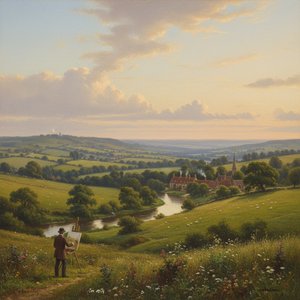
Edward Wilkins Waite: A Victorian Vision of Surrey's Serene Landscapes & Artistic Legacy
Explore the serene landscapes of Edward Wilkins Waite (1854-1924), a prolific Victorian painter celebrated for his depictions of Surrey's countryside. Discover his artistic influences, career highlights & collecting guide.

The Enduring Legacy of Oil on Canvas: Technique, History & Aesthetic Impact
Explore the rich history & techniques of oil painting – from Renaissance masters to Impressionism. Discover pigments, layering methods, and why this timeless medium endures. Expert insights for artists & art enthusiasts.