Expressionism · 1893
Storm (Edvard Munch, 1893)
Edvard Munch (1863–1944) je izdelal Storm. Zajema obdobje iz leta 1893. Spada v smer Expressionism. Izdelano je iz Oil On Canvas.
- 1893
- Oil On Canvas

 Predogled v realnem okolju

 Ročno izdelano oljno slikarstvo
 Pošlji
 Deli
 Informacijski list


 Prenesi sliko
 Podobni izdelki
 Rentgenski posnetek
 Predvajaj diaporama
 Vprašanja in odgovori

 Statistika
Storm, na kratek
- Naslov
- Storm
- Avtor
- Edvard Munch (1863–1944)
- Umetnik, rojen v
- Ådalsbruk, Norveška
- Datum
- 1893
- Tehnika
- Oil On Canvas
- Gibanje
- Expressionism
- Tema
- storm, anxiety, darkness, landscape, emotion, turmoil
Kaj prikazuje Storm?
A Tempestuous Soul: Edvard Munch’s “The Storm”
Edvard Munch's "The Storm," painted in 1893, isn’t merely a depiction of a raging tempest; it’s a visceral embodiment of inner turmoil—a profound exploration of anxiety and the fragility of human existence. This iconic work, currently residing within the esteemed collection of the Museum of Modern Art (MoMA) in New York City, stands as a cornerstone of Expressionism, a movement that sought to capture not just external reality but the raw, unfiltered emotions simmering beneath the surface. Munch, already grappling with personal tragedies including the early deaths of his mother and sister, channeled these profound experiences into a visual language characterized by bold color, distorted forms, and an unsettling sense of unease—elements powerfully realized in “The Storm.” The painting’s power resides not just in its dramatic subject matter but in its ability to evoke a deeply felt emotional response within the viewer, mirroring the artist's own turbulent inner world.
Visualizing Inner Chaos: Style and Technique
Munch’s technique is deliberately unsettling. The composition immediately plunges the viewer into a scene of chaotic energy. Thick, swirling brushstrokes dominate the canvas, conveying the relentless force of the wind and rain. These aren't delicate lines; they are aggressive marks, imbued with an almost frantic quality. The color palette contributes significantly to this sense of unease. Muted tones—primarily deep blues, grays, and ochres—create a somber atmosphere, punctuated by jarring flashes of intense yellow in the clouds and the distant light. This contrast isn’t merely aesthetic; it represents the struggle between darkness and hope, despair and perhaps a fleeting glimpse of resilience. The figure in the foreground, rendered with simplified forms and a slightly elongated face, seems to be caught within this maelstrom, her posture suggesting both vulnerability and a desperate attempt to maintain composure. Note how Munch uses perspective—the receding road and distant house create a sense of isolation and emphasize the overwhelming power of nature.
Symbolism and Psychological Depth
“The Storm” is rich in symbolic meaning, deeply rooted in Munch’s personal experiences and his exploration of psychological themes. The storm itself represents not just meteorological conditions but also the internal storms raging within the human psyche—fear, grief, anxiety, and a sense of impending doom. The woman standing on the road has been interpreted as representing humanity confronting these forces, perhaps even succumbing to them. Some scholars connect her posture and gaze to depictions of women awaiting news from loved ones lost at sea – a poignant reflection of Munch’s own anxieties about loss and mortality. The distant house, barely visible through the storm clouds, symbolizes a fragile sense of security, threatened by the overwhelming power of nature. The overall composition can be viewed as an allegory for the human condition—a constant struggle against forces beyond our control.
A Legacy of Emotional Intensity
Edvard Munch’s “The Storm” remains a profoundly moving and influential work of art, solidifying his place as a pioneer of Expressionism. Its enduring appeal lies in its ability to tap into universal emotions—fear, anxiety, and the awareness of our own mortality. Reproductions of this masterpiece offer an opportunity to experience the raw emotional power of Munch’s vision firsthand. Whether displayed in a grand salon or a more intimate setting, “The Storm” continues to resonate with viewers, reminding us of the complexities of the human spirit and the enduring beauty—and terror—of the natural world. For those seeking a high-quality reproduction, OriginalUniqueArt.com offers meticulously crafted hand-painted versions that faithfully capture the essence of this iconic artwork. Further exploration into Munch’s life and artistic journey can be found on platforms like Edvard Munch on OriginalUniqueArt.com and through resources such as Smarthistory and the Metropolitan Museum of Art.
Visokoresolucijske slike dela Storm

Javna lastnina: umetnik je umrl leta 1944.
Druge velikosti, izrezave in citiranje →Edvard Munch, Storm (1893). Javna lastnina
Barve so digitalno prilagojene originalu, datoteka pa je strokovno retuširana in zvesta umetnikovemu čopičku.
Pridobite visokofrekvenčni posnetekOdgovori na vprašanja o Storm
Kateri je datum nastanka dela "Storm" avtorja Edvard Munch?
Ustvaritev dela "Storm" avtorja Edvard Munch datiramo v 1893.
Z kakšno tehniko je izdelano "Storm"?
Edvard Munch je za delo "Storm" uporabil/a tehniko Oil On Canvas. Ta tehnika opredeljuje materialno naravo izvirnega dela.
Katere teme se pojavljajo v delu "Storm" avtorja Edvard Munch?
Motivi dela "Storm" so storm, anxiety, darkness, landscape, emotion, turmoil, night.
Ali je "Storm" v javni domeni?
"Storm" avtorja Edvard Munch je v javni domeni (v javni domeni – avtorska pravica je zastarela). Ta status določa način, kako se lahko slika dela reproducira.
Kdo je ustvaril "Storm"?
Avtor dela "Storm" je Edvard Munch. Del je katalogiran pod imenom Edvard Munch.
V kateri umetniški smer spada "Storm" avtorja Edvard Munch?
Umetnostni smer, ki jo zastopa "Storm" avtorja Edvard Munch, je Expressionism. Ta klasifikacija delo uvršča med sorodne umetnike in umetniška dela.
V katero obdobje Edvard Munchove kariere spada delo "Storm"?
V okviru kariere umetnika Edvard Munch delo "Storm" pripada obdobju Late Period, kar omogoča primerjavo z ostalimi umetnikovimi deli.
Pri katerih letih je Edvard Munch ustvaril/a "Storm"?
Edvard Munch je delo "Storm" ustvaril v starostih 30 let. Umetnik se je rodil leta 1863, delo pa je datirano v leto 1893.
Zakaj je status avtorske pravice za "Storm" prav takšen, kot je?
"Storm" avtorja Edvard Munch je v javni domeni – avtorska pravica je zastarela. Avtorske pravice se izračunajo od smrti umetnika, ki je umrl leta 1944.
O umetniku, Edvard Munch

1863–1944, Norveška
Edvard Munch
Življenje in identiteta Edvarda Muncha Edvard Munch je bil norveški slikar, čije je življenje bilo globoko povezano z naravnimi pokrajinami in težko atmosfero njegove domovine. Rodil se je 12. decembra 1863 in je največ del svojega življenja preživel pri raziskovanju kompleksnosti človeške psihe skozi svoje čopčke in grafične tehnike. Njegovo del je pogosto delovalo kot neposredna podaljšava njegovih lastnih notranjih borcev, saj je zasebne čustve spremil v nekaj vidnega in skupnega.
Tudi dela avtorja Edvard Munch
 Krik1893
 Vampir, Nacionalna galerija v Oslu
 Puberteta1914
 Tesnoba 21894

Eseji o delu Storm
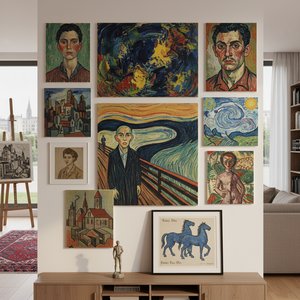 Izrazi čustev: 10 mojstrovin ekspresionizma za vaš domOdkrijte 10 mojstrovin ekspresionizma, ki so zaznamovale umetnost! Edvard Munch, Nolde & Kirchner – spoznajte zgodbe in čustva za vsakim de…
 Echoes of Anxiety: The 25 Most Iconic Masterpieces by Edvard MunchJourney through the raw emotion of Expressionism with our curated guide to Edvard Munch's top 25 masterpieces. Explore the stories behind h…
 Unveiling the Masterpieces: Top 25 Must-See Artworks at the Munch Museum in OsloExplore 25 iconic Edvard Munch masterpieces from Oslo's Munch Museum. Discover timeless Expressionist art on OriginalUniqueArt.com.