

 Preverite v realnem okolju
 Pošlji kot čestitko
 Deli
Deli
 Podrobnosti
 Priročnik

 Prenesi
 Podobni artefakti
 Rentgenski posnetek
 Predvajaj diaporama
 Statistika
The Head


 Preberi več
Umetniška dela, prikazana na tej strani, so zaščitena z avtorskimi pravicami, kar pomeni, da po zakonu ne moremo ustvarjati ali prodajati identičnih reprodukcij. Ta zaščita se izvaja v skladu z mednarodnimi sporazumi, kot so Bernska konvencija in po nacionalnih zakonih, vključno s tistimi, ki jih določa Zakon o avtorskih pravicah ZDA – naslov 17.
Ta način v celoti upošteva zakonodajo o avtorskih pravicah, saj ne vključuje kopiranja ali podvajanja zaščitena umetniškega dela. Namesto tega gre za kreativno preinterpretacijo – novo sliko, ki je navdihnjen rezultat originala, vendar ni z njim identična.
Giclée tisk / Umetniški tisk
Giclée ali platnati odtis muzejske kakovosti z hitro proizvodnjo in prilagodljivimi možnostmi končne obdelave. ( Naročite ročno slikano reprodukcijo Preklop na digitalno sliko)




P118B €10

P118H €10

P118W €10

P438Z €10

P508JH €12

P508YH €12

P805H €10

P805Z €10

P919BZ €10

P919G €10

P919XJ €10

P959ZH €10

P968JZ €12

W106C €8

W218G €10

W218JH €8

W218Y €10

W307PJ €10

W316G €10

W316PJ €8

W316Y €10

W398PJ €8

W4111J €10

W500HY €15

W500JH €15

W692G €12

W849H €8

W940BG €15

W953PJ €8




Izberite eno od naših vnaprej določenih velikosti, ki ustrezajo prvotnim proporcijam umetničkega dela.

Vnesite širino in višino, ki jih potrebujete za svoj okvir ali steno. Tiskanje se lahko le odreže, vendar ga ni mogoče narediti večjega od slike, zato format z drugačno obliko pomeni izgubo dela slike. Pred tiskanjem vam pošljemo digitalni predogled za potrditev. Slika, prikazana na tej strani, ne prikazuje dejanskega izrezkov — le predogled to omogoča.
Globalna dostava () v 2 tednih namesto standardnih 4/5 tednov. (21 oktober)

Brezplačna ekspresna dostava po vsem svetu

Visokokakovostno laneno platno

Popolno zavarovanje pošiljke

Garancija povračila carine in uvoznih davkov

Garancija popolnega barvnega ujemanja

Politika vračila v 100 dneh (le v primeru okvar)

Garancija 100% povračila denarja

Popust pri večjem naročilu
 Možnost stekla je na voljo le za velikosti pod 110 cm

The Head
Giclée tisk / Umetniški tisk
Velikost reprodukcije
-


Skupna cena
€ 70
A Fragment of Monumental Ideals: Deimantas Narkevičius’ ‘The Head’
Deimantas Narkevičius' “The Head” stands as a striking testament to the intersection of artistic vision and historical circumstance—a monumental, unfinished marble bust of Karl Marx meticulously documented through cinematic observation. Captured in black and white film footage originating from East Germany during the creation and inauguration of the Marx Monument in 1971, this artwork transcends mere representation; it embodies the spirit of a bygone era and probes profound questions about legacy and artistic process. The photograph itself serves as both record and catalyst for contemplation, inviting viewers to consider not just what is seen but also what remains unseen—the latent potential within an incomplete work.The Sculptor’s Vision: Contextualizing Kerbel's Creation
The sculpture’s genesis lies in the ambitious project spearheaded by sculptor Lev Kerbel, commissioned to honor Karl Marx amidst the ideological fervor of the GDR. The film documentation illuminates the meticulous planning and logistical challenges inherent in erecting such a grand monument within the constraints of Soviet artistic dogma. Every frame captures the raw physicality of construction—scaffolding, marble dust, and the purposeful movements of artisans striving to realize Kerbel’s vision. This context is crucial for understanding “The Head” not simply as an aesthetic object but as a symbol of political aspiration and the enduring struggle to commemorate influential figures. The GDR's propagandistic intent underscores the artwork’s significance beyond its formal qualities, prompting reflection on how artistic endeavors are shaped by broader societal forces.Formal Analysis: Texture, Light, and Geometric Precision
A careful examination reveals a masterful command of sculptural technique combined with photographic realism. The dominant form—a colossal marble bust—commands attention through its sheer scale and assertive contours. Strong lines delineate the face’s musculature and facial features, emphasizing anatomical accuracy while simultaneously conveying solidity and permanence. The texture is deliberately rendered to convey the unfinished state of the sculpture; chisel marks and imperfections in the marble contribute to a tactile quality that invites viewers to imagine the sculptor's hand at work. Artificial lighting directs shadows across the surface, highlighting three-dimensional form and enhancing visual drama. Geometric shapes—spheres for the head and planes for facial features—provide structural stability and reinforce compositional balance. The flattened perspective of the photograph subtly diminishes atmospheric depth but effectively communicates the monument’s imposing presence.Symbolism Beyond Representation: An Unfinished Echo
The deliberate omission of completion speaks volumes about Narkevičius' artistic intent. “The Head” isn’t merely a depiction of Marx; it embodies the ongoing process of shaping historical memory and confronting complex ideological narratives. The unfinished state symbolizes not only the challenges inherent in achieving lasting legacies but also the dynamism of ideas themselves—their capacity to evolve and transform over time. Like Kerbel's sculpture, Narkevičius’ photograph invites viewers to contemplate the elusive nature of representation and the power of suggestion. It compels us to consider what is absent as powerfully as what is present, fostering a deeper engagement with both art and history.Emotional Resonance: Memory and Reflection
Ultimately, “The Head” resonates with an emotional depth rooted in its connection to Lithuania’s Soviet past. The artwork evokes feelings of contemplation, nostalgia, and perhaps even unease—a recognition that monumental gestures can simultaneously celebrate achievement and grapple with unresolved contradictions. Narkevičius' masterful use of photographic documentation transforms a simple image into a conduit for profound reflection on identity, trauma, and the enduring influence of ideology. It serves as an invitation to consider how art can illuminate the complexities of history while prompting viewers to confront their own perspectives on memory and legacy.Vprašanja in odgovori
Priporočena velikost in orientacija za tiskanje dela "The Head" – kakšna velikost, kakšna orientacija?
Za tiskanje dela "The Head" avtorja Deimantas Narkevičius priporočamo velikost Large v Landscape orientaciji.
Katero temo in vzdušje združuje "The Head" avtorja Deimantas Narkevičius?
"The Head" prikazuje marxism, sculpture, monument, history, cold war, soviet art, unfinished, portrait, njegovo udejanjeno vzdušje pa je Dramatic.
Ali obstaja informativni list o delu "The Head" avtorja Deimantas Narkevičius za študente?
Za delo "The Head" avtorja Deimantas Narkevičius je na voljo stran Vodnik: natisljiv informativni list o umetninah, zasnovan za uporabo v šolskih prostorih in za učence.
Biografija umetnika
The Cinematic Architect of Memory
In the quiet, evocative landscapes of Lithuania, where the echoes of a complex Soviet past still linger in the architecture and the atmosphere, the work of Deimantas Narkevičius emerges as a profound meditation on time itself. Born in 1964 in Utena, Narkevičius began his artistic journey not with the lens of a camera, but with the tactile discipline of a sculptor. This foundational training at the Vilnius Art Institute instilled in him a unique sensitivity to form, space, and materiality—a sensibility that would later breathe life into his cinematic explorations. While many artists use film merely as a medium for documentation, Narkevičius treats the moving image as a sculptural element, carving out narratives from the raw materials of historical footage, found photographs, and the heavy silence of abandoned industrial sites.
His transition from the physical weight of sculpture to the ephemeral nature of video and film was not a departure, but an evolution. As Lithuania navigated the turbulent disintegration of the Soviet Union and its subsequent rebirth as a democratic state, Narkeyičius found himself at the intersection of personal recollection and political upheaval. He became a chronicler of the "rupture"—that delicate, often painful space between what was lived and what is remembered. His work does not simply present history; it interrogates the very mechanisms by which we construct myths from reality, using techniques such as voice-overs, interviews, and carefully staged re-enactments to blur the lines between documentary truth and cinematic imagination.
Layers of History and the Poetics of Space
The brilliance of Narkevičius’s practice lies in his ability to transform historical trauma into a poetic inquiry. He often directs his gaze toward the remnants of the Soviet era—monumental structures, decommissioned missile bases, and industrial hubs like the town of Elektrėnai. In works such as Energy Lithuania, he explores the symbiotic relationship between human vitality and the mechanical energy of power plants, treating these sites not merely as relics of a failed ideology, but as melancholic monuments to an era of vanished utopias. Through his lens, the decay of an industrial landscape becomes a metaphor for the fragility of political structures and the enduring persistence of cultural identity.
Influenced by the atmospheric depth of filmmakers like Andrei Tarkovsky and the structural experimentation of Peter Watkins, Narkevičius employs a visual language that is both intimate and expansive. He frequently utilizes close-ups to capture the nuances of human expression, grounding his larger political critiques in the lived experiences of individuals. This approach allows him to navigate the tension between the macro-history of nations and the micro-histories of the soul. His films act as a bridge, connecting the viewer to a past that may feel unrecognizable, yet remains fundamentally intertwined with the present through the persistent pull of collective memory.
A Global Presence and Lasting Legacy
The international recognition of Deimantas Narkevičius has solidified his position as one of the most significant voices in contemporary moving-image art. His presence on the global stage is marked by participation in the world's most prestigious cultural institutions, where his work challenges audiences to confront the fluidity of truth. His achievements include:
- Representing Lithuania at the 49th Venice Biennale, a pivotal moment that introduced his nuanced explorations of identity to a global audience.
- Exhibiting in premier institutions such as the Centre Pompidou in Paris, the Tate Modern in London, and the Museum of Modern Art (MoMA) in New York.
- Contributing to the discourse of contemporary curation through his roles as an art critic and exhibition curator, further enriching the dialogue surrounding political and social art.
Ultimately, the significance of Narkevičius’s oeuvre lies in its refusal to offer easy answers. He does not seek to provide a definitive record of history, but rather to highlight the cracks and shadows where memory resides. By treating history as both material and methodology, he invites us to witness the ongoing process of creation—the way we constantly mold our past to make sense of our present. His work remains a vital, haunting testament to the power of art to navigate the complexities of time, identity, and the enduring human spirit.

Deimantas Narkevičius
1964 - , Lithuania
Ključne informacije
- Full Name: Deimantas Narkevičius
- Nationality: Lithuanian
- Date Of Birth: 1964
- Date Of Death: (Living)
- Place Of Birth: Utena, Lithuania
- Notable Artworks:
- The Head
- Energy Lithuania
- Scena
- Legend Coming True
- Artistic Movement Or Style: Film and video art
- Artists Who Influenced This Artist: ['Peter Watkins']
- Artists Or Movements Influenced By This Artist: ['Soviet Cinema']
Sorodni članki

Sculpting Eternity: Transform Your Most Cherished Memories into Bespoke 3D Marble Busts and Timeless Sculptural Masterpieces
Transform cherished photos into breathtaking 3D sculptures and marble busts with OriginalUniqueArt AI. Experience the pinnacle of luxury art commissions, blending cutting-edge technology with classical mastery to create timeless, museum-quality heirlooms for your private collection.

Timeless Elegance: A Complete Guide to the Sublime Beauty and Artistry of Marble Sculpture
Discover the sublime beauty of marble art through an expert exploration of Renaissance and Neoclassical masterpieces. From the delicate textures of Carpeaux to the grandeur of Sansovino, immerse yourself in a guide to timeless elegance and sculptural perfection.
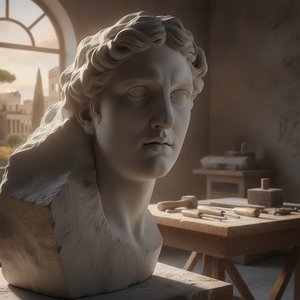
The Eternal Beauty of Marble: A Guide to Sculpting Light, Stone, and the Soul of Art History
Explore the sublime artistry of marble sculpture. From Greek antiquity to the masters of light, discover how stone captures the eternal essence of human beauty and emotion through expert craftsmanship and historical mastery.
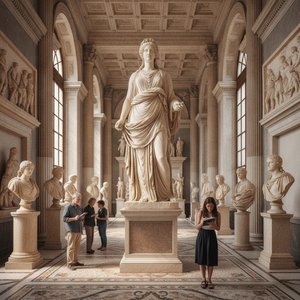
Timeless Grandeur: Exploring the Eternal Beauty and Art-Historical Legacy of Marble Sculpture
Explore the profound legacy of marble sculpture, from Classical antiquity to Neoclassical mastery. A definitive guide for elite collectors and designers seeking to integrate the luminous, eternal beauty of stone into sophisticated, high-end architectural spaces.

The Enduring Allure of Marble in Art History: From Classical Sculpture to Modern Abstraction
Explore the captivating history of marble sculpture from ancient Greece to modern art. Discover renowned artists like Canova & Michelangelo, carving techniques, and investment insights at OriginalUniqueArt.