

 Preverite v realnem okolju
 Pošlji kot čestitko
 Deli
Deli
 Podrobnosti
 Priročnik

 Prenesi
 Podobni artefakti
 Rentgenski posnetek
 Predvajaj diaporama
 Statistika
PAYSAGE AUX CINQ BAIGNEUSES


 Preberi več
Giclée tisk / Umetniški tisk
Giclée ali platnati odtis muzejske kakovosti z hitro proizvodnjo in prilagodljivimi možnostmi končne obdelave. ( Naročite ročno slikano reprodukcijo Preklop na digitalno sliko)




P118B $10

P118H $10

P118W $10

P438Z $10

P508JH $12

P508YH $12

P805H $10

P805Z $10

P919BZ $10

P919G $10

P919XJ $10

P959ZH $10

P968JZ $12

W106C $8

W218G $10

W218JH $8

W218Y $10

W307PJ $10

W316G $10

W316PJ $8

W316Y $10

W398PJ $8

W4111J $10

W500HY $15

W500JH $15

W692G $12

W849H $8

W940BG $15

W953PJ $8




Izberite eno od naših vnaprej določenih velikosti, ki ustrezajo prvotnim proporcijam umetničkega dela.

Svoje dimenzije lahko vnesete sami, da bodo ustrezne za določen okvir ali prostor. Če izbrana velikost ne bo skladna z razmerji izvirne slike, bomo umetniško delo orezali ali podaljšali s pomočjo ogledalnega odraza ali barvno polnega roba. Pred začetkom proizvodnje vam bomo poslali digitalni predogled za potrditev.
Upoštevajte, da predogled na zaslonu ne prikazuje dejanskega orezovanja ali podaljševanja. Le digitalni predogled bo natančno prikazal končno kompozicijo.
Čeprav so na voljo prilagojene velikosti, priporočamo izbiro dimenzije s predhodno določenega seznama, da ohranite prvotna razmerja.
Globalna dostava () v 2 tednih namesto standardnih 4/5 tednov. (25 september)

Brezplačna ekspresna dostava po vsem svetu

Visokokakovostno laneno platno

Popolno zavarovanje pošiljke

Garancija povračila carine in uvoznih davkov

Garancija popolnega barvnega ujemanja

Politika vračila v 100 dneh (le v primeru okvar)

Garancija 100% povračila denarja

Popust pri večjem naročilu
 Možnost stekla je na voljo le za velikosti pod 110 cm

PAYSAGE AUX CINQ BAIGNEUSES
Giclée tisk / Umetniški tisk
Velikost reprodukcije
-


Skupna cena
$ 80
A Symphony of Light and Myth
In the quiet, golden glow of an idealized Roman hillside, Cornelis van Poelenburch’s Paysage aux cinq baigneuses (Landscape with Five Bathers) invites the viewer into a realm where time seems to suspend itself. Executed between 1627 and 1630, this exquisite oil on copper masterpiece serves as a profound meditation on the harmony between humanity and the natural world. As one gazes upon the lush foliage and rugged rocky outcrops, there is an immediate sense of serenity, a palpable stillness that transcends the centuries. The painting does not merely depict a scene; it orchestrates an atmosphere, using a warm, diffused light to bathe five nude figures in a soft, ethereal radiance that suggests a moment of divine grace captured in the fleeting seconds of a summer afternoon.
The narrative woven into this landscape is deeply rooted in the humanist ideals of the seventeenth century. By portraying men and women engaged in the ritual of bathing amidst nymphs and satyrs, Van Poelenburch draws directly from the wellspring of classical mythology. This choice of subject matter elevates the work from a simple pastoral scene to a symbolic exploration of desire, beauty, and contemplation. The figures, rendered with a delicate grace, embody the Renaissance preoccupation with the human body as a vessel of both intellect and aesthetic perfection. For the discerning collector or interior designer, this piece offers more than visual splendor; it provides a window into an era that sought to find the sacred within the sensual, making it a captivating centerpiece for any space dedicated to reflection and elegance.
Mastery of the Baroque Brush
Technically, the work is a triumph of the Dutch Baroque tradition, showcasing Van Poelenburch’s ability to balance the dramatic tension of Mannerism with the clarity of the emerging Baroque style. The artist employs a sophisticated technique of layering oil paint to build a sense of profound depth and volume. While one might detect subtle distortions in form—a lingering influence from his Mannerist predecessors—the overall composition is defined by an exquisite equilibrium. The perspective recedes thoughtfully into hazy, distant mountains, creating a spatial ambiguity that draws the eye deeper into the landscape, while the organic shapes of trees and stone are anchored by a balanced, classical structure.
The color palette is a masterclass in understated luxury, dominated by earthy ochres, deep browns, and muted greens that ground the mythological fantasy in a sense of tangible reality. These somber tones are brilliantly punctuated by highlights of gold and pale blues in the sky, mirroring the way sunlight filters through a forest canopy. The texture of the skin is rendered with such smoothness that it almost invites a tactile response, contrasting beautifully with the ruggedness of the landscape. For those seeking to adorn a sophisticated interior, this painting offers a versatile emotional impact; its warm tones and tranquil subject matter can evoke feelings of peace and classical grandeur, seamlessly integrating into both traditional and contemporary settings as a testament to timeless artistic excellence.
Biografija umetnika
raneje življenja in izobraževanja
Cornelis van Poelenburgh, izjemno nizozemski pejzažkar, je bil rojen v Utrechtu na Nizozemskem v letu 1594. Začetek svoje kariere je preživetal pod vodstvom Abraham Bloemaerta, znanega umetnika tega časa. To temeljito izobraževanje je postavilo temelje za kasnejši uspeh van Poelenburga.umetniška kariera in vplivi
Van Poelenburghove potovanje v Rim v začetku 17. stoletja je močno vplivala na njegovo delo, kar ga je naredilo vodilnega predstavnika prve generacije nizozemskih pejzažkarjev, aktivnih v Italiji. Njegova maleje škala sliki, ki so pogosto prikazovale italijanske pejzaže z malimi figurami, ki izvajajo bibljske ali mitološke zgodbe, so predstavljale njegov edinstven stil. Značilna dela:- Sateri, ki spledajo nimfe (po letu 1627), edinstven primer dela van Poelenburga, ki prikazuje arhaične pejzaže z figurami, ki se kupajo. (ogled na OriginalUniqueArt)
- Veda bogov (okoli leta 1630), slika, ki prikazuje van Poelenburghov idealiziran hribovit pejzaž in romančno navdihovane boginje, zdaj namestljena v Mauritshuisu (Laž, Nizozemska). (ogled na OriginalUniqueArt)
zakladnica in kasnejši življenjski obdobji
Delo van Poelenburga je bilo visoko cenjeno tudi odzraslimi, vključno z veljopoljedom Tukanjja in nizozemskim stadtholderjem. Kasneje se je vrnil v Utrecht, kjer je umrl leta 1667, le nekaj let po svojem starejšem učitelju Abraham Bloemaerta. Ključne točke:- rojen v Utrechtu na Nizozemskem v letu 1594
- izobraževanje pri Abraham Bloemaert
- vplivano s svojim prebivalom v Rimu
- znan po maleje italijanskih pejzažih z figurami
- umrl v Utrechtu leta 1667 ogled delov Cornelisa van Poelenburga na OriginalUniqueArt learn more about cornelis van poelenburgh on wikipedia

Cornelis Van Poelenburgh
1594 - 1667 , Nizozemska
Ključne informacije
- Artistic Movement Or Style: Nizozemski pejzaž, Romanatsk
- Artists Or Movements Influenced By This Artist: ['Claude Lorraine']
- Artists Who Influenced This Artist: ['Abraham Bloemaert']
- Date Of Birth: 1594, Utrecht, Nizozemska
- Date Of Death: 1667, Utrecht, Nizozemska
- Full Name: Cornelis van Poelenburgh
- Nationality: Nizozemski
- Notable Artworks:
- Sateriji, ki spajajo nimfe
- Veda bogov
- Place Of Birth: Utrecht, Nizozemska
Sorodni članki

Masterpieces of Light: A Definitive Guide to the Landscapes of the Dutch Golden Age
Discover the luminous mastery of Dutch Golden Age landscapes. Our expert guide explores the atmospheric realism of masters like Van Goyen and Cuyp. Elevate your space with museum-quality, hand-painted oil reproductions from OriginalUniqueArt.com. Art history, beautifully realized.
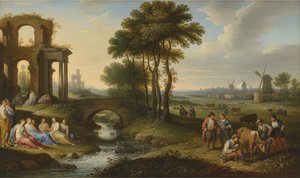
Cornelis van Poelenburch: Bridging Mannerism & the Dutch Baroque Landscape
Discover Cornelis van Poelenburch, a pivotal Dutch Baroque landscape painter bridging Mannerism & Italianate styles. Explore his life, key works, and lasting influence on 17th-century art with OriginalUniqueArt.

Rembrandt van Rijn: 25 Mojstrovin za Popestritev Vašega Doma | OriginalUniqueArt
Odkrijte 25 mojstrovin Rembrandta van Rijna! Preberite zgodbe o portretih, svetlobi in nizozemskem baroku. Kvalitetne reprodukcije slik za vaš dom na OriginalUniqueArt.com. Raziskajte celotno zbirko online.

Golden Light & Dutch Skies: The Timeless Magic of Dutch Golden Age Landscapes
Discover the breathtaking beauty of Dutch Golden Age landscapes. Explore the mastery of light, chiaroscuro, and 17th-century realism through an expert art history lens, celebrating the enduring legacy of the Dutch Masters for discerning collectors and art lovers.

Jan van Goyen: Master of Dutch Landscape & Atmospheric Perspective
Discover Jan van Goyen, the master of Dutch landscape painting. Explore his subtle technique, atmospheric realism & lasting influence on art history. Learn about this 17th-century pioneer at OriginalUniqueArt.