
 Predogled v realnem okolju
 Pošlji
 Deli
Deli
 Podrobnosti o delu
 Priročnik

 Prenesi sliko
 Podobni izdelki
 Rentgenski posnetek
 Predvajaj diaporama
 Q&A
Q&A Statistika
Triumf Bakha v Indiji

- 352.0 x 385.0 cm


 Preberi več
Giclée tisk / Umetniški tisk
Giclée ali platnati odtis muzejske kakovosti z hitro proizvodnjo in prilagodljivimi možnostmi končne obdelave. ( Kupite ročno slikano delo Preklop na digitalno sliko)




P118B €10

P118H €10

P118W €10

P438Z €10

P508JH €12

P508YH €12

P805H €10

P805Z €10

P919BZ €10

P919G €10

P919XJ €10

P959ZH €10

P968JZ €12

W106C €8

W218G €10

W218JH €8

W218Y €10

W307PJ €10

W316G €10

W316PJ €8

W316Y €10

W398PJ €8

W4111J €10

W500HY €15

W500JH €15

W692G €12

W849H €8

W940BG €15

W953PJ €8




Izberite eno od naših vnaprej določenih velikosti, ki ustrezajo prvotnim proporcijam umetničkega dela.

Vnesite širino in višino, ki jih potrebujete za svoj okvir ali steno. Tiskanje se lahko le odreže, vendar ga ni mogoče narediti večjega od slike, zato format z drugačno obliko pomeni izgubo dela slike. Pred tiskanjem vam pošljemo digitalni predogled za potrditev. Slika, prikazana na tej strani, ne prikazuje dejanskega izrezka — le predogled to omogoča.
Globalna dostava () v 2 tednih namesto standardnih 4/5 tednov. (1 november)

Brezplačna ekspresna dostava po vsem svetu

Visokokakovostno laneno platno

Popolno zavarovanje pošiljke

Garancija povračila carine in uvoznih davkov

Garancija popolnega barvnega ujemanja

100-dnevna politika vračil (le v primeru okvar)

Garancija 100% povračila denarja

Popust pri večjem naročilu
 Možnost stekla je na voljo le za velikosti pod 110 cm

Triumf Bakha v Indiji
Giclée tisk / Umetniški tisk
Velikost reprodukcije
-


Skupna cena
€ 71
Konrad Martin Metz: Maestralna Interpretacija Mitološke Apokalipse – 'The Triumph of Bacchus in India'
Konrad Martin Metz (1749–1827) je bil italijanski umetnik iz obdobja Baroka, ki ga zaznamajo intelektualni pogoji poznega osvetljenstva in zgodnje romantike. Kot mojster podrobnosti ter vizije mitologije je ustvarjal dela, ki so bila odlikovana z osupljivimi tehničnimi pristopi in globoko simbolično sporočilnostjo – kvaliteta njegove umetnosti še danes navdija kritične znanstvene osebe. Metzovo življenje je bilo zaznamenano z velikim zanimanjem za matematiko, naravoslovje ter klasiko, kar je odražalo humanistsko filozofijo svojega časa. Že kot mladenič je pod vodstvom Francesco Bartolozzija – priznanega grafičnega umetnika, ki je promoviral ponovno vzpostavljanje Mannerizma – osvojil vrhunske tehnike risanja in graviranja, kjer sta se mu posebna pozornost posvetila klasični mitologiji ter biblijskim zgodbam. Ta izobraževanje so mu omogočile ustvarjati dela, ki so bila odlikovana z intelektualno zahtevnostjo ter umetniško lepoto.Podrobna Analiza Dela – Stil in Tehniko
'The Triumph of Bacchus in India', kot umetniški projekt Metzovih rok iz leta 1789, je izjemno primerljivo delo Barokovne umetnosti. Kot vodja Akademije Bartolozzijev v Rimu je Metz ustvarjal dela, ki so bila odlikovana z osupljivimi tehničnimi pristopi – predvsem risanje z žvečilo in črno pisanje na papir, kar je omogočilo doseganje izjemne teksturne površine. Umetnik je uporabil metode, ki so bile tradicionalne za časovno obdobje, kjer sta bila uporabljena papir ter črna tinta. Čistoča linij ter njihova smer so vodila gledalca skozi kompleksno razporeditev oblik, pri čemer je bilo dosečeno občutek dinamike ter ustvarjalnosti. Izjemna pozornost podrobnostim je bila značilna za Metzovo umetnost – uporabljali so se materiali tradicionalni za časovno obdobje, kjer sta bila uporabljena papir ter črna tinta.Mitološka Simbolika in Apokaliptična Vizija
Kot umetnik je Metz izbral mitološko simboliko kot osnovo svojega dela – predstavitev Bacchusovih triumfov v Indiji je odražala intelektualno živost poznega osvetljenstva ter zgodnje romantike. Človeške figure so se vzpenjale preko drugih, kar je simbolično prikazovalo boj za oblast ter vodstvo. Živali – elefant ter lev – sta predstavljala moč ter pogumno odpor proti nasprotju. Kot umetnik je Metz uporabljal metode risanja z žvečilo in črno pisanje na papir, ki so mu omogočile ustvarjanje izjemno teksturne površine. Čistoča linij ter njihova smer so vodila gledalca skozi kompleksno razporeditev oblik, pri čemer je bilo dosečeno občutek dinamike ter ustvarjalnosti.Čustveni Odjek – Dramatična Napetost Ter Nostalgija
Kot umetnik je Metz želel prenesti občutje dramatične napetosti ter nostalgije gledalcu. Črna tinta, uporabljena pri risanju z žvečilo in črno pisanje na papir, je ustvarila intenziven efekt svetlosti ter kontrastnega svetlobnega intenziteta. Kot umetnik je Metz izbral mitološko simboliko kot osnovo svojega dela – predstavitev Bacchusovih triumfov v Indiji je odražala intelektualno živost poznega osvetljenstva ter zgodnje romantike. Čustveni odjek slike je občutek ustvarjalnosti, znanja ter umetniške lepote. Kot umetnik je Metz uporabljal metode risanja z žvečilo in črno pisanje na papir, ki so mu omogočile ustvarjanje izjemno teksturne površine. Čistoča linij ter njihova smer so vodila gledalca skozi kompleksno razporeditev oblik, pri čemer je bilo dosečeno občutek dinamike ter ustvarjalnosti.Vprašanja in odgovori
Ali lahko s pomočjo proširjene stvarnosti vidim "Triumf Bakha v Indiji" avtorja Conrad Martin Metz v svojem prostoru?
Delo "Triumf Bakha v Indiji" avtorja Conrad Martin Metz si lahko ogledate na svoji steni s stranjo Predogled v AR, z uporabo tehnologije augmented reality na združljivi napravi.
Kako lahko odkrijem umetniška dela, podobna delu "Triumf Bakha v Indiji" avtorja Conrad Martin Metz?
Umetninice, podobne delu "Triumf Bakha v Indiji" avtorja Conrad Martin Metz, so zbrane na strani Podobna dela te umetnine.
Kako nasičena je barvna paleta dela "Triumf Bakha v Indiji"?
"Triumf Bakha v Indiji" avtorja Conrad Martin Metz ima Zamegljeno saturacijo.
Biografija umetnika
The Visionary Precision of Conrad Martin Metz
In the grand tapestry of late Enlightenment and early Romantic art, few threads are as intricately woven as those spun by Conrad Martin Metz. Born in Bonn, Germany, in 1749, Metz emerged not merely as a craftsman of lines, but as a storyteller of the classical soul. His life was a journey through the most vibrant intellectual centers of Europe, moving from the rigorous academic traditions of London to the sun-drenched, antiquity-rich streets of Rome. This movement allowed him to bridge the gap between the structured elegance of the late Baroque and the burgeoning emotional depth of Neoclassicism, creating a body of work that resonates with both technical perfection and mythological grandeur.
The foundation of Metz’s mastery was laid through a disciplined education that balanced the precision of mathematics and natural sciences with the profound beauty of classical studies. This humanist approach is evident in every etching and drawing he produced. His artistic trajectory was irrevocably shaped by his mentorship under Francesco Bartolozzi, one of the most celebrated engravers of the era. Under Bartolozzi’s guidance at the Royal Academy Schools in London, Metz mastered the delicate nuances of printmaking, learning to manipulate light and shadow with a virtuosity that would become his hallmark. He adopted and refined advanced techniques such as aquatint and roulette, allowing him to achieve tonal gradations and textures that breathed life into static plates.
A Symphony of Myth and Masterpiece
Metz’s oeuvre is a profound exploration of the ancient world, where Greek and Roman myths are resurrected through ink and paper. His work often serves as a visual dialogue with the Old Masters; he frequently engraved religious and mythological subjects after the likes of Michelangelo and Raphael, effectively acting as a conduit between the Renaissance giants and the contemporary audiences of the eighteenth century. His ability to translate the monumental scale of frescoed ceilings into the intimate medium of printmaking was nothing short of extraordinary. One of his most ambitious undertakings involved a massive fifteen-plate engraving of Michelangelo’s Last Judgment, a project that showcased his capacity for handling complex, crowded compositions and dramatic, divine tension.
Beyond the grand scale of his engravings, Metz possessed a remarkable ability to capture the ephemeral. His drawings—often executed in pen, brown ink, and wash—reveal a sensitive hand capable of rendering the soft curve of a putto or the tragic weight of a mythological catastrophe. In works such as The Death of the Children of Niobe, created during his later years in Rome, one can witness the intersection of his technical skill and his emotional depth. These pieces are not merely illustrations; they are meditations on fate, beauty, and the enduring power of classical tragedy, often incorporating references to ancient sculptures that ground his imagination in the physical reality of Roman antiquity.
Legacy of an International Master
The historical significance of Conrad Martin Metz lies in his role as a pivotal figure in the international Neoclassical style. By settling in Rome in 1801, where he remained until his death in 1827, he became part of the living pulse of classical revivalism. His work helped define the aesthetic standards of an era that sought to find order and nobility in the ruins of the past. Through his prolific output of engravings and illustrations, he disseminated the beauty of classical motifs across Europe, influencing the visual language of both the scholarly elite and the broader public.
Today, the legacy of Metz is preserved in the hallowed halls of the world's greatest institutions, including the British Museum, the Metropolitan Museum of Art, and the National Gallery of Art. His contributions can be summarized through several enduring artistic pillars:
- Technical Innovation: The masterful application of aquatint and soft-ground etching to achieve unprecedented textural depth.
- Classical Preservation: The role of an engraver as a bridge, bringing the monumental works of the Renaissance to a wider, contemporary audience.
- Narrative Depth: A unique ability to imbue mythological scenes with a sense of psychological realism and dramatic movement.
- Cultural Synthesis: The blending of German precision, English academic training, and Italian classical inspiration into a singular, cohesive style.
Conrad Martin Metz remains a testament to the power of meticulous observation. His life’s work stands as a luminous reminder of a time when art sought to harmonize the rigorous logic of science with the boundless reaches of human myth.

Conrad Martin Metz
1749 - 1827 , Italy
Hitri podatki
- Full Name: Conrad Martin Metz
- Nationality: German
- Date Of Birth: 1749
- Date Of Death: 1827
- Place Of Birth: Rome, Italy
- Notable Artworks:
- The Triumph of Bacchus in India
- Saint-Martin
- Artistic Movement Or Style: Baroque & Rococo
- Artists Who Influenced This Artist: ['Francesco Bartolozzi']
- Artists Or Movements Influenced By This Artist: ['Michelangelo']
Sorodni članki

Baročna Drama: Uvedba Velikosti in Čustvenosti v Sodobne Interierje
Odkrijte veličino baročne umetnosti! Nasveti za integracijo dramatičnosti in čustvenosti v vaš dom. Kvalitetne reprodukcije, naročila po meri pri OriginalUniqueArt.com – strokovno posvetovanje in vrhunska kakovost.

The Dramatic Flourish: Exploring the Baroque Movement's Enduring Legacy in Art History
Explore the dramatic world of Baroque art! Discover iconic artists like Caravaggio & Rubens, defining techniques, and its lasting impact on art history. Expert insights for collectors & enthusiasts at OriginalUniqueArt.

The Visceral Stage: Exploring Dramatic Narratives & Emotional Intensity in Baroque Art
Explore the dramatic world of Baroque art! Discover iconic masters like Caravaggio & Rembrandt, their techniques, and the movement's lasting impact. Expert insights for collectors & enthusiasts at OriginalUniqueArt.
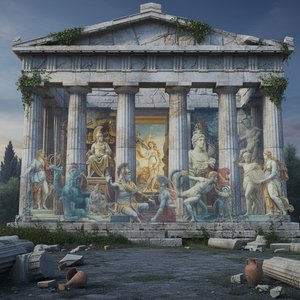
Echoes of Olympus: Mythological Narratives in Western Art Through the Ages
Explore the captivating history of mythological narratives in Western art! From ancient Greece to modern masterpieces, discover iconic artworks & symbolism. Expert analysis and high-quality reproductions at OriginalUniqueArt.

Baročne mojstrovine: 10 umetnin, ki so definirale obdobje | OriginalUniqueArt
Odkrijte 10 baročnih mojstrovine, ki so zaznamovale umetnost! Karavaggio, Bernini & Rubensovi deli v zgodovinskem kontekstu. Navdih za notranjost in reprodukcije slik na OriginalUniqueArt.com. Raziskujte polno zbirko online!
