Geometric Abstraction · 1950
Nepobarvano (Carlos Mérida, 1950)
Carlos Mérida (1891–1984) je izdelal Nepobarvano. Zajema leto 1950. Spada v umetniško smer Geometric Abstraction. Izdelano je iz Akril na platnu. Del se nahaja v muzeju Inter-American Development Bank v mestu Washington, D.C., Združene države Amerike.
- 1950
- Akril na platnu
- Inter-American Development Bank, Washington, D.C.

 Predogled v realnem okolju

 Ročno izdelano oljno slikarstvo
 Pošlji
 Deli
 Informacijski list za tjači


 Prenesi sliko
 Podobni izdelki
 Rentgenski posnetek
 Predvajaj diaporama
 Vprašanja in odgovori

 Statistika
Nepobarvano, na kratek
- Naslov
- Nepobarvano
- Umetnik
- Carlos Mérida (1891–1984)
- Umetnik, rojen v
- Gvatemala, Gvatemala
- Datum
- 1950
- Tehniko
- Akril na platnu
- Kje je razstavljeno
- Inter-American Development Bank, Washington, D.C., Združene države Amerike
- Gibanje
- Geometric Abstraction
- Tema
- geometric form, color palette, spatial depth, maya influence, cubist elements, texture surface
Kaj prikazuje Nepobarvano?
Carlos Mérida: A Dialogue Between Tradition and Modernity
Carlos Mérida (1891–1984) stands as an emblem of Latin American artistic innovation, embodying the audacious fusion of European avant-garde impulses with the profound resonance of indigenous heritage—specifically Mayan cosmology. Born in Guatemala City, Mérida’s journey wasn't merely biographical; it was a relentless pursuit of aesthetic identity, driven by circumstance and nurtured by unwavering dedication.
- Early Influences: Mérida’s formative years were steeped in Guatemalan musical tradition, profoundly impacting his artistic sensibility. Hearing loss spurred him toward painting under his father's encouragement, initiating a transformative trajectory that would propel him to international acclaim.
- Formal Training: His studies at the Instituto de Artes y Oficios and the Instituto de Ciencias y Letras in Guatemala City provided crucial grounding in artistic principles, preparing him for explorations beyond national borders.
Mérida’s distinctive style emerged from a deliberate confrontation with modernist currents—Cubism and Constructivism—yet simultaneously anchored itself in the geometric precision and symbolic depth of Mayan art. This duality is palpable in his seminal works of the 1950s, exemplified by “Untitled,” where a rhythmic interplay of color and negative space dances across an underlying grid.
- Geometric Abstraction: The artwork’s dominant characteristic is its geometric abstraction—a masterful distillation of form into fundamental shapes like triangles, rectangles, and irregular polygons. These elements are arranged with meticulous care, creating a visually arresting composition that prioritizes spatial relationships over representational imagery.
- Color Palette & Texture: Mérida employs a restrained yet impactful color palette dominated by shades of grey, black, and beige, accented by bursts of vibrant hues. The textured paper surface enhances the artwork’s tactile quality, mirroring the materiality of Mayan ceramics and contributing to its overall sense of depth.
"Untitled" isn't merely a visual exercise; it speaks to broader philosophical concerns—a celebration of order, structure, and the harmonious coexistence of opposing forces. Like Joan Miró’s pioneering explorations into subconscious imagery and spontaneous gesture, Mérida’s work invites contemplation on universal themes of existence and perception.
This artwork embodies the spirit of Constructivism, prioritizing geometric precision and conceptual representation over literal depiction—a testament to Mérida's enduring legacy as a visionary artist who bridged cultures and redefined artistic expression.Symbolic Resonance: Mayan Echoes in Modern Form
The tessellated surfaces and pure colors of “Untitled” resonate with the visual vocabulary of ancient Maya art, reflecting Mérida’s fascination with Mesoamerican cosmology. Geometric patterns—particularly spirals and triangles—were integral to Mayan ritual practices and symbolic thought, conveying concepts of cyclical time and cosmic order.
- Spiral Motif: Recurring spiral motifs subtly suggest the notion of regeneration and transformation—a core element of Maya beliefs about death and rebirth.
- Triangle Symbolism: Triangles represent stability and balance—fundamental principles underpinning Mérida’s compositional strategy and mirroring the architectural grandeur of Mayan pyramids.
Mérida's artistic vision transcends stylistic conventions, establishing a dialogue between tradition and modernity that continues to inspire artists today.
Technique & Material Considerations
The artwork’s execution demonstrates meticulous attention to detail—layers of acrylic or oil paint are skillfully applied to build up the complex shapes and patterns. This technique allows for nuanced tonal variations and textural effects, maximizing visual impact and conveying a profound sense of materiality.
- Surface Texture: The textured paper substrate contributes significantly to the artwork’s aesthetic experience—mimicking the tactile qualities of Mayan ceramics and enhancing its overall dimensionality.
- Color Mixing & Layering: Mérida's masterful color mixing techniques produce harmonious blends that capture the ethereal beauty of light and shadow, furthering the artwork’s expressive power.
A Legacy of Innovation
"Untitled" stands as a cornerstone of Latin American modernism—a bold assertion of artistic autonomy rooted in both European influences and indigenous heritage. Its enduring appeal lies in its ability to communicate profound ideas through deceptively simple forms, cementing Carlos Mérida’s place among the most influential artists of the twentieth century.
V katerem muzeju se nahaja Nepobarvano?
Inter-American Development Bank
Washington, D.C., Združene države Amerike
Živoprasna tapija latinskoameriških glasov: Raziskovanje galerije ArtLAC Mednarodne razvojne banke V veličastni sedežni zgradbi Mednarodne razvojne banke v Washingtonu, D.C., se skriva presenetljivo intimen in globoko ganljiv prostor – galerija ArtLAC. Ta prostor je več kot le zbirka umetnin; je zavestna prizadevanja za premoščanje razkoraka med ekonomsko razvojom, kulturno izražanjem in družbenim napredkom, saj ponuja edinstveno perspektivo, skozi katero lahko zaznamimo zapletenost Latinske Amerike in Karibov. Čeprav je bila sprva ustanovljena kot kulturni center za spodbujanje razumevanja med ZDA in njihovimi sosedi, se je galerija razvila v dinamično prizorišče sodobne umetnosti, ki ne odraža le estetične lepote, temvezględno tudi kritičnih zgodiv okoli razvoja, identitete in izzivov, s katerimi se sooča celotna regija.


Visokoresolucijske slike dela Nepobarvano

Zaščitovano z avtorskimi pravicami: te datoteke so namenjene osebni referenci, ne paovojilo za ponovno objavo.
Carlos Mérida, Nepobarvano (1950), Inter-American Development Bank.
Odgovori na vprašanja o Nepobarvano
Kje je danes razstavljeno "Nepobarvano" avtorja Carlos Mérida?
Originalno delo "Nepobarvano" avtorja Carlos Mérida se nahaja v muzeju Inter-American Development Bank, Washington, D.C., Združene države Amerike. Reprodukcija omogoča, da ta sklad prikazujete tudi v svojem domu.
Kdaj je bilo ustvarjeno "Nepobarvano"?
"Nepobarvano" izvira iz 1950. Ta datum delo situira v okvir Carlos Méridaove kariere in obdobja, v katerem je nastalo.
S katero tehniko je bila izdelana skladba "Nepobarvano" avtorja Carlos Mérida?
"Nepobarvano" je izdelano z uporabo tehnike Akril na platnu.
Katere teme se pojavljajo v delu "Nepobarvano" avtorja Carlos Mérida?
Tematika v delu "Nepobarvano" avtorja Carlos Mérida vključuje geometric form, color palette, spatial depth, maya influence, cubist elements, texture surface, minimal composition, ki skupaj predstavljajo vsebino umetninškega dela.
Ali je delo "Nepobarvano" avtorja Carlos Mérida v javni lastini?
"Nepobarvano" avtorja Carlos Mérida je v javni domeni (še vedno pod avtorsko zaščito). Ta status določa način, kako se lahko slika dela reproducira.
Kdo je avtor dela "Nepobarvano"?
"Nepobarvano" pripisujemo Carlos Mérida.
V kateri umetniški smer spada "Nepobarvano" avtorja Carlos Mérida?
Umetnostni smer, ki jo zastopa "Nepobarvano" avtorja Carlos Mérida, je Geometric Abstraction. Ta klasifikacija delo uvršča med sorodne umetnike in umetniška dela.
V katero obdobje Carlos Méridaove kariere spada delo "Nepobarvano"?
"Nepobarvano" predstavlja Mature Period umetnika Carlos Mérida.
Pri katerih letih je Carlos Mérida ustvaril/a "Nepobarvano"?
Carlos Mérida je bil/a star/a 59 let, ko je ustvaril/a "Nepobarvano" leta 1950. Starost je izračunana na podlagi leta rojstva umetnika, 1891.
O umetniku, Carlos Mérida
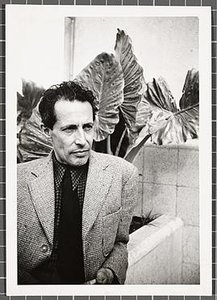
1891–1984, Gvatemala
Carlos Mérida
A Fusion of Worlds: The Life and Art of Carlos Mérida Carlos Mérida, born Carlos Santiago Ortega in Guatemala City in 1891, stands as a pivotal figure in the narrative of Latin American modern art. His journey was one of constant exploration—a compelling synthesis of European avant-garde sensibilities with the rich cultural heritage of his Guatemalan roots and, later, the vibrant artistic landscape of Mexico. Initially drawn to music, Mérida’s path shifted due to hearing loss, a circumstance that unexpectedly steered him toward painting under his father's encouragement. This redirection proved fortuitous, unlocking a talent that would blossom across continents and redefine artistic boundaries.
O umetniku Carlos Mérida Znomeni dela umetnika Carlos Mérida
Tudi dela avtorja Carlos Mérida
 Madre Terra, (Mother Earth)1970
 Carnaval1974
 Dancers of Tlaxcala1951
 Xochipilli and the God1949
Eseji o delu Nepobarvano
 Geometry with Purpose: Distinguishing Suprematism from ConstructivismMaster the differences between Suprematism and Constructivism with our expert guide. Discover the soul of the Russian avant-garde now.
 Spontaneity and Matter: Distinguishing CoBrA from Art InformelMaster the differences between CoBrA and Art Informel with our expert guide. Learn to identify these post-war movements today.
 10 Iconic Graphite Masterpieces That Redefined the Art WorldExplore 10 iconic graphite masterpieces that redefined art history. Discover museum-quality legends on OriginalUniqueArt.com.