Meni
Text size

() ·

A painting made for you, by hand

Crucifix (detail)

Ročno izdelana oljna reprodukcija

Ročno slikano olje na platnu v vaši izbiri velikosti in okvirja, izdelano po naročilu naših umetnikov. ( Preklop na tiskanine Preklop na digitalno sliko)

Opis zbirateljskega predmeta

Explore the poignant Santo Spirito Crucifix by Michelangelo, a masterpiece of Renaissance sculpture depicting Christ's sacrifice with remarkable realism and emotional depth.

Biografija umetnika

Benvenuto Cellini (1500-1571): Mojster renesančnega zlata in kiparja manierizma, znan po mojstrovini 'Perzej' ter izjemni posodi za sol. Raziščite njegovo umetnost in življenje!

from ·

Chapter 1

How large should it be?

Slide to change the size; the picture on the left shows the frame at its real width. The proportions of the original are kept.

Standardna velikost
po meri
CM
INCH

Izberite eno od naših vnaprej določenih velikosti, ki ustrezajo prvotnim proporcijam umetničkega dela.

širina
višina

Vnesite širino in višino, ki jih potrebujete, da se slika prilega vašemu okviru ali steni. Ker je delo ročno slikano, lahko umetnik pri različnih oblikih slik pri robovih doda malo več barve ali pa jih malo odreže — izberite sami. Pred začetkom slikanja vam pošljemo digitalni predogled za potrditev. Slika, prikazana na tej strani, ni končni rezultat — le predogled prikazuje dejansko podobo.

Chapter 2

How should it arrive?

Choose the edges of the stretched canvas

Choose your frame

Corner sample of the WhiteWrap canvas edge finish, stretched on masivno drevo bars
White €1
Corner sample of the BlurSideWrap canvas edge finish, stretched on masivno drevo bars
Blurside €1
Corner sample of the ExtendedWrap canvas edge finish, stretched on masivno drevo bars
Extended €1
Corner sample of the P118B picture frame: izoblit polistiren, 5 cm wide and 3 cm thick
P118B €10
Corner sample of the P118H picture frame: izoblit polistiren, 5 cm wide and 3 cm thick
P118H €10
Corner sample of the P118W picture frame: izoblit polistiren, 5 cm wide and 3 cm thick
P118W €10
Corner sample of the P438Z picture frame: izoblit polistiren, 5.5 cm wide and 3.5 cm thick
P438Z €10
Corner sample of the P508JH picture frame: izoblit polistiren, 7 cm wide and 3.5 cm thick
P508JH €12
Corner sample of the P508YH picture frame: izoblit polistiren, 7 cm wide and 3.5 cm thick
P508YH €12
Corner sample of the P805H picture frame: izoblit polistiren, 5 cm wide and 3.5 cm thick
P805H €10
Corner sample of the P805Z picture frame: izoblit polistiren, 5 cm wide and 3.5 cm thick
P805Z €10
Corner sample of the P919BZ picture frame: izoblit polistiren, 7 cm wide and 3.5 cm thick
P919BZ €10
Corner sample of the P919G picture frame: izoblit polistiren, 7 cm wide and 3.5 cm thick
P919G €10
Corner sample of the P919XJ picture frame: izoblit polistiren, 7 cm wide and 3.5 cm thick
P919XJ €10
Corner sample of the P959ZH picture frame: izoblit polistiren, 5 cm wide and 3 cm thick
P959ZH €10
Corner sample of the P968JZ picture frame: izoblit polistiren, 6 cm wide and 4 cm thick
P968JZ €12
Corner sample of the W106C picture frame: masivno drevo, 5 cm wide and 3 cm thick
W106C €8
Corner sample of the W218G picture frame: masivno drevo, 5 cm wide and 3 cm thick
W218G €10
Corner sample of the W218JH picture frame: masivno drevo, 5 cm wide and 3 cm thick
W218JH €8
Corner sample of the W218Y picture frame: masivno drevo, 5 cm wide and 3 cm thick
W218Y €10
Corner sample of the W307PJ picture frame: masivno drevo, 6 cm wide and 3 cm thick
W307PJ €10
Corner sample of the W316G picture frame: masivno drevo, 6 cm wide and 3 cm thick
W316G €10
Corner sample of the W316PJ picture frame: masivno drevo, 6 cm wide and 3 cm thick
W316PJ €8
Corner sample of the W316Y picture frame: masivno drevo, 6 cm wide and 3 cm thick
W316Y €10
Corner sample of the W398PJ picture frame: masivno drevo, 5 cm wide and 3 cm thick
W398PJ €8
Corner sample of the W4111J picture frame: masivno drevo, 6.5 cm wide and 3.5 cm thick
W4111J €10
Corner sample of the W500HY picture frame: masivno drevo, 7 cm wide and 5 cm thick
W500HY €15
Corner sample of the W500JH picture frame: masivno drevo, 7 cm wide and 5 cm thick
W500JH €15
Corner sample of the W692G picture frame: masivno drevo, 8 cm wide and 4 cm thick
W692G €12
Corner sample of the W849H picture frame: masivno drevo, 5 cm wide and 3 cm thick
W849H €8
Corner sample of the W940BG picture frame: masivno drevo, 7.5 cm wide and 4.5 cm thick
W940BG €15
Corner sample of the W953PJ picture frame: masivno drevo, 6 cm wide and 3.5 cm thick
W953PJ €8
Corner sample of the H24-GOLD picture frame: gravirano leseno okvopje z gessoem, 10 cm wide and 6 cm thick
H24-GOLD €30
Corner sample of the H24-SILVER picture frame: gravirano leseno okvopje z gessoem, 10 cm wide and 6 cm thick
H24-SILVER €30
Corner sample of the H36-GOLD picture frame: gravirano leseno okvopje z gessoem, 15 cm wide and 6.5 cm thick
H36-GOLD €45
Corner sample of the H36-SILVER picture frame: gravirano leseno okvopje z gessoem, 15 cm wide and 6.5 cm thick
H36-SILVER €45
Predogled okvirja
V okviru

Moulding: . Overall size with the frame: .

Chapter 3

Who paints it, and should anything change?

Examples of what can be changed: Replace face with customer photo; Add pet (e.g., replace cat with dog); Include hidden message in background; Change background landscape or elements.
After order, OriginalUniqueArt.com team will email client for instructions and provide a mockup preview

Mednarodna dostava () v 3/4 tednih namesto običajnih 5 tednov. (30 oktober). Brez kompromisov pri kakovosti.

Chapter 4

The finishing touches

A nameplate, as in a museum?

Podrobnosti o gravirani bronasti plošči

This elegant plaque features the artist's name and the title of the artwork, finely engraved for a timeless presentation.

It is made from bronze with a refined, elegant finish. The text is precisely laser-engraved for a sharp and permanent result. Measuring 9x2 cm, the plaque is compact yet easy to read. It's built to be durable and scratch-resistant, offering a professional, museum-quality look. Mounting is simple thanks to the included adhesive backing.

Podrobnosti o transparentni akrilni plošči

The plaque includes essential engraved details such as the artist's name, the title of the artwork, the date it was created, the type of media used-like oil on canvas or watercolor-a brief description of the piece, and a QR code that links to the complete artwork information.

It is crafted from clear acrylic, offering a sleek, modern appearance. The text is UV-engraved in black to ensure strong visual contrast. With a size of 10x15 cm, it ensures optimal readability. It comes equipped with two metal hooks for secure wall mounting. The plaque is designed to be weather-resistant, making it suitable for various environments, and it includes interactive features that work seamlessly with smartphone scanning.

Podrobnosti o črni akrilni plošči

This elegant plaque includes engraved information such as the artist's name, the title of the artwork, the date it was created, the type of media used (like oil on canvas or watercolor), a short description of the artwork, and a QR code for quick access to more information.

The plaque itself is made from refined black acrylic with a premium finish. The text is laser-engraved in white for high contrast and readability. Its size is 10x15 cm, designed to be easy to read. It comes with two metal hooks for professional mounting. The design is sleek and fits any interior style. It is also weather-resistant and durable, with built-in digital integration for mobile compatibility.

A protective varnish?

When do you need it?

Chapter 5

Your painting, as you ordered it

Crucifix (detail)

Tehnik reprodukcije

Velikost reprodukcije

-

Izbor vrhunskih umetnikov

Več podrobnosti, dovršenosti in dodatnega časa za izdelavo

-

Okvir za reprodukcijo

-

-

Za umetniška dela ali reprodukcije, ki so po katerikoli strani širše od 105 cm (približno 41 palč), bo okvir poslan v razstavljeni obliki kot komplet. Ta metoda zagotavlja varno dostavo in preprečuje poškodbe med transportom.

Potrebna je profesionalna montaža – to ni izdelek za DIY izdelavo.
Komplet mora sestaviti in platno napeti izkušen profesionalni okvirjest, pri čemer bo uporabil lepil za les (ni vključeno), klešče za napetje platna in spone, da bi ohranil pravokotnost letev med sušenjem lepila. Nepravilna montaža ali neenakomerna napetost platna lahko trajno poškoduje umetniško del in ni pokrita z našo garancijo.

  • Vključene so vse letve iz masivnega lesa, natančno izrezane po meri.

  • Montaža poteka s priloženimi vijaki, vendar je za kotiče potrebna lepil za les, ki ga ni v kompletu in ga mora zagotoviti vaš okvirnik.

  • Za uporabo so potrebna profesionalna orodja, ki niso vključena: klešče za napinjanje platna (napetnik) in sponke za ohranjanje pravokotnosti letev med sušenjem lepila.

Pomembno:
Za stike v kotih potrebujete lepil za les, nosilce je treba z spenjačami držati, dokler se lepil popolnoma ne suši, za zategovanje platna na sestavljenem okvirju pa potrebujete spenjače za platno. Noben od teh pripomočkov ni vključen v komplet. Pred naročilom te velikosti, prosimo, poskrbite za izkušenega profesionalnega okvirja.

Značka z imenom

-

-

Zaščitni lak

Sijajni lak (poudarja barve ter zagotavlja zaščito pred svetlobo in vlago)

-

Prilagodi svoje umetniško delo

Primeri možnih prilagoditev: zamenjava obraza s fotografijo kupca; dodajanje hišnega ljubljenčka (npr. zamenjava mačke s psom); vključitev skritega sporočila v ozadje; sprememba krajšave ali elementov ozadja.

-

Hitra dostava

Mednarodna dostava () v 3/4 tednih namesto običajnih 5 tednov. (30 oktober). Brez kompromisov pri kakovosti.

-

Hitra dostava

Globalna dostava () v 5 tednih. (6 november).

Vključeno v ceno

Skupna cena

€ 266

Skupna cena € 266

Možnost stekla je na voljo le za velikosti pod 110 cm

Included with every order

  • Brezplačna ekspresna dostava po vsem svetu
  • Visokokakovostno laneno platno
  • Popolno zavarovanje pošiljke
  • Garancija povračila carine in uvoznih davkov
  • Garancija popolnega barvnega ujemanja
  • 100-dnevna politika vračil (le v primeru okvar)
  • Garancija 100% povračila denarja
  • Popust pri večjem naročilu

The Silent Majesty of Suffering – An Exploration of Cellini's Crucifix

Benvenuto Cellini’s 1562 marble sculpture, “Crucifix (detail),” is not merely a depiction of Christ’s suffering; it’s an immersive experience. Within the dimly lit confines of El Escorial, this intimate piece draws you into a world of profound emotion and technical mastery – a testament to Cellini's genius as both goldsmith and sculptor. The sculpture immediately commands attention with its stark realism and the palpable sense of agony radiating from the figure of Christ. It’s a work that transcends simple religious iconography, becoming a poignant meditation on mortality, faith, and the human condition.

The composition itself is strikingly direct. Cellini eschews the idealized forms often associated with Renaissance sculpture, opting instead for an anatomical honesty rarely seen at the time. Christ's body is rendered with meticulous detail – every ripple of muscle, every subtle curve of bone—a testament to Cellini’s deep understanding of human anatomy gleaned from his years dissecting corpses in Florence. The stark contrast between the smooth, luminous marble and the deeply shadowed areas creates a dramatic interplay of light and dark, intensifying the emotional impact of the scene. The closed eyes, a common motif in depictions of Christ's death, suggest not just physical exhaustion but also a profound acceptance of his fate – a quiet dignity amidst unimaginable pain.

A Mannerist Masterpiece: Technique and Influences

Cellini’s “Crucifix” is firmly rooted in the Mannerist style that dominated Italian art during the late 16th century. This movement, following the High Renaissance, prioritized drama, emotional intensity, and a departure from classical ideals. Unlike the balanced compositions of earlier periods, Cellini embraces asymmetry and exaggeration – Christ’s elongated torso, for instance, contributes to the sculpture's dynamic energy. The use of polished marble creates an almost ethereal quality, reflecting light in a way that highlights the figure’s vulnerability and suffering.

The technique employed is remarkable. Cellini was renowned for his mastery of goldwork, but this sculpture demonstrates his equally impressive skill with marble. He utilized a subtractive carving method, carefully removing material to reveal the underlying form. The surface is remarkably smooth, achieved through countless hours of painstaking polishing – a process that would have been incredibly labor-intensive. The subtle variations in texture and tone add depth and realism to the sculpture, making it feel almost tactile.

Symbolism and Historical Context

Beyond its immediate visual impact, “Crucifix” is rich in symbolic meaning. The nudity of Christ—a deliberate choice by Cellini—references both the biblical account of his crucifixion and the Old Testament prophecy of Psalm 22:18, which speaks of his garments being divided among his soldiers. This detail underscores the humiliation and abandonment experienced by Christ. The spear wound, prominently displayed on his side, symbolizes sacrifice and redemption – a potent reminder of Christ’s willingness to endure suffering for humanity's salvation.

Created during a period of political and religious upheaval in Italy, “Cruifix” reflects the anxieties and uncertainties of the time. The Medici family, who had recently lost power in Florence, were facing increasing challenges from rival factions. Cellini’s sculpture can be interpreted as a commentary on human fallibility and the transience of earthly power – a stark contrast to the eternal promise of faith. The work was originally intended for Cellini's own tomb, highlighting his personal connection to the subject matter and underscoring the themes of mortality and remembrance.

A Legacy of Artistic Innovation

Benvenuto Cellini’s “Cruifix” stands as a pivotal work in the history of Renaissance sculpture. It exemplifies the artist's exceptional technical skill, his profound understanding of human anatomy, and his ability to infuse religious imagery with emotional depth and dramatic intensity. The sculpture’s enduring appeal lies not only in its aesthetic beauty but also in its capacity to evoke a powerful response from viewers – a reminder of the timeless themes of suffering, sacrifice, and redemption.

Vprašanja in odgovori

Kdaj je bilo ustvarjeno "Crucifix (detail)"?

"Crucifix (detail)" izvira iz 1562. Ta datum delo situira v okvir Benvenuto Celliniove kariere in obdobja, v katerem je nastalo.

Kako lahko "Crucifix (detail)" avtorja Benvenuto Cellini vključite v oblikovanje domačega interierja?

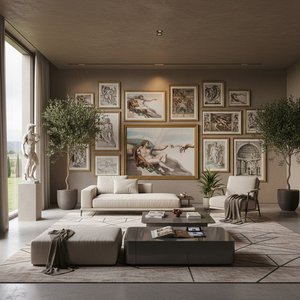
Priporočena uporaba (Reflective) in prostor (Living Room) za delo "Crucifix (detail)" avtorja Benvenuto Cellini.

Kakšen občutek vzbujajo barve dela "Crucifix (detail)" avtorja Benvenuto Cellini?

V delu "Crucifix (detail)" barvna paleta Earthy dopolnjuje Melancholic občutek.

More about this painting

Preklop na tiskanine Preklop na digitalno sliko Pošlji
Podrobnosti o delu Priročnik Dodaj v priljubljene Prenesi sliko Podobni izdelki Predvajaj diaporama Q&A Statistika

In numbers

  • 1562the year it was painted
  • 29frames to choose from
  • standard sizes, in its own proportions
  • 5weeks to paint and deliver it
Benvenuto Cellini

Benvenuto Cellini

1500 - 1571, Italija

Quick facts about Benvenuto Cellini

  • Artistic Movement Or Style: Manierizem
  • Artists Who Influenced This Artist: ['Michelangelo']
  • Date Of Birth: 1. november 1500
  • Date Of Death: 13. februar 1571
  • Full Name: Benvenuto Cellini
  • Nationality: Italijan
  • Notable Artworks:
    • Perzej z Meduzino glavo
    • Solilnica Cellinijev
  • Place Of Birth: Firence, Italija

Biografija umetnika

Benvenuto Cellini: Renesančni Polimat

Benvenuto Cellini, rojen v Firencah leta 1500 in umrl tam leta 1571, je bil izjemna osebnost italijanske renesanse. Njegovo ime se ne povezuje le z zlatarstvom in kiparstvom, temveč tudi s slikarstvom, vojaštvom, glasbo in pisateljstvom. Cellinijeva življenjska pot je bila izjemno pestra in dinamična, njegov avtobiografski spis pa velja za pomembno literarno delo, ki dopolnjuje njegove umetniške dosežke. Značilnosti njegovega ustvarjanja odražajo duh manierizma – obdobja po visokem renesansi, zaznamovanega z dramatičnim izrazom in stilsko kompleksnostjo.

Zgodnje življenje in umetniška pot

Cellini se je rodil v družini s glasbenimi talenti; njegov oče je bil muzikant in izdelovalec instrumentov. Sprva je pokazal zanimanje za glasbo, vendar se je pri petnajstih letih odločil za poklic zlatarja. Svojemu oklevajočemu očetu je uspel prepričati, da ga je vzel v učnost k Antoniju di Sandru, znanem kot Marcone. To je bil začetek njegove formalne umetniške izobrazbe. Njegova mladost ni bila brez zapletov; pri šestnajstih letih se je zapletel v prepir s prijatelji, kar ga je privedlo do izgnanstva iz Firenc in kasnejšega dela v Sieni pod zlatarjem Fracastorom. Ta zgodnji incident je nakazal njegovo strastveno naravo in pripravljenost tvegati.

Pomembna umetniška dela in stil

Cellinijeva ustvarjalnost se kaže v izjemno dovršenih delih, ki odražajo njegovo tehnično spretnost in estetsko občutljivost. Med njegova najpomembnejša dela spadajo:

  • Solilnica: Ta veličastna srebrna mojstrovina, naročena s strani francoskega kralja Francisa I., je morda njegovo najbolj znano delo. Odlikuje jo izjemno podrobnost in dinamične figure, ki so danes shranjene v Kunsthistorischemu muzeju na Dunaju. Solilnica ni zgolj uporabni predmet, temveč simbol kraljeve moči in bogastva.
  • Perzej z glavo Meduze: Bronasta skulptura, ki prikazuje Perzeja s ponosom držečo odrezano glavo Meduze, je izraz Cellinijevega mojstrstva oblike in dramatične kompozicije. Stoji kot dokaz njegove spretnosti pri ujemanju gibanja in čustev v kovini. Skulptura ni le tehnično dovršena, temveč tudi polna simbolike – zmaga nad zlom in triumf heroja.
  • Zlati medaljon Lede in laboda: Ustvarjen za Gonfaloniere Gabriella Cesarina, ta medaljon kaže Cellinijevo sposobnost prepletanja klasične mitologije z izjemno izdelavo. Medaljon je majhen dragoceni predmet, ki pa vsebuje bogato zgodbo in umetniško vrednost.
  • Skica pečata: Risba, shranjena v Britanskem muzeju, prikazuje njegovo oblikovalsko sposobnost. Ta skica ponuja vpogled v Cellinijevo ustvarjalno razmišljanje in pozornost do detajlov.

Cellinijev slog je značilen po dinamiki, realizmu in pozornosti do podrobnosti. Navdihoval se je pri klasični antiki in Michelangelovih močnih figurah, vendar je svojemu delu vnesel tudi značilno manieristično občutljivost – podolgovate oblike, pretirane poze in dramatičnost.

Življenje onkraj umetnosti: vojak, muzikant in avtobiograf

Cellinijevo življenje se ni omejilo na delavnico. Služboval je kot vojak med obleganji, trdil pa je, da je igral ključno vlogo pri obrambi Rima pred cesarskimi silami. Bil je tudi sposoben muzikant, ki je igral kornet in flavto na papeškem dvoru. Vendar ga avtobiografija resnično postavlja v ospredje.

  • Življenje Benvenuta Cellinija: Ta iskren in pogosto pohlepni spis ponuja dragocene vpoglede v renesančno umetnost, kulturo in družbo. Je prepričljiva pripoved, polna anekdot o pokroviteljih, tekmecih in osebnih dogodivščinah, ki ponuja edinstven pogled na to obdobje.

Njegova avtobiografija ni zgolj popis dogodkov; je skrbno konstruiran samoportret, zasnovan za prikaz njegovega talenta in upravičenje njegovih dejanj. Čeprav je včasih nezanesljiva zaradi Cellinijeve lastne pristranskosti, ostaja bistven primarni vir za razumevanje renesančnega življenja.

Zapuščina in zgodovinski pomen

Benvenuto Cellini je umrl v Firencah leta 1571 in za seboj pustil zapuščino kot enega najpomembnejših umetnikov manierizma. Njegova tehnična spretnost, umetniška inovacija in očarljiva avtobiografija še naprej navdihujeta umetnike in ljubitelje umetnosti po vsem svetu. Predstavlja kvintesencialni renesančni ideal – polimata, ki je bil vešč več disciplin, pogojen z ambicijami in ni imel strahu izraziti svoje individualnosti. Njegova dela so slavna po svoji lepoti, izdelavi in dramatični moči, kar utrjuje njegov položaj kot ključne figure v zahodni umetnostni zgodovini.

Ključni podatki

  • Medium: Marble
  • Year: 1562
  • Artistic style: Renaissance sculpture
  • Subject or theme: Religious (crucifixion)
  • Movement: Mannerism

Umetniški kviz

Pri vsakem vprašanju je na voljo le eden pravilen odgovor.

Vprašanje 1:
What is the primary subject depicted in Benvenuto Cellini’s ‘Crucifix (detail)’?
Vprašanje 2:
In what artistic movement is Benvenuto Cellini’s ‘Crucifix (detail)’ primarily associated?
Vprašanje 3:
According to the image description, what is a prominent feature of the sculpture’s lighting?
Vprašanje 4:
What material is Benvenuto Cellini’s ‘Crucifix (detail)’ primarily made of?
Vprašanje 5:
What is the approximate date of creation for Benvenuto Cellini’s ‘Crucifix (detail)’?
Raziščite umetniška dela, razvrščena po temah, slogih in značilnostih.