Fauvism · 1911
Vegetable fields (August Macke, 1911)
August Macke (1887–1914) je izdelal Vegetable fields. Zajema obdobje iz leta 1911. Spada v smer Fauvism. Izdelano je iz Oil On Canvas. Del se nahaja v muzeju Kunstmuseum Bonn v mestu Bonn, Nemčija. Dimenzije so 47 × 64 cm.
- 1911
- Oil On Canvas
- 47 × 64 cm
- Kunstmuseum Bonn

 Predogled v realnem okolju

 Ročno izdelano oljno slikarstvo
 Pošlji
 Deli
 Informacijski list


 Prenesi sliko
 Podobni izdelki
 Rentgenski posnetek
 Predvajaj diaporama
 Vprašanja in odgovori

 Statistika
Vegetable fields, na kratek
- Naslov
- Vegetable fields
- Avtor
- August Macke (1887–1914)
- Umetnik, rojen v
- Meschede, Nemčija
- Datum
- 1911
- Tehnika
- Oil On Canvas
- Dimenzije
- 47 × 64 cm
- Kje je videti
- Kunstmuseum Bonn, Bonn, Nemčija
- Gibanje
- Fauvism
- Tema
- rural landscape, haystacks, blue flowers, path, roads, color field
Kaj prikazuje Vegetable fields?
August Macke’s ‘Vegetable Fields’: A Fauvist Echo of Rural Melancholy
This captivating oil painting, “Vegetable Fields,” created in 1911 by August Macke, offers a potent glimpse into the burgeoning world of German Expressionism. Measuring 47 x 64 cm, this work transcends a simple depiction of a rural landscape; it’s an intensely felt experience rendered through bold color and simplified forms – hallmarks of the Fauvist movement. Macke, tragically cut short by the First World War at just 27, was already producing art that resonated with a raw emotionality, anticipating the full force of Expressionism while still retaining traces of Impressionist influence.
- Subject Matter: The scene unfolds in a stylized countryside, dominated by haystacks, fields ablaze with blue flowers, and a prominent pathway leading the viewer’s eye into the distance. This isn't a meticulous rendering of reality; rather, it’s an interpretation filtered through Macke’s emotional lens.
- Style & Technique: The painting firmly embraces Fauvist principles – prioritizing color over precise representation. Thick impasto brushstrokes build texture and physicality onto the canvas, creating a vibrant, almost tactile surface. Lines are deliberately expressive, guiding the viewer's gaze and contributing to the overall sense of movement.
Decoding the Emotional Landscape
Macke’s use of color is particularly striking. The dominant blues and greens evoke a feeling of tranquility, yet they’re punctuated by jarring yellows and reds, creating an underlying tension. This deliberate dissonance reflects the anxieties and uncertainties of the era – a world on the cusp of profound change. The flattened perspective, prioritizing emotional impact over realistic spatial illusion, further intensifies this effect. It's as if Macke is inviting us to step into his subjective experience, rather than simply observing a landscape.
- Symbolism: The diverging paths in the distance are rich with symbolic potential, representing choices, journeys, or perhaps the fragmented nature of modern life. The isolated setting contributes to a sense of melancholy, hinting at themes of loneliness and contemplation.
- Historical Context: Created in 1911, “Vegetable Fields” sits squarely within the period of experimentation that preceded the full flowering of German Expressionism. Macke’s work foreshadowed the movement's emphasis on subjective emotion and distorted form, while still retaining a connection to earlier artistic traditions.
A Masterclass in Texture and Light
The painting’s technical brilliance lies not just in its color palette but also in Macke’s masterful manipulation of light and texture. The diffuse lighting suggests an overcast day, eliminating harsh shadows and contributing to the overall mood of quiet contemplation. The thick impasto technique – applying paint thickly to create a textured surface – is particularly evident in the haystacks and fields, adding a remarkable physicality to the composition. This deliberate roughness further emphasizes the emotional intensity of the work.
Collecting this Powerful Image
A hand-painted reproduction of “Vegetable Fields” offers an exceptional opportunity to bring this evocative artwork into your home or office. OriginalUniqueArt’s meticulous reproductions capture the essence of Macke's vision, faithfully recreating the painting’s vibrant colors and expressive brushwork. This piece is more than just a decoration; it’s a window into the soul of a brilliant artist and a poignant reflection on the human condition.
V katerem muzeju se nahaja Vegetable fields?
Kunstmuseum Bonn
Bonn, Nemčija
Zatočišče izražanja: Duša Kunstmuseum Bonn V zgodovinskem srcu Bonnerja, v mestu, kjer odmevajo Beethovenove skladbe, se skriva Kunstmuseum Bonn —globljoko zatočišče za tiste, ki iščejo surovost in čustveno moč modernizma. Stopiti v to institucijo pomeni se zapustiti na pot skozi turbulentno, a hkrati čudovito psihiko dvokrotnega stoletja. Zrodil se je iz potrebe, da se ne obnovijo le stene, temveč tudi kulturna identiteta v preobrazbeni dobi povojne rekonstrukcije, od takrat pa se muvr museum razvil v svetovni svetlobnik reškega ekspresionizma .

Visokoresolucijske slike dela Vegetable fields

Javna lastnina: umetnik je umrl leta 1914.
Druge velikosti, izrezave in citiranje →August Macke, Vegetable fields (1911), Kunstmuseum Bonn. Javna lastnina
Odgovori na vprašanja o Vegetable fields
Kje je danes razstavljeno "Vegetable fields" avtorja August Macke?
Originalno delo "Vegetable fields" lahko vidite v muzeju Kunstmuseum Bonn, Bonn, Nemčija.
V letu katerega je bilo ustvarjeno delo "Vegetable fields" avtorja August Macke?
"Vegetable fields" izvira iz 1911. Ta datum delo situira v okvir August Mackeove kariere in obdobja, v katerem je nastalo.
い哪種媒介是用來創作 "Vegetable fields" avtorja August Macke 的?
Tehnika za delo "Vegetable fields" avtorja August Macke je Oil On Canvas. Različice imajo za namen natančno prikazati videz te tehnike.
Kakšna je dejanska velikost dela "Vegetable fields" avtorja August Macke?
Dimenzije originalnega dela "Vegetable fields" avtorja August Macke so 47 x 64 cm.
Kaj prikazuje "Vegetable fields" avtorja August Macke?
"Vegetable fields" avtorja August Macke prikazuje: rural landscape, haystacks, blue flowers, path, roads, color field, expressionism, geometric forms.
Ali je "Vegetable fields" v javni domeni?
V zvezi z avtorskimi pravicami je "Vegetable fields" v v javni domeni – avtorska pravica je zastarela.
Kateremu umetniku je "Vegetable fields" pripisano?
Avtor dela "Vegetable fields" je August Macke. Del je katalogiran pod imenom August Macke.
V kateri umetniški smer spada "Vegetable fields" avtorja August Macke?
"Vegetable fields" je del umetniškega sloga Fauvism, ki predstavlja umetniško tradicijo, v katero je delo vključeno.
V katero obdobje umetnostnega razvoja August Macke pripada delo "Vegetable fields"?
"Vegetable fields" pripada Mature Period v karieri umetnika August Macke. Ta razvrstitev povezuje delo z umetnikovim razvojnim obdobjem.
O umetniku, August Macke
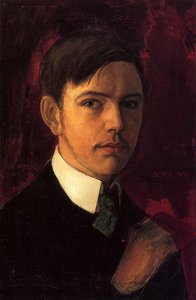
1887–1914, Nemčija
August Macke
Življenje in zgodnji razvoj Augusta Mackeja August Robert Ludwig Macke, ime sinonim za kratek a izjemno bleščeč cvet nemškega ekspresionizma, je živel življenje tragično prekinjeno z izbruhom prve svetovne vojne. Rodil se je leta 1887 v Meschedeju, v Vestfaliji, njegova umetniška pot pa je bila hitra evolucija in strastno raziskovanje, zaznamovano s neustavljivo radovednostjo do novih stilov in globoko željo po ujemanju bistva moderne izkušnje. Mackejevo zgodnje življenje je bilo prelomljeno z preselitvijo družine v Bonn, kjer je prejel prvo izobrazbo in začel negovati svojo rastočo nadarjenost. Čeprav se je formalno usposabljal na umetniški akademiji v Düsseldorfu od leta 1904 do 1906 pod vodstvom Adolfa Maennchena, je bil njegov umetniški glas resnično oblikovan z neodvisnim študijem in potovanji.
Tudi dela avtorja August Macke
 Dame v zelenem plašču1913
 Bathing girls z mestom na ozadju1913
 Nakupovalni Center1913
 Portrait of the Artist's Wife with Hat1909

Eseji o delu Vegetable fields
 August Macke: Expressionist Visions of Harmony & Modern LifeExplore the vibrant Expressionist paintings of August Macke (1887-1914). Discover his key role in Der Blaue Reiter, Fauvist influences, and…
 Izrazi čustev: 10 mojstrovin ekspresionizma za vaš domOdkrijte 10 mojstrovin ekspresionizma, ki so zaznamovale umetnost! Edvard Munch, Nolde & Kirchner – spoznajte zgodbe in čustva za vsakim de…
 Brushes of Anguish: The Psychological Landscape of Emotional Distress in Post-Impressionist ArtExplore the profound psychological depth of Post-Impressionist masters. Discover how color and form mirror human emotion.