Oljna izvedba
 Vse o Peter Du Cane







































 Za umetniška dela ali reprodukcije, ki so po katerikoli strani širše od 105 cm (približno 41 palč), bo okvir poslan v razstavljeni obliki kot komplet. Ta metoda zagotavlja varno dostavo in preprečuje poškodbe med transportom.


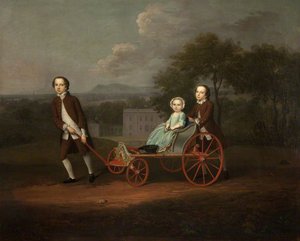
Mr Peter du Cane (1713–1803): A Portrait of Quiet Dignity Amidst Georgian Elegance
Arthur William Devis’s “Mr Peter du Cane” stands as a quintessential example of the conversation piece – a genre that flourished in Britain during the mid-18th century and aimed to capture not merely likeness but also character and social standing. Painted in 1749, this portrait offers a glimpse into the refined tastes of Georgian England and showcases Devis’s masterful command of classical composition and subtle tonal nuances. It's more than just a depiction; it’s an invitation to contemplate the sitter’s inner life within a meticulously crafted visual environment.- Subject Matter: The portrait portrays Peter du Cane, a gentleman of considerable wealth and influence, seated on a stone outcrop overlooking a tranquil landscape. This deliberate choice of setting—a rocky promontory bathed in diffused daylight—was typical of the era’s artistic conventions, symbolizing stability and contemplation.
- Style & Technique: Devis adhered to the principles of neoclassicism, prioritizing clarity of form and restraint in color palettes. The painting employs a realistic style, meticulously rendered with attention to detail – from the folds of Du Cane's coat to the texture of the stone beneath him. He skillfully utilized chiaroscuro—the dramatic interplay between light and shadow—to sculpt the figure’s musculature and imbue the scene with atmospheric depth.
- Color Palette: Dominating the canvas is a muted earth tone scheme, predominantly browns and ochres, punctuated by splashes of cool blues in Du Cane's waistcoat. This restrained palette reflects the prevailing aesthetic sensibilities of the time, favoring subtlety over flamboyant ornamentation. The blue serves as a striking visual counterpoint to the earthy hues, subtly emphasizing Du Cane’s aristocratic status.
- Historical Context: “Mr Peter du Cane” emerged during a period marked by intellectual and artistic ferment—the Enlightenment—where artists sought inspiration in classical ideals of beauty and harmony. Devis's work aligns with the broader trend toward portraying individuals as embodiments of virtue and intellect, reflecting the values championed by thinkers like Voltaire and Rousseau.
- Symbolism & Emotional Impact: Beyond its formal qualities, the portrait conveys a sense of dignified repose and inner serenity. Du Cane’s gaze directs outwards towards the landscape, suggesting contemplation and an appreciation for the natural world—a motif prevalent in Georgian art. The overall impression is one of understated elegance and intellectual refinement, inviting viewers to contemplate not just appearance but also character and moral virtue.
Vprašanja in odgovori
Ali je Peter Du Cane ročno slikano ali natiskano?
Ročno naslikano: usposobljen slikar kopira Peter Du Cane v olju na platnu »linen«
Kakšno velikost naj izberem za Peter Du Cane?
Originalne dimenzije so 74 x 53 cm. Velikosti so od 38.3 x 26.1 cm (€179) do 244.6 x 166.3 cm (€1362); v tabeli na tej strani so navedeni ključni koraki in njihove cene.
Koliko časa traja dostava?
Dostava traja 4 do 5 tedn"', z brezplačno svetovno ekspresno dostavo; na tej strani je na voljo tudi možnost nujne proizvodnje. Izdelek lahko vrnete v 100 dneh za popoln povračilo denarja, brez kakršnih koli pogojev.
Kje se nahaja originalni izvirni primerek dela Peter Du Cane?
Original se nahaja v kolekciji Harris Museum - Art Gallery, Preston.
Katere tehniko je Arthur Devis uporjal/a za delo Peter Du Cane?
Akril na platnu
 Predogled v realnem okolju

 Pošlji
 Deli
 Podrobnosti o delu
 Informacijski list


 Prenesi sliko
 Podobni izdelki
 Rentgenski posnetek
 Predvajaj diaporama
 Vprašanja in odgovori

 Statistika