Symbolist Painting · 1879
Spring Evening (Arnold Böcklin, 1879)
Arnold Böcklin (1827–1901) je izdelal Spring Evening. Zajema obdobje iz leta 1879. Spada v smer Symbolist Painting. Izdelano je iz Oil On Panel. Del se nahaja v muzeju Muzej lepih umetnosti v mestu Budimpešta, Madžarska. Dimenzije so 67 × 129 cm.
- 1879
- Oil On Panel
- 67 × 129 cm
- Muzej lepih umetnosti, Budimpešta

 Predogled v realnem okolju

 Ročno izdelano oljno slikarstvo
 Pošlji
 Deli
 Informacijski list


 Prenesi sliko
 Podobni izdelki
 Rentgenski posnetek
 Predvajaj diaporama
 Vprašanja in odgovori

 Statistika
Spring Evening, na kratek
- Naslov
- Spring Evening
- Avtor
- Arnold Böcklin (1827–1901)
- Umetnik, rojen v
- Basel, Švica
- Datum
- 1879
- Tehnika
- Oil On Panel
- Dimenzije
- 67 × 129 cm
- Kje je videti
- Muzej lepih umetnosti, Budimpešta, Madžarska
- Gibanje
- Symbolist Painting
- Tema
- mythology, nymphs, pan, forest, evening, landscape
Kaj prikazuje Spring Evening?
The Ethereal Embrace of Spring Evening
Arnold Böcklin’s “Spring Evening,” painted in 1879, isn't merely a depiction of a woodland scene; it’s an immersion into a realm of melancholic beauty and profound symbolism. Created during his time in Florence – a city that profoundly shaped his artistic vision – the painting captures a fleeting moment of enchantment, steeped in the atmosphere of late Romanticism and foreshadowing the rise of Symbolism. The canvas breathes with a quiet intensity, dominated by muted greens, blues, and browns, creating an almost dreamlike quality that immediately draws the viewer into its hushed world.
At the heart of the composition stands a woman, her posture suggesting both contemplation and vulnerability. Her hand gently resting on her head is a gesture simultaneously of yielding and quiet strength – she’s not passively observing but actively engaged with the scene unfolding before her. Beside her sits a man, seemingly lost in thought as he peruses a book, his presence offering a grounding element to the ethereal atmosphere. A bear, rendered with surprising tenderness, interacts playfully with both figures, blurring the lines between human and animal, nature and civilization. This carefully orchestrated tableau speaks of harmony, connection, and the delicate balance of the natural world.
A Symphony of Symbolism
Böcklin’s work is deeply rooted in mythology and folklore, drawing heavily on ancient Greek and Roman traditions. The central figure, often interpreted as Pan – the god of nature, shepherds, and wild music – plays his pipes, summoning a chorus of unseen nymphs from the surrounding forest. These dryads, with their flowing hair and graceful movements, represent the spirit of the woods, embodying both beauty and danger. The bear itself is a potent symbol, frequently associated with strength, wisdom, and primal instincts—a reminder of humanity’s connection to the earth.
The painting's muted palette contributes significantly to its symbolic weight. The cool blues and greens evoke a sense of melancholy and introspection, while the browns ground the scene in the tangible reality of the forest floor. The lighting is soft and diffused, creating an atmosphere of twilight—a liminal space between day and night, representing transition, mystery, and perhaps even mortality. Böcklin masterfully uses color not to simply depict a landscape but to convey complex emotions and ideas.
Technique and Artistic Influences
“Spring Evening” exemplifies Böcklin’s distinctive artistic style, characterized by meticulous detail, rich textures, and an almost obsessive attention to the natural world. He employed a technique of layering thin glazes of oil paint, building up color gradually to achieve remarkable depth and luminosity. The brushwork is subtle yet expressive, conveying both the smoothness of the forest floor and the intricate details of the foliage.
Böcklin’s artistic journey was profoundly influenced by his time in Düsseldorf, where he studied under Schirmer and became associated with the Düsseldorf School of Painting. However, it was in Florence that he truly developed his unique Symbolist vision, drawing inspiration from the city's rich cultural heritage and its connection to antiquity. The painting also reflects the influence of Romanticism, particularly the emphasis on emotion, imagination, and the sublime beauty of nature—themes central to the movement.
A Timeless Resonance
“Spring Evening” continues to resonate with viewers today because it taps into universal themes of longing, connection, and the search for meaning. Its evocative atmosphere and symbolic richness invite contemplation and offer a glimpse into the artist’s deeply personal vision. The painting's enduring appeal lies in its ability to transport us to another time and place—a world where myth and reality intertwine, and where the beauty of nature is inextricably linked to the mysteries of the human soul.
V katerem muzeju se nahaja Spring Evening?
Muzej lepih umetnosti
Budimpešta, Madžarska
Zgodovina in korenine Muzeja lepih umetnosti Ustanovitev Muzeja lepih umetnosti je bila uradno potrdjena z Milenijsko zakonodajo leta 1896. Ta zakonodajna odločitev je bila usmerjena v ustvarjanje namenskine institucije za bele umetnosti v Budimpešti, na Madjarskem. Za ta namen je bila izbrana lokacija, kjer je pred tem stajal paviljon Rotunda, zgraditev, ki je bila namenjena razstavi Fesztyjevega krogovja.
 Jael in SiseraArtemisia Gentileschi, 1620
 Ženska, ki bere pismaPieter De Hooch, 1664
 Pieter Bruegel starejši
115 x 168 cm
Pieter Coecke van Aelst (master)
Museum of Fine Arts, Budapest, Hungary
Oil on panel
Northern Renaissance
Detailed depiction of a religious gathering
Predavanje svetihojana
Northern Renaissance
Religious narraPieter Bruegel Starejši, 1566
Visokoresolucijske slike dela Spring Evening

Javna lastnina: umetnik je umrl leta 1901.
Druge velikosti, izrezave in citiranje →Arnold Böcklin, Spring Evening (1879), Muzej lepih umetnosti. Javna lastnina
Odgovori na vprašanja o Spring Evening
Kje lahko vidim originalno delo "Spring Evening" avtorja Arnold Böcklin?
Originalno delo "Spring Evening" avtorja Arnold Böcklin se nahaja v muzeju Muzej lepih umetnosti, Budimpešta, Madžarska. Reprodukcija omogoča, da ta sklad prikazujete tudi v svojem domu.
V letu katerega je bilo ustvarjeno delo "Spring Evening" avtorja Arnold Böcklin?
"Spring Evening" izvira iz 1879. Ta datum delo situira v okvir Arnold Böcklinove kariere in obdobja, v katerem je nastalo.
Z kakšno tehniko je izdelano "Spring Evening"?
"Spring Evening" je izdelano z uporabo tehnike Oil On Panel.
Kakšnih je originalnih dimenzij "Spring Evening"?
Dimenzije originalnega dela "Spring Evening" avtorja Arnold Böcklin so 67 x 129 cm.
Kaj prikazuje "Spring Evening" avtorja Arnold Böcklin?
Motivi dela "Spring Evening" so mythology, nymphs, pan, forest, evening, landscape, symbolism, böcklin.
Ali se lahko slika "Spring Evening" avtorja Arnold Böcklin prosto reproducira?
Status avtorskih pravic za "Spring Evening" avtorja Arnold Böcklin: del je v javni domeni – avtorska pravica je zastarela. To določa, ali se lahko reprodukcije slike izdelujejo prosto.
Kateremu umetniku je "Spring Evening" pripisano?
"Spring Evening" pripisujemo Arnold Böcklin.
V kateri umetniški smer spada "Spring Evening" avtorja Arnold Böcklin?
Umetnostni smer, ki jo zastopa "Spring Evening" avtorja Arnold Böcklin, je Symbolist Painting. Ta klasifikacija delo uvršča med sorodne umetnike in umetniška dela.
V katero obdobje kariere Arnold Böcklin pripada delo "Spring Evening"?
"Spring Evening" predstavlja Late Period umetnika Arnold Böcklin.
O umetniku, Arnold Böcklin
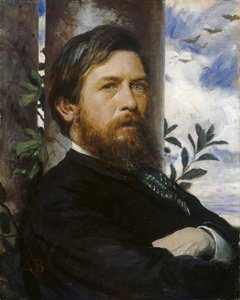
1827–1901, Švica
Arnold Böcklin
Senča otoka Basel na Švici predstavlja izhodišče za življenje, ki ga je opredelila napetost med materialnim in spektralnim. Mladenič, rojen 16. oktobra 1827 Christianu Fredericku Böcklinu in Ursuli Lippe, se je skozi čas odmaknil od očetovega trgovine s svilo in odšel v strogo akademske sale Düsseldorf Academy. Pod mentorstvom Schirmerja je začel absorbirati jezik pejzaža, veščino, ki jo je kasneje uporabil za kartiranje geografije človeške duše.
Tudi dela avtorja Arnold Böcklin
 Otok smrti (Prva različica)1880
 Samoportret s smrtjo, ki igra violino
 Vojača1896
 Otok mrtvih1880

Eseji o delu Spring Evening
 French artworks of the 1880sFrench Impressionist masterpieces by Claude Monet, Pierre-Auguste Renoir, and Georges Seurat. Find museum-quality reproductions on Original…
 Symphony of Sunlight: The Luminous Legacy of Pine Tree Landscapes in Art HistoryExplore the luminous history of pine landscapes through Sorolla and Shishkin. Discover the magic of forest art today.
 En Plein Air Serenity: Exploring the Luminous Beauty of Impressionist Garden ArtExplore the luminous history of Impressionist garden art through Monet and Van Gogh. Discover the magic of plein air painting today.