

 Preverite v realnem okolju
 Pošlji kot čestitko
 Deli
Deli
 Podrobnosti
 Priročnik

 Prenesi
 Podobni artefakti
 Rentgenski posnetek
 Predvajaj diaporama
 Statistika
Centaur Watching Fish
 Oil On Canvas
- WallArt
- Symbolism
 1878
1878- 19th Century
 43.0 x 70.0 cm
 Kunsthaus Zürich
 Preberi več
Giclée tisk / Umetniški tisk
Giclée ali platnati odtis muzejske kakovosti z hitro proizvodnjo in prilagodljivimi možnostmi končne obdelave. ( Naročite ročno slikano reprodukcijo Preklop na digitalno sliko)




P118B €10

P118H €10

P118W €10

P438Z €10

P508JH €12

P508YH €12

P805H €10

P805Z €10

P919BZ €10

P919G €10

P919XJ €10

P959ZH €10

P968JZ €12

W106C €8

W218G €10

W218JH €8

W218Y €10

W307PJ €10

W316G €10

W316PJ €8

W316Y €10

W398PJ €8

W4111J €10

W500HY €15

W500JH €15

W692G €12

W849H €8

W940BG €15

W953PJ €8




Izberite eno od naših vnaprej določenih velikosti, ki ustrezajo prvotnim proporcijam umetničkega dela.

Vnesite širino in višino, ki jih potrebujete za svoj okvir ali steno. Tiskanje se lahko le odreže, vendar ga ni mogoče narediti večjega od slike, zato format z drugačno obliko pomeni izgubo dela slike. Pred tiskanjem vam pošljemo digitalni predogled za potrditev. Slika, prikazana na tej strani, ne prikazuje dejanskega izrezkov — le predogled to omogoča.
Globalna dostava () v 2 tednih namesto standardnih 4/5 tednov. (20 oktober)

Brezplačna ekspresna dostava po vsem svetu

Visokokakovostno laneno platno

Popolno zavarovanje pošiljke

Garancija povračila carine in uvoznih davkov

Garancija popolnega barvnega ujemanja

Politika vračila v 100 dneh (le v primeru okvar)

Garancija 100% povračila denarja

Popust pri večjem naročilu
 Možnost stekla je na voljo le za velikosti pod 110 cm

Centaur Watching Fish
Giclée tisk / Umetniški tisk
Velikost reprodukcije
-


Skupna cena
€ 70
A Silent Meditation on Nature and Mortality
In the quietude of Arnold Böcklin’s 1878 masterpiece, “Centaur Watching Fish,” the viewer is invited into a realm where the boundaries between the mythological and the terrestrial dissolve. This evocative oil on canvas, currently held in the prestigious Kunsthaus Zürich, serves as a profound gateway into the Symbolist movement—a period of art history dedicated to exploring the hidden psychological depths of the human soul. Rather than presenting a mere scene from ancient legend, Böcklin crafts an immersive experience that speaks to the universal themes of solitude and the silent, rhythmic pulse of the natural world. The centaur, a creature of dual nature, reclines upon a serene shoreline, his gaze fixed upon the movement beneath the water's surface, creating a moment of suspended animation that feels both eternal and fleeting.
The composition is masterfully orchestrated to evoke a sense of Romantic reverie. Utilizing a horizontal format, Böcklin emphasizes the reclining posture of the centaur, grounding the mythological figure within a landscape of soft sands and swaying grasses. The artist deliberately eschews the rigid precision of strict realism in favor of an emotional truth. Through the use of diffused lighting and gentle shadows, he establishes an atmosphere of melancholic stillness. This technique allows the viewer to feel the weight of the silence, as if the very air around the creature is heavy with contemplation. It is a painting that does not demand attention through spectacle, but rather earns it through a subtle, haunting intimacy.
The Mastery of Texture and Atmosphere
Technically, “Centaur Watching Fish” is a triumph of texture and perspective. Böcklin employs the impasto technique with remarkable skill, applying thick, deliberate layers of paint to render the coarse fur of the centaur’s equine half. This tactile richness provides a palpable sense of physicality, making the creature feel present and breathing within the frame. To balance this heavy texture, the artist utilizes atmospheric perspective to create an illusion of infinite depth. By reducing color saturation and softening the details of the distant horizon, he simulates a hazy, dreamlike distance that reinforces the theme of isolation. This method draws a direct lineage from the Romantic masters like Caspar David Friedrich, using the landscape as a mirror for spiritual introspection.
The color palette is a sophisticated arrangement of earthy tones—ochres, deep browns, and muted beiges—which lends the work an organic, timeless quality. These warm, grounded hues are contrasted by the subtle, shimmering light reflecting off the water, drawing the eye toward the focal point of the centaur’s quiet observation. For the collector or interior designer, this piece offers a unique aesthetic versatility; its somber yet tranquil mood provides a sophisticated anchor for a room, offering a sense of historical depth and intellectual gravity that more contemporary works may lack.
Symbolism: The Intersection of Myth and Being
Beyond its visual splendor, the painting functions as a complex symbolic tapestry. The centaur itself—a hybrid of human intellect and animal instinct—serves as a powerful metaphor for the duality of existence. As he watches the fish, there is a profound sense of the relationship between humanity and the untamed elements of nature. The act of watching becomes a meditation on mortality; the stillness of the figure suggests a resignation to the cycles of life and death that govern both man and beast. There is a touch of sadness in his solitude, yet it is a beautiful, dignified melancholy that celebrates the quiet dignity of existence.
For those seeking to bring a piece of this profound emotional landscape into their personal spaces, a high-quality reproduction of this work offers more than just decoration. It provides a window into a bygone era of artistic exploration, a constant reminder of the beauty found in silence and the enduring power of myth. Whether placed in a library, a study, or a curated gallery space, “Centaur Watching Fish” continues to provoke thought, inviting all who encounter it to pause, breathe, and reflect upon the silent wonders of the world.
Vprašanja in odgovori
Kakšno vzdušje ima "Centaur Watching Fish"?
"Centaur Watching Fish" avtorja Arnold Böcklin je po vzduju opisan kot Romantic. Ta razvrščitev lahko pomaga pri izbiri ustreznega okolja za delo.
Ali lahko pred nakupom vidim "Centaur Watching Fish" avtorja Arnold Böcklin na svoji steni?
Delo "Centaur Watching Fish" avtorja Arnold Böcklin si lahko ogledate na svoji steni s stranjo AR predogled, z uporabo augmented reality tehnologije na združljivi napravi.
Ali je "Centaur Watching Fish" v celotnosti bolj svetel ali bolj temen?
"Centaur Watching Fish" avtorja Arnold Böcklin je zabeležen z jasnostjo balanced in luminanco Soft Shadow.
Biografija umetnika
zgodna mladost in izobraževanje
Arnold Böcklin, švicarski simbolist, se je rodil 16. oktobra 1827 v Baslu na Švici. Njegov oče, Christian Frederick Böcklin, je pripada bil starodavnemu rodu iz Schaffhausena in se je ukvarjal v trgovini s svilo. Arnoldova mati, Ursula Lippe, je bila domačinka istega mesta. Svoje umetniške korenine je utrjal na akademiji v Düsseldorfu pod mentorstvom Schirmerja, kjer je vzpostavil tesen odnos in postal prijatelj s Anselmom Feuerbachom. Böcklin ostaja tesno povezan z umetniško šolo v Düsseldorfu.umetniška pot in simbolizem
Umetnično potovanje je Böcklina vodilo skozi številna mesta, vključno s Parizom, kjer je delal v Louvru, in Rimom, kjer so nanj močno delovali tamojšnji razgledi. Njegova dela pogosto prikazujejo alegorijske in mitološke figure v okoljih z klasično arhitektijo, pri čemer raziskuje globoke teme smrti in smrtnosti.- Great Park, eden njegovih najranjših posegov, je prikazal staro mitologijo.
- Nimfa in satir (1858) ter Safona (1859) so bila izstopajoča dela tega obdobja.
- Böcklinov portret sebe, ko smrt igra violino (1872) je popolnoma prikazal njegov edinstven slog.
dediščina in vpliv
Böcklin je najbolj znan po svojih petih različicah dela Otok smrti (1880–1886), ki je priklical na spomin angleškega pokopališča v Florenci, kjer je bila pokopana njegova hči. Njegovo del je vplival na mlajše umetnike, kot je Hans Thoma, in je navdihnilo številne kompozitorje pozne romantike.- Clement Greenberg je opisal Böcklinovo delo kot "enega najbolj dovršenih izrazov" svojega časa.
- Böcklinov slog se je prepletal s predrafaelitami, pri čemer je poudarjal svet sanj in mistike.
muzeji in zbirke
Böcklinova dela lahko najdemo v različnih muzejih, med drugim:- Öffentliche Kunstsammlung (Basel, Švica)
- Kunstmuseum Basel (Švica)
- Museum Kunsthaus Zürich (Zürih, Švica)
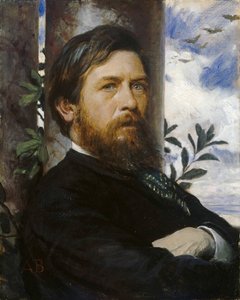
Arnold Böcklin
1827 - 1901 , Švija
Ključne informacije
- Artistic Movement Or Style: Simbolizem
- Artists Or Movements Influenced By This Artist:
- Hans Thoma
- Pre-rafaeliti
- Artists Who Influenced This Artist:
- Schirmer
- Feuerbach
- Date Of Birth: 16. oktober 1827
- Date Of Death: 16. januar 1901
- Full Name: Arnold Böcklin
- Nationality: Švizergija
- Notable Artworks:
- Otok mrtvih
- Nimfa in satir
- Safona
- Portret sebe
- Place Of Birth: Basel, Švizerija
Sorodni članki

Romantic Realism's Finest: 10 Masterpieces for Your Home | OriginalUniqueArt
Explore 10 defining masterpieces of Romantic Realism! Discover Courbet, Millet & Daumier's powerful paintings—capturing emotion and social realities. Find museum-quality reproductions for your home at OriginalUniqueArt.com.

The Enduring Power of Painting: A Historical & Contemporary Exploration of Form and Emotion
Explore the rich history & enduring techniques of oil painting with OriginalUniqueArt. Discover masterpieces, learn about art collecting, and find authentic handmade reproductions crafted by skilled artists.

The Enduring Legacy of Oil on Canvas: Technique, History & Aesthetic Impact
Explore the rich history & techniques of oil painting – from Renaissance masters to Impressionism. Discover pigments, layering methods, and why this timeless medium endures. Expert insights for artists & art enthusiasts.

Oil on Canvas: A Historical & Technical Exploration of a Timeless Artistic Medium
Explore the rich history & enduring techniques of oil painting on canvas. Discover the science behind its longevity, conservation practices, and contemporary relevance. Expert insights for art enthusiasts.

Trajnost platna v umetnosti: Tehnike, zgodovina in sodobne metode ohranjanja
Odkrijte zgodovino platna, tehnike ohranjanja in najnovejše metode konzerviranja slik. Izvedite več o vplivu oljne barve na trajnost umetniških del ter nasvetih strokovnjakov za dolgotrajno lepoto vaših dragocenosti.
