Preklop na tiskanine
 Preberi več







































 Za umetniška dela ali reprodukcije, ki so po katerikoli strani širše od 105 cm (približno 41 palč), bo okvir poslan v razstavljeni obliki kot komplet. Ta metoda zagotavlja varno dostavo in preprečuje poškodbe med transportom.


The Soul Within the Matter
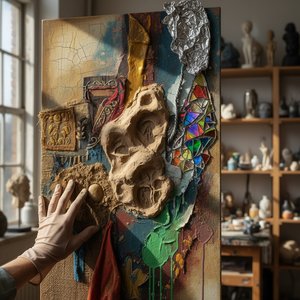
In the realm of contemporary art, few voices resonate with the raw, tactile intensity of Antoni Tàpies. His work Gothic Box, created in 1989, serves as a profound testament to his philosophy of pintura matèrica—a style where the physical substance of the medium becomes the very language of the soul. This piece is not merely an object to be observed; it is an encounter with texture and history. At first glance, the viewer is drawn into a miniature world of weathered surfaces and intricate carvings that evoke the ancient and the eternal. The box, appearing as a fusion of stone and wood, carries a rustic, primordial energy that suggests it has been unearthed from a forgotten corner of Catalan history.
The artistry lies in the delicate balance between spontaneous gesture and deliberate craftsmanship. Tàpies believed that any mark expressing the human condition—even something as fleeting as graffiti on a wall—held more value than the sterile perfection of traditional museum pieces. In Gothic Box, we see this manifested through the detailed carvings of a bird and a fish, symbols that dance across the surface with a quiet, organic grace. These motifs, paired with the enigmatic letter "G" etched into the corner, invite the observer to contemplate personal inscriptions and the layers of identity that define us. The piece breathes with a life force that transcends its small 18 x 23 cm dimensions, offering a window into a universe where every scratch and indentation tells a story.
A Masterpiece of Texture and Symbolism
To possess or display a reproduction of this work is to invite a sense of profound depth into a space. For the discerning collector or interior designer, Gothic Box offers more than just aesthetic appeal; it provides a focal point of intellectual and emotional gravity. The technique employed by Tàpies involves an experimental use of non-traditional materials—clay, marble dust, and organic debris—to create a surface that feels alive to the touch. Even in a high-quality reproduction, the illusion of this rugged, sculptural relief is maintained, allowing the interplay of light and shadow to animate the carved figures of the bird and fish.
The emotional impact of the piece is one of quiet introspection. It evokes the feeling of holding a relic, a sacred object that bridges the gap between the ephemeral present and the enduring past. The muted, earthy tones and the weathered appearance of the "stone-like" wood create an atmosphere of serenity and strength. Whether placed in a minimalist modern gallery or nestled within a richly textured study, this artwork acts as an anchor, grounding the surrounding environment with its historical weight and artistic integrity. It is a celebration of the beauty found in imperfection, making it an essential acquisition for those who find inspiration in the rugged, the authentic, and the deeply human.
Vprašanja in odgovori
Kaj ima "Gothic Box" skupnega z ostalo celotno tvorbino umetnika Antoni Tàpies?
"Gothic Box" z ostalimi deli Antoni Tàpies deli svoj Art Informel slog in zastopljene teme: paul klee influence, joan miró influence, matter painting style, catalan identity, existentialist themes, late career exploration.
Kako se v delu "Gothic Box" avtorja Antoni Tàpies prepletata umetniška smer in dobo?
"Gothic Box" avtorja Antoni Tàpies uvrščamo v smer Art Informel, v obdobje Modern svojega ustvarjalca.
V kakšnem usmerjenju je delo "Gothic Box" avtorja Antoni Tàpies?
Format dela "Gothic Box" je Panoramic, kar je koristno pri načrtovanju postavitve reprodukcije.
 Pošlji
 Deli
Deli
 Podrobnosti o delu
 Priročnik

 Prenesi sliko
 Podobni izdelki
 Predvajaj diaporama
 Q&A
Q&A Statistika