
 Predogled v realnem okolju
 Pošlji
 Deli
Deli
 Podrobnosti o delu
 Priročnik

 Prenesi sliko
 Podobni izdelki
 Rentgenski posnetek
 Predvajaj diaporama
 Vprašanja in odgovori
 Statistika
Walking Lion


 Preberi več
Giclée tisk / Umetniški tisk
Giclée ali platnati odtis muzejske kakovosti z hitro proizvodnjo in prilagodljivimi možnostmi končne obdelave. ( Kupite ročno slikano delo Preklop na digitalno sliko)




P118B €10

P118H €10

P118W €10

P438Z €10

P508JH €12

P508YH €12

P805H €10

P805Z €10

P919BZ €10

P919G €10

P919XJ €10

P959ZH €10

P968JZ €12

W106C €8

W218G €10

W218JH €8

W218Y €10

W307PJ €10

W316G €10

W316PJ €8

W316Y €10

W398PJ €8

W4111J €10

W500HY €15

W500JH €15

W692G €12

W849H €8

W940BG €15

W953PJ €8




Izberite eno od naših vnaprej določenih velikosti, ki ustrezajo prvotnim proporcijam umetničkega dela.

Vnesite širino in višino, ki jih potrebujete za svoj okvir ali steno. Tiskanje se lahko le odreže, vendar ga ni mogoče narediti večjega od slike, zato format z drugačno obliko pomeni izgubo dela slike. Pred tiskanjem vam pošljemo digitalni predogled za potrditev. Slika, prikazana na tej strani, ne prikazuje dejanskega izrezka — le predogled to omogoča.
Globalna dostava () v 2 tednih namesto standardnih 4/5 tednov. (3 november)

Brezplačna ekspresna dostava po vsem svetu

Visokokakovostno laneno platno

Popolno zavarovanje pošiljke

Garancija povračila carine in uvoznih davkov

Garancija popolnega barvnega ujemanja

100-dnevna politika vračil (le v primeru okvar)

Garancija 100% povračila denarja

Popust pri večjem naročilu
 Možnost stekla je na voljo le za velikosti pod 110 cm

Walking Lion
Giclée tisk / Umetniški tisk
Velikost reprodukcije
-


Skupna cena
€ 72
A Regal Presence: Deconstructing the Majesty of Barye’s Walking Lion
Antoine-Louis Barye's "Walking Lion," a bronze sculpture dating from the mid-19th century, isn’t merely a depiction of an animal; it’s a visceral embodiment of power, grace, and untamed wilderness. Born in Paris during a period of profound artistic transformation – the rise of Romanticism – Barye sought to move beyond the static formality of Neoclassical sculpture, instead capturing the dynamic energy and raw emotion inherent in the natural world. This particular piece, rendered with an almost palpable sense of movement, invites us into the heart of the lion’s spirit, a testament to Barye's revolutionary approach to animal representation.
The sculpture immediately commands attention through its sheer physicality. The bronze itself, meticulously cast and patinated to achieve a rich, burnished surface, speaks volumes about Barye’s mastery of lost-wax casting – a technique demanding both technical precision and artistic intuition. Notice the subtle variations in tone; the darker recesses of the musculature contrast beautifully with the highlights that accentuate the lion's powerful form. The texture is crucial: it’s not smooth or polished, but retains a tactile quality, hinting at the rough hide and formidable strength beneath. The wooden base, deliberately simple and rectangular, provides a grounding element, anchoring this embodiment of wildness within a contained space.
Capturing the Spirit of the Animalier
Barye’s work falls squarely within the burgeoning “animalier” movement – a trend that championed the study and representation of animals in sculpture. Prior to Barye, depictions of lions were often idealized or stylized, frequently serving as symbols of royalty or military might. However, Barye sought to capture the *essence* of the lion, its predatory instincts, its territoriality, and its inherent wildness. He achieved this through an intensely detailed anatomical study, meticulously rendering every muscle fiber, every ripple of fur, and every glint of light on the bronze surface. The pose itself – a deliberate stride forward, head held high – conveys a sense of confident authority and unwavering determination.
Consider the influence of Romanticism, which emphasized emotion, individualism, and the sublime power of nature. Barye’s lion embodies these ideals perfectly. It's not simply a beautiful animal; it’s a force of nature, a symbol of courage and resilience. The sculpture resonates with a primal energy, evoking a sense of awe and respect for the untamed wilderness.
Symbolism and Historical Context
The lion has long held significant symbolic weight across cultures – representing strength, nobility, justice, and vigilance. In ancient Egypt, it was associated with the sun god Ra; in Judeo-Christian tradition, it symbolizes Christ as “the Lion of Judah.” Barye’s sculpture taps into this rich tapestry of symbolism, reinforcing the lion's image as a creature of power and majesty. Furthermore, Barye’s work emerged during a period of significant social and political upheaval – the rise of nationalism, the Napoleonic Wars, and the burgeoning industrial revolution. His sculptures served as a powerful antidote to the rigid formality of classical art, offering instead a celebration of the natural world and its inherent beauty.
A Legacy in Bronze: Barye’s Enduring Influence
Antoine-Louis Barye remains one of the most celebrated sculptors of the 19th century. His pioneering work as an animalier fundamentally changed the way artists approached the representation of animals, paving the way for future generations of sculptors and artists. “Walking Lion” stands as a prime example of his genius – a captivating blend of technical skill, artistic vision, and profound understanding of the natural world. Today, reproductions of this iconic sculpture continue to inspire and delight, offering a tangible connection to a bygone era of artistic innovation and romantic fervor.
Vprašanja in odgovori
Kaj prikazuje "Walking Lion" avtorja Antoine-Louis Barye in kakšno vzdušje ustvarja?
"Walking Lion" avtorja Antoine-Louis Barye prikazuje bronze sculpture, lion, barye, animalier, power, grace, movement v Romantic vzdušju. Motiv in atmosfera skupaj opisujeta delo.
Ali je Antoine-Louis Barye, ustvarjalec dela "Walking Lion", znan tudi pod drugimi imeni?
Drugi imeni, ki so zabeležena za ustvarjalca dela "Walking Lion", imenovanega Antoine-Louis Barye, vključujejo Antoine Louis Barye, Antoine Barye.
Za kakšno umetniško delo velja "Walking Lion"?
"Walking Lion" avtorja Antoine-Louis Barye je razvrščeno v kategorijo WallArt. Ta kategorija opisuje vrsto umetniškega dela, da je original.
Biografija umetnika
Pionir živalske vprašljive skulpture: Življenje in dediščina Antoinea-Louisa Baryeja
Antoine-Louis Barye, rojen v Parizu 24. septembra 1795, se je izrinil kot ključna figura v svetu skulpture 1av 19. stoletja. Ni le prikazoval živali; v njih je vlival dramatično intenzivnost in anatomsko natančnost, ki prej niso bile nikoli videne, s čimer je učinkovito uvedel žanr animalier – posvečen oblikom živali – v svet bele umetnosti. Baryejeva pot se ni začela v ateljeju skulptorja, temveč kot učeniča zlatičarja, ki je sledil očetovi stopnji. Ta zgodnja izobrazba je v njem utrdila natančno pozornost do podrobnosti in mojstrstvo tehnike, ki se je skozi njegovo kariero pokazalo kot neprecenljivo. Te veščine je še izpil pod skulptorji, kot sta François-Joseph Bosio in baron Antoine-Jean Gros, pri čemer je sprejel klasične načeli in hkrati razvijal edinstveno romantično občutljivost. Njegova formalna izobraževanja na École des Beaux-Arts je zagotavljilo trdne temelje, vendar je bil prav srečanje z živo svetom – posebej z živalmi v vrtu Jardin des Plantes v Parizu okoli leta 1823 – tisto, kar je zares razžgločilo njegovo umetniško vizijo.Od zlatičarja do animalierja: Razvoj edinstvenega sloga
Baryejeva predanost opazovanju živali je bila skoraj obsesivna. Ni le preprosto pogledoval; študiral je, skiciral in temeljito analiziral njihovo anatomijo, gibanje in vedenje. Ta predanost realizmu pa ni bila hladna ali klinična. Bila je prepojena z čustveno vročino, značstveno za romantično gibanje. Njegova zgodnja dela, kot sta „Milo iz Krotonov, ki ga požre lev“ (1819) in „Herkul z erimantskim divjim živalom“ (okoli leta 1820), ustvarjena še med šolanjem, so nakazovala na njegov vzrastajoči talent za dinamično kompozicijo in dramatično pripovedovanje. Toda prav s skulpturami, kot sta „Tiger, ki požira krokodila gaviala“ (1831) – monumentalni gips, ki je v Salonu povzročil senzacijo – in „Lev, ki zdavi kačnika“ (1832), ulitimi v bronz, je Barye resnično vzpostavil svoj prepoznavni slog. To niso bile statične predstavitve; bili so trenutki surove moči, zamrznjeni v času, ki so zajemali brutalno lepoto naravne borbe za preživetje. Preslal je enostavno imitacijo, da bi izrazil samo bistvo živalskega življenja – njihovo moč, okretnost in neukrotjeno popolnost. Njegovo del je odmevalo z naraščajočo fascinacijo javnosti nad eksotičnim in divjim, kar je odražalo romantično hrepenenje po izkušnjah zunaj meja civilizirane družbe.Pomembna dela in monumentalne naročila
S skozi svojo kariero je Barye ustvaril osupljivo nabor skulptur, od katerih vsaka dokazuje njegovo nepremagljivo sposobnost zajema živalske oblike in gibanja. Poleg ikonskih del, kot sta „Tiger, ki požira krokodila gaviala“ in „Lev, ki zdavi kačnika“, so njegova vrhunska dela, kot so „Tesej in Minotav“ (1843), „Roger in Angelica na hipogrifu“ (1846), „Lapita in Kentavr“ (1848) in „Jaguar, ki požre zajeca“ (1850), prikazala njegovo vsestranost in domišljivo moč. Ni bil omejen le na prikaze predatorjev; raziskoval je tudi mitološke scene, v njih pa je vlival isto dinamično energijo in anatomsko natančnost, ki sta definirali njegove študije živali. Njegov talent se je razširil tudi izven bronz v manjšem obsegu. Barye je prejel prestižna naročila za monumentalna dela, vključno z „Levom na Koloni julija“, močnim simbolom francijske odpornosti, ter skulpturami, ki okrasijo vrt Tuileries v Parizu. Ti velikostni projekti so dokazali njegovo sposobnost prevajanja umetniške vizije v javno umetnost in utrdili njegov ugled med vodilnimi francoskimi skulptorji.Vplivi, težave in trajna pomembnost
Baryejevo del je bila sinteza raznih vplivov. Romantična poudarjenost čustev in individualizma je opazna v dramatični napetosti njegovih skulptur. Hkrati je črpal navdih iz klasične umetnosti, kar je vidno v njegovi pozornosti do anatomske natančnosti in idealiziranih oblik. Vendar pa ga je zares ločilo njegov znanstveni pristop k opazovanju – neposreden rezultat neštetnih ur, preteklih pri študiranju živali v Jardin des Plantes. Kljub kritičnemu priznanju Baryejevo življenje ni bilo brez težav. Skozi velik del kariere se je soočal s finančnimi težavami, zlasti zaradi slabega poslovnega okusa. Bankrot v letu 1848 ga je prisilil k prodaji svojih modelov in kalupov, kar je vodilo v obdobje, ko so trg preplavile slabše kopije, kar je škodovalo njegovemu ugledu. Nekatero stabilnost je našel kot profesor risanja na Muzeju naravne zgodovine leta 154, vendar je njegov genij popoln priznan šele po smrti. Danes je Antoine-Louis Barye prepoznan kot oče moderne živalske skulpture. Njegov vpliv na naslednje generacije umetnikov je nepodvden, njegova dela pa so slavila zaradi svoje moči, realizma in trajne lepote. Žanr animalier je dvignil iz nišne zanimivosti v spoštovan oblik umetniškega izražanja in pustil neizbrisno sled v zgodovini skulpture. Njegova dediščina še vedno navdihuje čudenj in občudovanje zbirateljev in muzejev po vsem svetu.
Antoine-Louis Barye
1796 - 1875 , Francija
Hitri podatki
- Artistic Movement Or Style: Romantizem
- Artists Or Movements Influenced By This Artist: ['Hišni kiparji']
- Artists Who Influenced This Artist:
- Francois-Joseph Bosio
- Baron Antoine-Jean Gros
- Date Of Birth: 24. september 1795
- Date Of Death: 25. junij 1875
- Full Name: Antoine-Louis Barye
- Nationality: Francoz
- Notable Artworks:
- Tiger, ki požira gavijala
- Lev, ki zganja kačo
- Tezej in Minotavre
- Roger in Angelica
- Lapita in Kentavr
- Jaguar, ki požira zajeca
- Place Of Birth: Pariz, Francija
Sorodni članki

The Enduring Legacy of Bronze: History, Technique & Artistic Expression for the Collector
Explore the rich history & enduring appeal of bronze sculpture with expert insights for collectors at OriginalUniqueArt. Learn about casting techniques, iconic artists, and collecting tips.

Bronze Sculptures That Defined Art History | OriginalUniqueArt
Journey through art history with our Top 10 bronze sculptures! Explore masterpieces by Rodin, Michelangelo & more. Discover stories behind iconic statues and find museum-quality reproductions for your home decor at OriginalUniqueArt.com.
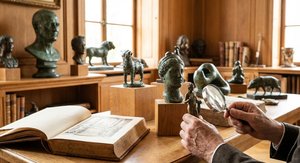
The Enduring Legacy of Bronze Sculpture: A Collector's Guide to Form & Cultural Significance
Explore the rich history & enduring appeal of bronze sculpture with expert insights for collectors at OriginalUniqueArt. Learn about casting techniques, iconic artists, and collecting tips to build a discerning art collection.

Bronze Age to Modern Masters: 10 Sculptures That Redefined Art | OriginalUniqueArt
Journey through art history with 10 legendary bronze sculptures – from Michelangelo's David to Rodin’s Thinker. Explore the stories, techniques & timeless beauty of these masterpieces. Find museum-quality reproductions & elevate your home decor on OriginalUniqueArt.com.

The Enduring Legacy of Bronze: A Historical & Artistic Exploration for the Collector
Explore the rich history & enduring appeal of bronze sculpture with expert insights for collectors at OriginalUniqueArt. Learn about casting techniques, iconic artists, collecting tips & contemporary interpretations.

