

 Preverite v realnem okolju
 Pošlji kot čestitko
 Deli
Deli
 Podrobnosti
 Priročnik

 Prenesi
 Podobni artefakti
 Rentgenski posnetek
 Predvajaj diaporama
 Statistika
Light Blue Nursery
 Painting
- Contemporary Realism
 1968
1968 124.0 x 121.0 cm
 Smithsonian American Art Museum
 Preberi več
Giclée tisk / Umetniški tisk
Giclée ali platnati odtis muzejske kakovosti z hitro proizvodnjo in prilagodljivimi možnostmi končne obdelave. ( Naročite ročno slikano reprodukcijo Preklop na digitalno sliko)




P118B $10

P118H $10

P118W $10

P438Z $10

P508JH $12

P508YH $12

P805H $10

P805Z $10

P919BZ $10

P919G $10

P919XJ $10

P959ZH $10

P968JZ $12

W106C $8

W218G $10

W218JH $8

W218Y $10

W307PJ $10

W316G $10

W316PJ $8

W316Y $10

W398PJ $8

W4111J $10

W500HY $15

W500JH $15

W692G $12

W849H $8

W940BG $15

W953PJ $8




Izberite eno od naših vnaprej določenih velikosti, ki ustrezajo prvotnim proporcijam umetničkega dela.

Svoje dimenzije lahko vnesete sami, da bodo ustrezne za določen okvir ali prostor. Če izbrana velikost ne bo skladna z razmerji izvirne slike, bomo umetniško delo orezali ali podaljšali s pomočjo ogledalnega odraza ali barvno polnega roba. Pred začetkom proizvodnje vam bomo poslali digitalni predogled za potrditev.
Upoštevajte, da predogled na zaslonu ne prikazuje dejanskega orezovanja ali podaljševanja. Le digitalni predogled bo natančno prikazal končno kompozicijo.
Čeprav so na voljo prilagojene velikosti, priporočamo izbiro dimenzije s predhodno določenega seznama, da ohranite prvotna razmerja.
Globalna dostava () v 2 tednih namesto standardnih 4/5 tednov. (26 september)

Brezplačna ekspresna dostava po vsem svetu

Visokokakovostno laneno platno

Popolno zavarovanje pošiljke

Garancija povračila carine in uvoznih davkov

Garancija popolnega barvnega ujemanja

Politika vračila v 100 dneh (le v primeru okvar)

Garancija 100% povračila denarja

Popust pri večjem naročilu
 Možnost stekla je na voljo le za velikosti pod 110 cm

Light Blue Nursery
Giclée tisk / Umetniški tisk
Velikost reprodukcije
-


Skupna cena
$ 80
A Symphony in Squares: Exploring Alma Thomas's "Light Blue Nursery"
To stand before Alma Thomas’s "Light Blue Nursery" is to step into a vibrant dreamscape, a place where pure color sings and structure finds joyous release. This painting, executed in 1968, is not merely an arrangement of hues; it is a celebration of childhood wonder filtered through the masterful hand of an artist whose life was itself a testament to enduring spirit. The composition immediately arrests the eye with its dazzling array of blues, reds, yellows, greens, purples, oranges, pinks, and whites. These colors do not simply coexist; they engage in a lively, rhythmic conversation across the canvas.
Technique and Visual Texture
What makes this piece so captivating is the meticulous yet seemingly effortless application of paint. Thomas employs a technique characterized by small, interlocking squares that form intricate stripes throughout the entire surface. This grid-like structure provides an underlying sense of order—a foundational rhythm—while the sheer riot of color prevents any feeling of rigidity. Upon closer inspection, one can appreciate the careful layering and variation within each square. It suggests a painstaking dedication to pattern, transforming what could be a simple geometric exercise into something profoundly lyrical. The close-up view reveals the texture inherent in her brushwork, inviting the viewer to trace the paths of color with their own gaze.
Symbolism of Color and Space
The title itself, "Light Blue Nursery," anchors the piece in themes of innocence, nurturing, and nascent life. The nursery setting inherently suggests potential—the promise of growth and discovery. Symbolically, the vibrant clash and harmony of colors speak to the complexity of early experience; joy mixed with curiosity, learning intertwined with play. Alma Thomas’s use of such a broad spectrum suggests that childhood itself is not monochromatic but rather a dazzling, multifaceted explosion of sensation. The blue tones, perhaps evoking tranquility or the vastness of sky, act as a grounding element against the exuberant bursts of warmer colors.
Historical Resonance and Emotional Impact
Painted in 1968, this work emerges from a period of immense cultural dynamism, yet it retains an eternal quality. Alma Thomas’s career spanned decades marked by significant social change, and her art reflects a persistent vitality. For the modern collector or designer, "Light Blue Nursery" offers more than just decoration; it is an emotional anchor. It possesses an undeniable uplifting energy that can revitalize any space—be it a sunlit sitting room, a creative studio, or a thoughtfully designed nursery itself. Owning this piece means inviting a spirit of unbridled creativity and optimistic beauty into your daily life.
Bringing the Art Home
Whether you are seeking a focal point for an eclectic gallery wall or desire a single piece that radiates pure joy, the scale of 124 x 121 cm allows this vibrant energy to command attention beautifully. We offer high-quality reproductions designed to capture the depth and luminosity of Thomas’s original vision. Imagine the subtle interplay of light across these painted squares in your own home—a constant, gentle reminder of life's inherent, beautiful complexity.
Biografija umetnika
Alma Thomas: A Life in Color
Early Life and Education
- Born: 1891 in Columbus, Georgia, Alma Woodsey Thomas was the eldest of four children. Her parents were John Harris Thomas, a businessman, and Amelia Cantey Thomas, a dress designer.
- The family relocated to the Logan Circle neighborhood of Washington, D.C., in 1907 due to racial violence and seeking better educational opportunities.
- Early Artistic Inclinations: From a young age, Thomas displayed artistic talent, creating puppets and sculptures at home.
- She attended Armstrong Technical High School, taking her first formal art classes.
- Thomas pursued education at Miner Normal School (later University of the District of Columbia) from 1911 to 1913, focusing on kindergarten education.
Career as an Educator
- Thomas began her career as a substitute teacher in Maryland before securing a permanent position in 1914.
- From 1916 to 1923, she taught kindergarten at the Thomas Garrett Settlement House in Wilmington, Delaware.
- In 1921, she enrolled at Howard University as a home economics student but soon switched her focus to fine art under James V. Herring.
- Groundbreaking Graduate: She earned her B.S. in Fine Arts from Howard University in 1924, becoming the first graduate of the university’s fine arts program.
- Thomas dedicated over three decades to teaching at Shaw Junior High School (1924-1960), fostering a community arts program that included marionette performances and student-designed holiday cards for veterans.
- She earned her M.A. in Art Education from Columbia University in 1934, and continued studies at American University under Jacob Kainen (1950-1960).
Artistic Development & Influences
- Early Style: Thomas’s early work was representational, but her style evolved towards abstraction through studies with Herring and Lois Mailou Jones.
- Key Influences: She drew inspiration from West African paintings, Byzantine mosaics, and the color field movement.
- Her exposure to the work of the New York School and Abstract Expressionism at American University significantly impacted her artistic direction.
- She was inspired by Matisse’s cutouts, notably reinterpreting “The Snail” in her painting “Watusi (Hard Edge).”
Mature Work & Artistic Style
- Color Field Paintings: Thomas became known for her vibrant, abstract color field paintings characterized by pattern, rhythm, and bold use of color.
- Her work often reflected themes inspired by nature, space, and music.
- Notable Works: Include “Watusi (Hard Edge),” “Celestial Fantasy,” “Wind and Crepe Myrtle Concerto,” and “Sky Light.”
- She frequently sought inspiration from the effects of light and atmosphere on rural environments, often driving into the countryside with friend Delilah Pierce.
Recognition & Legacy
- Late Recognition: Thomas gained significant recognition after her retirement from teaching in 1960.
- Her first retrospective exhibit was held at the Gallery of Art at Howard University in 1966, curated by James A. Porter.
- Groundbreaking Exhibition: In 1972, she became the first African American woman to have a solo exhibition at the Whitney Museum of American Art and the Corcoran Gallery of Art in the same year.
- Thomas passed away in 1978, leaving behind a legacy as a pioneering artist who defied labels and embraced her creative vision.
- Historical Significance: Alma Thomas’s work challenged racial barriers within the art world and contributed significantly to the development of abstract expressionism and color field painting.

alma thomas
1891 - 1978
Ključne informacije
- Birth Date: 1891
- Birth Place: Columbus, Georgia
- Death Date: 1978
- Influenced By:
- James V. Herring
- Lois Mailou Jones
- Jacob Kainen
- Matisse
- Movement:
- Washington Color School
- Abstract Expressionism
- Color Field Painting
- Name: Alma Thomas
- Nationality: American
- Notable Works:
- Watusi (Hard Edge)
- Celestial Fantasy
- Wind and Crepe Myrtle Concerto
- Sky Light
Sorodni članki

Geometrična Abstraktna Umetnost: 10 Mojstrovin za Vaš Dom | OriginalUniqueArt.com
Odkrijte 10 mojstrovin geometrične abstrakcije! Mondrian, Malevich, Kandinsky in drugi. Zgodbe umetnikov, tehnike ter navdih za vaš dom. Kvalitetne reprodukcije slik na OriginalUniqueArt.com. Raziskajte celotno zbirko online!
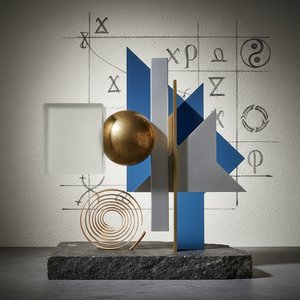
Beyond Form: Exploring the Philosophical Foundations of Geometric Abstraction
Explore the philosophical roots & artistic evolution of geometric abstraction with OriginalUniqueArt. Discover Mondrian, Malevich, De Stijl & more. Expert insights for collectors and art enthusiasts.

Kandinsky's Masterpieces: 25 Paintings That Define Abstract Art | OriginalUniqueArt
Journey through Wassily Kandinsky's 25 most iconic abstract paintings. Explore his revolutionary use of color, form & spiritual expressionism. Find museum-quality Kandinsky reproductions and elevate your home decor with OriginalUniqueArt.com. Discover all masterpieces on OriginalUniqueArt.com!

Neo-Abstract Art: The High-Impact Evolution of Modern Visual Energy and Geometric Sophistication
Discover the power of Neo-Abstract art. Explore how bold geometric forms and high-impact visual energy are redefining modern design. Learn to curate sophisticated, high-energy spaces with the latest trends in contemporary abstraction and structural color.

Beyond Form & Color: Geometric Abstraction's Evolution in 20th/21st Century Art
Explore the evolution of geometric abstraction from Cubism to contemporary art. Discover key artists like Malevich & Mondrian, investment insights, and expert collecting advice at OriginalUniqueArt.