

 Predogled
 Pošlji
 Deli
Deli
 Podrobnosti o delu

 Prenesi
 Podobni izdelki
 Rentgenski posnetek
 Predvajaj diaporama
Sacrament House


 Razviljaj več
Giclée tisk / Umetniški tisk
Giclée ali platnati odtis muzejske kakovosti z hitro proizvodnjo in prilagodljivimi možnostmi končne obdelave. ( Kupi ročno naslikano sliko Kupi digitalno sliko)




































Izberite eno od naših vnaprej določenih velikosti, ki ustrezajo prvotnim proporcijam umetničkega dela.

Svoje dimenzije lahko vnesete sami, da bodo ustrezne za določen okvir ali prostor. Če izbrana velikost ne bo skladna z razmerji izvirne slike, bomo umetniško delo orezali ali podaljšali s pomočjo ogledalnega odraza ali barvno polnega roba. Pred začetkom proizvodnje vam bomo poslali digitalni predogled za potrditev.
Upoštevajte, da predogled na zaslonu ne prikazuje dejanskega orezovanja ali podaljševanja. Le digitalni predogled bo natančno prikazal končno kompozicijo.
Čeprav so na voljo prilagojene velikosti, priporočamo izbiro dimenzije s predhodno določenega seznama, da ohranite prvotna razmerja.
Globalna dostava () v 2 tednih namesto standardnih 4/5 tednov. (19 avgust)

Brezplačna ekspresna dostava po vsem svetu

Visokokakovostno laneno platno

Popolno zavarovanje pošiljke

Garancija povračila carine in uvoznih davkov

Garancija popolnega ujemanja barv

60-dnevna politika vračanja (le v primeru napak)

Garancija 100% povračila denarja

Popust pri večjem naročilu
 Možnost stekla je na voljo le za velikosti pod 110 cm

Sacrament House
Giclée tisk / Umetniški tisk
Velikost reprodukcije
-


Skupna končna cena
$ 80
Biografija umetnika
The Sculptor of Nuremberg’s Gothic Soul
Adam Kraft remains an enigmatic figure in the annals of German Renaissance art, shrouded in a certain historical obscurity despite his undeniable contribution to the artistic landscape of Nuremberg. Precise details about his birth and formative years are scarce; scholars continue to debate whether he emerged from the creative circles of Prague or Augsburg, leaving historians to reconstruct his life primarily through circumstantial evidence gleaned from surviving commissions and architectural marvels. His oeuvre speaks volumes about a talent that bridged the gap between the late Gothic tradition and the burgeoning sensibilities of a new era. Though his hand is felt in the monumental structures of the fifteenth century, it is his ability to breathe life into cold stone that truly defines his legacy.
Kraft’s ascent began around 1490 when he secured a position as an assistant sculptor at Ulm Minster, arguably the most ambitious Gothic cathedral project in Bavaria. This collaboration with masters like Veit Stoss established him within the influential guild system of Nuremberg and exposed him to the stylistic currents shaping European art. His early career was marked by a mastery of liturgical sculpture, reflecting the profound piety of the age. As he matured, his work transitioned from mere religious ornamentation to complex architectural storytelling, where stone was no longer just a building material but a medium for deep emotional resonance.
Mastery in Stone and the Sacred Tabernacle
The pinnacle of Kraft’s artistic achievement is undoubtedly the Sacrament House at Sankt Lorenz, a monumental edifice that stands as a testament to his technical prowess. Completed in 1493, this eighteen-meter-tall masterpiece embodies the grandeur of Gothic architecture while incorporating innovative sculptural elements that foreshadow Renaissance aesthetics. The structure, shaped like a soaring Gothic tower reaching toward the church's vault, features intricate tracery interspersed with figural scenes from Christ's Passion. It is a work of breathtaking complexity, utilizing even wire to connect difficult pinnacles, demonstrating a level of virtuosity that few of his contemporaries could match.
Beyond the spiritual heights of the tabernacle, Kraft’s skill extended to the delicate and the human. His ability to convey profound narratives is evident in his various reliefs and architectural projects throughout Nuremberg. One of his most captivating works, Girl Holding Coats of Arms, offers a rare glimpse into his ability to capture real-life humanity without the veil of idealization. In this piece, the subject appears sturdy and fresh, holding the heraldic symbols of the Imhoff and Muffel families with a grounded, lifelike presence that breaks away from the rigid formality of traditional medieval sculpture.
A Legacy Carved in Nuremberg
The scope of Kraft’s work was remarkably diverse, ranging from the sacred to the profane. While much of his fame rests on religious monuments like the Schreyer monument and the Crucifixion reliefs at St. Sebaldus Church, he was also a master of civic art. He was entrusted with the design of micro-architectures, complex balustrades for patrician courtyards, and even reliefs for public buildings such as the Toll Hall and the Imperial Stables. This versatility allowed him to shape the very visual identity of Nuremberg, turning the city's stone surfaces into a gallery of historical and spiritual significance.
Ultimately, Adam Kraft’s importance lies in his role as a transitional figure. He introduced a sense of restraint and realism into German late Gothic sculpture, paving the way for the more naturalistic approaches of the following century. His life, though partially lost to time, is preserved in the enduring weight of his stone creations. Through his hands, the heavy, somber textures of the Middle Ages began to yield to a more nuanced, human-centric expression, ensuring that his name would remain etched into the architectural soul of Germany forever.

adam kraft
1460 - 1509 , Germany
Hitri podatki
- Artistic Movement Or Style: Late Gothic
- Artists Or Movements Influenced By This Artist: ['Albrecht Dürer']
- Artists Who Influenced This Artist: ['Veit Stoss']
- Date Of Birth: c. 1460?
- Date Of Death: January 1509
- Full Name: Adam Kraft
- Nationality: German
- Notable Artworks:
- Girl Holding Coats of Arms
- Sacrament House
- Place Of Birth: Nuremberg, Germany
Sorodni članki
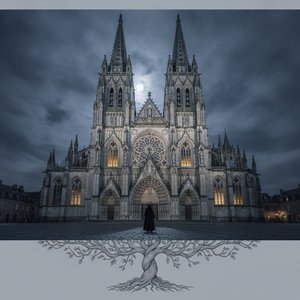
Shadows & Splendor: A Journey Through the Soul of Gothic Art and Architectural Grandeur
Embark on a profound journey through the spiritual intensity of Gothic art. Explore the architectural marvels, luminous stained glass, and sacred sculptures that define this era of grandeur and human devotion.

Bronze Sculptures That Defined Art History | OriginalUniqueArt
Journey through art history with our Top 10 bronze sculptures! Explore masterpieces by Rodin, Michelangelo & more. Discover stories behind iconic statues and find museum-quality reproductions for your home decor at OriginalUniqueArt.com.

The Enduring Form: Exploring Themes & Techniques in Sculpture Across Historical Periods
Explore the rich history of sculpture from ancient masterpieces to contemporary innovations. Discover key techniques, influential artists & investment potential for discerning art collectors.
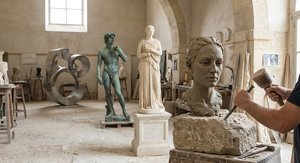
The Enduring Form: Sculpture Across History, Technique & Emotional Resonance
Explore the rich history of sculpture with OriginalUniqueArt. Discover key techniques, influential artists & investment potential for discerning collectors. Expert insights into valuing and collecting timeless masterpieces.

Bronze Age to Modern Masters: 10 Sculptures That Redefined Art | OriginalUniqueArt
Journey through art history with 10 legendary bronze sculptures – from Michelangelo's David to Rodin’s Thinker. Explore the stories, techniques & timeless beauty of these masterpieces. Find museum-quality reproductions & elevate your home decor on OriginalUniqueArt.com.

