Portret Johann Carl Loth

44 najbolj znanih slik umetnika Johann Carl Loth, vsaka popolnoma edinstvena

Posodobljeno november 2026 · uvrščeno glede na naš skoraj priljubljenosti (iskanja, obiske in naročila za vsako delo) · 47 del v našem katalogu avtorja Johann Carl Loth

Kratek opis

Selene and Endymion (1670) je slika avtorja Johann Carl Loth, ki pritegne največ pogledov; original se nahaja v muzeju Rijksmuseum, Amsterdam. Nato se pogled smeri k Jacob Blesses Ephraim and Manasseh (1692) in Old Peasant Lighting a Pipe (1660). Med 47 dela umetnika Johann Carl Loth v našem katalogu so ta 44 najbolj znana; vsako je edinstven original, predstavljen z letnico nastanka, muzejem in razlogom za njegovo nečasenost.

1632 – 1698, München Baroque Največ del: Bavarske državne slikopisne zbirke

10 najboljjših slik umetnika Johann Carl Loth skozi oči galerije

1
Selene and Endymion (1670) avtorja Johann Carl Loth

Selene and Endymion

1670 · Oil On Canvas · Rijksmuseum, Amsterdam

In this dramatic oil painting, we find ourselves witnessing a moment of profound stillness and longing. The scene captures the mythological meeting between Selene, the personification of the Moon, and the sleeping Endymion. The composition moves with a heavy, diagonal energy, pulling the eye from the upper left down toward the lower right, following the curve of the figures. Endymion lies in a deep, earthly slumber, his muscular form rendered…

2
Jacob Blesses Ephraim and Manasseh (1692) avtorja Johann Carl Loth

Jacob Blesses Ephraim and Manasseh

1692 · Oil On Canvas · Kunsthistorisches Museum, Dunaj

In this 1692 oil on canvas, an aged, semi-nude patriarch leans forward to bestow a blessing upon two young boys, Ephraim and Manasseh. The composition is tightly packed, utilizing a dynamic, triangular formation that directs the viewer's eye toward the central elderly figure. The scene captures a moment of profound interpersonal drama, where the physical presence of the figures is emphasized through heavy drapery and muscular contours. Light falls theatrically…

3
Old Peasant Lighting a Pipe (1660) avtorja Johann Carl Loth

Old Peasant Lighting a Pipe

1660 · Oil On Canvas · Art Institute of Chicago, Chicago

A single, focused light source pierces a heavy darkness, illuminating a weathered face in a moment of profound concentration. This profile view captures an elderly man as he attends to a clay pipe, the thin stem acting as a visual guide through the composition. The scene is defined by a stark chiaroscuro, where deep shadows recede into an indeterminate background, pushing the subject into the immediate foreground. Every wrinkle in…

4
Music Lesson (1650) avtorja Johann Carl Loth

Music Lesson

1650 · Oil On Canvas · Muzeum palača kralja Jana III v Wilanowie, Varšava

In the oil painting Music Lesson by Johann Carl Loth, the artist employs an oval composition to frame a tightly cropped scene. The figures are arranged in a triangular formation, a structural choice that directs the viewer's eye toward the central action. A muscular male figure plays a pan flute, or syrinx, while an older man wearing a laurel wreath observes or instructs a younger woman. This arrangement creates a…

5
Diogenes (1650) avtorja Johann Carl Loth

Diogenes

1650 · Oil On Canvas · Minneapolis Institute of Art, Minneapolis

A muscular, bearded man emerges from a dark, near-black background in this 1650 oil painting. He is positioned in a tight, close-up composition that focuses on his upper torso and head. His skin is rendered with detailed musculature, particularly across the shoulder, chest, and arm. A single light source, a lit candle contained within a handheld lantern, casts sharp highlights onto his anatomy. This light creates a strong chiaroscuro effect,…

6
Susannah and the Elders (1650) avtorja Johann Carl Loth

Susannah and the Elders

1650 · Oil On Canvas · J. Paul Getty Museum, Los Angeles

In Susannah and the Elders, Johann Carl Loth brings a heavy, dramatic tension to the canvas. The scene unfolds from a narrative found within the Old Testament, capturing a moment of profound intrusion. Susannah finds herself cornered by two men, their presence a sudden and unsettling weight in her private space. The air feels thick with the gravity of this confrontation, as the figures press into a tight, triangular arrangement…

7
The Exposure of the Infant Moses (1665) avtorja Johann Carl Loth

The Exposure of the Infant Moses

1665 · Oil · Bavarske državne slikopisne zbirke, München

In The Exposure of the Infant Moses, Johann Carl Loth captures a heavy moment from the Book of Exodus. The scene centers on a small infant resting in a vessel upon the ground. A muscular man reaches toward the child, his body taut with effort. To the side, a woman collapses in grief, her hand pressed against her forehead as she faces a moment of profound despair. The weight of…

8
Christ Appears to Saint Anthony (1665) avtorja Johann Carl Loth

Christ Appears to Saint Anthony

1665 · Oil · Bavarske državne slikopisne zbirke, München

In this dramatic Baroque oil painting, titled Christ Appears to Saint Anthony, Johann Carl Loth captures a profound mystical encounter. Created about 1665, the work focuses on the intimate connection between the Christ Child and the saint. The composition centers on the upper bodies of these two figures, drawing the viewer into a private moment of spiritual presence. The Christ Child is depicted as a plump, nude infant leaning forward…

9
The Penitent Mary Magdalene (1665) avtorja Johann Carl Loth

The Penitent Mary Magdalene

1665 · Oil · Bavarske državne slikopisne zbirke, München

The Penitent Mary Magdalene emerges from the shadows as a profound oil painting by Johann Carl Loth. Created about 1665, the work captures a singular moment of spiritual intensity. The subject gazes upward, caught in a state of deep devotion that feels immediate and alive. Every brushstroke contributes to the weight of her presence within the frame.

10
John the Baptist (1665) avtorja Johann Carl Loth

John the Baptist

1665 · Oil · Bavarske državne slikopisne zbirke, München

This oil painting, titled John the Baptist, was executed by the German Baroque painter Johann Carl Loth. The work dates to about 1665. It presents a vertical portrait that focuses on the head and the upper torso of the subject. The figure is a muscular man characterized by a beard and a gaze directed upward and to his right. He is depicted in a state of intense spiritual or emotional…

Slavna platna umetnika Johann Carl Loth, od številk 11 do 44

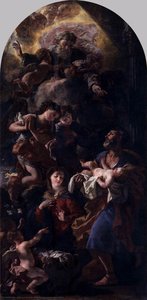
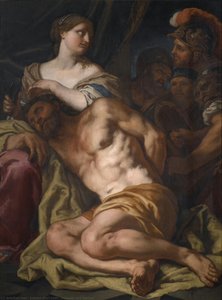
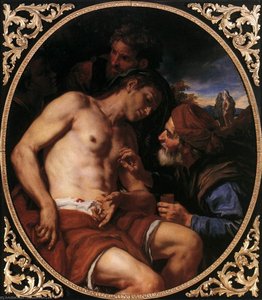
11Christ on the Cross (1665) avtorja Johann Carl LothChrist on the Cross1665 · Bavarske državne slikopisne zbirke 12Adoration of the Shepherds (1665) avtorja Johann Carl LothAdoration of the Shepherds1665 · Bavarske državne slikopisne zbirke 13David with the Head of Goliath (1665) avtorja Johann Carl LothDavid with the Head of Goliath1665 · Bavarske državne slikopisne zbirke 14Mockery of Christ (1665) avtorja Johann Carl LothMockery of Christ1665 · Bavarske državne slikopisne zbirke 15Isaac Blesses Jacob (1665) avtorja Johann Carl LothIsaac Blesses Jacob1665 · Bavarske državne slikopisne zbirke 16The Shame of Noah (1674) avtorja Johann Carl LothThe Shame of Noah1674 · Bavarske državne slikopisne zbirke 17The Dying Seneca (1665) avtorja Johann Carl LothThe Dying Seneca1665 · Bavarske državne slikopisne zbirke 18The Rescue of Agrippina, Mother of Nero (1665) avtorja Johann Carl LothThe Rescue of Agrippina, Mother of Nero1665 · Bavarske državne slikopisne zbirke 19Boy in Armor (1665) avtorja Johann Carl LothBoy in Armor1665 20Cato the Younger's Death (1672) avtorja Johann Carl LothCato the Younger's Death1672 · Statens Museum For Kunst 21Saint Joseph with the Christ Child (1680) avtorja Johann Carl LothSaint Joseph with the Christ Child1680 · Bavarske državne slikopisne zbirke 22Holy Family with the Christ Child John (1680) avtorja Johann Carl LothHoly Family with the Christ Child John1680 · Bavarske državne slikopisne zbirke 23Saint John the Baptist (1680) avtorja Johann Carl LothSaint John the Baptist1680 · Slovenska narodna galerija 24Saint Paul (1675) avtorja Johann Carl LothSaint Paul1675 · Narodni muzej v Varšavi 25Faun playing the flute. (1675) avtorja Johann Carl LothFaun playing the flute.1675 · Narodni muzej v Varšavi 26Martyrdom of Gerard of Csanád (1677) avtorja Johann Carl LothMartyrdom of Gerard of Csanád1677 · Musée des Beaux-Arts de Strasbourg 27Holy Family and God the Father (1681) avtorja Johann Carl LothHoly Family and God the Father1681 · San Silvestro 28The Guardian Angel and Archangel Michael (1691) avtorja Johann Carl LothThe Guardian Angel and Archangel Michael1691 · Bavarske državne slikopisne zbirke 29Saint Dominic Receives the Rosary (1691) avtorja Johann Carl LothSaint Dominic Receives the Rosary1691 · Bavarske državne slikopisne zbirke 30The Death of Cato. (1700) avtorja Johann Carl LothThe Death of Cato.1700 · Narodni muzej v Varšavi 31Abraham Visited by the Angels avtorja Johann Carl LothAbraham Visited by the Angels 32Death of St Peter Martyr (1691) avtorja Johann Carl LothDeath of St Peter Martyr1691 · Bazilika svetih Janeza in Pavla 33Apollo, Pan, and Marsyas avtorja Johann Carl LothApollo, Pan, and MarsyasStaatliche Museen zu Berlin 34Eližej in Rebeka pri vodnem izvoru (1670) avtorja Johann Carl LothEližej in Rebeka pri vodnem izvoru1670 · Ermitaž 35Self-Portrait avtorja Johann Carl LothSelf-PortraitBavarske državne slikopisne zbirke 36The Crowning with thorns avtorja Johann Carl LothThe Crowning with thornsFinnish National Gallery 37Saint Sebastian avtorja Johann Carl LothSaint SebastianNarodna galerija v Pragi 38Adam and Eve avtorja Johann Carl LothAdam and EveKedleston Hall 39Lot and His Daughters avtorja Johann Carl LothLot and His Daughters 40Samson and Delilah avtorja Johann Carl LothSamson and DelilahFondazione Brescia Musei 41Mercury Piping to Argus avtorja Johann Carl LothMercury Piping to ArgusNational Gallery 42Jupiter and Mercury at Philemon and Baucis avtorja Johann Carl LothJupiter and Mercury at Philemon and BaucisKunsthistorisches Museum 43The Good Samaritan avtorja Johann Carl LothThe Good SamaritanKunsthistorisches Museum 44The Good Samaritane (1676) avtorja Johann Carl LothThe Good Samaritane1676 · Kunstsammlungen Graf von Schönborn

Motivi, ki so očarali Johann Carl Loth

Četiri teme, ki se v teh originalih najpogosteje ponavljajo, vsaka z svojim vrhunskim primerom.

Muzeji, ki hranijo originala umetnika Johann Carl Loth

8 muzejev, ki vsebujo največ slik na tej strani.

Muzeji Mesto Sloga Johann Carl Loth Slike iz tega seznama
Bavarske državne slikopisne zbirke, MünchenBavarske državne slikopisne zbirke München 17 The Exposure of the Infant Moses, Christ Appears to Saint Anthony, The Penitent Mary Magdalene
Kunsthistorisches Museum, DunajKunsthistorisches Museum Dunaj 3 Jacob Blesses Ephraim and Manasseh, Jupiter and Mercury at Philemon and Baucis, The Good Samaritan
Narodni muzej v Varšavi, VaršavaNarodni muzej v Varšavi Varšava 3 Saint Paul, Faun playing the flute., The Death of Cato.
Rijksmuseum, AmsterdamRijksmuseum Amsterdam 1 Selene and Endymion
Art Institute of Chicago, ChicagoArt Institute of Chicago Chicago 1 Old Peasant Lighting a Pipe
Muzeum palača kralja Jana III v Wilanowie, VaršavaMuzeum palača kralja Jana III v Wilanowie Varšava 1 Music Lesson
Minneapolis Institute of Art, MinneapolisMinneapolis Institute of Art Minneapolis 1 Diogenes
J. Paul Getty Museum, Los AngelesJ. Paul Getty Museum Los Angeles 1 Susannah and the Elders

Johann Carl Loth skozi desetetja: vsak unikatni original za vsako obdobje

Slikorstva po desetletjih

Izberite desetletje, da si ogledate original, ki ga opredeljuje.

Slike umetnika Johann Carl Loth: vprašanja za galerijo

Katero je najbolj znano delo umetnika Johann Carl Loth?Razkriti odgovor

Selene and Endymion (1670), Rijksmuseum, Amsterdam. Zatem sledeta Jacob Blesses Ephraim and Manasseh (1692) in Old Peasant Lighting a Pipe (1660).

Pri kateri dobe je Johann Carl Loth ustvaril Selene and Endymion?Razkriti odgovor

38 let: delo Selene and Endymion iz leta 1670, Johann Carl Loth pa je bil/a rojen/a leta 1632.

Katera desetina slik avtorja Johann Carl Loth je najbolj znana?Razkriti odgovor

Selene and Endymion, Jacob Blesses Ephraim and Manasseh, Old Peasant Lighting a Pipe, Music Lesson, Diogenes, Susannah and the Elders, The Exposure of the Infant Moses, Christ Appears to Saint Anthony, The Penitent Mary Magdalene in John the Baptist. Zgornja lestica prikazuje leto nastanka in muzej za vsako delo.

Koliko je znanih del avtorja Johann Carl Loth?Razkriti odgovor

Naš katalog vsebuje 47 del avtorja Johann Carl Loth, datiranih od 1650 do 1692.

Kje si lahko ogledate najslavnejše originale umetnika Johann Carl Loth?Razkriti odgovor

Večini v Bavarske državne slikopisne zbirke (München), Kunsthistorisches Museum (Dunaj) in Narodni muzej v Varšavi (Varšava). Zgoraj navedena tabela muzejev vsebuje njihov celoten seznam.

V katerem obdobju je Johann Carl Loth ustvaril svoja najbolj znana dela?Razkriti odgovor

V obdobju 1660s: 13 od 44 del na tej strani je bilo izdelovanih takrat, med njimi pa Old Peasant Lighting a Pipe.

Katero znano sliko je naslikal Johann Carl Loth najprej in katero najpozdneje?Razkriti odgovor

Na tej strani je najstarejše delo iz Music Lesson (1650) in najstarejše iz Jacob Blesses Ephraim and Manasseh (1692).

Katere teme je Johann Carl Loth najprej ravnate?Razkriti odgovor

Man (28), Drapery (15) in Skin (11), na 44 delih na tej strani.

S katerimi materiali je Johann Carl Loth najpogosteje slikal?Razkriti odgovor

Oil On Canvas, za 23 od 44 del na tej strani.

Kateri umetniški slog predstavlja delo umetnika Johann Carl Loth?Razkriti odgovor

Baroque, glede na originala na tej strani.

Katere originale Johann Carl Loth lahko vidim v muzeju Bavarske državne slikopisne zbirke?Razkriti odgovor

The Exposure of the Infant Moses, Christ Appears to Saint Anthony in The Penitent Mary Magdalene: v muzeju Bavarske državne slikopisne zbirke, München se nahaja 17 del z te strani.

Johann Carl Loth: portret umetnika

Venecianski mojster drame: Življenje in dediščino Johann Carl Loth

V sončnem, teatralnem vzdušju sedemnajstega stoletja v Veneciji je malo umetnikov tako mojstrovsko zajelo globoko napetost med božimskim in zemeljskim kot Johann Carl Loth. Born okoli leta 1632 v Münchnu, v okviru bavorske izvoliteljske dežele, je Loth bil slikar, katerega identiteta je premostila robustne tradicije nemškega umetništva z luminosno, čustveno veličastnostjo italijanskega baroka. Čeprav njegovo ime morda ne odmeva z takšnim takojšnjim domovnim prepoznavanjem kot ime Titian, je bila njegova prisotnost v venecijanski pokrajini monumentalna. Slavni biograf Arnold Houbraken ga je izpostavil kot enega od treh velikih mojstrov umetnosti z imenom "Karel" – prestižno priznanje, ki ga je postavilo na raven svetovnih luminarjev, kot sta Karel Duijardin in Carlo Maratta, kar je signaliziralo njegov prihod med elito evropskega slikarstva.

Lothova umetniška pot se je začela pod budnim nadzorom njegovega očeta, Johann Ulrich Loth,er, ki je zagotovil temeljito tehnično rigoroznost, ki je sinu pozneje omogočila eksperimentiranje z tako grandioznim obsegom. Ta zgodnja izobrazba v Münchnu je vplivala na discipliniran pristop k kompoziciji, vendar je bil to njegov prehod v Venecijo, ki je resnično vžaril njegov ustvarjalni duh. V živahnem venecijanskem okolju je Loth vpilo vpliv Giovan Battista Langettija, s čimer je sprejel slog, ki ga definiroda chiaroscuro – dramatična igra svetlobe in senče – ter naklonjenost tenebrizmu. Ta tehnika mu je omogočila, da je iz teme izklesal figure, s čimer je platna prežela z občutkom težine, skrivnostnosti in duhovne nujnosti, kar je postalo njegov neprepoznavni podpis.

Prepletenica mitov in svote pisma

Prava briljantnost Lothovega dela leži v njegovi sposobnosti, da platno spremeni v odra za najbolj epske narative človeške zgodovine. Specializiral se je za zgodovinske slike velikega obsega, ki so se pogosto odvijale v gostih, množičnih scenah, ki so zahtevale neizmerno kompozicijsko veščitost. Njegove teme so izhajale iz virov klasične mitologije in globin Starega zaveta, obdelovane ne le kot ilustracije, temveč kot žive, dišeče drame. Ne glede na to, ali je prikazoval nebesno intervencijo bogov ali trpežne preizkušnje biblijskih patriarhov, je Loth uporabljal paleto vibrantnih barv in ohlapnega, izrazitnega črtarja, da bi vzbudil intenzivno čustvo.

To mojstvo lahko opazimo v delih, kot je Jupiter in Merkur pri Filemonu in Bauci, kjer se božijsko prisotnost čuti skozi nenadno, osvetljujočo svetlobo, ki prodre skozi skromno okolje smrtne koče. Podobno njegove religiozne kompozicije, kot je Sveta družina in Bog Oče, prikazujejo globoko obvladovanje atmosferične globine in svete intimnosti. Njegova sposobnost vpletenja kompleksnih človeških čustev – predanosti, strahu, čednosti in družinske ljubezni – v te velike narative je zagotovila, da je njegovo del odmevalo daleč za meje Italije in privabili pozornost prestižnih pokojnikov, vključno z imperatorjem Leopoldom I iz habsburškega dvora v Dunaju.

Vpliv, sodelovanje in trajna pomembnost

Lothova kariera ni bila samostojni podjem, temveč pot, ki jo je obeležovala pomembna umetniška sinergija. V Veneciji je sodeloval z drugimi mojstri, kot je Pietro Liberi, kjer so skupaj izpolnjevali ambiciozne naloge, ki so dvignile standarde zgodovinskega pripovedovanja. Njegov studio je postal svetilnik za ambiciozne talente; mentoriral je generacijo slikarjev, vključno z Michaelom Wenzelom Halbaxom in Johannom Michaelom Rottmayrom, s čimer je zagotovil, da bodo njegovi stilski značilniki – dramatična osvetljava in teatralne kompozicije – odmevali skozi naslednja desetetja baročne umetnosti. Tudi izven sveta slikarstva je Lothova reputacija privabila zaslužne potnike in umetnike, kot je Cornelis de Bruijn, na prag njegovega doma, zaradi česar je bil njegov studio ključni člen v evropski umetniški mrežji.

Ko se je približoval koncu svojega življenja in prebival v Veneciji do smrti leta 1698, je Loth zagotovil dediščino, ki je presegala njegove nemške korenine. Bil je slikar, ki je lahko vladal tako z intimitno senco posamezne figure kot z kaotično energijo množine. Danes njegova dela prebivajo v nekaterih najbolj cenjenih institucijah na svetu, od Kunsthistorisches Museum v Dunaju do Hermitage Museum v Sankt Peterburgu. Skozi svojo sposobnost združevanja strukturne discipline mladosti z čustveno tekočostjo venecijanske šole ostaja Johann Carl Loth odločilen glas baročnega obdobja, ki nas opominja na čas, ko je bila umetnost grandiozna, teatralna pot do sublimnega.