Benátska tapéria moci a umenia
Majestátne vyčnívajúci z okraja Svätého Markovho námestia, Palazzo Ducale , či Dogov palác, je oveľa viac než len obyčajným monumentom z kameňa a istrijského mramoru; je to pohlcujúca kronika zaniknutého impéria. Kroky cez jeho brány znamenajú vstup do živého svedectia o trvajúcom odtlačku benátskeho republikanizmu, kde každý vysoký oblúk a zložitý rez špecifikujú príbehy politických intrigí, námorného panovania a nezhladiteľného umeleckého géniu. Palác slúži ako hmatateľná ozvena výnimočnej minulosti Beniek, miesto, kde sa tiene spravodlivosti miešajú s živými, slnecom preplnenými odtlačkami renesančných majstrov. Jeho samotné základy rozprávajú príbeh transformácie, od opevneného pevného bodu z 9. storočia – postaveného na odrepudovanie slovanských nápadov – až po opulentné, rozľahlé sídlo Dogov, ktoré odráža cestu mesta od zraniteľnej výskytovej stanice k globálnej námornej mocnosti.
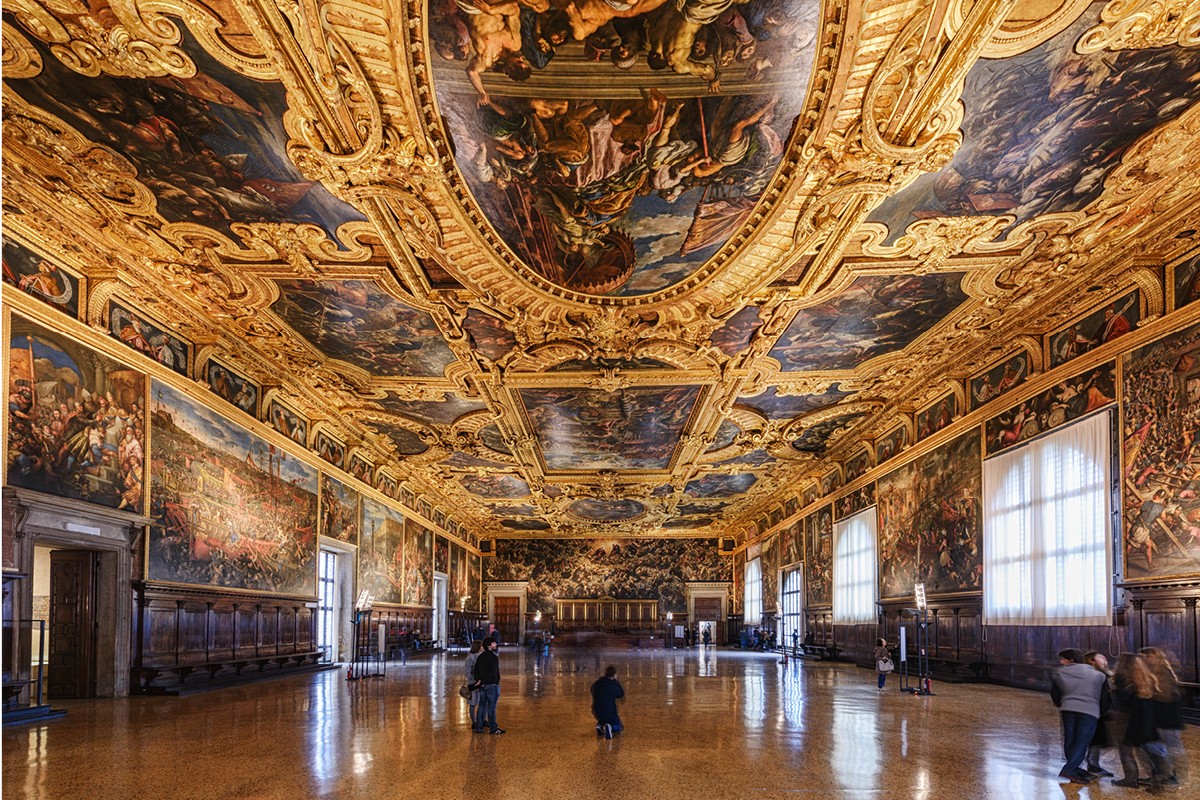
Architektúra paláca je dychberúcim dialógom medzi štýlmi, ktorý predstavuje jedinečnú fúziu zrkadlícícu pozíciu Beniek na skrzyžení východu a západu. Exteriérna fasáda, s rytmickou hrou jemnej gotickej čiprovitosti a ťažkej, masívnej muratúry, čerpá hlbokú inšpiráciu z byzantských predchodcov, najmä z neďalekej Baziliky sv. Marka. Táto architektonická inovácia predstavuje uvedomovaný odklon od tradičných pevnostných štruktúr a namiesto toho volí estetiku ľahkosti a dynamizmu. Vnútri sa veľkoleposť ešte zintenzívňuje v priestoroch ako je Sala del Maggajú Consiglio . Tu rozsah Sály veľkej rady ohrmuje zmysly, kde dominuje Tintorettovo monumentálne Raj . Toto úchvatné plátno, pretiahnuté cez viac ako 36 metrov, slúži ako silné vizuálne manifesto záväznosti Beniek k občianskej cnosti a božskej milosti, vrhajúc nebeský jas priamo do srdca benátskeho vládnutia.
Pokladnica dekoratívnej nádhery
Pre náročného zberateľa a milovníka jemných detailov ponúka palác pokladnicu dekoratívnej slávy, ktorá presahuje rámec čistej ornamentiky. Sály sú ozdobené Veronesovým Triumfom Beniek , hostinou farieb a opulentných detailov, ktoré oslavujú námornú silu Republiky. Okrem týchto veľkoformátových pláten tu nájdeme jemnú dušu benátskeho remesla v zložitých tapériách zobrazujúcich biblické príbehy a v nádhernom sklárskom rýpaní, ktoré kedysi definovalo ekonomické srdce mesta. Palác tiež pozýva k objavovaniu svojich tajomnejších kútoch prostredníctvom špecializovaných ciest, ako je Tajná itinerár , ktorá odhaluje skryté komory a chodby, kde sa niekedy uchovávali najdôvernejšie štátne tajomstvá.
Či už obdivujete majstrovské svetlo Tiziana alebo sledujete kartografickú presnosť školy Lafreri, návštevníci sa nachádzajú obklopení atmosférou, v ktorej sú umenie a autorita neoddeliteľne prepletené. Dnes zostáva Palazzo Ducale živým kultúrnym epicentrum, ktoré neustále evoluuje prostredníctvom výstav, ktoré prepojujú starobylú tradíciu s moderným pohľadom. Nedávne prezentácie sa venovali jemnému umeniu benátskeho sklárskeho remesla a hlbokému vplyvu byzantských mozaík, čím zabezpečujú, že príbeh paláca zostáva rovnako dynamický ako more, ktoré ho kedysi chránilo. Pre interiérových dizajnérov a nadšencov umenia hľadajúcich inšpiráciu predstavuje palác absolútný referenčný bod pre luxus, rozsah a harmonickú integráciu architektúry a ryze vysokého umenia.