
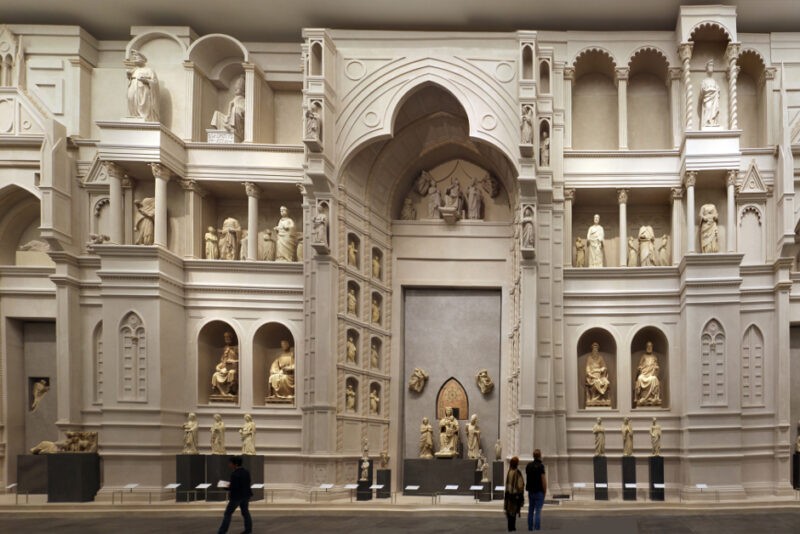
The Duomo: A Florentine Tapestry of Faith and Art
Nestled within the heart of Florence, Italy, the Duomo – formally known as the Cathedral of Santa Maria del Fiore – stands not merely as a religious edifice but as a monumental testament to the city’s enduring legacy of artistic innovation and civic pride. More than just a church, it's an immersive experience, a layered narrative woven from centuries of ambition, ingenuity, and spiritual devotion. The Duomo complex, encompassing the cathedral itself, Giotto’s Campanile, and the Museo dell’Opera del Duomo, offers visitors a profound journey into the soul of Renaissance Florence – a city that continues to inspire awe and wonder.
The story begins in 1296 with Arnolfo di Cambio, tasked by Pope Boniface VIII with replacing an earlier Romanesque structure. His design, while groundbreaking for its time, was ultimately deemed too modest for the grandeur envisioned. It wasn’t until the mid-14th century that Francesco Talenti dramatically expanded the cathedral's footprint, employing a masterful Gothic style characterized by soaring arches and expansive nave spaces. However, it is Filippo Brunelleschi’s audacious dome – completed in 1436 – that truly defines the Duomo’s iconic silhouette. Brunelleschi’s engineering marvel, built without scaffolding using innovative techniques, remains a breathtaking achievement of Renaissance ingenuity, a symbol of Florence's boundless ambition and mastery of materials. The sheer audacity of constructing such a massive dome without traditional support systems is a testament to human potential and a cornerstone of Florentine pride.
The cathedral itself is a masterpiece of Gothic and early Renaissance architecture. Its exterior walls are clad in stunning polychrome marble panels, showcasing intricate geometric patterns and stylized floral motifs – a vibrant tapestry of green, pink, and white that changes with the light. The façade, a 19th-century neo-Gothic creation by Emilio De Fabris, stands in stark contrast to the original medieval design, yet complements it beautifully, creating a harmonious blend of styles. Inside, visitors are greeted by vast spaces illuminated by fourteen magnificent stained-glass windows, each depicting biblical scenes and figures – a kaleidoscope of color that washes over the interior. The floor is a mesmerizing mosaic of marble, meticulously crafted over centuries, telling silent stories of faith and Florentine history.
Treasures Within the Museo dell’Opera del Duomo
The Museo dell’Opera del Duomo, located adjacent to the cathedral, serves as a crucial repository of artifacts directly related to the construction and restoration of the Duomo complex. It's here that visitors can truly delve into the intricate details of this monumental undertaking and witness the artistic legacy it spawned. The museum houses an extraordinary collection of original sculptures, mosaics, stained glass windows, and architectural models – many of which were salvaged from the cathedral during restorations. It’s a veritable treasure trove for anyone interested in understanding the Duomo's evolution.
A highlight is undoubtedly Ghiberti’s Gates of Paradise, a pair of bronze doors that originally adorned the Baptistery. These intricately detailed panels depict scenes from the Old Testament, showcasing Ghiberti’s unparalleled skill in sculpting and his mastery of perspective. The figures are remarkably lifelike, imbued with emotion and narrative power. Equally captivating are Donatello’s sculptures, including his iconic *St. Mark* and *St. Sebastian*, offering a poignant glimpse into the artistic sensibilities of the Renaissance period. These works demonstrate a profound understanding of human anatomy and expression – hallmarks of Florentine artistry.
A Glimpse into Di Michelino's Vision
The works of Domenico di Michelino offer a fascinating window into the religious art of Florence during the Renaissance. Known primarily for his frescoes within the Duomo itself, particularly those depicting scenes from the Old Testament and Dante’s *Divine Comedy*, Di Michelino’s style is characterized by its dramatic compositions, vibrant colors, and meticulous attention to detail. His depictions of biblical figures are imbued with a profound sense of humanity, reflecting the humanist ideals that were gaining prominence during this era. His “Comedy Illuminating Florence,” a large-scale panel painting, exemplifies his artistic vision – a celebration of Florentine civic pride and religious faith.
The Museo dell’Opera del Duomo houses several examples of Di Michelino’s work, providing visitors with an intimate understanding of his artistic contributions to the Duomo complex. His frescoes are particularly noteworthy for their dynamic energy and expressive power, capturing the drama and intensity of biblical narratives. They offer a unique perspective on how religious themes were interpreted and visualized during this transformative period in Florentine art.
A Legacy of Innovation and Artistic Excellence
The Duomo is more than just a building; it's a symbol of Florence’s enduring spirit – a testament to human ingenuity, artistic brilliance, and unwavering faith. From Brunelleschi’s revolutionary dome to Ghiberti’s Gates of Paradise, the Duomo complex embodies the very essence of the Renaissance. Ongoing restoration efforts ensure that this magnificent monument will continue to inspire generations to come, preserving its legacy as one of the world's greatest architectural achievements. A visit to the Duomo is not merely a sightseeing trip; it’s an immersion into the heart and soul of Florence – a city that has consistently pushed the boundaries of art, architecture, and human ambition.
Current Exhibitions & Events: The Museo dell’Opera del Duomo regularly hosts temporary exhibitions showcasing related artworks and historical documents. Check their website for details on current events and special programs. Don’t miss the opportunity to climb Giotto’s Campanile for breathtaking panoramic views of Florence!