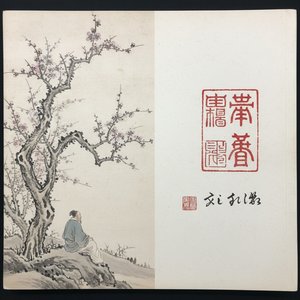
The Quiet Presence of Xu Qiu
To look at the surviving record of Xu Qiu is to encounter a specific, localized fragment of the Qing dynasty. While many artists of the seventeenth century sought to redefine the boundaries of the brush, Xu Qiu’s presence in the historical canon is defined by a singular, focused output. The work survives not through massive collections or sprawling influence, but through its placement within the most guarded repositories of Chinese art history.
The artist lived through a period of significant transition, spanning from 1636 to 1708. This era demanded a high level of technical discipline, yet Xu Qiu’s legacy remains concentrated. There is no grand narrative of rebellion or stylistic revolution attached to this name; instead, there is the reality of a practitioner whose work has been preserved by the highest authorities of the time.
Institutional Preservation
The weight of an artist's importance is often measured by where their work resides. For Xu Qiu, that measurement is found in the halls of The Palace Museum in Beijing. The survival of these works suggests a level of technical competence that met the rigorous standards of the imperial era.
- The Palace Museum, Beijing (2)
The catalog of known works is lean. We find an undated piece titled Untitled, which remains the primary point of contact for anyone studying this artist's hand. This scarcity does not diminish the historical fact of their existence; it simply limits the scope of study to a very specific, controlled set of visual evidence.
Historical Context
The period between 1636 and 1708 was a time of strict aesthetic hierarchies. Artists operated within a framework where technique was a matter of precision and lineage. Xu Qiu’s place in this timeline is marked by the fact that their work was deemed worthy of inclusion in the imperial collections, a distinction that requires a mastery of the formal requirements of the period.
We see the artist as a figure of the Qing dynasty, a time when the tension between meticulous detail and expressive ink was a constant reality for every painter. While the broader history of Chinese painting is filled with loud movements, Xu Qiu represents the steady, institutionalized side of the tradition. The work exists as a specific data point in the long history of the Beijing imperial collections.
Otázky a odpovede
Ako môžem sledovať tvorbu umelca Xu Qiu chronologicky?
Pre Xu Qiu existuje časová osť diel: stránka Chronológia diel zobrazuje diela usporiadané podľa dátumov ich vytvorenia.
Môžem si prehliadnuť diela umelca Xu Qiu podľa umeleckého smeru?
Umelecké smery, v ktorých tvoril Xu Qiu, si môžete pozrieť na stránke Všetky umelecké smery umelca, ktorá zoradila jeho diela podľa jednotlivých smerov.
Existuje kompletný zoznam všetkých diel umelca Xu Qiu?
Všetky diela umelca Xu Qiu na táto webstránka si môžete pozrieť na jeho stránke Všetky diela umelcov.
Ako nájdem diela od Xu Qiu v konkrétnej farebnej palete?
Diela umelca Xu Qiu si môžete prehliadnuť podľa farebnej palety na jeho stránke Podľa palety farieb.