Portrét Theo van Doesburg

Obrazy umelca Theo van Doesburg: 100 najznámejších výtvarných diel prostretých pohľadom galérie

Aktualizované november 2026 · zoradené podľa našej miery popularity (vyhľadávanie, návštevy a objednávky pre každou prácu) · 225 dielov umelca Theo van Doesburg v našom katalógu

Stručne povedané

Z hľadiska galérie je najznámejším obrazom umelca Theo van Doesburg dielo Counter composition XV (1925). Rhythm of a Russian Dance a Troelstra (1910) dopĺňajú trojicu, ktorú pozná každé oko. Z 225 diel umelca Theo van Doesburg v našom katalógu prezentuje galéria nižšie 100 najznámejších, z ktorých je každá originál s uvedeným rokom vzniku, múzeom a unikátnosťou.

1883 – 1931, Utrecht De stijl Najviac diel: Centraal Museum

Top 10 obrazov umelca Theo van Doesburg v galérii

1
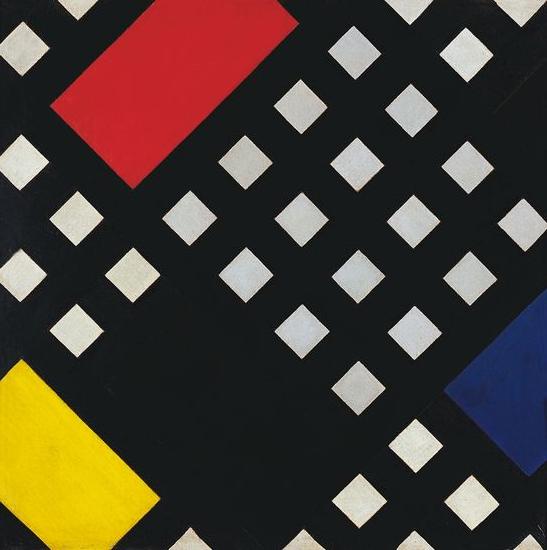
Counter composition XV (1925) od Theo van Doesburg

Counter composition XV

1925 · Acrylic On Canvas

Theo van Doesburg's "Counter Composition XV," painted in 1925, isn’t merely a painting; it’s a distilled essence of the De Stijl movement – a radical declaration of order and universal harmony. This deceptively simple work, executed against a stark white canvas, pulsates with an underlying tension born from the careful orchestration of geometric forms and primary colors. It represents a pivotal moment in 20th-century art, moving beyond representational imagery to…

2
Rhythm of a Russian Dance od Theo van Doesburg

Rhythm of a Russian Dance

Oil On Canvas

The composition consists of an arrangement of intersecting horizontal and vertical lines that form a series of rectangular and square shapes. These geometric forms overlap across the canvas, creating a sense of depth through visual layering rather than traditional perspective. The color palette is restricted to white, black, blue, pink, and gold or yellow hues. Each color is applied in flat planes with minimal shading, resulting in a smooth and…

3
Troelstra (1910) od Theo van Doesburg

Troelstra

1910 · Charcoal

The artwork Troelstra is a monochromatic portrait rendered in charcoal on paper, dating to 1910. The composition is tightly focused on the head and shoulders of the subject, creating an intimate and close-up view. The man's face occupies the majority of the frame, characterized by an asymmetrical arrangement where features are not proportionally accurate. A collar or cravat is visible around the neck, providing a sense of formality to the…

4
Study for Composition VIII (The Cow) (1918) od Theo van Doesburg

Study for Composition VIII (The Cow)

1918 · Oil

A cow is reduced to a series of intersecting planes. In this 1918 study, the animal is no longer a creature of flesh and breath, but a rhythmic arrangement of vertical and horizontal lines. The subject is stripped of its organic curves, replaced by the sharp precision of a geometric skeleton. Green blocks of color anchor the composition, cutting through a field of white and black. There is a tension…

5
Composition (The Cow) (1917) od Theo van Doesburg

Composition (The Cow)

1917 · Pencil

The eye meets Composition (The Cow), a work that captures a moment of radical transformation. Created by the artist Theo van Doesburg, this piece emerges from 1917, a time when the boundaries of representation begin to fracture. The subject, a cow, exists here not as a living creature of flesh and breath, but as a series of energetic, geometric investigations. It is a study of form that seeks to find…

6
Composition (1923) od Theo van Doesburg

Composition

1923 · Oil On Canvas

The canvas known as Composition emerges from the mind of Theo van Doesburg, a work that captures a specific moment in 1923. This piece exists as a precise arrangement of form and color, born from a period of intense creative focus. The artist, Theo van Doesburg, brings a sense of equilibrium to the surface, translating abstract thought into a tangible presence. It is a work that demands attention through its…

7
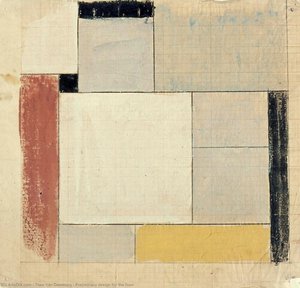
Preliminary design for the floor (1923) od Theo van Doesburg

Preliminary design for the floor

1923 · Pencil

The gaze meets Preliminary design for the floor, a work that breathes with the structured intent of Theo van Doesburg. Created in 1923, this piece exists as a vision for a specific space: a tiled floor intended for the De Vonk holiday home located in Noordwijkerhout. It is a moment of pure architectural thought captured on paper, where the abstract becomes a tangible plan for a lived environment.

8
Composition (1931) od Theo van Doesburg

Composition

1931 · Oil

The painting titled Composition is a work by the artist Theo van Doesburg. Created in 1931, this piece occupies a small, intimate space of 31 x 24 cm. It exists as a quiet arrangement of form and color, captured within its rectangular boundaries.

9
Portrait of a man with hat (1908) od Theo van Doesburg

Portrait of a man with hat

1908 · Oil On Board · Kunstmuseum Den Haag, Haag

The portrait presents a close-up, bust-length view of a man wearing a hat. The subject's face occupies the central portion of the frame, positioned slightly to the left. The lighting is low-key, catching the left side of the forehead and the cheek, while the remaining features recede into deep shadow. This use of chiaroscuro creates a sense of depth through the contrast between light and dark. The color palette is…

10
Self-portrait with beard (1905) od Theo van Doesburg

Self-portrait with beard

1905 · Oil On Canvas · Centraal Museum, Utrecht

Self-portrait with beard by Theo van Doesburg is a close-up portrait executed about 1905. The composition focuses on the head and neck of a single male figure. This subject is depicted with a beard, positioned against a dark and indistinct background. The arrangement centers the viewer's attention on the physical presence of the man's face.

Obrazy umelca Theo van Doesburg, usporiadané od 11 do 100

11Portrait of Agnita Feis (1904) od Theo van DoesburgPortrait of Agnita Feis1904 · Centraal Museum 12Female Nude (1904) od Theo van DoesburgFemale Nude1904 13Portrait of a Man with Hat (1909) od Theo van DoesburgPortrait of a Man with Hat1909 14Portrait of a Man with Hat (1908) od Theo van DoesburgPortrait of a Man with Hat1908 15Portrait of Christian Leibbrandt (1908) od Theo van DoesburgPortrait of Christian Leibbrandt1908 16Portrait of Agnita Feis (1906) od Theo van DoesburgPortrait of Agnita Feis1906 · Centraal Museum 17Smiling man (self-portrait?) (1907) od Theo van DoesburgSmiling man (self-portrait?)1907 · Centraal Museum 18Workman head (1906) od Theo van DoesburgWorkman head1906 · Centraal Museum 19Man with moustache and cap (self-portrait?) (1907) od Theo van DoesburgMan with moustache and cap (self-portrait?)1907 · Centraal Museum 20Portrait of a boy en profil (1906) od Theo van DoesburgPortrait of a boy en profil1906 · Centraal Museum 21Workmanshead (1906) od Theo van DoesburgWorkmanshead1906 · Centraal Museum 22Portrait of Agnita Feis with closed eyes (1906) od Theo van DoesburgPortrait of Agnita Feis with closed eyes1906 · Centraal Museum 23Portrait of een man met baret (1908) od Theo van DoesburgPortrait of een man met baret1908 24Don Juan (1910) od Theo van DoesburgDon Juan1910 25Burgerman (1910) od Theo van DoesburgBurgerman1910 26Archangel (1910) od Theo van DoesburgArchangel1910 27Abraham Kuyper (1910) od Theo van DoesburgAbraham Kuyper1910 28Farmer (1910) od Theo van DoesburgFarmer1910 29Alderman of education (1910) od Theo van DoesburgAlderman of education1910 30Quérido (1910) od Theo van DoesburgQuérido1910 31Frederik van Eeden (1910) od Theo van DoesburgFrederik van Eeden1910 32Old Faun (self portrait) (1909) od Theo van DoesburgOld Faun (self portrait)1909 33Dutch peasent girl (1913) od Theo van DoesburgDutch peasent girl1913 · Centraal Museum 34Portrait of A. J. J. de Winter (1916) od Theo van DoesburgPortrait of A. J. J. de Winter1916 35Study for Composition VIII (The Cow) (1917) od Theo van DoesburgStudy for Composition VIII (The Cow)1917 36Beggar (1914) od Theo van DoesburgBeggar1914 · Centraal Museum 37Abstract portrait (1915) od Theo van DoesburgAbstract portrait1915 · Museum de Lakenhal 38Portrait of Nelly van Doesburg (1899-1975) (1922) od Theo van DoesburgPortrait of Nelly van Doesburg (1899-1975)1922 · Museum de Lakenhal 39Self portrait (1928) od Theo van DoesburgSelf portrait1928 · Centraal Museum 40Nelly van Doesburg Viewed from behind, and a harbor scene (1924) od Theo van DoesburgNelly van Doesburg Viewed from behind, and a harbor scene1924 41Dancing man from sketchbook 60 (1931) od Theo van DoesburgDancing man from sketchbook 601931 42Archer (1919) od Theo van DoesburgArcher1919 · Szépművészeti Múzeum 43Tripartite stained glass window od Theo van DoesburgTripartite stained glass window 44Self portrait with hat (1909) od Theo van DoesburgSelf portrait with hat1909 · Centraal Museum 45Café Aubette, Strasbourg, France (Preliminary color scheme for ceiling and short walls of ballroom) (1927) od Theo van DoesburgCafé Aubette, Strasbourg, France (Preliminary color scheme for ceiling and short walls of ballroom)1927 · MoMA - Museum of Modern Art 46Self portrait with hat (1909) od Theo van DoesburgSelf portrait with hat1909 47Composition I (still life) (1916) od Theo van DoesburgComposition I (still life)1916 · Kröller-Müller Museum 48Landscape (1901) od Theo van DoesburgLandscape1901 49Figure on Bridge in Forest (1903) od Theo van DoesburgFigure on Bridge in Forest1903 50Woman in Landscape (1903) od Theo van DoesburgWoman in Landscape1903 · Centraal Museum 51Figure on a Bridge in a Forest (1903) od Theo van DoesburgFigure on a Bridge in a Forest1903 · Centraal Museum 52Landscape (1901) od Theo van DoesburgLandscape1901 · Centraal Museum 53River Landscape with Steeple and Mill (1900) od Theo van DoesburgRiver Landscape with Steeple and Mill1900 54A Child (1904) od Theo van DoesburgA Child1904 55Landscape with hay cart, church towers and windmill (1901) od Theo van DoesburgLandscape with hay cart, church towers and windmill1901 · Centraal Museum 56Still Life (1906) od Theo van DoesburgStill Life1906 57Tree (1906) od Theo van DoesburgTree1906 · Centraal Museum 58Banister post, Huis De Lange, Alkmaar od Theo van DoesburgBanister post, Huis De Lange, Alkmaar 59Portrait of Nelly van Doesburg od Theo van DoesburgPortrait of Nelly van Doesburg 60Self portrait (1906) od Theo van DoesburgSelf portrait1906 61Cover of ''The masks'' (1910) od Theo van DoesburgCover of ''The masks''1910 62The discarded basket (1913) od Theo van DoesburgThe discarded basket1913 · Centraal Museum 63Haystacks (1913) od Theo van DoesburgHaystacks1913 · Centraal Museum 64Study for Composition X (1917) od Theo van DoesburgStudy for Composition X1917 65Composition VI (on black fond) (1917) od Theo van DoesburgComposition VI (on black fond)1917 66Composition (The Cow) (1917) od Theo van DoesburgComposition (The Cow)1917 67Composition (The Cow) (8) (1917) od Theo van DoesburgComposition (The Cow) (8)1917 68Cover of "Balance" by J. Elgenhuis (1916) od Theo van DoesburgCover of "Balance" by J. Elgenhuis1916 69Composition (The Cow) (1917) od Theo van DoesburgComposition (The Cow)1917 70Composition (The Cow) (1917) od Theo van DoesburgComposition (The Cow)1917 71Composition (The Cow) (1917) od Theo van DoesburgComposition (The Cow)1917 72Krishna playing a flute (1916) od Theo van DoesburgKrishna playing a flute1916 73Lena in interieur (1917) od Theo van DoesburgLena in interieur1917 74Colour design for a chimney (1917) od Theo van DoesburgColour design for a chimney1917 75Design for a tile floor, and entrance hall (1917) od Theo van DoesburgDesign for a tile floor, and entrance hall1917 76Stained glass composition ''Woman'' (1917) od Theo van DoesburgStained glass composition ''Woman''1917 77Potrait of Evert Rinsema (1915) od Theo van DoesburgPotrait of Evert Rinsema1915 78Abstract church (1915) od Theo van DoesburgAbstract church1915 79Dance II (1917) od Theo van DoesburgDance II1917 80Street Music I (1915) od Theo van DoesburgStreet Music I1915 81Dance I (1917) od Theo van DoesburgDance I1917 82Street Music II (1915) od Theo van DoesburgStreet Music II1915 83Design for a tile floor, and entrance hall (1917) od Theo van DoesburgDesign for a tile floor, and entrance hall1917 84Leaded glass composition I (1917) od Theo van DoesburgLeaded glass composition I1917 85The Cardplayers (1916) od Theo van DoesburgThe Cardplayers1916 86Composition with window with coloured glass III (1917) od Theo van DoesburgComposition with window with coloured glass III1917 87Composition II (Still life) (1916) od Theo van DoesburgComposition II (Still life)1916 88Landscape (1916) od Theo van DoesburgLandscape1916 89Portrait of Lena Milius (1915) od Theo van DoesburgPortrait of Lena Milius1915 90Dunes and sea (1912) od Theo van DoesburgDunes and sea1912 · Kröller-Müller Museum 91Still Life with Bottle (1919) od Theo van DoesburgStill Life with Bottle1919 · Museum de Lakenhal 92Still Life (1918) od Theo van DoesburgStill Life1918 93Plastic garden (Vases) (1919) od Theo van DoesburgPlastic garden (Vases)1919 94Study for Rhythm of a Russian Dance (1918) od Theo van DoesburgStudy for Rhythm of a Russian Dance1918 95Study for Rhythm of a Russian Dance (1918) od Theo van DoesburgStudy for Rhythm of a Russian Dance1918 96Landscape (study for composition XII) (1918) od Theo van DoesburgLandscape (study for composition XII)1918 97Composition in gray (Rag Time) (1919) od Theo van DoesburgComposition in gray (Rag Time)1919 · Solomon R. Guggenheim Museum 98Cover design for magazine ''Klei'' (1920) od Theo van DoesburgCover design for magazine ''Klei''1920 99Cover of ''Classic, Modern, Baroque'' (1920) od Theo van DoesburgCover of ''Classic, Modern, Baroque''1920 100Cover of ''Three lectures about the new art'' (1919) od Theo van DoesburgCover of ''Three lectures about the new art''1919

Slávne obrazy umelca Theo van Doesburg podľa jednotlivých období

Motívy, ktoré zaujali Theo van Doesburg

Štyri témy, ktoré sa v týchto origináloch najčastejšie vracajú, každá s jej najvychybenejším príkladom.

Múzeá, ktoré uchovávajú originály umelca Theo van Doesburg

7 múzeá, v ktorých sa nachádza najviac obrazov z tejto stránky.

Múzeá Mesto Diela umelca Theo van Doesburg Obrazy z tohto zoznamu
Centraal Museum, UtrechtCentraal Museum Utrecht 33 Self-portrait with beard, Portrait of Agnita Feis, Portrait of Agnita Feis
Museum de Lakenhal, LeidenMuseum de Lakenhal Leiden 9 Abstract portrait, Portrait of Nelly van Doesburg (1899-1975), Still Life with Bottle
Kröller-Müller Museum, OtterloKröller-Müller Museum Otterlo 12 Composition I (still life), Dunes and sea
MoMA - Museum of Modern Art, New YorkMoMA - Museum of Modern Art New York 9 Café Aubette, Strasbourg, France (Preliminary color scheme for ceiling and short walls of ballroom)
Kunstmuseum Den Haag, HaagKunstmuseum Den Haag Haag 4 Portrait of a man with hat
Solomon R. Guggenheim Museum, New YorkSolomon R. Guggenheim Museum New York 3 Composition in gray (Rag Time)
Szépművészeti Múzeum, BudapešťSzépművészeti Múzeum Budapešť 1 Archer

Theo van Doesburg, jeden ikonický obraz na každé desaťročie

Diela podľa dekád

Vyberte si dekádu a pozrite si originál, ktorý ju definuje.

Obrazy umelca Theo van Doesburg: odpovede galérie

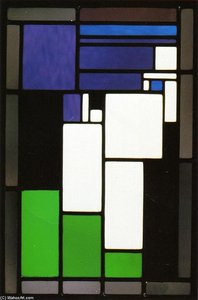
Ktorý obraz od Theo van Doesburg je najznámejší zo všetkých?Odhaľte odpoveď

Counter composition XV (1925). Nasledujú Rhythm of a Russian Dance a Troelstra (1910).

Koľko rokov mal/a Theo van Doesburg pri dokončeni diela Counter composition XV?Odhaľte odpoveď

42 rokov: Counter composition XV vzniklo v roku 1925 a Theo van Doesburg sa narodil/a v roku 1883.

Ktorých 10 najlepších obrazov má Theo van Doesburg?Odhaľte odpoveď

Counter composition XV, Rhythm of a Russian Dance, Troelstra, Study for Composition VIII (The Cow), Composition (The Cow), Composition, Preliminary design for the floor, Composition, Portrait of a man with hat a Self-portrait with beard. Vyššie uvedené hodnotenie uvádza rok a múzeu pre každé z nich.

Koľko diel vytvoril/a Theo van Doesburg?Odhaľte odpoveď

Náš katalóg obsahuje 225 diel od umelca Theo van Doesburg z perioda od 1900 do 1931.

Kde visia najznámejšie originály umelca Theo van Doesburg?Odhaľte odpoveď

Väčšinou v Centraal Museum (Utrecht), Museum de Lakenhal (Leiden) a Kröller-Müller Museum (Otterlo). Tabuľka múzeí vyššie ich všetky uvádza.

Kedy vytvoril/a Theo van Doesburg svoje najznámejšie obrazy?Odhaľte odpoveď

V období 1910s: 56 z 100 diel na tejto stránke bolo vytvorených vtedy, pričom Troelstra z nich.

Aké sú najskoršie a najneskoršie známe diela umelca Theo van Doesburg?Odhaľte odpoveď

Na tejto stránke je najstaršie dielo z River Landscape with Steeple and Mill (1900) a najnovšie z Composition (1931).

K akým témamam sa Theo van Doesburg najčastejšie vracia?Odhaľte odpoveď

Face (24), Man (23) a Portrait (17), v rámci 100 diel na tejto stránke.

V akom médiu tvoril/a Theo van Doesburg najčastejšie?Odhaľte odpoveď

Oil On Canvas, pre 13 z 100 diel na tejto stránke.

S ktorým smerom je spojený/á umenec Theo van Doesburg?Odhaľte odpoveď

De stijl, podľa originálov na tejto stránke.

Aké originály umelca Theo van Doesburg má v zbierkach Centraal Museum?Odhaľte odpoveď

Self-portrait with beard, Portrait of Agnita Feis a Portrait of Agnita Feis: múzeá Centraal Museum, Utrecht uchovávajú 20 z diel na tejto stránke.

Theo van Doesburg: umelec

The Architect of Abstraction: A Life in Geometric Harmony

Theo van Doesburg, narodený Christian Emil Marie Küpper v roku 1883 v Utřici, Holandsko, bol viac než len maľiar – stal sa revolučnou silou, ktorá zásadne premenila základy modernej umenia. Jeho cesta začínala medzi dozvukmi impresionizmu a postimpresionizmu, spočiatku odrážajúc štýly podobné Vincentovi van Gogghovi – nielen v témach, ale aj v emocionálnej intenzite. Avšak tento skorý štádium slúžilo ako kľúčová záležitosť, nevyhnutný prechod k radikálnemu zmeneniu, ktoré definovalo jeho trvalé dedičstvo. Kľúčový moment nastal v roku 1913 s stretom s Kandinským a jeho *Rückblicke*. Tento text vyvolal v van Doesburgu hlbokú realizáciu: skutočné umelecké vyjadrenie nespočíva v replikovaní vonkajšieho sveta, ale v prenášaní vnútorného, duchovného priestoru prostredníctvom čistej abstrakcie. Toto presvedčenie prinieslo Neoplasticizmus – hnutie, ktoré založil a s vášňou obhajoval, stáva sa jeho najväčším zástupcom.

Forging a New Visual Language: The Principles of De Stijl

De Stijl nebolo len umelecký štýl; bolo to komplexný filozofický manifest preložený do vizuálnej podoby. Van Doesburg veril v odstraňovanie umenia k jeho najzákladnejším elementom – priamych líniách, pravých uhlov a základným farbám červenej, žltej a modrej, spolu s čiernou, bielou a šedou. Tento skromný farebný rozsah nebol výsledkom obmedzenia, ale túžbou po univerzálnosti – presvedčením, že tieto základné tvary rezonujú s podzákladným kozmickým poriadkom. Videl *celé* umenie, ktoré sa rozširuje za plátno aj do architektúry, dizajnu a dokonca každodenných predmetov. Spolupráca bola kľúčová; van Doesburg úzko spolupracoval s architektmi ako J.J.P. Oudom a Gerritom Rietveldom, navrhoval vitráže, nábytok a celé interiéry, ktoré odôvodňovali princípmi De Stijl. Jeho spolupráce sa rozširovali aj na ďalších umelcov, ako Piet Mondrian, s ktorým vytvoril vplyvný periodik *De Stijl*, platformu pre šírenie ich myšlienok a podporu podobne zmyslenia umelcov. Napriek spoločným začatkom však vznikol medzi van Doesburgom a Mondrianom rozkol ohľadom prísnosti Neoplasticizmu. Van Doesburg v roku 1926 predstavil “Elementarizmus”, ktorý zavádzal diagonálne čiary a dynamickejšiu kompozíciu – odchýlku, ktorá nakoniec viedla k rozkolu v rámci hnutia.

Beyond Painting: A Multifaceted Artistic Vision

Aj keď je oslavovaný ako maľiar, van Doesburgove umelecké úsilie bolo mimoriadne rozmanité. Bol prolificným spisovateľom, poetom a kritikom, používal svoj pióro na vyjadrenie teoretických základech De Stijl a prekonávanie konvenčných vnímania umenia. Jeho zapojenie do Dadaizmu na začiatku 20. rokov sa tiež rozširilo o jeho umelecké obzory, čo viedlo k experimentom s kolážami a typografiou. Táto éra priniesla aj jeho učiteľskú činnosť na Bauhaus, kde zdieľal svoje myšlienky s novou generáciou umelcov a dizajnérov. Nebol spokojný len v rámci tradičných umeleckých foriem; van Doesburg aktívne hľadal integráciu umenia do každodenného života, veril, že má moc transformovať spoločnosť. Jeho návrhy interiérov a nábytku neboli len estetické cvičenia, ale pokusy o vytvorenie harmonických priestorov, ktoré odôvodňovali princípmi De Stijl. Príkladom je jeho spolupráca s Sophie Taeuber-Arp a Georges Vantongerloo na navrhovaní umeleckých rezidencií, čo predstavuje holistický prístup k umeleckému tvoreniu – pokus o postavenie *sveta* v obraze svojich ideálov.

Key Influences and Developments

Van Doesburg bol ovplyvnený mnohými umelcami a hnutiami, vrátane Vincenta van Gogha, ktorý mu poskytol prvotný štýl a emocionálnu intenzitu, a Wassilyho Kandinského, ktorý ho navždy zmenil v abstrakciu. Jeho presvedčenie o univerzálnosti geometrických tvarov a základných farieb bolo ovplyvnené filozofiou a architektonickou praxou. Počas svojho pobytu v Berlíne a Viedni v 20. rokoch sa stretol s najvýznamnejšími predstaviteľmi avantgardy, ako boli Pablo Picasso, Franz Marc a Max Beckmann. Jeho štúdium Bauhaus v roku 1923 ho ovplyvnilo jeho chápaním moderného dizajnu a architektúry.

Major Achievements and Lasting Impact

Van Doesburg zanechal po sebe rozsiahle dielo, ktoré sa vyznačuje jasnými geometrickými tvarmi, základnými farbami a minimalistickým prístupom. Jeho najvýznamnejšie diela zahŕňajú:
  • Study for Simultaneous Compositions XXII (1922): Ikona Neoplasticizmu, ktorá ukazuje hnutie’s signature geometrické tvary a obmedzenú farebnú paletu.
  • Composition with half values (1928): Demonštruje van Doesburgov experiment s tónovými variáciami v rámci estetiky De Stijl.
  • Dancers (1917-1918): Prechodný štádium jeho tvorby, ktorý spája figuratívne prvky s nástupom abstrakcie.
  • Collaboration on *De Stijl* journal: Kľúčová platforma pre šírenie myšlienok hnutia a podporu dialógu medzi umelcami a intelektuálmi.
  • Elementarism (1926): Van Doesburgov pokus o vniesenie dynamiky do Neoplasticizmu, ktorý zavádza diagonálne čiary a dynamickejšiu kompozíciu.
Van Doesburgova inštancia má nespočetný vplyv na moderný dizajn – od architektúry a nábytku po grafický dizajn a typografiu. Zostáva kľúčovou postavou v dejinách umenia, pravým pionierom, ktorý sa odvážil zpochybniť konvencie a predstaviť nový vizuálny jazyk pre 20. storočie a ďalej. Jeho dedičstvo žije v priamych líniách a základných farbách.