Portrét Ivan Ivanovič Šiškin

100 najznámejších obrazov od umelca Ivan Ivanovič Šiškin, každý jedinečný

Aktualizované november 2026 · zoradené podľa našej miery popularity (vyhľadávanie, návštevy a objednávky pre každou prácu) · 706 dielov umelca Ivan Ivanovič Šiškin v našom katalógu

Stručne povedané

Útoro v borovej strate (1886) je obrazom umelca Ivan Ivanovič Šiškin, ktorý priťahuje najviac pohľadov; originál sa nachádza v múzeu Tretyakov Gallery, Moskva. Potom sa pohľad presunie na Raidové pole (1877) a Ráno v borovom lese (1889). Z 706 diel umelca Ivan Ivanovič Šiškin v našom katalógu je týchto 100 najznámejších; každá z nich je jedinečným originálom prezentovaným s jeho rokom vzniku, múzeom a dôvodom, prečo pretrváva.

1831 – 1898, Jelabuga Návrat realismu Najviac diel: Tretyakov Gallery

Top 10 obrazov umelca Ivan Ivanovič Šiškin podľa výberu galérie

1
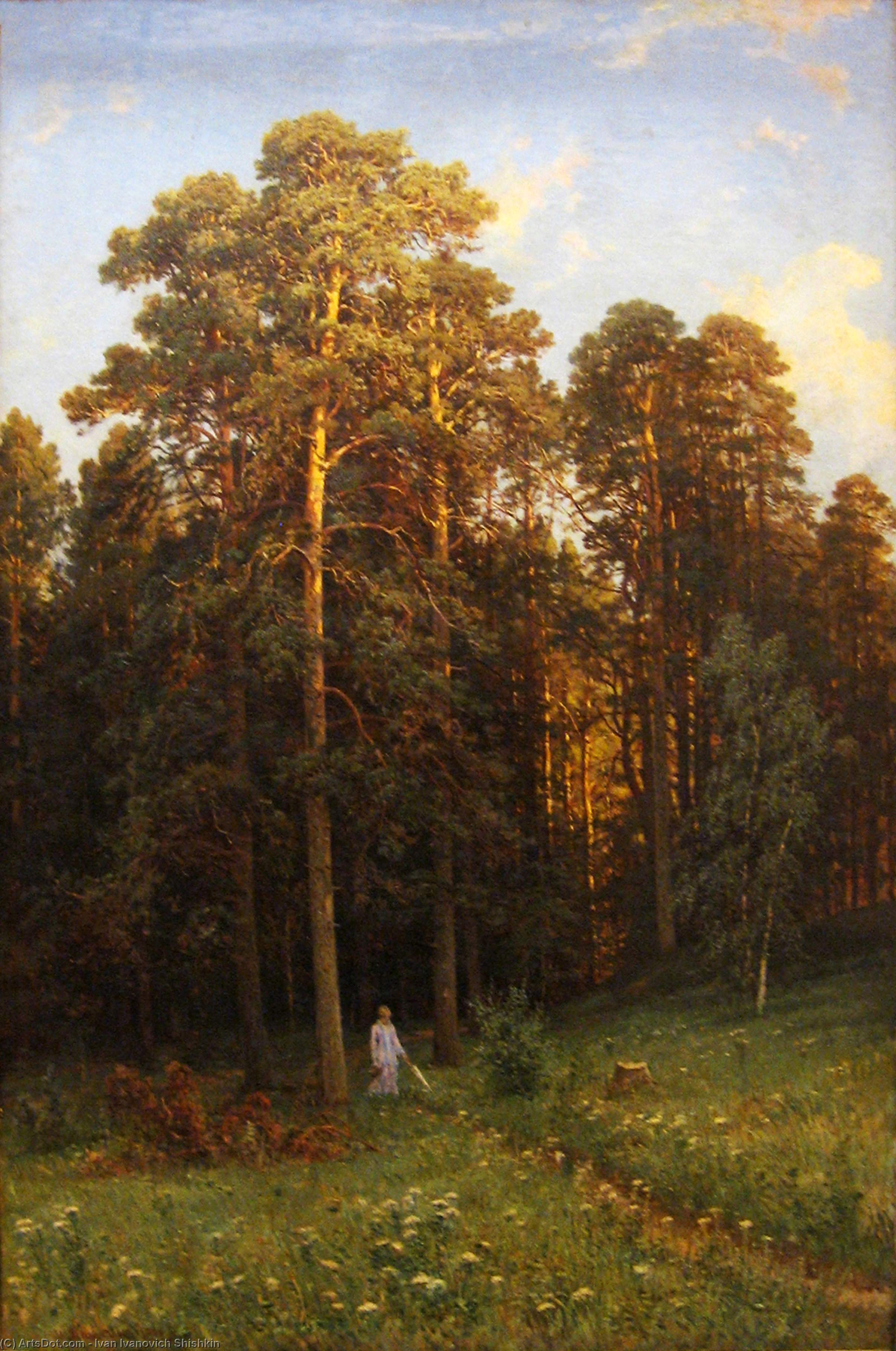
Útoro v borovej strate (1886) od Ivan Ivanovič Šiškin

Útoro v borovej strate

1886 · Olej na plátne · Tretyakov Gallery, Moskva

Ranné v borovom lese od Ivana Ivanovicha Šiškina je majstrovským príkladom ruského realizmu, ktorý pozýva divákov do pokojnej a kontemplatívnej lesnej sceny. Táto pútavá olejná technika na plátne, vytvorená v roku 1886, demonštruje Šiškinovu bezkonkurécnu schopnosť zachytiť podstatu prírody s precíznymi detailmi a emocionálnou hĺbkou.

2
Raidové pole (1877) od Ivan Ivanovič Šiškin

Raidové pole

1877 · Olejová farba · Tretyakov Gallery, Moskva

V nekonečnom, rozľuhujúcim priestore 19. storočia ruského realismu má málo mien taký hlboký rezonanciu a úctu ako Ivan Ivanovič Šiškin. Jeho majstrovské dielo, Raidové pole, vytvorené v roku 1877, slúži ako úchvačný oknom do samotného srdca ruskej vidieže, zachytávajúc moment večnej nehybnosti. Obraz predstavuje rozľahlú panorámu, kde sa vysoké, zlatisté trávy kýčajú v neviditeľnom vánku, prepojenú skromnou zemnou cestou, ktorá pozýva diváka, aby sa vydal hlboko do samotnej kompozície. Toto…

3
Ráno v borovom lese (1889) od Ivan Ivanovič Šiškin

Ráno v borovom lese

1889 · Olej na plátne · Tretyakov Gallery, Moskva

V tichých, jantárových chvíľach úsvitu vnáša Ivan Ivanovič Šiškin svojím dielom Ráno v borovom lese Pine Forest život do samotnej podstaty ruskej krajiny. Toto majstrovské dielo z roku 1889 nie je len prostým zachytením stromov a svetla; je to imersívny zážitok, ktorý pozýva diváka do primordialného sveta, kde príroda zostáva nedotknutá frenetickým tempom modernity. Obraz zachytáva hlboký pocit pokoja, keď prvé lúče slnečného svitu prenikajú hustou korunou prastarých borovíc a…

4
Dúbravka (1887) od Ivan Ivanovič Šiškin

Dúbravka

1887 · Olej na plátne · Kyiv National Art Gallery, Kyiv

V tichých hĺbkach konca devätnastého storočia zachytil Ivan Ivanovič Šiškin niečo oveľa hlbšie než len obyčajnú krajinu; zachytil samotný tep ruskej krajiny. Jeho majstrovské dielo, Dúbravka, vytvorené v roku 1887, slúži ako úchvačný okná do sveta prastarých síl a tichej veľkolepilosti. Keď človek stojí pred týmto olejom na plátne, okamžitým pocitom je úplné ponorenie do scény. Divák len nepozoruje les, ale je prenesený na okraj prastarého hájov, kde sa vzduch…

5
Zmrak. Po západe slnka (1874) od Ivan Ivanovič Šiškin

Zmrak. Po západe slnka

1874 · Olej na plátne

Táto scéna zachytáva les v presnom okamihu, keď slnko už skĺzlo pod obzor. Stromy v popredí aj v pozadí vytvárajú vrstvy hĺbky a rámia tichú hladinu vody. Jeden jediný vták odpočíva na vetvi, čím v nekonečnej tomne poskytuje jediný bod pohybu v rámci celkového pokoja. Atmosféru definuje blednúce svetlo súmraku, kde sa obloha a krajina začínia zlúčiť do jemných tieňov.

6
Cesta cez les, 1880 (olej na plátne) (1880) od Ivan Ivanovič Šiškin

Cesta cez les, 1880 (olej na plátne)

1880 · Olej na plátne · Štátne ruské múzeum, Petrohrad

To gaze upon Ivan Ivanovich Shishkin's "The Path through the Woods" is not merely to observe a landscape; it is to step directly into the profound, breathing heart of Russia itself. Painted in 1880, this oil on canvas captures that quintessential moment when humanity pauses within nature’s embrace. The scene unfolds along a dirt path, inviting the viewer to follow the gentle rhythm of two women strolling deeper into the…

7
Hlboký les (1872) od Ivan Ivanovič Šiškin

Hlboký les

1872 · Olej na plátne · Tretyakov Gallery, Moskva

Obraz Hlboký les predstavuje majestátnu scénu lesa, kde rôznorodne stromy a hustý mach pokrývajú zemský povrch. Celá scéna zachytáva samotnú esenciu prírody prostredníctvom zobrazenia viacerých stromov umiestnených v popredí aj pozadí, čo vytvára pocit hĺbky a tridimensionality. Namiesto zahrnutia chodníkov alebo ľudských postav sa toto dielo sústredí na tichý, neustály cyklus prírody – na proces padania, hnitia stromov a ich následného kŕmenia nového života. Machnatá pôda zásadným spôsobom dopĺňa celkovú…

8
Na okraji borového lesa (1882) od Ivan Ivanovič Šiškin

Na okraji borového lesa

1882 · Olej na plátne

Hľadieť na zachytenie „Na okraji borového lesa“ od Ivana Ivanoviča Šiškina nie je len prostým pozorovaním krajiny; je to krok cez závoj priamo do samotnej duše ruskej divočiny. Tento obraz zachytáva ten vznešený okamih, kedy civilizácia jemne ustupuje ohromujúcej majestátnosti prírody. Kompozícia vtiahne diváka hlboko do smaragdového objatia, ktorým ho vedú postavy kráčajúce podrostom. Šiškin, majster kronikár ruskej prírodnej duše, vdechuje každému listu a každému luku slnečného svetla hmatateľný život.…

9
Rain in the Oak Forest (1891) od Ivan Ivanovič Šiškin

Rain in the Oak Forest

1891 · Oil On Canvas

Rain in the Oak Forest is an oil on canvas work by Ivan Shishkin. Created in 1891, the painting captures an oak grove during a warm summer rain. The scene focuses on the specific atmosphere of a woodland setting under a seasonal downpour.

10
Fir forest od Ivan Ivanovič Šiškin

Fir forest

Oil On Canvas

To gaze upon Ivan Ivanovich Shishkin's depiction of a fir forest is not merely to observe trees; it is to step across the threshold and into the very soul of the Russian wilderness. This painting captures that profound, almost spiritual encounter one has with an ancient woodland—a place where time seems to slow its breath and the air itself feels thick with the scent of pine sap and damp earth.…

Slávne obrazy umelca Ivan Ivanovič Šiškin, čísla 11 až 100

11Gathering Mushrooms (1870) od Ivan Ivanovič ŠiškinGathering Mushrooms1870 · Štátne ruské múzeum 12Firný les (štúdia) (1889) od Ivan Ivanovič ŠiškinFirný les (štúdia)1889 · Tretyakov Gallery 13The Sun lit Pines (1886) od Ivan Ivanovič ŠiškinThe Sun lit Pines1886 14Pond in an old park (1898) od Ivan Ivanovič ŠiškinPond in an old park1898 · Tretyakov Gallery 15Autumn landscape. Park in Pavlovsk (1888) od Ivan Ivanovič ŠiškinAutumn landscape. Park in Pavlovsk1888 16In grove (1869) od Ivan Ivanovič ŠiškinIn grove1869 17To go for mushrooms (1870) od Ivan Ivanovič ŠiškinTo go for mushrooms1870 18Oaklets near Sestroretsk (1857) od Ivan Ivanovič ŠiškinOaklets near Sestroretsk1857 · Tretyakov Gallery 19Twilight (1883) od Ivan Ivanovič ŠiškinTwilight1883 20Coniferous forest. Sunny day (1895) od Ivan Ivanovič ŠiškinConiferous forest. Sunny day1895 21Woodland scenery with herons (1870) od Ivan Ivanovič ŠiškinWoodland scenery with herons1870 22Mast Tree Grove (1898) od Ivan Ivanovič ŠiškinMast Tree Grove1898 · Štátne ruské múzeum 23Gathering Storm (1884) od Ivan Ivanovič ŠiškinGathering Storm1884 · Štátne ruské múzeum 24Stones in the forest, Valaam (etude) (1858) od Ivan Ivanovič ŠiškinStones in the forest, Valaam (etude)1858 25Path in a forest (1880) od Ivan Ivanovič ŠiškinPath in a forest1880 26Oaks (study) (1864) od Ivan Ivanovič ŠiškinOaks (study)1864 27In the forest of countess Mordvinova, Petergof (1891) od Ivan Ivanovič ŠiškinIn the forest of countess Mordvinova, Petergof1891 · Tretyakov Gallery 28View of Valaam Island. Kukko (1860) od Ivan Ivanovič ŠiškinView of Valaam Island. Kukko1860 · Štátne ruské múzeum 29From the banks of the Kama River near Yelabuga (1885) od Ivan Ivanovič ŠiškinFrom the banks of the Kama River near Yelabuga1885 30Little House in Dusseldorf (1856) od Ivan Ivanovič ŠiškinLittle House in Dusseldorf1856 31Mixed Forest (1888) od Ivan Ivanovič ŠiškinMixed Forest1888 32Oaks (1887) od Ivan Ivanovič ŠiškinOaks1887 33Valaam. Forest on the rocks (1859) od Ivan Ivanovič ŠiškinValaam. Forest on the rocks1859 34The road in forest (1869) od Ivan Ivanovič ŠiškinThe road in forest1869 35The road in the Rye (1866) od Ivan Ivanovič ŠiškinThe road in the Rye1866 · Tretyakov Gallery 36Oaklets (1886) od Ivan Ivanovič ŠiškinOaklets1886 · Tretyakov Gallery 37Rye (1878) od Ivan Ivanovič ŠiškinRye1878 · Tretyakov Gallery 38Ship timber grove (1898) od Ivan Ivanovič ŠiškinShip timber grove1898 39Forest Stream (1870) od Ivan Ivanovič ŠiškinForest Stream1870 40Go to the autumn (1880) od Ivan Ivanovič ŠiškinGo to the autumn1880 41Piny wood (1885) od Ivan Ivanovič ŠiškinPiny wood1885 42Forest road (1892) od Ivan Ivanovič ŠiškinForest road1892 43Morning in piny wood (1889) od Ivan Ivanovič ŠiškinMorning in piny wood1889 · Tretyakov Gallery 44In the Grove (1865) od Ivan Ivanovič ŠiškinIn the Grove1865 · Štátne ruské múzeum 45Pine forest (1878) od Ivan Ivanovič ŠiškinPine forest1878 46Tevtoburgsky forest (1865) od Ivan Ivanovič ŠiškinTevtoburgsky forest1865 47Landscape with hunter, island Valaam od Ivan Ivanovič ŠiškinLandscape with hunter, island Valaam 48Overgrown pond on edge of forest, Siverskaya (1883) od Ivan Ivanovič ŠiškinOvergrown pond on edge of forest, Siverskaya1883 · Tretyakov Gallery 49Forest Stream (1870) od Ivan Ivanovič ŠiškinForest Stream1870 50Near the monastery (1870) od Ivan Ivanovič ŠiškinNear the monastery1870 51Forest (1869) od Ivan Ivanovič ŠiškinForest1869 52Landscape with a Hunter. Valaam Island (1867) od Ivan Ivanovič ŠiškinLandscape with a Hunter. Valaam Island1867 · Štátne ruské múzeum 53Forest before the storm (1872) od Ivan Ivanovič ŠiškinForest before the storm1872 54Thicket (1879) od Ivan Ivanovič ŠiškinThicket1879 55Forest in spring (1884) od Ivan Ivanovič ŠiškinForest in spring1884 56In The Birch Tree Forest (1883) od Ivan Ivanovič ŠiškinIn The Birch Tree Forest1883 · Štátne ruské múzeum 57After the rain. Etude of the forest (1881) od Ivan Ivanovič ŠiškinAfter the rain. Etude of the forest1881 58Pine (1892) od Ivan Ivanovič ŠiškinPine1892 59Early Autumn (1889) od Ivan Ivanovič ŠiškinEarly Autumn1889 60Deciduous Forest (1897) od Ivan Ivanovič ŠiškinDeciduous Forest1897 · The State Museum of Fine Arts of Tatarstan Republic 61Oak-wood (1887) od Ivan Ivanovič ŠiškinOak-wood1887 62Thickets (1881) od Ivan Ivanovič ŠiškinThickets1881 · Tretyakov Gallery 63In Crimea od Ivan Ivanovič ŠiškinIn Crimea 64Cut down birch (1864) od Ivan Ivanovič ŠiškinCut down birch1864 · Štátne ruské múzeum 65Fir forest on the river Kama (1877) od Ivan Ivanovič ŠiškinFir forest on the river Kama1877 · Perm State Arts Gallery 66In the forest. Fallen Tree (1878) od Ivan Ivanovič ŠiškinIn the forest. Fallen Tree1878 67Fir forest (1891) od Ivan Ivanovič ŠiškinFir forest1891 68Park in Pavlovsk (1889) od Ivan Ivanovič ŠiškinPark in Pavlovsk1889 69Forest in Mordvinovo (1891) od Ivan Ivanovič ŠiškinForest in Mordvinovo1891 70Flowers on the forest edge (1893) od Ivan Ivanovič ŠiškinFlowers on the forest edge1893 71Deciduous forest od Ivan Ivanovič ŠiškinDeciduous forestTretyakov Gallery 72Self-portrait (1854) od Ivan Ivanovič ŠiškinSelf-portrait1854 73Self-portrait (1854) od Ivan Ivanovič ŠiškinSelf-portrait1854 74In Krippen. The man on the Doorstep (1862) od Ivan Ivanovič ŠiškinIn Krippen. The man on the Doorstep1862 · The State Museum of Fine Arts of Tatarstan Republic 75I. I. Shishkin and A. V. Gine in the Studio on the Valaam Island (1860) od Ivan Ivanovič ŠiškinI. I. Shishkin and A. V. Gine in the Studio on the Valaam Island1860 · Štátne ruské múzeum 76Rocks on the island of Valaam. Kukko (1859) od Ivan Ivanovič ŠiškinRocks on the island of Valaam. Kukko1859 77Forest path (1863) od Ivan Ivanovič ŠiškinForest path1863 78In front of the mirror (1870) od Ivan Ivanovič ŠiškinIn front of the mirror1870 79Rest in a forest (1865) od Ivan Ivanovič ŠiškinRest in a forest1865 80View near Dusseldorf (1865) od Ivan Ivanovič ŠiškinView near Dusseldorf1865 · Štátne ruské múzeum 81Swiss landscape (1866) od Ivan Ivanovič ŠiškinSwiss landscape1866 · The State Museum of Fine Arts of Tatarstan Republic 82Forest (1869) od Ivan Ivanovič ŠiškinForest1869 83Clouds above grove (1878) od Ivan Ivanovič ŠiškinClouds above grove1878 84Clouds over the grove (1878) od Ivan Ivanovič ŠiškinClouds over the grove1878 85On the forest boundary line (1878) od Ivan Ivanovič ŠiškinOn the forest boundary line1878 86Coltsfoot (1878) od Ivan Ivanovič ŠiškinColtsfoot1878 87Winter in a forest (Rime) (1877) od Ivan Ivanovič ŠiškinWinter in a forest (Rime)1877 · Kyiv National Art Gallery 88Winter (1890) od Ivan Ivanovič ŠiškinWinter1890 89Pines (1885) od Ivan Ivanovič ŠiškinPines1885 90Rotten wood, covered with moss (1890) od Ivan Ivanovič ŠiškinRotten wood, covered with moss1890 91Self-portrait (1886) od Ivan Ivanovič ŠiškinSelf-portrait1886 92Night (1886) od Ivan Ivanovič ŠiškinNight1886 93Flood like sea (1890) od Ivan Ivanovič ŠiškinFlood like sea1890 94Forest swamp (1889) od Ivan Ivanovič ŠiškinForest swamp1889 95Piny forest (1889) od Ivan Ivanovič ŠiškinPiny forest1889 96Sands (1887) od Ivan Ivanovič ŠiškinSands1887 97Trees od Ivan Ivanovič ŠiškinTrees 98Forest before thunderstorm (1872) od Ivan Ivanovič ŠiškinForest before thunderstorm1872 · Taganrog Art Museum 99The Forest Clearing (1896) od Ivan Ivanovič ŠiškinThe Forest Clearing1896 100Oaks, evening (study for picture Oak-wood) (1887) od Ivan Ivanovič ŠiškinOaks, evening (study for picture Oak-wood)1887 · Tretyakov Gallery

Slávne obrazy umelca Ivan Ivanovič Šiškin podľa jednotlivých období

Motívy, ktoré zaujali Ivan Ivanovič Šiškin

Štyri témy, ktoré sa v týchto origináloch najčastejšie vracajú, každá s jej najvychybenejším príkladom.

Múzeá, ktoré uchovávajú originály umelca Ivan Ivanovič Šiškin

6 múzeá, v ktorých sa nachádza najviac obrazov z tejto stránky.

Múzeá Mesto Diela umelca Ivan Ivanovič Šiškin Obrazy z tohto zoznamu
Tretyakov Gallery, MoskvaTretyakov Gallery Moskva 51 Útoro v borovej strate, Raidové pole, Ráno v borovom lese
Štátne ruské múzeum, PetrohradŠtátne ruské múzeum Petrohrad 36 Cesta cez les, 1880 (olej na plátne), Gathering Mushrooms, Mast Tree Grove
The State Museum of Fine Arts of Tatarstan Republic, KazanThe State Museum of Fine Arts of Tatarstan Republic Kazan 21 Deciduous Forest, In Krippen. The man on the Doorstep, Swiss landscape
Kyiv National Art Gallery, KyivKyiv National Art Gallery Kyiv 9 Dúbravka, Winter in a forest (Rime)
Perm State Arts Gallery, PermPerm State Arts Gallery Perm 11 Fir forest on the river Kama
Taganrog Art Museum, TaganrogTaganrog Art Museum Taganrog 1 Forest before thunderstorm

Ivan Ivanovič Šiškin naprieč dekádami: jeden jedinečný originál pre každý

Diela podľa dekád

Vyberte si dekádu a pozrite si originál, ktorý ju definuje.

Obrazy umelca Ivan Ivanovič Šiškin: otázky pre galériu

Akým najznámejším dielom sa pýta Ivan Ivanovič Šiškin?Odhaľte odpoveď

Útoro v borovej strate (1886), Tretyakov Gallery, Moskva. Nasledujú Raidové pole (1877) a Ráno v borovom lese (1889).

V akom veku vytvoril/a Ivan Ivanovič Šiškin dielo Útoro v borovej strate?Odhaľte odpoveď

55 rokov: Útoro v borovej strate vzniklo v roku 1886 a Ivan Ivanovič Šiškin sa narodil/a v roku 1831.

Ktorých desať obrazov Ivan Ivanovič Šiškin je najznámejších?Odhaľte odpoveď

Útoro v borovej strate, Raidové pole, Ráno v borovom lese, Dúbravka, Zmrak. Po západe slnka, Cesta cez les, 1880 (olej na plátne), Hlboký les, Na okraji borového lesa, Rain in the Oak Forest a Fir forest. Vyššie uvedené hodnotenie uvádza rok a múzeu pre každé z nich.

Koľko je známych diel umelca Ivan Ivanovič Šiškin?Odhaľte odpoveď

Náš katalóg obsahuje 706 diel od umelca Ivan Ivanovič Šiškin z perioda od 1854 do 1898.

Kde možno vidieť najznámejšie originály od Ivan Ivanovič Šiškin?Odhaľte odpoveď

Väčšinou v Tretyakov Gallery (Moskva), Štátne ruské múzeum (Petrohrad) a The State Museum of Fine Arts of Tatarstan Republic (Kazan). Tabuľka múzeí vyššie ich všetky uvádza.

V akom období vytvoril/a Ivan Ivanovič Šiškin svoje najznámejšie obrazy?Odhaľte odpoveď

V období 1880s: 33 z 100 diel na tejto stránke bolo vytvorených vtedy, pričom Útoro v borovej strate z nich.

Ktorý z najslávnejších obrazov autora Ivan Ivanovič Šiškin je najstarší a ktorý najnovší?Odhaľte odpoveď

Na tejto stránke je najstaršie dielo z Self-portrait (1854) a najnovšie z Pond in an old park (1898).

Aké témy obľúbené Ivan Ivanovič Šiškin?Odhaľte odpoveď

Trees (51), Forest (49) a Landscape (38), v rámci 100 diel na tejto stránke.

S akými materiálmi mal(a) Ivan Ivanovič Šiškin najčastejšie pracuje?Odhaľte odpoveď

Oil On Canvas, pre 47 z 100 diel na tejto stránke.

Do ktorého smeru patrí tvorba umelca Ivan Ivanovič Šiškin?Odhaľte odpoveď

Návrat realismu, podľa originálov na tejto stránke.

Aké originály od Ivan Ivanovič Šiškin môžem vidieť v Tretyakov Gallery?Odhaľte odpoveď

Útoro v borovej strate, Raidové pole a Ráno v borovom lese: múzeá Tretyakov Gallery, Moskva uchovávajú 16 z diel na tejto stránke.

Ivan Ivanovič Šiškin: portrét umelca

Early Life, Family and Training

Ivan Ivanovich Shishkin was born on 25 January 1832 in Yelabuga, Vyatka Governorate. He grew up in a family of merchants, the son of Ivan Vasilyevich Shishkin, a grain merchant who lived until 1872. His lineage was rooted in the region, tracing back to his grandfather, Vasily Afanasyevich Shishkin-Serebryakov, who was a palace peasant and later a third-guild merchant in Yelabuga.

His formal education began at the age of 12 when he was enrolled in the First Kazan Boys' Gymnasium. This early schooling provided the foundation for a life spent observing the natural world. After his time in Kazan, he moved toward professional artistic study, entering the Moscow School of Painting, Sculpture and Architecture in 1852. He remained there for four years, honing his technical skills before moving on to the Saint Petersburg Imperial Academy of Arts in 1857. He completed his studies at the Academy in 1860.

Artistic Training and Travels

After his early schooling, Shishkin moved to the Saint Petersburg Imperial Academy of Arts, where he studied from 1857 to 1860. He worked under the guidance of Professor Sokrat Vorobyov, a landscape painter who helped shape his technical foundation. His dedication to his craft was recognized upon his graduation when he earned a gold medal from the Academy. This achievement opened doors to further study beyond the borders of Russia.

The Academy granted him an imperial scholarship, allowing him to spend three years living and working abroad. This period of travel was essential to his development. In 1861, he visited Munich, Germany, to observe the works of established artists. His travels eventually took him through Switzerland and Germany, where he spent much of his time sketching and painting from life. These years away from home allowed him to refine his ability to render the natural world with precision.

Technique and Artistic Style

Shishkin’s approach to the canvas was rooted in a deep, analytical study of the natural world. He did not merely look at the forest; he observed its smallest intricacies, from the texture of old stumps to the way driftwood rests on the earth. This commitment to realism allowed him to translate the physical reality of the Russian landscape into his works. His method was precise, driven by a need to understand how light and form actually behaved in the wild. He was as skilled with a pen as he was with a brush, proving himself an outstanding draftsman and a printmaker who could capture detail through various means.

His technical repertoire was broad, spanning oil painting, watercolor, and pen drawings. He also experimented with etching using aqua regia, a process that required significant technical control. One of the most striking aspects of his work is his handling of color, particularly the endless variations of green found in the woods. To achieve this, he utilized an extensive range of pigments, including Permanent Green, Veronese Green, Cobalt Green, Chrome Green, Cinnabar Green, Green Earth, and Emerald Green. By mixing these with various shades of yellow and blue, he could recreate the specific, shifting light of a forest floor or the deep shadows of a thicket.

His ability to render the atmosphere of a scene relied on this careful color work and his mastery of detail. Whether he was depicting the sunlight filtering through branches or the dampness of a forest after rain, his work remained grounded in the actual appearance of the land. He focused on the tangible elements of nature—the bark of a tree, the blades of grass, and the specific quality of light—to build his compositions.

Key Works and Masterpieces

Shishkin’s brush often found its way to the quietest corners of the woods. In 1869, he produced Walk in a forest, a work that offers a glimpse into a tranquil woodland scene, capturing a moment frozen in time. His ability to translate the stillness of nature was evident in his 1884 painting, Forest in Winter, which immerses the viewer in the silent grandeur of a snowy landscape. These works show a man who spent countless hours observing the intricacies of the trees and the way light moves through the branches.

His connection to the Russian landscape was perhaps most clearly felt in his 1878 oil painting, Rye. This piece depicts a field of ripening yellow rye near the village of Lekarevo, west of Yelabuga. The scene captures the vastness of the plains under a hazy summer sky. His most famous work, Morning in a Pine Forest, remains a central part of his legacy, showing sunlight filtering through towering pines to create a sense of peace and strength.

During his time spent traveling through Europe, he also looked toward the dramatic scenery of the mountains. His painting Staubbach Falls in the Lauterbrunnen Valley is held in a museum’s permanent exhibition, reflecting the influence of the Swiss landscapes he encountered during his years abroad. His output was vast, covering many different aspects of the natural world:

Professional Roles and Memberships

Shishkin’s commitment to the art community was deeply felt through his involvement with several influential groups. He was a member of the Peredvizhniki, also known as the Wanderers, a group that sought to bring art directly to the people rather than keeping it confined to academic circles. His influence extended into specialized circles as well; he was a member of the Circle of the Itinerants and the Society of Russian Etchers in St. Petersburg, as well as the Society of Russian Watercolorists. These affiliations reflected a man who was deeply embedded in the evolving landscape of Russian artistic life.

His expertise was not limited to his own canvas. From 1873 to 1898, he held the position of professor of painting. During this time, he also headed the landscape painting class at the Highest Art School in St. Petersburg. In these roles, he helped shape the technical skills of many students, passing on the meticulous methods he had refined throughout his own career. He was a constant presence in the academic and professional structures of the city, helping to guide the next generation of painters through the complexities of their craft.

Later Years and Death

The final years of Shishkin's life were spent in St. Petersburg, where he remained deeply immersed in his craft. Even as he aged, his commitment to the study of nature never wavered. On March 20, 1898, he passed away in the city. At the time of his death, he was actively working on a new painting, a detail that speaks to the constant, quiet labor of his studio life.

His passing marked the end of a life spent largely in the company of the forests he so carefully observed. He was initially buried at the Smolensk Orthodox Cemetery. Decades later, in 1950, his remains were moved to the Tikhvin Cemetery, located within the Necropolis of the Masters of Art.

Where to See the Works Today

To experience the quiet presence of Shishkin’s forests, one can visit several significant collections across Russia. The Tretyakov Gallery in Moscow holds a substantial number of his paintings, including his detailed studies of grain and woodland. These works allow viewers to see the textures of the Russian landscape up close, from the sweeping expanse of a rye field to the dense shadows of a pine grove.

Other important repositories of his art include the Yaroslavl Arts Museum and the Kartinnaja Galerija in Tambov. These institutions preserve the visual history of the landscapes he spent his life observing. In Voronezh, Russia, the Kramskoy Museum of Fine Arts also maintains his works, ensuring his specific way of seeing the natural world remains available to those who seek it.