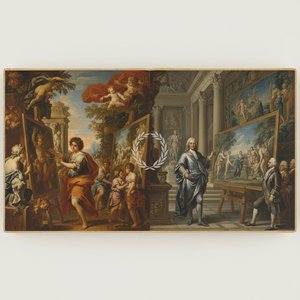
Joseph Ducreux

1735 - 1802

Joseph Ducreux (1735–1802) je známy najmä svojou tvorbou v oblasti Portrait of a Man "Mocking"; katalóg obsahuje 25 diel tohto umelca.

Základné informácie

  • Mediums: olej na plátne
  • Top 3 works:
    • Portrait of a Man
    • Self-portrait, called the Surprise
    • Selfportrait, called Le Silence (The Silence)
  • Room fit: obývací izba
  • Died: 1802
  • Also known as:
    • Giuseppe Ducreux
    • Joseph Du Creux
    • Жозеф Дюкрьо
    • Джозеф Дюкрё
  • Corpus themes:
    • maurice quentin de la tour
    • jean-baptiste greuze
  • Museums on this site:
    • Louvre
    • Národné múzeum
    • Museum of Fine Arts
    • National Gallery
    • J. Paul Getty Museum
  • Vibe: dramatické

Ktorým dielom je Joseph Ducreux najznámejší/najznámejšia?

Predovšetkým Portrait of a Man "Mocking"; potom Portrait of Benjamin Franklin.

A Courtier’s Wit: The Life and Art of Joseph Ducreux

Joseph Ducreux, a name perhaps unfamiliar to many outside the circles of art history, occupies a fascinating niche in the late 18th-century French artistic landscape. Born in Nancy in 1735, his journey from the workshop of his painter father to becoming *premier peintre de la reine* – First Painter to Queen Marie Antoinette – is a testament to both talent and opportune timing. The son of Charles Ducreux, who served Stanisław Leszczyński, the exiled King of Poland, Joseph’s initial artistic education was steeped in the traditions of courtly portraiture. However, it was his move to Paris around 1760 that truly ignited his creative development. There, he fell under the tutelage of Maurice Quentin de La Tour, a master of pastel and renowned for his sensitive portrayals of aristocratic society. This mentorship proved pivotal, instilling in Ducreux a delicate touch and an exceptional command of pastel techniques – skills that would initially define his artistic style. He also benefited from the influence of Jean-Baptiste Greuze, whose expertise helped refine Ducreux’s oil painting abilities.

Royal Favor and Artistic Innovation

Ducreux's ascent within the French court was remarkably swift. A turning point arrived in 1769 when he secured the commission to paint a portrait of Archduchess Marie Antoinette before her marriage to Louis XVI. Remarkably, he won this prestigious assignment over more established artists, largely due to his willingness to offer a more affordable price. This initial success opened doors, and soon Ducreux was appointed *premier peintre de la reine*, an extraordinary achievement considering he wasn’t yet a member of the highly exclusive Royal Academy of Painting and Sculpture. The appointment ruffled feathers within the Academy, traditionally reserving such positions for its members, but royal favor proved a powerful force. He continued to navigate this complex relationship with the Academy, producing portraits that satisfied both courtly expectations and his own burgeoning artistic vision. During the tumultuous years of the French Revolution, Ducreux even traveled to London, where he created what would become the last known portrait of King Louis XVI before his tragic execution – a poignant record of a fading era.

Beyond Likeness: Physiognomy and Self-Expression

While proficient in traditional portraiture, it is for his unconventional self-portraits that Joseph Ducreux is most celebrated today. These works, created primarily during the 1780s and 1790s, represent a radical departure from the formal conventions of the time. Instead of presenting himself with dignified composure, Ducreux dared to depict himself in moments of unrestrained emotion – yawning widely, bursting into laughter, or making deliberately comical faces. This fascination with capturing fleeting expressions stemmed from his interest in physiognomy, the now-discredited belief that facial features reveal character and inner disposition. He wasn’t merely interested in *likeness*; he sought to portray personality, mood, and even a sense of playful self-awareness. These self-portraits challenged the very notion of portraiture, injecting humor, spontaneity, and an unprecedented level of individuality into the genre. Some scholars draw parallels between Ducreux's expressive portraits and the *tronies* – character studies – favored by Dutch Golden Age painters, suggesting a broader European tradition of exploring human psychology through artistic representation.

A Lasting Legacy: From Salon to Internet Meme

Following the French Revolution, Ducreux continued his career with support from Jacques-Louis David, and his home became a gathering place for artists and musicians. He came from a family of creatives; his son Jules was a painter and infantry captain who tragically died in battle, while his daughters Rose-Adélaïde and Antoinette-Clémence also pursued artistic careers. Ducreux passed away in 1802, leaving behind a body of work that, while appreciated by connoisseurs for generations, experienced an unexpected resurgence in the 21st century. His self-portrait *Portrait de l'artiste sous les traits d’un moqueur* (Self-Portrait as a Mocker) became a viral internet meme, often paired with verbose and archaic language to create humorous captions. This unlikely phenomenon introduced Ducreux’s work to a new audience, demonstrating the enduring appeal of his playful spirit and expressive artistry.

Major Works and Historical Significance

Ducreux's oeuvre encompasses a range of portraits, but certain works stand out as particularly significant. His Portrait of Marie Antoinette (1769), commissioned before her marriage, remains a key example of his early success and royal patronage. The Self-Portrait, Yawning (c. 1783), now held in a private collection, exemplifies his unconventional approach to self-representation. However, it is the Self-Portrait as a Mocker (c. 1793), housed in the Louvre Museum, that has captured the modern imagination and cemented Ducreux’s place in popular culture. Other notable works include Le Discret (ca. 1790), showcasing his ability to capture personality through subtle expression, and his portrait of Pierre Choderlos de Laclos, author of *Les Liaisons dangereuses*. Joseph Ducreux’s work represents a crucial transition in the history of portraiture, moving away from rigid formality towards greater expressiveness and individuality. His self-portraits are not merely artistic exercises; they are precursors to modern concepts of self-representation and a testament to the power of art to challenge conventions and reveal the complexities of the human spirit.

Kvíz

Pri každej otázke je iba jedna správna odpoveď.

Otázka 1:
Joseph Ducreux získal významné uznanie po том, čo mu bolo zverené vytvorenie portrétu koho pred jej vydajením?
Otázka 2:
Aký bol oficiálny titul Ducreuxa na dvore Ludovika XVI?
Otázka 3:
Ducreux je obzvlášť známy svojimi nekonvenčnými autoportrétmi. Čo definuje tieto portréty?
Otázka 4:
Kto bol Ducreuxovým hlavným mentorom v pastelovom portrétovaní?
Otázka 5:
Čo prispelo k nedávnemu vzostupu popularity umeleckých diel Josepha Ducreuxa?

Otázky a odpovede

Kedy Joseph Ducreux zomrel?

Joseph Ducreux zemrel/a v roku 1802, vo veku približne 67 rokov.

Ako dlho trvala kariéra Joseph Ducreux?

Dátované diela umelca Joseph Ducreux uvedené tu siahajú od roku 1750 do roku 1795, čo predstavuje celkom 18 diel. Pozrite si kariéru umelca Joseph Ducreux rozdelenú podľa období.

Patrí diela umelca Joseph Ducreux do domény verejného vlastníctva?

Áno. Joseph Ducreux zomrel(a) v roku 1802 a jeho/jeho diela sú v domene verejného vlastníctva.

Kde a v ktorom roku sa narodil/a Joseph Ducreux?

Joseph Ducreux sa narodil v meste Nancy v roku 1735.

V akom historickom období tvoril/a Joseph Ducreux?

Joseph Ducreux tvoril v období Raná modernosť. Toto obdobie zasazuje umeleckú činnosť umelca do historického kontextu.

Pod akými inými menami alebo pseudonymami je známy/á Joseph Ducreux?

Joseph Ducreux sa objavuje aj pod inými menami: Giuseppe Ducreux, Joseph Du Creux, Жозеф Дюкрьо, Джозеф Дюкрё.

Aké sú najznámejšie obrazy od Joseph Ducreux?

Pozrite si najznámejšie obrazy od Joseph Ducreux, usporiadané podľa popularity.

Môžem si prehliadnuť diela umelca Joseph Ducreux podľa nálady?

Pozrite si diela Joseph Ducreux usporiadané podľa nálady: každé dielo je zaradené podľa jeho atmosféry.

Kto učil Joseph Ducreux?

Joseph Ducreux sa kształtoval pod vedením Rose Adélaïde Ducreux.