Portrét John Hassall

Obrazy umelca John Hassall: 6 najznámejších výtvarných diel prostretých pohľadom galérie

Aktualizované november 2026 · zoradené podľa našej miery popularity (vyhľadávanie, návštevy a objednávky pre každú prácu) · 7 dielov umelca John Hassall v našom katalógu

Stručne povedané

Z hľadiska galérie je najznámejším obrazom umelca John Hassall dielo Bannockburn (1915). The State Entry of Queen Elizabeth into Bristol, 14 August 1574 (1917) a A Tank in Action (1917) dopĺňajú trojicu, ktorú pozná každé oko. Z 7 diel umelca John Hassall v našom katalógu prezentuje galéria nižšie 6 najznámejších, z ktorých je každá originál s uvedeným rokom vzniku, múzeom a unikátnosťou.

1868 – 1948, Walmer Najviac diel: Bristol Museum - Art Gallery

Top 10 obrazov umelca John Hassall v galérii

1
Bannockburn (1915) od John Hassall

Bannockburn

1915 · Olej na plátne

V tomto díle sa John Hassall obracia k rozhodujúcemu momentu v škótskej histórii. Obraz Bannockburn, vytvorený okolo roku 1915, zachytáva napätie konfliktu z roku 1314, významného víťazstva Škótov pod vedením Roberta the Bruce nad anglickou armádou. Namiesto toho, aby sa sústredil na kovový clash zbraní, umelec sa rozhodol vykresliť tiché, ťažké chvíle prípravy a modlitby, ktoré predchádzali boju.

2
The State Entry of Queen Elizabeth into Bristol, 14 August 1574 (1917) od John Hassall

The State Entry of Queen Elizabeth into Bristol, 14 August 1574

1917 · Oil On Canvas · Bristol Museum - Art Gallery, Bristol

The State Entry of Queen Elizabeth into Bristol, 14 August 1574 appears before us as a grand historical tableau, capturing a moment of triumph and majesty. Painted by John Hassall about 1917, the work transports the viewer to a time of royal procession and civic pride. The scene unfolds with the queen riding upon her horse, surrounded by a retinue of soldiers and court members who gather to welcome her…

3
A Tank in Action (1917) od John Hassall

A Tank in Action

1917 · Oil On Canvas

The heavy presence of A Tank in Action commands the space, a large oil on canvas that captures a moment of intense movement. Created by the artist John Hassall, this work emerges from the chaos of the early 20th century. It dates to about 1917, a time when the mechanical power of warfare reshapes the landscape. The scale of the piece demands attention, pulling the viewer into a scene of…

4
Short Seaplane (1915) od John Hassall

Short Seaplane

1915 · Oil On Canvas · Usher Gallery, Lincoln

Created about 1915, Short Seaplane by John Hassall captures a moment of early aviation in motion. The work focuses on a seaplane in mid-flight, its wings spread wide against the sky. This central subject is positioned above the vastness of the ocean, emphasizing the scale of the environment through which the aircraft moves.

5
The Vision of St George over the Battlefield (1915) od John Hassall

The Vision of St George over the Battlefield

1915

The Vision of St George over the Battlefield is a work by John Hassall, dating to 1915. In this piece, Hassall explores a scene of conflict, capturing a moment of tension within a historical or commemorative context. The composition focuses on the presence of soldiers and the movement of figures across a battlefield, set against a backdrop of aerial action.

6
Sir Frederic Hobday (1870–1939) (1936) od John Hassall

Sir Frederic Hobday (1870–1939)

1936 · Painting · Royal Veterinary College, Londýn

This black and white painting depicts a man in military uniform standing beside a wall. The subject is positioned in a formal stance, wearing a hat and a tie. A sword is visible at his side, and several medals are attached to his chest. The figure is rendered with a focus on the structural details of his attire and the physical presence of his stature. The composition captures the man…

Motívy, ktoré zaujali John Hassall

Štyri témy, ktoré sa v týchto origináloch najčastejšie vracajú, každá s jej najvychybenejším príkladom.

Múzeá, ktoré uchovávajú originály umelca John Hassall

3 múzeá, v ktorých sa nachádza najviac obrazov z tejto stránky.

Múzeum Mesto Diela umelca John Hassall Obrazy z tohto zoznamu
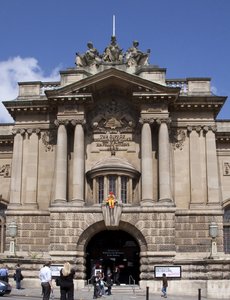
Bristol Museum - Art Gallery, BristolBristol Museum - Art Gallery Bristol 1 The State Entry of Queen Elizabeth into Bristol, 14 August 1574
Usher Gallery, LincolnUsher Gallery Lincoln 1 Short Seaplane
Royal Veterinary College, LondýnRoyal Veterinary College Londýn 1 Sir Frederic Hobday (1870–1939)

John Hassall, ikonické obrazy každého roka

22 rokov umenia John Hassall, od 1915 do 1936: galéria ich sleduje rok po roku prostredníctvom ich najznámejších originálov.

Diela podľa roku

Vyberte si rok a pozrite si originály.

Obrazy umelca John Hassall: odpovede galérie

Ktorý obraz od John Hassall je najznámejší zo všetkých?Odhaľte odpoveď

Bannockburn (1915). Nasledujú The State Entry of Queen Elizabeth into Bristol, 14 August 1574 (1917) a A Tank in Action (1917).

Koľko rokov mal/a John Hassall pri dokončeni diela Bannockburn?Odhaľte odpoveď

47 rokov: Bannockburn vzniklo v roku 1915 a John Hassall sa narodil/a v roku 1868.

Koľko diel vytvoril/a John Hassall?Odhaľte odpoveď

Náš katalóg obsahuje 7 diel od umelca John Hassall z perioda od 1915 do 1936.

Kde visia najznámejšie originály umelca John Hassall?Odhaľte odpoveď

Väčšinou v Bristol Museum - Art Gallery (Bristol), Usher Gallery (Lincoln) a Royal Veterinary College (Londýn). Tabuľka múzeí vyššie ich všetky uvádza.

Kedy vytvoril/a John Hassall svoje najznámejšie obrazy?Odhaľte odpoveď

V období 1915: 3 z 6 diel na tejto stránke bolo vytvorených vtedy, pričom Bannockburn z nich.

Aké sú najskoršie a najneskoršie známe diela umelca John Hassall?Odhaľte odpoveď

Na tejto stránke je najstaršie dielo z Bannockburn (1915) a najnovšie z Sir Frederic Hobday (1870–1939) (1936).

K akým témamam sa John Hassall najčastejšie vracia?Odhaľte odpoveď

Soldiers (3) a Sky (2), v rámci 6 diel na tejto stránke.

V akom médiu tvoril/a John Hassall najčastejšie?Odhaľte odpoveď

Oil On Canvas, pre 3 z 6 diel na tejto stránke.

John Hassall: umelec

John Hassall: A Pioneer of British Illustration and Poster Art

John Hassall (1868 – 1948) stands as a significant figure in the history of British illustration and poster design, particularly during the Edwardian and interwar periods. Born in Walmer, Kent, his artistic journey began with formal education at Worthing’s Newton Abbot College and Heidelberg’s Neuenheim College, experiences that instilled a foundational understanding of academic art principles. Despite twice failing to gain admission to Sandhurst Military Academy, Hassall pursued an unconventional path by emigrating to Manitoba, Canada, where he established a farming enterprise alongside his brother Owen – a formative period shaping his perspective on rural life and observation. Returning to London in 1890, he enrolled in Antwerp and Paris art schools under the tutelage of Alphonse Mucha, absorbing the stylistic innovations of Art Nouveau and recognizing its impact on visual communication. This influence profoundly shaped Hassall’s distinctive artistic style: characterized by bold flat colours enclosed within thick black lines—a technique perfectly suited for capturing the vibrancy of children's books and theatrical productions alike. His prolific output included over 600 theatre posters for David Allen & Sons between 1895 and 1899, alongside extensive illustrations for newspapers like *The Illustrated London News*, demonstrating his versatility as a visual storyteller. Hassall’s enduring legacy resides in his contribution to the dissemination of imagery—particularly through advertising campaigns such as Kodak Girl Ads—which cemented his reputation as a master of persuasive design.
  • Notable Achievements: Hassall's artistic career spanned five decades, culminating in membership of the Royal Institute of Painters in Watercolour and Colour and the Royal Society of Miniature Painters. He served as president of The Langham Club and The Savage Club from 1903 to 1904, highlighting his engagement with intellectual circles.
  • Educational Influence: Hassall founded John Hassall Correspondence School in Kensington (1900), nurturing the talents of artists like Annie Fish, Bert Thomas, Bruce Bairnsfather, H.M. Bateman and Harry Rountree—a testament to his belief in accessible artistic education.
His work gained considerable renown during World War I, where he continued to operate The Hassall Correspondence School despite the disruption caused by the conflict. Following the war, Hassall’s artistic output flourished, producing numerous successful educational materials and establishing himself as a respected figure within the British art community. He is remembered particularly for his captivating depictions of nursery rhymes and fairy tales—volumes now treasured collector's items on eBay—demonstrating his ability to engage audiences with imaginative narratives.

Stylistic Characteristics & Artistic Techniques

Hassall’s artistic style was instantly recognizable: he prioritized clarity and impact through simplified forms and bold colour palettes. The use of thick black outlines served not only as a structural element but also as a stylistic device, enhancing the visual drama of his compositions. Mucha's influence is evident in Hassall’s decorative motifs and compositional arrangements—particularly in theatrical posters where flowing lines and stylized figures conveyed movement and emotion. His meticulous attention to detail combined with an unwavering commitment to conveying mood and atmosphere solidified his position as one of Britain’s foremost illustrators.

Major Works & Illustrative Projects

Among Hassall's most celebrated achievements were the iconic “Skegness is So Bracing” poster for Kodak (1908), which captured the spirit of seaside tourism with remarkable precision and visual appeal. Simultaneously, he produced over 600 theatre posters for David Allen & Sons—a monumental undertaking showcasing his artistic prowess and collaborative spirit. Furthermore, Hassall’s contributions to *The Illustrated London News* cemented his reputation as a skilled journalist-turned-artist, demonstrating his ability to adapt to evolving media landscapes. His enduring popularity is evidenced by the continued value of his nursery rhyme books on eBay—a testament to their timeless charm and artistic merit.

Historical Significance & Legacy

John Hassall’s work reflects the aesthetic sensibilities of the Edwardian era, embracing Art Nouveau principles while simultaneously responding to the demands of commercial illustration. He played a crucial role in shaping British visual culture during a period marked by rapid industrialization and social change—his posters served as powerful tools for disseminating information and influencing public opinion. Hassall’s enduring legacy resides not only in his artistic output but also in his dedication to fostering artistic education, leaving an indelible mark on the landscape of British art history.