Portrét John Edward Brett

Obrazy umelca John Edward Brett: 45 najznámejších výtvarných diel prostretých pohľadom galérie

Aktualizované november 2026 · zoradené podľa našej miery popularity (vyhľadávanie, návštevy a objednávky pre každou prácu) · 48 dielov umelca John Edward Brett v našom katalógu

Stručne povedané

Z hľadiska galérie je najznámejším obrazom umelca John Edward Brett dielo Lady with a Dove: Madame Loeser (1864), ktorého originál visí v Tate Gallery v meste Londýn. Forest Cove, Cardigan Bay (1883) a Cape Cornwall from Whitesand Bay (1872) dopĺňajú trojicu, ktorú pozná každé oko. Z 48 diel umelca John Edward Brett v našom katalógu prezentuje galéria nižšie 45 najznámejších, z ktorých je každá originál s uvedeným rokom vzniku, múzeom a unikátnosťou.

1830 – 1902, Lincoln Pre-raphaelite Najviac diel: Tate Gallery

Top 10 obrazov umelca John Edward Brett v galérii

1
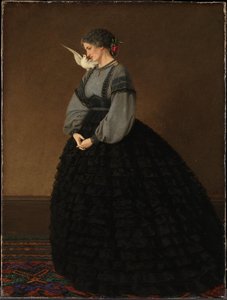
Lady with a Dove: Madame Loeser (1864) od John Edward Brett

Lady with a Dove: Madame Loeser

1864 · Oil On Canvas · Tate Gallery, Londýn

The gaze meets Lady with a Dove: Madame Loeser, a portrait that holds its subject in a quiet, suspended moment. Painted by John Edward Brett in 1864, the work presents a woman caught in a stillness that feels both intimate and profound. This oil on canvas captures a specific presence, one that remains part of the esteemed Tate collection.

2
Forest Cove, Cardigan Bay (1883) od John Edward Brett

Forest Cove, Cardigan Bay

1883 · Oil · Amgueddfa Cymru, Cardiff

The sun hangs high over Cardigan Bay, casting a bright, clear light across a scene of quiet activity. Along the shoreline, the beach is alive with the presence of people, each figure caught in a moment of leisure as they enjoy the warmth of the day. The water meets the land in a gentle rhythm, while several boats drift upon the surface—some resting near the shallow shore and others appearing…

3
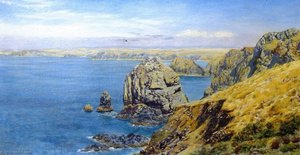
Cape Cornwall from Whitesand Bay (1872) od John Edward Brett

Cape Cornwall from Whitesand Bay

1872 · Oil On Panel · Fitzwilliam Museum

The oil on panel painting depicts a rocky shoreline where large boulders are scattered across the foreground and middle ground. These stones meet a sandy beach that extends toward the ocean. The water appears calm, meeting the horizon under a light that provides depth to the scene. In the distance, several small figures are positioned along the shore, appearing as minute details against the scale of the landscape. The composition…

Obrazy umelca John Edward Brett, usporiadané od 11 do 45

Slávne obrazy umelca John Edward Brett podľa jednotlivých období

Motívy, ktoré zaujali John Edward Brett

Štyri témy, ktoré sa v týchto origináloch najčastejšie vracajú, každá s jej najvychybenejším príkladom.

Múzeá, ktoré uchovávajú originály umelca John Edward Brett

8 múzeá, v ktorých sa nachádza najviac obrazov z tejto stránky.

Múzeá Mesto Diela umelca John Edward Brett Obrazy z tohto zoznamu
Tate Gallery, LondýnTate Gallery Londýn 2 Lady with a Dove: Madame Loeser, Florence from Bellosguardo
Fitzwilliam MuseumFitzwilliam Museum 2 Cape Cornwall from Whitesand Bay, Landscape
Amgueddfa Cymru, CardiffAmgueddfa Cymru Cardiff 1 Forest Cove, Cardigan Bay
Walker Art Gallery, LiverpoolWalker Art Gallery Liverpool 1 The Stonebreaker
Tate Britain, LondýnTate Britain Londýn 1 The Glacier of Rosenlaui
Sheffield City Art Galleries, SheffieldSheffield City Art Galleries Sheffield 1 Mount Etna from Taormina, Sicily
Barber Institute of Fine Arts, BirminghamBarber Institute of Fine Arts Birmingham 1 Kennack Sands, Cornwall
Russell, BournemouthRussell Bournemouth 1 The Land's End, Cornwall

John Edward Brett, jeden ikonický obraz na každé desaťročie

Diela podľa dekád

Vyberte si dekádu a pozrite si originál, ktorý ju definuje.

Obrazy umelca John Edward Brett: odpovede galérie

Ktorý obraz od John Edward Brett je najznámejší zo všetkých?Odhaľte odpoveď

Lady with a Dove: Madame Loeser (1864), Tate Gallery, Londýn. Nasledujú Forest Cove, Cardigan Bay (1883) a Cape Cornwall from Whitesand Bay (1872).

Koľko rokov mal/a John Edward Brett pri dokončeni diela Lady with a Dove: Madame Loeser?Odhaľte odpoveď

34 rokov: Lady with a Dove: Madame Loeser vzniklo v roku 1864 a John Edward Brett sa narodil/a v roku 1830.

Ktorých 10 najlepších obrazov má John Edward Brett?Odhaľte odpoveď

Lady with a Dove: Madame Loeser, Forest Cove, Cardigan Bay, Cape Cornwall from Whitesand Bay, Landscape, Val di Cogne, Switzerland, Preliminary watercolor sketch for 'The Glacier of Rosenlaut], Norbury on the Mole, The Stonebreaker, The Glacier of Rosenlaui a Florence from Bellosguardo. Vyššie uvedené hodnotenie uvádza rok a múzeu pre každé z nich.

Koľko diel vytvoril/a John Edward Brett?Odhaľte odpoveď

Náš katalóg obsahuje 48 diel od umelca John Edward Brett z perioda od 1850 do 1891.

Kde visia najznámejšie originály umelca John Edward Brett?Odhaľte odpoveď

Väčšinou v Tate Gallery (Londýn), Fitzwilliam Museum a Amgueddfa Cymru (Cardiff). Tabuľka múzeí vyššie ich všetky uvádza.

Kedy vytvoril/a John Edward Brett svoje najznámejšie obrazy?Odhaľte odpoveď

V období 1870s: 22 z 45 diel na tejto stránke bolo vytvorených vtedy, pričom Cape Cornwall from Whitesand Bay z nich.

Aké sú najskoršie a najneskoršie známe diela umelca John Edward Brett?Odhaľte odpoveď

Na tejto stránke je najstaršie dielo z Head of a Young Boy (1850) a najnovšie z The Isles of Skomer and Skokholm (1891).

K akým témamam sa John Edward Brett najčastejšie vracia?Odhaľte odpoveď

Beach (5), Saints (5) a Coastal landscape (3), v rámci 45 diel na tejto stránke.

S ktorým smerom je spojený/á umenec John Edward Brett?Odhaľte odpoveď

Pre-raphaelite a Romanticism, podľa originálov na tejto stránke.

Aké originály umelca John Edward Brett má v zbierkach Tate Gallery?Odhaľte odpoveď

Lady with a Dove: Madame Loeser a Florence from Bellosguardo: múzeá Tate Gallery, Londýn uchovávajú 2 z diel na tejto stránke.

John Edward Brett: umelec

John Edward Brett: A Pioneer of Scientific Landscape Painting

John Edward Brett (1830-1902) stands as a pivotal figure in British Pre-Raphaelite art, distinguished by his unwavering dedication to meticulous observation and artistic representation of the natural world. Born in Lincolnshire, England, Brett’s formative years instilled within him a profound fascination for geology and botany – passions that would irrevocably shape his artistic vision and propel him to become one of the foremost landscape painters of his era. Unlike many of his contemporaries who prioritized idealized beauty, Brett approached nature with a scientist's rigor, meticulously documenting geological formations and plant species with unparalleled accuracy. This commitment to scientific detail wasn’t merely an intellectual pursuit; it served as the bedrock for his artistic endeavors, informing his compositions and imbuing them with palpable realism.
  • Early Life & Education: Brett's upbringing fostered a love of science alongside artistic inclination. He studied at Lincoln Art School and later honed his skills at the Royal Academy in London, absorbing influences from artists like Turner and Ruskin – figures who championed the revival of medieval art and advocated for a return to naturalistic representation.
  • The Cornish Influence: Brett’s artistic breakthrough occurred during his expeditions to Cornwall, where he embarked on extensive geological surveys alongside fellow Pre-Raphaelites. The rugged coastline, dramatic granite tors, and vibrant flora captivated him, inspiring a prolific output of paintings depicting these landscapes with breathtaking detail.
  • Technique & Style: Brett’s distinctive style is characterized by thick impasto brushstrokes—a technique deliberately chosen to convey the texture and physicality of stone and vegetation. He employed glazing methods to achieve luminous color palettes that captured the subtleties of light and atmosphere, mirroring Ruskin's belief in the importance of capturing “the spirit of place.”

Notable Works & Artistic Achievements

Brett’s oeuvre encompasses a remarkable range of subjects, reflecting his multifaceted interests. Among his most celebrated paintings are "Cape Cornwall from Whitesand Bay," "Head of a Young Boy," and "The Glacier of Rosenlaui"—each demonstrating his mastery of landscape painting and his ability to convey profound emotional resonance. “Cape Cornwall” exemplifies his meticulous geological rendering, capturing the grandeur of Cornwall’s coastline with astonishing precision. Similarly, “Head of a Young Boy,” showcases Brett's skill in portraiture alongside his commitment to realism. However, it was "The Glacier of Rosenlaui" that cemented his reputation as a visionary artist—a monumental canvas depicting the sublime beauty of Switzerland’s glacial landscape and embodying Ruskin’s aesthetic ideals.

Legacy & Historical Significance

John Edward Brett’s contribution to British art extends far beyond his individual paintings. He championed Ruskin’s aesthetic philosophy—a belief that art should serve as a conduit for moral instruction and inspire contemplation of the natural world—establishing himself as one of the foremost voices advocating for scientific observation within artistic practice. His meticulous depictions of landscapes resonated deeply with Victorian audiences, fostering an appreciation for geological science and bolstering the Pre-Raphaelite movement’s commitment to portraying nature truthfully. Today, Brett's artworks continue to inspire admiration for their technical brilliance and emotional depth—testaments to his enduring legacy as a pioneer of scientific landscape painting and a champion of Ruskinian ideals.