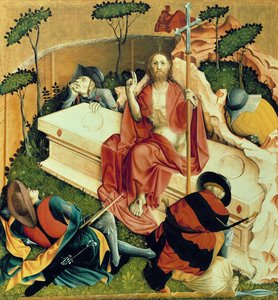
Portrét Hans Multscher

23 najznámejších obrazov od Hans Multscher, výber z galérie

Aktualizované október 2026 · zoradené podľa našej miery popularity (vyhľadávanie, návštevy a objednávky pre každou prácu) · 24 dielov umelca Hans Multscher v našom katalógu

Stručne povedané

Z všetkých originálov, ktoré Hans Multscher zanechal, je najznámejší Christ before Pilate (1437), ktorý sa nachádza v zbierkach Staatliche Museen zu Berlin v meste Berlín. Hneď za ním nasledujú Pentecost (1437) a Th Adoration of the Magi (1437). Náš katalóg obsahuje 24 diel od Hans Multscher; galéria si zachovala tých 23, ktoré obdivuje celý svet, pričom každý z nich je prezentovaný spolu s jeho dátumom, múzeou a príbehom.

1400 – 1467, Leutkirch im Allgäu Najviac diel: Staatliche Museen zu Berlin

Top 10 obrazov umelca Hans Multscher: výber galérie

1
Christ before Pilate (1437) od Hans Multscher

Christ before Pilate

1437 · Oil On Panel · Staatliche Museen zu Berlin, Berlín

To stand before this depiction of Christ before Pilate is to step directly into the crucible of human history and divine confrontation. Painted in 1437 by Hans Multscher, this work transcends a mere narrative scene; it is a profound meditation on innocence facing overwhelming temporal power. The composition immediately draws the eye to the central drama: Jesus, seated with an air of serene dignity, enduring the scrutiny of Pontius Pilate…

2
Pentecost (1437) od Hans Multscher

Pentecost

1437 · Oil On Canvas · Staatliche Museen zu Berlin, Berlín

To stand before Hans Multscher's depiction of Pentecost is to step directly into the charged atmosphere of early Renaissance spiritual awakening. This 1437 masterpiece does more than merely illustrate a biblical event; it captures a moment of profound, transformative energy. The scene unfolds within an intimate, richly detailed interior space, drawing the viewer immediately into the circle of disciples gathered in anticipation. At the heart of this gathering sits the…

3
Th Adoration of the Magi (1437) od Hans Multscher

Th Adoration of the Magi

1437 · Oil On Canvas · Staatliche Museen zu Berlin, Berlín

To stand before this depiction of The Adoration of the Magi is to step directly into the vibrant, devotional heart of early fifteenth-century Germany. Hans Multscher’s masterful rendering captures not merely a religious narrative, but a profound moment of human awe meeting divine mystery. The scene unfolds under a sheltering canopy, creating an intimate, almost sacred enclosure where light seems to emanate from the very presence of Mary and the…

4
Christ Carrying the Cross (1437) od Hans Multscher

Christ Carrying the Cross

1437 · Tempera · Staatliche Museen zu Berlin, Berlín

Hieronymus Bosch’s “Christ Carrying the Cross,” housed in Ghent Cathedral, stands as one of his most arresting depictions of Christian iconography—a painting that transcends mere representation to embody a profound meditation on suffering and mortality. Completed around 1510-1535, during Bosch's twilight years, this artwork exemplifies his signature style: grotesque realism infused with moral allegory.

5
Holy Trinity (1430) od Hans Multscher

Holy Trinity

1430 · Prírodný kameň · Liebieghaus, Frankfurt

Hans Multscher: Holy Trinity – A Masterpiece of Late Gothic Realism Hans Multscher’s “Holy Trinity,” created around 1430 in Reichenbach im Baumes, Bavaria, stands as a testament to the burgeoning Renaissance spirit within the confines of late Gothic artistic tradition. More than just a sculptural depiction of God’s divine trinity—Father, Son, and Holy Spirit—it embodies a profound philosophical exploration encapsulated in alabaster stone, reflecting the meticulous observation of nature championed…
6
The Wings of the Wurzach Altar (1437) od Hans Multscher

The Wings of the Wurzach Altar

1437 · Oil On Panel · Gemäldegalerie, Berlín

In the quiet, hallowed atmosphere of the 15th century, few works captured the intersection of divine miracle and human emotion as profoundly as Hans Multscher’s The Wings of the Wurzach Altar. Created in 1437, this masterpiece serves as a breathtaking window into the German Renaissance, offering more than just a religious tableau; it presents a visceral experience of faith. The painting depicts a sacred assembly, where figures are gathered within…

7
Model of a Tomb (1435) od Hans Multscher

Model of a Tomb

1435 · Stone · Bavorské národné múzeum, Mníchov

The stone breathes with a quiet, solemn energy, holding a frozen moment of devotion within its pale, textured surface. Every chisel mark tells a story of hands working with purpose, carving out a sacred space where the earthly and the divine meet. In this relief, a hierarchy of existence unfolds vertically, drawing the eye upward from the heavy, grounded reality of the world toward the celestial heights. Angels hover in…

8
Reliquary Bust of a Female Saint (1460) od Hans Multscher

Reliquary Bust of a Female Saint

1460 · Bronze · The Frick Collection, New York

The bronze reliquary bust of a female saint, attributed to the masterful German sculptor Hans Multscher (circa 1400-1467), offers a poignant window into the artistic and spiritual landscape of late medieval Europe. More than simply a portrait, it’s a meticulously crafted devotional object—a testament to both the burgeoning realism of the era and the enduring power of religious iconography. Created around 1460 in Ulm, Germany, this piece transcends its material…

9
The Wings of the Wurzach Altar (1437) od Hans Multscher

The Wings of the Wurzach Altar

1437 · Oil On Panel · Gemäldegalerie, Berlín

In the quiet corridors of art history, few works capture the raw, visceral essence of human suffering and divine purpose as profoundly as Hans Multscher’s The Wings of the Wurzach Altar. Created in 1437, this masterpiece serves as a breathtaking window into the late Gothic period, a time when the spiritual and the physical began to merge through an unprecedented lens of realism. The painting presents a harrowing yet sacred…

10
The Wings of the Wurzach Altar (1437) od Hans Multscher

The Wings of the Wurzach Altar

1437 · Oil On Panel · Gemäldegalerie, Berlín

Jesus sits upon a cold stone bench, his arms outstretched in a gesture of blessing or miracle. The light catches the heavy folds of his garments, grounding the divine in the weight of the physical world. Around him, the space is populated by silent witnesses. A figure stands in the upper left corner, watching from the periphery, while another lingers in the distance to the right. Two swords rest near…

Výber umelcov Hans Multscher pokračuje, od 11 do 23

Slávne obrazy umelca Hans Multscher podľa jednotlivých období

Motívy, ktoré zaujali Hans Multscher

Štyri témy, ktoré sa v týchto origináloch najčastejšie vracajú, každá s jej najvychybenejším príkladom.

Múzeá, ktoré uchovávajú originály umelca Hans Multscher

7 múzeá, v ktorých sa nachádza najviac obrazov z tejto stránky.

Múzeá Mesto Diela umelca Hans Multscher Obrazy z tohto zoznamu
Staatliche Museen zu Berlin, BerlínStaatliche Museen zu Berlin Berlín 11 Christ before Pilate, Pentecost, Th Adoration of the Magi
Gemäldegalerie, BerlínGemäldegalerie Berlín 6 The Wings of the Wurzach Altar, The Wings of the Wurzach Altar, The Wings of the Wurzach Altar
Liebieghaus, FrankfurtLiebieghaus Frankfurt 1 Holy Trinity
Bavorské národné múzeum, MníchovBavorské národné múzeum Mníchov 1 Model of a Tomb
The Frick Collection, New YorkThe Frick Collection New York 1 Reliquary Bust of a Female Saint
Cathedral, UlmCathedral Ulm 1 St George and St John the Evangelist
Szépművészeti Múzeum, BudapešťSzépművészeti Múzeum Budapešť 1 Fragment of a Female Saint

Hans Multscher dekáda po dekáde: originál, ktorý definuje každú z nich

Diela podľa dekád

Vyberte si dekádu a pozrite si originál, ktorý ju definuje.

Otázky zberateľov o obrazoch od Hans Multscher

Ktorým dielom je Hans Multscher najznámejší/najznámejšia?Odhaľte odpoveď

Christ before Pilate (1437), Staatliche Museen zu Berlin, Berlín. Nasledujú Pentecost (1437) a Th Adoration of the Magi (1437).

V akom veku bol/a Hans Multscher, keď vzniklo dielo Christ before Pilate?Odhaľte odpoveď

37 rokov: Christ before Pilate vzniklo v roku 1437 a Hans Multscher sa narodil/a v roku 1400.

Ktorých desať najznámejších obrazov má Hans Multscher?Odhaľte odpoveď

Christ before Pilate, Pentecost, Th Adoration of the Magi, Christ Carrying the Cross, Holy Trinity, The Wings of the Wurzach Altar, Model of a Tomb, Reliquary Bust of a Female Saint, The Wings of the Wurzach Altar a The Wings of the Wurzach Altar. Vyššie uvedené hodnotenie uvádza rok a múzeu pre každé z nich.

Koľko obrazov zanechal umenec Hans Multscher?Odhaľte odpoveď

Náš katalóg obsahuje 24 diel od umelca Hans Multscher z perioda od 1430 do 1460.

V ktorých múzeách visia majstrovské diela umelca Hans Multscher?Odhaľte odpoveď

Väčšinou v Staatliche Museen zu Berlin (Berlín), Gemäldegalerie (Berlín) a Liebieghaus (Frankfurt). Tabuľka múzeí vyššie ich všetky uvádza.

V ktorých rokoch vytvoril Hans Multscher svoje najznámejšie diela?Odhaľte odpoveď

V období 1430s: 19 z 23 diel na tejto stránke bolo vytvorených vtedy, pričom Christ before Pilate z nich.

Aké sú prvé a posledné známe originály od Hans Multscher?Odhaľte odpoveď

Na tejto stránke je najstaršie dielo z Holy Trinity (1430) a najnovšie z Reliquary Bust of a Female Saint (1460).

Aké témy si Hans Multscher najčastejšie vyberal/a?Odhaľte odpoveď

Religious scene (5), Religious art (5) a Medieval art (5), v rámci 23 diel na tejto stránke.

Ktorú techniku používal(a) Hans Multscher najčastejšie?Odhaľte odpoveď

Oil On Panel, pre 9 z 23 diel na tejto stránke.

Aké diela umelca Hans Multscher sa nachádzajú v múzeu Staatliche Museen zu Berlin?Odhaľte odpoveď

Christ before Pilate, Pentecost a Th Adoration of the Magi: múzeá Staatliche Museen zu Berlin, Berlín uchovávajú 11 z diel na tejto stránke.

Hans Multscher: život a dielo

Hans Multscher (1400-1467): A Bridge Between Worlds

Hans Multscher, a name perhaps less familiar than those of his contemporaries like Dürer or Holbein, nevertheless stands as a pivotal figure in the transition from late Gothic to early Renaissance art within Germany. Born around 1400 in the small Bavarian town of Reichenhofen – now part of Leutkirch im Allgäu – Multscher’s life and work represent a fascinating confluence of influences, a testament to his inquisitive spirit and his willingness to embrace new artistic horizons. He wasn't merely a follower of trends; he actively sought out knowledge and inspiration, embarking on journeys that fundamentally shaped his distinctive style and cemented his place as a bridge between two distinct artistic eras.

His early years remain somewhat shrouded in mystery, but it’s clear that Multscher possessed an innate talent for both sculpture and painting. He didn't emerge from a traditional guild setting; instead, he seems to have cultivated his skills through independent study and observation, absorbing the lessons of masters like Gislebertus and Master of Cabestany. Crucially, he spent considerable time in northern France and the Netherlands – regions then at the forefront of artistic innovation – immersing himself in the burgeoning realism and meticulous detail characteristic of Early Netherlandish painting. This exposure proved transformative, profoundly influencing his approach to composition, perspective, and the rendering of human form.

The Workshop: A Crucible of Innovation

In 1427, Multscher established himself as a free citizen of Ulm – a thriving commercial hub on the Danube River. It was here that he married Adelheid Kitzin and, alongside his brother Heinrich, founded a workshop that quickly gained renown for its diverse range of artistic output. This wasn’t simply a production facility; it was a vibrant environment where traditional Gothic forms were gradually infused with the naturalism and observational techniques he had absorbed during his travels. The workshop employed as many as sixteen assistants at times, fostering an atmosphere of experimentation and collaboration.

The influence of this workshop extended far beyond Multscher’s own creations. His brother Heinrich specialized in wood carving, creating intricate architectural elements for churches and civic buildings throughout Swabia. Together, they established a reputation for quality and innovation that attracted commissions from wealthy patrons across the region. The workshop's output included not only sculptures and paintings but also illuminated manuscripts, stained glass windows, and decorative furnishings – demonstrating Multscher’s versatility and his ability to adapt his style to different media and contexts.

The Wurzach Altar: A Masterpiece of Transition

Perhaps the most enduring testament to Multscher's artistic vision is the *Wurzacher Altar*, begun in 1437. This ambitious project, originally intended for the church of St. James in Wurzach, exemplifies the artist’s masterful synthesis of Gothic and Renaissance elements. The altar consisted of a central shrine flanked by two wings, each adorned with panels depicting scenes from the life of Christ and the Virgin Mary. These panels showcase Multscher's remarkable skill in oil painting – a relatively new medium at the time – and his ability to render textures, light, and shadow with astonishing realism.

The *Wurzacher Altar* is particularly noteworthy for its emotional depth and psychological insight. Unlike the stylized figures of earlier devotional art, Multscher’s depictions of Christ and Mary are imbued with a palpable humanity – their faces expressing sorrow, compassion, and profound spiritual awareness. The altar's innovative use of perspective and color further enhanced its dramatic impact, creating a truly immersive experience for the viewer. Sadly, the altar was dismantled in the 18th century and its panels dispersed to various museums, but they remain invaluable examples of Multscher’s artistic genius.

Beyond Wurzach: Sculpture and Secular Works

While the *Wurzacher Altar* is undoubtedly Multscher's most famous work, he also produced a significant body of sculpture and secular art. His sculptures, ranging from monumental figures to intimate devotional panels, demonstrate his mastery of form and his ability to convey complex emotions through sculpted stone. The sculpture of *Holy Mary Magdalen*, now housed in Frankfurt’s Liebieghaus, is a particularly poignant example of his expressive style.

Furthermore, Multscher's commissions extended beyond the realm of religious art. In 1456-58, he created a group of emperors adorning the eastern window of Ulm’s city hall – a testament to his versatility and his appeal to a broad clientele. These works showcase his ability to adapt his style to different subjects and contexts, reflecting the diverse demands of his patrons.

A Lasting Legacy

Hans Multscher died in Ulm in 1467, leaving behind a legacy that continues to resonate today. He wasn’t merely a skilled craftsman; he was a visionary artist who played a crucial role in shaping the course of German art. His willingness to embrace new influences and his commitment to realism paved the way for subsequent generations of Renaissance masters. The workshop he established continued to thrive after his death, disseminating his artistic principles throughout Swabia and beyond. Multscher’s work serves as a powerful reminder that artistic innovation often arises from the synthesis of tradition and experimentation – a testament to the enduring power of human creativity.