La Fête Dieu
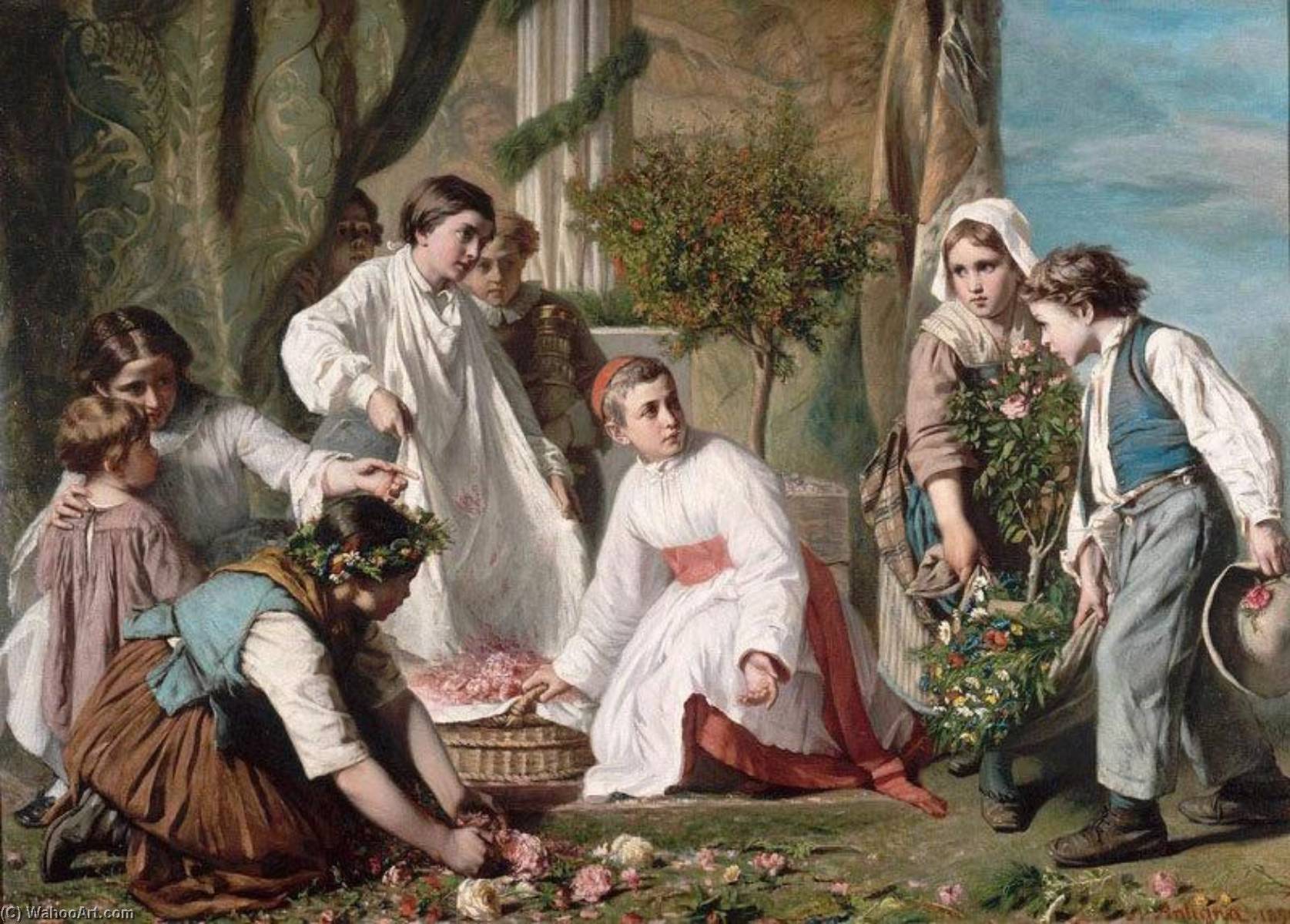
The oil on canvas titled La Fête Dieu was painted by Alexandre Antigna in 1855. This work measures 55 x 76 3/4 inches (140 x 195 cm). It captures a moment of preparation, where the weight of tradition meets the lightness of youth.
Stručne povedané
Z všetkých originálov, ktoré Alexandre Antigna zanechal, je najznámejší La Fête Dieu. Hneď za ním nasledujú The Lightning (1848) a L'Eclair. Náš katalóg obsahuje 21 diel od Alexandre Antigna; galéria si zachovala tých 21, ktoré obdivuje celý svet, pričom každý z nich je prezentovaný spolu s jeho dátumom, múzeou a príbehom.
The oil on canvas titled La Fête Dieu was painted by Alexandre Antigna in 1855. This work measures 55 x 76 3/4 inches (140 x 195 cm). It captures a moment of preparation, where the weight of tradition meets the lightness of youth.
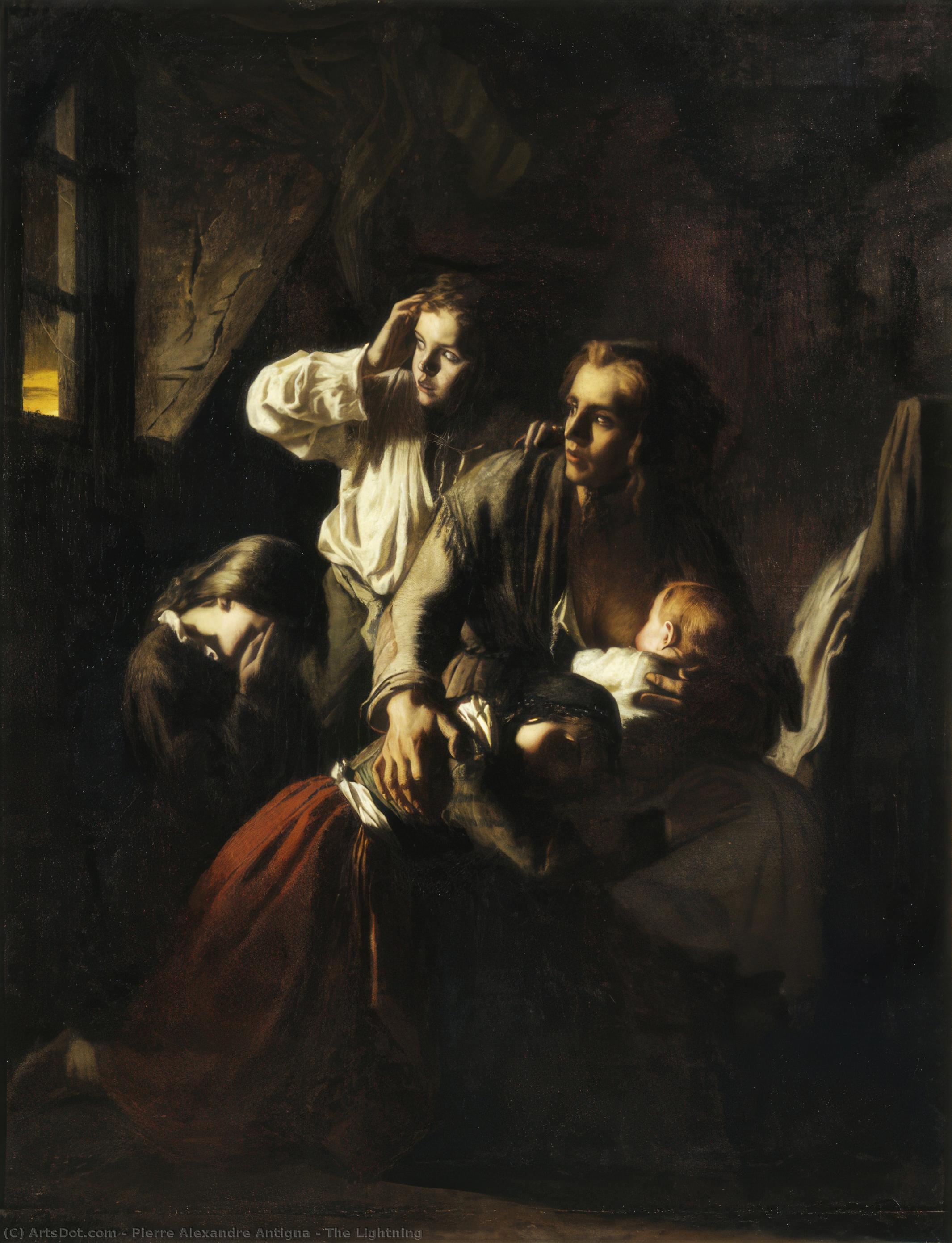
“The Lightning,” painted in 1848 by the French artist Pierre Alexandre Antigna, is more than just a depiction of a family huddled together during an electrical storm; it’s a poignant meditation on vulnerability, familial love, and the raw power of nature. Antigna, a key figure in Parisian Realism, masterfully captures a fleeting moment of intense emotion within a dimly lit interior, drawing the viewer into a scene brimming with both…
The oil on canvas titled L'Eclair was painted in 1848. This tableau captures a singular moment of tension. Alexandre Antigna, born in Orléans, France, in 1817, rendered the scene with a steady hand. The pigment settles into the weave of the fabric, holding a fragment of a storm within its fibers.
The air feels heavy with the scent of dry hay and sun-warmed earth as a group of children whirl in a rhythmic circle. They move through a wide, rural landscape, their small figures caught in a moment of pure, uninhibited joy. The composition pulls the eye into a continuous loop, following the sweep of outstretched arms and the swirling motion of colorful skirts. Reds, blues, and whites flash against the…
The sketch depicts a young girl captured in mid-stride, her body leaning slightly forward into the direction of her movement. She is positioned off-center to the right, creating a sense of momentum as she walks. Her head is tilted downward, eyes fixed upon an open book held in her outstretched hands. The figure is rendered from the mid-thigh upward, focusing the viewer's attention on the interaction between her posture and…
The light falls from the upper left, casting soft shadows across a gathering of Aragonese people. They sit upon weathered stone steps, framed by the deep green of a grapevine. A woman holds an infant, her chemise a bright white against the earthy tones of the scene. Beside them, a young boy cradles a musical instrument, his small hands poised in a moment of stillness. The air feels heavy with…
This oil painting presents a close-up portrait of a young girl, focusing tightly on her head and hands. The subject is positioned in a direct, eye-level view, her chin resting upon her hands in a pensive posture. A headscarf wraps around her face, creating organic folds that frame her features. The lighting originates from the upper left, casting shadows across her face and highlighting the specific expression in her eyes.…
A solitary woman rests in a dimly lit, rustic interior, her form surrendered to sleep. Positioned slightly to the left of center, she is balanced by the large, circular silhouette of a spinning wheel to the right. The composition is vertical, drawing the eye to the heavy, nocturnal atmosphere of the room. Deep, earthy tones of umber and sienna dominate the space, creating a sense of profound stillness. A sharp…
The oil painting titled Gypsy Girl presents a quiet, heavy moment captured on canvas. This work is the creation of Alexandre Antigna, an artist who emerged from the city of Orléans, France. Born in 1817, Antigna brings a specific, focused gaze to the subjects he encounters, often finding the weight of existence in the faces of those living on the margins of society.
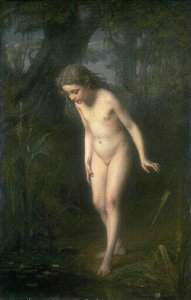
is an oil on canvas by the French painter Alexandre Antigna. The work presents a nude female figure wading into a body of water. This central subject is situated within a dense forest setting, where the natural environment forms a dark, enveloping backdrop around the form.
Štyri témy, ktoré sa v týchto origináloch najčastejšie vracajú, každá s jej najvychybenejším príkladom.
6 múzeá, v ktorých sa nachádza najviac obrazov z tejto stránky.
| Múzeum | Mesto | Diela umelca Alexandre Antigna | Obrazy z tohto zoznamu |
|---|---|---|---|
| Paríž | 2 | The Lightning, L'Eclair | |
| Orléans | 2 | Aragonese of Anso, The Fire | |
| Limoux | 1 | Circle of children | |
| Worcester | 1 | Head of a Girl | |
| Saint-Brieuc | 1 | The sleeping spinner | |
| Ghent | 1 | Gypsy Girl |
Vyberte si dekádu a pozrite si originál, ktorý ju definuje.
“The Lightning,” painted in 1848 by the French artist Pierre Alexandre Antigna, is more than just a depiction of a family huddled together during an electrical storm; it’s a poignant meditation on vulnerability, familial love, and the raw power of nature. Antigna, a key figure in Parisian Realism, masterfully captures a fleeting moment of intense emotion within a dimly lit interior, drawing the viewer into a scene brimming with both…
The air feels heavy with the scent of dry hay and sun-warmed earth as a group of children whirl in a rhythmic circle. They move through a wide, rural landscape, their small figures caught in a moment of pure, uninhibited joy. The composition pulls the eye into a continuous loop, following the sweep of outstretched arms and the swirling motion of colorful skirts. Reds, blues, and whites flash against the…
The light falls from the upper left, casting soft shadows across a gathering of Aragonese people. They sit upon weathered stone steps, framed by the deep green of a grapevine. A woman holds an infant, her chemise a bright white against the earthy tones of the scene. Beside them, a young boy cradles a musical instrument, his small hands poised in a moment of stillness. The air feels heavy with…
La Fête Dieu. Nasledujú The Lightning (1848) a L'Eclair.
La Fête Dieu, The Lightning, L'Eclair, Circle of children, Girl striding out reading a book, Aragonese of Anso, Head of a Girl, The sleeping spinner, Gypsy Girl a Miroir des bois. Vyššie uvedené hodnotenie uvádza rok a múzeu pre každé z nich.
Náš katalóg obsahuje 21 diel od umelca Alexandre Antigna z perioda od 1848 do 1872.
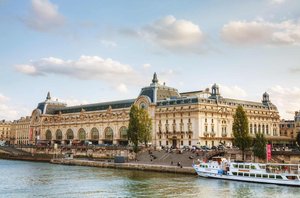
Väčšinou v Musée d'Orsay (Paríž), Musée des Beaux-Arts (Orléans) a musée Petiet de Limoux (Limoux). Tabuľka múzeí vyššie ich všetky uvádza.
V období 1850s: 3 z 21 diel na tejto stránke bolo vytvorených vtedy, pričom Circle of children z nich.
Na tejto stránke je najstaršie dielo z The Lightning (1848) a najnovšie z Aragonese of Anso (1872).
Woman (8), Children (4) a Girl (4), v rámci 21 diel na tejto stránke.
Oil On Canvas, pre 15 z 21 diel na tejto stránke.
Romanticism, podľa originálov na tejto stránke.
The Lightning a L'Eclair: múzeá Musée d'Orsay, Paríž uchovávajú 2 z diel na tejto stránke.
V srdci devätnastého storočia Francúzska, v období definovanom hlbokými sociálnymi nepokojmi a meniacimi sa umeleckými paradigmami, sa Jean Pierre Alexandre Antigna objavil ako maliar s bezprecedentnou empatiou. Narodený v Orléans v roku 1817, jeho raná umelecká cesta bola zakorenená v tradičných krajinách jeho mladosti, ktoré formoval pod bdelým dohľadom miestneho maliara Françoisa Salmóna. Avšak neodmysliteľný magnet Paríža sa mu nevyhnal. Po príchode na prestížnu École Nationale Supérieure des Beaux-Arts v roku 1837 sa Antigna ocitol v kruhoch akademickej prísnosti, kde študoval u majstrov ako Sébastien Norblin de la Gourdaine a slávneho Paul Delaroche. Tieto rané roky boli poznačené zameraním na náboženské témy a formálnu portrétnu maľbu, v súlade s vtedajšími umeleckými konvenciami éry.
Skutočná metamorfóza Antignaovej duše sa však odohrala nie v pozlacených sálach akadémie, ale v tieňových, úzkych uličkách Île Saint-Louis. Život v chudobných štvrťach Paríža sa stal pre umelca svedkom surového, nefalšovaného osudu urbánnej chudoby. Tento hlboký kontakt s ľudským trápením pôsobil ako katalyzátor, ktorý ho odviedol od idealizovanej náboženskej ikonografie smerom k drsnému, nekompromisnému realizmu. Keď v roku 1848 preplávala Francúzsko revolúcia, Antigna už plne prijäl štýl, ktorý sa snažil dokumentovať samotnú váhu existencie. Jeho plátna začali pulzovať ťažkými bremenami a tichou odolnosťou ľudí na okraji spoločnosti, vykreslenými pomocou textúrovitého ťahov pędzla a emocionálnej hĺbky, ktorá si vynútila pozornosť parížskeho Salonu.
S postupom jeho kariéry sa Antignaov umelecký vizus rozšíril aj za mestské hranice Paríža. Poháňaný nesbyčajnou zvedavosťou o ľudskej kondícii a prírode, vydal sa na rozľuché cesty cez drsné krajiny Bretaňe a živé terény Španielska. Tieto cestovanie mu umožnilo prepojiť svoje sociálne vedomie s rodiacim sa naturalizmom. Kolem roku 1860 jeho prácu začala odzvedieť dôsledná pozornosť prírody, kde atmosférické kvality krajiny sa stali rovnako významným predmetom ako ľudia, ktorí ju obývajú. Či už zachytával dramatické napätie búčky alebo tichú dôstojnosť vidieckeho robotníka, jeho technika zostávala zakotvená v pocite hlbokej spolúčastí.
Jeho majstrovstvo oficiálne uznal francúzsky štát, keď mu bol v roku 1861 udelený rad Legion of Honor, čo bol milník, ktorý upevnil jeho postavenie medzi významnými postavami jeho generácie. Aj keď sa jeho štýl vyvíjaľ smerom k prirodzenejším zobrazeniam, jadro jeho tvorby zostalo hľadaniem zraniteľnosti a sily. Významné diela, ako napríklad Blesk, demonštrujú túto dualitu, kde rodina schúlená počas elektrickej búčky slúži ako dojmovná meditácia o rodinnej láske v tengah hrozivej moci prírody. Prostredníctvom svetla, tieňa a impasto textúr Antigna len tak neymaloval scény; on zachytával samotnú esenciu prežitia.
Historický význam Pierre Alexandre Antigna spočíva v jeho schopnosti premostiť priepasť medzi romantickou emóciou a realistickou pravdou. Nedíval sa na chudobu len ako na pozorovanie; dodal jej dôstojnosť, ktorá vyzvala sociálne hierarchie danej éry. Jeho život, ktorý sa ukončil v Paríži v roku 1878, zanechal po sebe dielo, ktoré slúži ako vitalný vizuálny záznam devätnastého storočia francúzskeho života. Jeho vplyv možno vidieť v spôsobe, akým využíval nasledujúce prvky na pozdvihnutie svojich predmetov:
Dnes je Antigna spomínaný nielen ako maliar scén, ale ako spolúčastný hlas svojej éry, umelec, ktorý sa pozrel do temnoty urbánneho boja a našiel v nej trvácu svetlo ľudského ducha.