
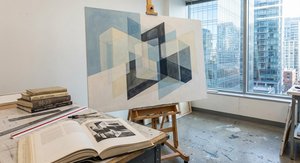
 Náhľad v interiéri
 Odoslať ako digitálnu kartu
 Zdieľať
 Podrobnosti o dielo
 Príručka

 Stiahnuť obraz
 Podobné položky
 RTG skúška
 Prehliadanie diapozoje
 Otázky a odpovede
 Štatistiky
Black and White Structure

- 158.0 x 222.0 cm


 Zobraziť viac
Umelecké dielo zobrazené na tejto stránke je chránené autorským zákonom, čo znamená, že nemôžeme legálne vytvárať ani predávať jeho identickú reprodukciu. Táto ochrana je vymáhaná na základe medzinárodných dohôd, ako napríklad Bernská konvencia a národnými zákonmi, vrátane tých, ktoré sú stanovené v Autorské právo USA – Title 17. Všetky práva vyhradené.
Táto metóda plne dodržiava autorské práva, pretože nezahŕňa kopírovanie ani duplikovanie chráneného diela. Ide skôr o kreatívnu reinterpretáciu – nový obraz, ktorý je ovplybnený originálom, no nie je s ním identický.
Giclée / Umenotlač
Giclée tlač alebo plátno múzeálnej kvality s rýchlou výrobou a rôznymi možnosťami povrchovej úpravy. ( Kúpiť ručne maľovaný obraz Prepnúť na digitálny obraz)




































Vyberte si z našich preddefinovaných rozmerov, ktoré zodpovedajú pôvodným pomeroḿ diela.

Zadajte šírku a výšku, ktoré potrebujete, aby sa reprodukcia hodila k vášmu rámu alebo stene. Print možno len orezávať, nikdy však nemennú veľkosť zvětšiť oproti pôvodnému obrázku, preto pri inom formáte stráca časť obrazu. Pred samotným vytlačiacím procesom vám pošleme digitálny náhľad na schválenie. Obrázok zobrazený na tejto stránke nezobrazuje reálny rez — len digitálny náhľad ukazuje presný výsledok.
Celosvetová doprava () do 2 týždňov namiesto štandardných 4 až 5 týždňov. (8 november)

Bezplatná expresná doprava po celom svete

Vysokokvalitné lnianske plátno

Kompletné poistenie prepravy

Záruka vrátenia colného poplatku

Záruka presného farebného zhodnutia

100-dená politika vrátenia tovaru (iba pri vadách)

100% záruka vrátenia peňazí

Zľava pri väčšom množstve
 Možnosť skla je dostupná len pri rozmeroch pod 110 cm

Black and White Structure
Giclée / Umenotlač
Veľkosť reprodukcie
-


Celková cena
€ 72
Otázky a odpovede
V ktorom roku a v rámci ktorého umeleckého smeru bolo dielo „Black and White Structure“ vytvorené?
Dielo „Black and White Structure“ vzniklo v roku 1965 v rámci smeru Geometric Abstraction.
K ktorému umeleckému smeru patrí „Black and White Structure“ od Zdeněk Sýkora?
Uvedený umelecký smer spojený s dielom „Black and White Structure“ od Zdeněk Sýkora je Geometric Abstraction. Táto klasifikácia umiestňuje toto dielo medzi súvisiace umelcov a umelecké diela.
V ktorom roku bolo vytvorené dielo „Black and White Structure“ od Zdeněk Sýkora?
Dielo „Black and White Structure“ od Zdeněk Sýkora vzniklo v roku 1965.
Biografia umelca
The Architect of Lines: The Life and Legacy of Zdeněk Sýkora
In the vast landscape of twentieth-century modernism, few figures command as much intellectual curiosity as Zdeněk Sýkora. Born in 1920 in Louny, Czechoslovakia, Sýkora’s journey was one of profound transformation, moving from the tangible beauty of the natural world to the mathematical precision of the digital frontier. His early years were marked by a traditional approach to the canvas, where his late 1940s works captured the essence of landscapes through a more representational lens. However, as the political and cultural tides of Central Europe shifted, so too did Sýkora’s vision. He began to shed the weight of the physical world, gravitating instead toward the rigorous, cerebral beauty of geometric abstraction.
The evolution of his style was not merely a personal choice but a response to the burgeoning technological era. Influenced by the structural complexities of Cubism and the dreamlike logic of Surrealism, Sýkora sought a way to bridge the gap between human intuition and algorithmic precision. By the 1960s, he emerged as a true pioneer, becoming one of the first artists to integrate computer technology into the creative process. This was a revolutionary leap; through the use of computers, he could manipulate geometric structures with a level of complexity that surpassed the capabilities of the human hand alone. His work began to pulse with a new kind of energy, where mathematical logic met artistic spontaneity.
A Symphony of Geometry and Chance
As his career progressed, Sýkora’s aesthetic underwent another mesmerizing metamorphosis. The rigid, strict systems of his early geometric structures gradually gave way to a more fluid, rhythmic language. He developed a signature style characterized by intricate line paintings, where vibrant streaks of color traversed expansive canvases in seemingly random yet deeply calculated directions. This period of his work felt less like a mathematical proof and more like a visual symphony, capturing the tension between order and chaos. His membership in the Křižovatka (Crossroad) group further solidified his place within the vanguard of Czech modernism, as he explored the intersections of different artistic movements.
This creative spirit was often a collaborative one. In 1985, Sýkora began a profound artistic partnership with his wife, Lenka Sýkora. Together, they expanded the boundaries of abstraction, applying their shared vision to large-scale architectural projects. Their work moved beyond the confines of the gallery wall and into the very fabric of the built environment, such as the striking flight operation building in Jeneč near Prague. This integration of fine art and architecture allowed Sýlam’s geometric explorations to inhabit three-dimensional space, influencing how viewers interact with modern structures.
Recognition and Eternal Influence
Despite the challenges posed by the Soviet occupation and the resulting limitations on international exhibition opportunities, Sýkora’s brilliance could not be contained. His resilience led to a global recognition that honored his immense contributions to the evolution of abstract art. The prestige of his career is reflected in the numerous accolades he received, including:
- The Vladimír Boudnik Award (2008)
- L'Ordre des Arts et des Lettres from France
- The Herbert-Boeckl-Preis from Austria
Today, the legacy of Zdeněk Sýkora lives on in the permanent collections of the world’s most esteemed institutions. From the Centre Georges Pompidou in Paris to the MUMOK in Vienna, his works serve as a testament to the power of innovation. He remains a monumental figure for anyone studying the intersection of technology and fine art, reminding us that even within the strictest mathematical lines, there is room for the infinite soul of creativity.

Zdeněk Sýkora
1920 - 2011 , Czech Republic
Základné informácie
- Full Name: Zdeněk Sýkora
- Nationality: Czech
- Date Of Birth: 1920
- Date Of Death: 2011
- Place Of Birth: Louny, Czech Republic
- Notable Artworks:
- Black & White Structure
- Lines No 24
- Artistic Movement Or Style: Geometric abstraction
- Artists Who Influenced This Artist:
- Cubism
- Surrealism
- Artists Or Movements Influenced By This Artist:
- Op Art
- Křižovatka group
Súvisiace články
Beyond Form & Color: Geometric Abstraction's Enduring Legacy in Art History
Explore the captivating world of geometric abstraction! Discover its origins, key artists like Malevich & Mondrian, and why this movement remains highly valued by art collectors today. Expert insights at OriginalUniqueArt.

Beyond Form & Color: Geometric Abstraction's Evolution in 20th/21st Century Art
Explore the evolution of geometric abstraction from Cubism to contemporary art. Discover key artists like Malevich & Mondrian, investment insights, and expert collecting advice at OriginalUniqueArt.

Wassily Kandinsky: Top 25 diel pre milovníkov umenia a dokonalý dizajn interiéru
Ponorte sa do sveta Wassilyho Kandinského s OriginalUniqueArt.com! Objavte top 25 diel abstraktného umenia, expresionizmu a farebných kompozícií. Kúpiť reprodukcie obrazov pre dokonalý dizajn interiéru. Explore the full collection online.

Top 10 majstrov geometrickej abstrakcie: Umění pre váš domov s OriginalUniqueArt.com
Ponorte sa do sveta geometrickej abstrakcie! Objavte 10 majstrovských diel od Mondriana, Kandinského a ďalších. História umenia, techniky a farebné kompozície na OriginalUniqueArt.com – reprodukcie obrazov pre váš domov.

Neo-Abstract Art: The High-Impact Evolution of Modern Visual Energy and Geometric Sophistication
Discover the power of Neo-Abstract art. Explore how bold geometric forms and high-impact visual energy are redefining modern design. Learn to curate sophisticated, high-energy spaces with the latest trends in contemporary abstraction and structural color.