

 Zobraziť v interiéri
 Odoslať
 Zdieľať
 Podrobnosti
 Príručka

 Stiahnuť
 Podobné položky
 RTG skúška
 Prehliadanie diapo\]
 Štatistiky
La,la,la (RE50)


 Prečítať si viac
Umelecké dielo zobrazené na tejto stránke je chránené autorským zákonom, čo znamená, že nemôžeme legálne vytvárať ani predávať jeho identickú reprodukciu. Táto ochrana je vymáhaná na základe medzinárodných dohôd, ako napríklad Bernská konvencia a národnými zákonmi, vrátane tých, ktoré sú stanovené v Autorské právo USA – Title 17. Všetky práva vyhradené.
Táto metóda plne dodržiava autorské práva, pretože nezahŕňa kopírovanie ani duplikovanie chráneného diela. Ide skôr o kreatívnu reinterpretáciu – nový obraz, ktorý je ovplybnený originálom, no nie je s ním identický.
Giclée / Umenotlač
Giclée tlač alebo plátno múzeálnej kvality s rýchlou výrobou a rôznymi možnosťami povrchovej úpravy. ( Objednať ručne maľovanú reprodukciu Prepnúť na digitálnu verziu obrazu)




P118B €10

P118H €10

P118W €10

P438Z €10

P508JH €12

P508YH €12

P805H €10

P805Z €10

P919BZ €10

P919G €10

P919XJ €10

P959ZH €10

P968JZ €12

W106C €8

W218G €10

W218JH €8

W218Y €10

W307PJ €10

W316G €10

W316PJ €8

W316Y €10

W398PJ €8

W4111J €10

W500HY €15

W500JH €15

W692G €12

W849H €8

W940BG €15

W953PJ €8




Vyberte si z našich preddefinovaných rozmerov, ktoré zodpovedajú pôvodným pomeroḿ diela.

Zadajte šírku a výšku, ktoré potrebujete, aby sa reprodukcia hodila k vášmu rámu alebo stene. Print možno len orezávať, nikdy však nemennú veľkosť zvětšiť oproti pôvodnému obrázku, preto pri inom formáte stráca časť obrazu. Pred samotným vytlačiacím procesom vám pošleme digitálny náhľad na schválenie. Obrázok zobrazený na tejto stránke nezobrazuje reálny rez — len digitálny náhľad ukazuje presný výsledok.
Celosvetová doprava () do 2 týždňov namiesto štandardných 4 až 5 týždňov. (26 október)

Bezplatná expresná doprava po celom svete

Vysokokvalitné lnianske plátno

Úplné poistenie prepravy

Záruka vrátenia colného poplatku

Záruka presného farebného zhodnutia

100-dená politika vrátenia tovaru (iba pri vadách)

100% záruka vrátenia peňazí

Ponuka množstevnej zľavy
 Možnosť skla je dostupná len pri rozmeroch pod 110 cm

La,la,la (RE50)
Giclée / Umenotlač
Veľkosť reprodukcie
-


Celková cena
€ 70
The Infinite Embrace of Blue: Exploring Yves Klein's Luminous Depths
To stand before an immersion into Yves Klein’s world is not merely to view a painting; it is to step across a threshold into the very essence of immateriality. This piece, echoing the profound explorations found in works like La,la,la (RE50), captures the artist's lifelong obsession with the void and the sublime power of color. Klein, a pivotal figure in the Nouveau Réalisme movement, did not simply paint blue; he seemed to distill the concept of blue itself—the boundless expanse of the sky, the mystery of the deep ocean, and the infinite reaches of the cosmos.
The surface itself invites close contemplation. It is a tapestry woven from texture and pigment, suggesting geological formations or perhaps the very lunar landscape Klein was fascinated by. The application of paint here transcends mere decoration; it becomes an archaeological record of artistic intent. One can almost feel the sponged material, the deliberate placement of textured elements that give the blue field a palpable, almost tactile reality.
The Alchemy of International Klein Blue
Central to understanding this work is the mythos surrounding International Klein Blue (IKB). This signature pigment was more than just a color; it was an ideological statement. When Klein patented this unique blue ink, he imbued it with a spiritual weight, transforming paint into a medium for pure concept. The deep, saturated quality visible in reproductions of his work speaks to this chemical and philosophical breakthrough. It is a blue that absorbs light while simultaneously radiating an otherworldly glow, demanding the viewer’s full attention.
The historical context of 1958 places this piece within Klein's most active period of defining modern art—a time when he was solidifying his reputation as a visionary who sought to paint what could not be seen. His exhibitions were often immersive experiences, turning gallery spaces into environments that challenged the very definition of pictorial space.
Symbolism and Spiritual Resonance
The symbolism embedded within this blue field is deeply spiritual. The description notes how the board feels "filled with deep spirituality as if to invite viewers to the infinite universe." This resonance suggests a dialogue between the finite object—the canvas—and the limitless concept it represents. For the collector or designer, owning such a piece means acquiring not just wall art, but a philosophical anchor. It is an invitation to pause, to breathe deeply, and to contemplate the vastness that exists beyond the immediate frame.
The contrast between the intense blue field and any surrounding white space—a common motif in Klein’s work—serves to heighten this sense of suspension, making the color feel both grounded and utterly weightless.
Integrating Art into Living Space
For interior design, a reproduction of this magnitude offers unparalleled dramatic impact. It functions as a monumental focal point, capable of transforming a room from merely decorated to deeply atmospheric. Whether placed in a modern gallery setting or within a space seeking an infusion of profound color theory, the blue acts as a sophisticated counterpoint to neutral tones. Its texture ensures that even at a distance, its complexity remains visible, rewarding prolonged viewing.
Acquiring this piece is partnering with a legacy of boundary-pushing art. It speaks to a collector who appreciates not only aesthetic beauty but also the intellectual rigor and revolutionary spirit behind modern masters like Yves Klein.
Otázky a odpovede
Akú farebnú harmóniu predstavuje „La,la,la (RE50)“ od Yves Klein?
„La,la,la (RE50)“ od Yves Klein predstavuje Unified Palette farebnú harmóniu.
K akému štýlu patrí „La,la,la (RE50)“?
Uvedené smer v kontexte diela „La,la,la (RE50)“ od Yves Klein je Nouveau Réalisme. Táto klasifikácia umiestňuje toto dielo medzi súvisiace umelcov a umelecké diela.
Aké farby dominujú v díle „La,la,la (RE50)“ od Yves Klein?
Farebná identita diela „La,la,la (RE50)“ od Yves Klein: paleta v odtieňoch Dark, ktorej dominuje Midnight Blue (#293180).
Biografia umelca
A Pioneer of Immateriality: The Life and Art of Yves Klein
Yves Klein, a name synonymous with the vibrant intensity of International Klein Blue (IKB), remains one of the most compelling and innovative figures to emerge from the post-war European art scene. Born in Nice, France, on April 28, 1928, into a family steeped in artistic tradition – his father, Fred Klein, was a figurative painter, while his mother, Marie Raymond, practiced Art Informel – Klein’s early life was one of immersion in creative expression. However, rather than following a conventional path of formal training, Klein embarked on a unique journey that intertwined artistic exploration with the rigorous discipline of Judo. Achieving the rank of yodan (4th-degree black belt) from the Kodokan in Japan instilled within him a profound sense of focus and control, qualities that would later become integral to his groundbreaking artistic process. This dedication to physical and mental discipline wasn’t merely a parallel pursuit; it fundamentally shaped Klein's approach to art, emphasizing intention, energy, and the transcendence of limitations.The Birth of IKB and the Monochrome Revolution
Klein’s artistic quest centered on capturing the immaterial, the infinite—a realm beyond representation. He believed that traditional painting, bound by form and subject matter, was insufficient to express these profound concepts. This conviction led him towards monochrome paintings as early as 1949, a radical departure from prevailing artistic norms. These weren’t simply exercises in reduction; they were attempts to distill color to its purest essence, to evoke emotion directly through hue alone. The culmination of this exploration was the creation of International Klein Blue (IKB) in collaboration with Parisian paint supplier Edouard Adam. IKB wasn't merely a pigment; it was a carefully guarded formula designed to achieve an unparalleled depth and luminosity – a blue so intense that it seemed to radiate from within, embodying the void itself. The first public presentation of his monochrome vision came with the publication of *Yves Peintures* in 1954, a self-published artist’s book featuring intensely colored monochromes linked to various cities he had visited. Exhibitions followed, initially met with skepticism but gradually gaining recognition as Klein relentlessly pursued his artistic vision, establishing IKB as the defining element of his identity and challenging conventional notions of what painting could be.Anthropometries: The Body as a Living Brush
Klein’s relentless pursuit of immateriality led him to increasingly radical forms of expression. He moved beyond the canvas itself, seeking to incorporate the human body directly into the creative process. This culminated in his groundbreaking “Anthropometries” series, beginning in 1958. These performances were not simply acts of spectacle; they were carefully choreographed explorations of gesture, energy, and chance. Nude female models, covered in IKB paint, became "living brushes," their movements across large sheets of paper or canvas creating abstract impressions that captured the dynamism of the human form. These weren’t about depicting the body but utilizing it as a tool to manifest pure color and movement. The resulting works blurred the boundaries between painting and performance, challenging traditional notions of authorship and artistic control. Klein saw these performances as a way to liberate art from the constraints of the artist's hand, allowing for a more direct expression of primal energy and emotion.Beyond Painting: Air Architecture and Spiritual Resonance
Klein’s ambition extended far beyond the confines of traditional painting and performance. He envisioned art as an all-encompassing experience, capable of transforming perception and connecting with the spiritual realm. This led to projects like “Air Architecture” (Architecture de l'air), a series of cyanotypes created by exposing sensitized paper to sunlight through sculpted armatures. These ethereal images evoked futuristic visions of architecture and technology, imbued with a sense of lightness and immateriality. He also explored sound with his *Monotone Symphony*, a single sustained chord intended to induce a meditative state in the listener. Throughout his career, Klein sought to create art that transcended the material world, inviting viewers to contemplate the infinite and experience a deeper connection to their own inner selves. His work was deeply influenced by Rosicrucianism, a philosophical and mystical tradition that emphasized spiritual enlightenment and the pursuit of hidden knowledge.A Lasting Legacy: Influence and Enduring Impact
Yves Klein’s tragically short life – he died in 1962 at the age of 34 – belies the profound and lasting impact of his work. He anticipated many of the key developments in post-war art, paving the way for Minimalism with his reductive aesthetic, influencing Conceptual Art through his emphasis on ideas over execution, and foreshadowing aspects of Pop Art with his bold use of color and embrace of popular culture. His innovative use of performance art expanded the definition of artistic practice, challenging traditional boundaries and inspiring generations of artists to explore new forms of expression. IKB remains a powerful symbol of artistic innovation, continuing to resonate with contemporary audiences as a testament to Klein’s visionary spirit. His legacy is not merely one of aesthetic achievement but also of intellectual provocation—a constant reminder that art can be a vehicle for exploring the deepest questions about existence and our place in the universe. Yves Klein's work continues to inspire, challenge, and captivate, solidifying his position as a pivotal figure in the history of modern art.
Yves Klein
1928 - 1962 , Francúzsko
Rýchle fakty
- Artistic Movement Or Style: Nouveau Réalisme
- Artists Or Movements Influenced By This Artist:
- Minimalizmus
- Pop Art
- Date Of Birth: 28 apríla 1928
- Date Of Death: 6. júna 1962
- Full Name: Yves Klein
- Nationality: Francúzsky
- Notable Artworks:
- IKB
- Air Architecture
- Špongiový reliéf
- Place Of Birth: Nice, Francúzsko
Súvisiace články
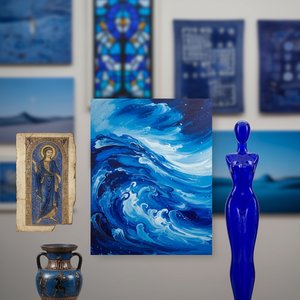
The Allure of Azure: Exploring the Symbolic & Aesthetic Depths of Blue in Art History
Explore the rich history of blue in art! Discover its symbolism, from ancient pigments to modern masterpieces by Kandinsky & Seurat. Uncover the psychological impact and cultural meanings behind this captivating hue.

Top 10 majstrovských diel abstraktného expresionizmu pre váš domov | OriginalUniqueArt.com
Ponorte sa do sveta abstraktného expresionizmu s Pollockom, Rothkom a ďalšími majstrami. Objavte príbehy za 10 ikonických diel, techniky a farby, ktoré definovali toto revolučné umenie. Kvalitné reprodukcie na OriginalUniqueArt.com.

Top 10 majstrov geometrickej abstrakcie: Umění pre váš domov s OriginalUniqueArt.com
Ponorte sa do sveta geometrickej abstrakcie! Objavte 10 majstrovských diel od Mondriana, Kandinského a ďalších. História umenia, techniky a farebné kompozície na OriginalUniqueArt.com – reprodukcie obrazov pre váš domov.

Wassily Kandinsky: Top 25 diel pre milovníkov umenia a dokonalý dizajn interiéru
Ponorte sa do sveta Wassilyho Kandinského s OriginalUniqueArt.com! Objavte top 25 diel abstraktného umenia, expresionizmu a farebných kompozícií. Kúpiť reprodukcie obrazov pre dokonalý dizajn interiéru. Explore the full collection online.

Top 10 slávnych obrazov v odtieňoch sivomodrej: Umění pre váš domov s OriginalUniqueArt
Objavte top 10 slávnych obrazov v odtieňoch sivomodrej! Preskúmajte príbehy Van Gogha, Moneta a ďalších majstrov. Reprodukcie obrazov pre váš domov s OriginalUniqueArt – umenie online.
