Prepnúť na tlač
 Zobraziť viac







































 V prípade umeleckých diel alebo reprodukcií, ktorých ktorákoľvek strana je väčšia ako 105 cm (cca 41 palcov), sa rám dodáva v rozloženom stave ako sada. Táto metóda zabezpečuje bezpečnú доставu a chráni pred poškodením počas prepravy.


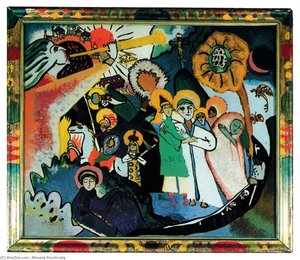
A Symphony of Form and Color: Exploring Kandinsky’s ‘Colourful Ensemble’
“Colourful Ensemble,” painted in 1938 by the visionary Russian artist Wassily Kandinsky, stands as a testament to the transformative power of abstraction. Measuring 45.7 x 35 inches (116.0 x 89.0 cm), this oil and gloss on canvas resides at the Centre Georges Pompidou in Paris, inviting viewers into a realm unbound by representational constraints—a space governed by feeling and intuition.
Kandinsky: Pioneer of Abstract Expression
Wassily Kandinsky (1866-1944) irrevocably altered the trajectory of modern art. Initially trained in law and economics, he was profoundly moved by Impressionist works—particularly Monet’s “Haystacks”—which ignited his artistic calling. This pivotal encounter spurred him to abandon representational forms, driven by a conviction that color and composition could directly evoke emotional responses, independent of recognizable objects. His theoretical writings, notably Concerning the Spiritual in Art, articulated this philosophy and cemented his position as one of the first truly abstract artists.
Deconstructing Reality: An Analysis of ‘Colourful Ensemble’
‘Colourful Ensemble’ is a dynamic interplay of geometric shapes—circles, triangles, squares—and vibrant hues. While eschewing depictions of specific scenes, the composition subtly suggests an underlying structure; observers have noted hints of fragmented faces or figures emerging from the apparent chaos. Kandinsky masterfully employs layering and overlapping forms to generate depth and movement within the two-dimensional canvas. The palette is rich and varied, incorporating bold primaries alongside softer earth tones—a deliberate choice intended to stimulate emotional resonance. The meticulous application of paint, characterized by visible brushstrokes and subtle gloss variations, adds textural complexity.
Expressionism and the Inner Landscape
This artwork firmly anchors itself within the Expressionist movement, which flourished in the early 20th century. Expressionists sought to convey subjective emotions and inner experiences rather than objective reality. Kandinsky’s work exemplifies this ethos; ‘Colourful Ensemble’ isn't about *what* it portrays but *how* it stirs your soul. The painting invites introspection, prompting viewers to connect with their own emotional responses to the colors, shapes, and overall arrangement—a deliberate effort to bypass rational thought and tap into primal feelings.
Symbolism and Interpretation
Kandinsky believed that each color possessed a spiritual quality and could evoke specific emotions. While he resisted rigid symbolic interpretations, his use of color was purposeful and imbued with meaning. Circles often represented wholeness and spirituality—a visual allusion to unity and harmony—while triangles conveyed dynamism and aggression—suggesting movement and tension. The interplay between these forms in ‘Colourful Ensemble’ creates a complex emotional landscape open to individual contemplation. Is it an affirmation of life's vitality? A reflection on internal conflict? Or perhaps a glimpse into the artist’s subconscious?
Emotional Resonance and Lasting Impact
'Colourful Ensemble' transcends mere visual aesthetics; it represents an invitation to engage with art on a profoundly personal level. Its enduring appeal lies in its ability to bypass intellect and communicate directly through emotion. For collectors, this painting embodies a significant investment in a cornerstone of modern art history—a piece that speaks volumes about Kandinsky’s artistic vision. For interior designers, a high-quality reproduction can infuse a space with energy, sophistication, and intellectual depth—transforming it into an environment conducive to contemplation and creative inspiration.
- Style: Abstract Expressionism
- Medium: Oil and gloss on canvas
- Dimensions: 45.7 x 35 inches (116.0 x 89.0 cm)
- Location: Centre Georges Pompidou, Paris
Otázky a odpovede
Prečo je autorskoprávny status diela „Výrazné Ensemble“ taký, aký je?
„Výrazné Ensemble“ od Wassily Wassilyevich Kandinsky sa nachádza v oblasti v slobodnom prostredí – autorské práva vypršali. Doba trvania autorského práva sa začína dňom smrti umelca, ktorého smrť nastala v roku 1944.
Kde sa v rámci opakujúcich sa tém umelca Wassily Wassilyevich Kandinsky umiestňuje dielo „Výrazné Ensemble“?
Medzi opakujúce sa témy umelca Wassily Wassilyevich Kandinsky patrí inspired by monet & wagner, exploring spirituality & emotion, bauhaus aesthetic influence, key piece in kandinsky’s legacy; dielo „Výrazné Ensemble“ sa zameriava na abstract art, geometric shapes, color harmony, emotional resonance, inner landscape, symbolism, bauhaus style.
Môžem si pomocou rozšírenej reality prezrieť „Výrazné Ensemble“ od Wassily Wassilyevich Kandinsky vo svojej miestnosti?
Stránka Náhľad v AR diela „Výrazné Ensemble“ od Wassily Wassilyevich Kandinsky využíva rozšírenú realitu na zobrazenie umelleckého diela vo vašom vlastnom priestore pomocou kompatibilného zariadenia.
 Náhľad v interiéri
 Odoslať ako digitálnu kartu
 Zdieľať
 Podrobnosti o dielo
 Príručka

 Stiahnuť obraz
 Podobné položky
 RTG skúška
 Prehliadanie diapozoje
 Q&A
Q&A Štatistiky