Zobraziť v interiéri
 Odoslať
 Zdieľať
 Podrobnosti
 Príručka

 Stiahnuť
 Podobné položky
 RTG skúška
 Prehliadanie diapo\]
 Štatistiky
Pole s Kvapkami
 Olej na plátne
- WallArt
- Post-Impressionizmus
 1889
1889 72.0 x 91.0 cm
 Kunsthalle Bremen
 Prečítať si viac
Giclée / Umenotlač
Giclée tlač alebo plátno múzeálnej kvality s rýchlou výrobou a rôznymi možnosťami povrchovej úpravy. ( Objednať ručne maľovanú reprodukciu Prepnúť na digitálnu verziu obrazu)




P118B $10

P118H $10

P118W $10

P438Z $10

P508JH $12

P508YH $12

P805H $10

P805Z $10

P919BZ $10

P919G $10

P919XJ $10

P959ZH $10

P968JZ $12

W106C $8

W218G $10

W218JH $8

W218Y $10

W307PJ $10

W316G $10

W316PJ $8

W316Y $10

W398PJ $8

W4111J $10

W500HY $15

W500JH $15

W692G $12

W849H $8

W940BG $15

W953PJ $8




Vyberte si z našich preddefinovaných rozmerov, ktoré zodpovedajú pôvodným pomeroḿ diela.

Môžete zadať vlastné rozmery, aby sa reprodukcia prispôsobila konkrétnemu rámu alebo priestoru. Ak zvolená veľkosť nebude zodpovedať proporciám originálu, dielo buď orežeme, alebo obraz rozšírime pomocou zrkadlenia či farebného doplnenia okrajov. Pred začatím výroby vám pošleme digitálnu ukážku na schválenie.
Máte na vedomí, že náhľad na obrazovke neodzrkadľuje skutočné orezanie alebo rozšírenie. Len digitálna ukážka presne zobrazí finálnu kompozíciu.
Hoci sú k dispozícii vlastné rozmery, pre zachovanie pôvodných proporcií odporúčame vybrať si rozmer z vopred definovaného zoznamu.
Celosvetová doprava () do 2 týždňov namiesto štandardných 4 až 5 týždňov. (26 september)

Bezplatná expresná doprava po celom svete

Vysokokvalitné lnianske plátno

Úplné poistenie prepravy

Záruka vrátenia colného poplatku

Záruka presného farebného zhodnutia

100-dená politika vrátenia tovaru (iba pri vadách)

100% záruka vrátenia peňazí

Ponuka množstevnej zľavy
 Možnosť skla je dostupná len pri rozmeroch pod 110 cm

Pole s Kvapkami
Giclée / Umenotlač
Veľkosť reprodukcie
-


Celková cena
$ 80
Vincent van Gogh: Field with Poppies – A Symphony of Color and Emotion
Vincent Willem van Gogh’s “Field with Poppies,” painted in 1889 during his stay at Saint-Rémy asylum, transcends mere depiction; it embodies the very essence of Post-Impressionism and stands as a testament to Van Gogh's unparalleled ability to translate inner turmoil into breathtaking visual beauty. Measuring 72 x 91 cm, this canvas currently resides in the Kunsthalle Bremen, Germany, inviting viewers to immerse themselves in a landscape brimming with vibrant hues and palpable energy.A Window Into Provence’s Soul
The painting captures a quintessential Provençal vista – a valley bathed in sunlight, dominated by undulating grain fields punctuated by swathes of scarlet poppies. More than just a scenic representation, “Field with Poppies” serves as a conduit to Van Gogh's profound connection with the natural world and his yearning for solace amidst mental instability. The artist’s gaze ascends from the lower reaches of the meadow, establishing a harmonious balance between observation and emotional expression.The Language of Impasto – Texture That Speaks Volumes
What distinguishes “Field with Poppies” is undoubtedly Van Gogh's revolutionary technique: impasto—thickly applied paint—which dominates every surface of the canvas. Each brushstroke isn’t merely pigment; it’s a deliberate gesture, conveying movement and dynamism. The artist meticulously builds up layers of color, creating a tactile experience that mimics the texture of the meadow itself – the rough grasses, the velvety petals of the poppies. This technique amplifies the painting's emotional impact, mirroring Van Gogh’s own agitated state while simultaneously capturing the radiant beauty of summer.A Controversial Reflection on Artistic Taste
The creation of “Field with Poppies” coincided with a significant artistic debate within Germany – the "Protest of German Artists." Following Gustav Pauli’s acquisition of the artwork, a pamphlet questioned the perceived dominance of French art in German museums, sparking discussions about national identity and artistic values. Figures like August Macke, Franz Marc, Max Pechstein, and Vassily Kandinsky passionately defended Pauli's decision, recognizing “Field with Poppies” as an emblem of progressive artistic vision.Symbolism Rooted in Memory and Hope
The poppies themselves hold symbolic significance beyond their visual splendor. Traditionally associated with remembrance and mourning, they also represent resilience and rebirth – themes that resonate deeply within Van Gogh’s biographical narrative. The inclusion of distant houses provides a grounding element, hinting at the artist's desire for stability amidst his turbulent life, yet simultaneously emphasizing the vastness and indifference of the surrounding landscape.A Legacy Enduring Through Reproduction
“Field with Poppies” continues to captivate audiences worldwide, inspiring artists and designers alike. A high-quality reproduction allows one to appreciate Van Gogh’s masterful artistry from afar, transporting viewers back to Provence and immersing them in the emotional core of this iconic masterpiece. Explore a stunning rendition of “Field with Poppies” at OriginalUniqueArt – experience the brilliance of Post-Impressionism firsthand.Biografia umelca
A Life Painted in Emotion: The World of Vincent van Gogh
Vincent Willem van Gogh, a name synonymous with artistic passion and turbulent genius, remains one of the most recognizable and beloved figures in Western art history. Born on March 30, 1853, in Groot-Zundert, Netherlands, his journey was not one of immediate acclaim but rather a slow burn of dedication, struggle, and ultimately, profound influence. The eldest of six children born to a Protestant minister, Theodorus van Gogh, Vincent’s early life was steeped in religious contemplation, a sensibility that would subtly permeate much of his later work. Though he displayed an inclination towards drawing from a young age, his path wasn't immediately clear; he explored various vocations – art dealer, teacher, and missionary – before fully embracing the artist’s life. These experiences, though seemingly disparate, proved formative, instilling in him a deep empathy for the working class and a profound sense of spiritual seeking that would become hallmarks of his artistic vision. Early influences included the Dutch Masters like Rembrandt van Rijn and Frans Hals, whose masterful use of light and shadow resonated with young Vincent, as well as contemporary French painters Jean-François Millet and Camille Corot, who depicted scenes of rural life with a poignant realism.From Darkness to Light: Artistic Development and Style
Van Gogh’s serious engagement with painting began around 1880, largely self-taught, driven by an inner compulsion to express the world as he perceived it. His initial works reflected his compassion for the marginalized, focusing on the lives of peasants and laborers – exemplified in pieces like The Potato Eaters. These early paintings are characterized by dark, earthy tones and a raw, almost brutal honesty that sought to capture the hardship and dignity of rural existence. The figures aren’t idealized; they're depicted with unflinching realism, conveying their weariness and toil. A pivotal moment arrived with his move to Paris in 1886, where he was exposed to the vibrant world of Impressionism and Post-Impressionism. This encounter proved transformative, injecting brighter colors into his palette and encouraging experimentation with new techniques. He absorbed the lessons of artists like Monet, Renoir, and Pissarro, but never fully adopted their style; instead, he forged a path uniquely his own. His distinctive style rapidly evolved, becoming instantly recognizable for its bold colors, expressive brushwork, and emotional intensity. Van Gogh didn’t merely *represent* reality; he sought to convey the feeling of being within it, utilizing impasto – thick layers of paint – to create texture and imbue his canvases with a palpable energy. This technique wasn't simply aesthetic; it was an integral part of his expressive language, allowing him to translate inner turmoil and ecstatic joy onto the canvas.Periods of Intensity: Key Works and Artistic Phases
Van Gogh’s artistic journey can be broadly divided into distinct periods, each marked by unique characteristics and significant works. The Dutch Period (1880-1886), as mentioned, was defined by somber tones and depictions of peasant life. These paintings often featured muted colors and a focus on the dignity of labor. The subsequent Parisian Period (1886-1888) saw a dramatic shift towards brighter colors and experimentation with Impressionist techniques. He studied the effects of light and color, attempting to capture fleeting moments and atmospheric conditions. However, it was during the Arles Period (1888-1889), in the south of France, that Van Gogh reached a peak of creative intensity. Surrounded by the radiant light and vibrant landscapes of Provence, he produced some of his most iconic works: Sunflowers, a series celebrating the beauty of simple subjects; The Night Café, a claustrophobic depiction of a late-night Parisian scene filled with unsettling energy; and Starry Night Over the Rhône, capturing the shimmering reflections of city lights on the water. These paintings are not merely depictions of scenes; they are emotional landscapes, pulsating with life and imbued with a sense of longing. His use of color became increasingly expressive, employing vibrant yellows, blues, and greens to convey his subjective experience of the world. His final years, spent in Saint-Rémy and Auvers-sur-Oise (1889-1890), were marked by continued artistic output despite increasing mental distress. Confined to an asylum at Saint-Rémy following a breakdown, he found solace in painting the surrounding countryside, resulting in masterpieces like The Starry Night, a swirling vortex of color and emotion that continues to captivate viewers today. Even during this period of profound suffering, his portraits – particularly those of Dr. Gachet – reveal an extraordinary sensitivity and psychological depth.A Legacy Forged in Suffering: Achievements and Historical Significance
Despite facing rejection and struggling with mental illness throughout his life, Van Gogh created over 2,100 artworks in just over a decade—approximately 860 oil paintings and 1,100 drawings. This astonishing output is testament to his unwavering dedication and relentless creative drive. Remarkably, during his lifetime, only one painting – The Red Vineyard – was sold. Recognition came posthumously, slowly at first, then with increasing momentum in the early 20th century. His work profoundly influenced the development of modern art, particularly Expressionism and Fauvism, inspiring artists to prioritize emotional expression over realistic representation. His bold use of color, distorted forms, and expressive brushwork paved the way for new artistic possibilities. Today, Van Gogh’s paintings are among the most recognizable and valuable artworks in the world, commanding record prices at auction and drawing millions of visitors to museums worldwide. But his legacy extends far beyond monetary value; he remains a cultural icon, representing the archetype of the “tortured artist” – though this narrative often overshadows his skill, dedication, and artistic vision. The Van Gogh Museum in Amsterdam stands as a testament to his enduring influence, showcasing his work and celebrating his life for generations to come. His art continues to resonate with audiences because it speaks to universal human experiences—love, loss, hope, despair—with an honesty and vulnerability that transcends time and culture.- Major Influences: Dutch Masters (Rembrandt, Hals), Millet, Corot.
- Key Periods: Dutch, Parisian, Arles, Saint-Rémy/Auvers-sur-Oise.
- Notable Works: The Potato Eaters, Sunflowers, Starry Night, The Night Café.
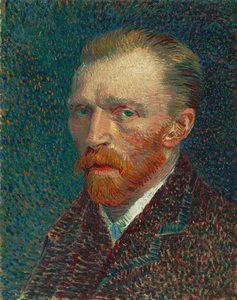
vincent willem van gogh
1853 - 1890 , Nemecko
Rýchle fakty
- Artistic Movement Or Style: Postimpresionizmus
- Artists Or Movements Influenced By This Artist:
- Expresionizmus
- Fauvizmus
- Artists Who Influenced This Artist:
- Rembrandt
- Millet
- Date Of Birth: 30. marec 1853
- Date Of Death: 29. júl 1890
- Full Name: Vincent Willem van Gogh
- Nationality: Holanďan
- Notable Artworks:
- Slnečnice
- Hviezdičná noc
- Nočná kaviareň
- Place Of Birth: Zundert, Holandsko
Súvisiace články
Top 10 majstrovských diel postimpresionizmu: Umelci a obrazy, ktoré zmenili svet umenia
Objavte top 10 majstrovských diel postimpresionizmu od Van Gogha, Cézanna a ďalších. Prežite príbehy umelcov a ich ikonických obrazov. Reprodukcie múzejnej kvality pre váš interiér na OriginalUniqueArt.com.

Decoding Impasto: The Emotional Power and Texture of Van Gogh's Brushstrokes
Explore the profound emotional depth of Van Gogh's impasto technique. Discover how his sculptural brushstrokes and textured oil layers define Post-Impressionism through an expert art-historical lens, perfect for discerning collectors and fine art enthusiasts.
The Soul of the Brushstroke: Decoding Van Gogh's Emotional Impasto
Explore the profound emotional depth of Van Gogh's impasto technique. Discover how his sculptural brushstrokes and textured oil layers define Post-Impressionism through an expert art-historical lens, perfect for discerning collectors and fine art enthusiasts.

Rembrandt van Rijn: Top 25 Majstrovských Diel pre Váš Domov | OriginalUniqueArt
Ponorte sa do sveta Rembrandta van Rijna s OriginalUniqueArt.com! Objavte 25 majstrovských diel holandského baroka, portrétov a ikonických obrazov plných svetla a tieňa. Kúpiť kvalitné reprodukcie pre váš interiér. Preskúmajte celú kolekciu online!
Decoding Van Gogh's Turmoil: OriginalUniqueArt’s Masterful Reproductions of Emotional Depth
Discover exquisite Van Gogh reproductions from OriginalUniqueArt – expert art specialists offering museum-quality prints & custom paintings. Trust our authentic process and elevate your collection today.