Cubism
Interior (Stuart Davis)
Stuart Davis (1892–1964) vytvoril Interior. Patrí k umeleckému smeru Cubism.

 Náhľad v interiéri

 Ručne maľovaná olejná reprodukcia
 Odoslať ako digitálnu kartu
 Zdieľať
 Príručka


 Stiahnuť obraz
 Podobné položky
 RTG skúška
 Prehliadanie diapozoje
 Otázky a odpovede

 Štatistiky
Interior: základné informácie
- Názov
- Interior
- Umelec
- Stuart Davis (1892–1964)
- Narodený v roku
- Philadelphia, Spojené štáty americké
- Pohyb
- Cubism
- Motív
- abstract, geometric, modernism, composition, lines, forms
Čo zobrazuje Interior?
A Dynamic Vision of Modernity: Exploring Stuart Davis’s “Interior”
Stuart Davis's “Interior” is a captivating example of American Modernism, pulsating with energy and reflecting the artist’s unique response to the burgeoning urban landscape and the rhythms of jazz. Created sometime during his prolific career (1892-1964), this work embodies Davis’s commitment to developing a distinctly American visual language, moving beyond European influences towards a bold, independent style.
Deconstructing Space: Style & Technique
- The artwork is immediately striking for its geometric abstraction. Davis employs fragmented forms and flattened perspectives – hallmarks of both Cubism and Constructivism – but infuses them with a uniquely American sensibility.
- A vibrant palette dominates, anchored by the stark contrast between the white background, bold reds, blues, and greys, and punctuated by energetic black lines. The orange border further intensifies this visual impact.
- Davis’s technique is evident in the visible brushstrokes and layering of paint, creating a subtle texture that adds depth despite the overall flattened composition. This suggests an active process of building up form and color on the canvas, likely using oil paints as his primary medium.
- The arrangement isn't simply random; it’s carefully orchestrated into distinct zones – a tower-like structure in blue-grey, a dynamic red section with a vertical ‘sail’ or flag element, and a central area of interwoven geometric shapes. This zoning creates a sense of controlled chaos.
Echoes of Jazz & the Machine Age: Context & Symbolism
Davis was deeply influenced by jazz music, which he saw as embodying the spirit of modern America – improvisational, energetic, and uniquely its own. While “Interior” isn’t a direct representation of musical notes, the dynamic interplay of shapes and colors evokes the same sense of rhythm and syncopation found in jazz compositions.
- The architectural elements, particularly the stylized tower, could be interpreted as representing aspiration or the burgeoning skyscrapers of American cities. Davis frequently engaged with urban themes throughout his career.
- The ‘sail’ or flag-like form introduces a sense of movement and direction, perhaps symbolizing progress or the forward momentum of modern life.
- His early exposure to the Armory Show in 1913 was pivotal. While his initial works reflected the Ashcan School style, he quickly absorbed and transformed European avant-garde ideas into something distinctly American.
Emotional Resonance & Lasting Impact
“Interior” is not a tranquil scene; it’s charged with energy and tension. The fragmented forms and bold colors create a sense of dynamism, while the lack of traditional perspective can be slightly unsettling. This emotional complexity reflects the anxieties and excitements of a rapidly changing world.
- The artwork invites viewers to actively engage with its abstract language, prompting individual interpretations and fostering a personal connection.
- As a pioneering figure in American Modernism, Stuart Davis paved the way for subsequent generations of artists. His work continues to inspire those seeking to break free from convention and explore new forms of visual expression.
Interior vo vysokom rozlíšení
Chránené autorským zákonom: obrázok je zobrazený len na ilustračné účely.
Viac veľkostí, výrezov a citácií →Stuart Davis, Interior.
Otázky k Interior
Aká paleta a dominantná farba definujú "Interior"?
„Interior“ od Stuart Davis využíva paletu v odtieňoch Metallics, pričom dominantnou farbou je Steel Blue (#5c7ba9).
Môžem si pozrieť "Interior" ako celovoobrazovkovú diapozitívu?
Diaporama diela „Interior“ si môžete pozrieť na jeho stránke Prehliadanie diela.
Čo vysvetľuje situáciu s autorskými právami diela „Interior“ od Stuart Davis?
„Interior“ od Stuart Davis sa nachádza v oblasti stále chránené autorským právom. Doba trvania autorského práva sa začína dňom smrti umelca, ktorého smrť nastala v roku 1964.
Akú farebnú paletu využíva dielo "Interior"?
„Interior“ od Stuart Davis využíva Metallics farebnú paletu, ktorá vystihuje celkový farebný charakter diela.
Existujú diela podobné ako „Interior"?
Diela podobné dielu „Interior“ nájdete na stránke Podobné diela daného diela.
Aká farba dominuje v kompozícii diela „Interior“ od Stuart Davis?
Dominantnou farbou diela „Interior“ od Stuart Davis je Steel Blue (#5c7ba9).
Kto je umelcom diela „Interior"?
Dielo „Interior“ sa pripisuje autorovi Stuart Davis.
K ktorému umeleckému smeru patrí „Interior“ od Stuart Davis?
Uvedený umelecký smer spojený s dielom „Interior“ od Stuart Davis je Cubism. Táto klasifikácia umiestňuje toto dielo medzi súvisiace umelcov a umelecké diela.
Ako je vybudovaná farebná kompozícia diela „Interior“ od Stuart Davis?
V diele „Interior“ sa Statement kontrast spája s Strong Color Unity harmóniou.
O umelcovi, Stuart Davis
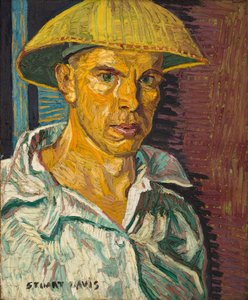
1892–1964, Spojené štáty americké
Stuart Davis
Stuart Davis: A Pioneer of American Modernism Stuart Davis, born Edward Stuart Davis on December 7, 1892, in Philadelphia, Pennsylvania, was immersed in an artistic environment from a young age. His father, Edward Wyatt Davis, served as the art editor for *The Philadelphia Press*, while his mother, Helen Stuart Davis, was a sculptor—a lineage that undeniably fostered his early fascination with visual arts. Davis received formal training at the Robert Henri School of Art in New York City from 1909 to 1912 under the guidance of Robert Henri himself. During this formative period, he forged enduring friendships with fellow painters John Sloan, Glenn Coleman, and Henry Glintenkamp—artists who would become collaborators and companions on his artistic journey.
Aj od Stuart Davis
 Odol
 Lucky Strike1924
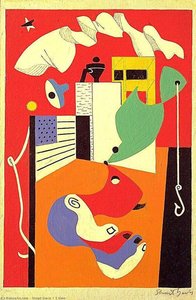 T View1951
 Blue Café1928
Eseje k dielu Interior
 Stuart Davis: Modernist Abstraction & the Vibrant Spirit of the Jazz AgeExplore the vibrant world of Stuart Davis, a pioneer of American Modernism. Discover his jazz-inspired paintings, signature style & investm…
 The Geometry of Elegance: Elevating Modern Villa Interiors with Cubist-Inspired ArtDiscover how Cubist-inspired art elevates modern villa interiors. Explore the intersection of geometric precision and luxury design through…
 Steel & Soul: The Rhythmic Geometry and Industrial Resonance of the Machine AgeExplore the rhythmic geometry of Fernand Leger and the Machine Age. Discover the power of industrial art today.