

 Náhľad v interiéri
 Odoslať ako digitálnu kartu
 Zdieľať
 Podrobnosti o dielo
 Príručka

 Stiahnuť obraz
 Podobné položky
 RTG skúška
 Prehliadanie diapozoje
 Q&A
Q&A Štatistiky
Varal#4
 Acrylic
- WallArt
- Modern Surrealism
 1950
1950 40.0 x 40.0 cm
 Itaú Cultural Institute
 Zobraziť viac
Umelecké dielo zobrazené na tejto stránke je chránené autorským zákonom, čo znamená, že nemôžeme legálne vytvárať ani predávať jeho identickú reprodukciu. Táto ochrana je vymáhaná na základe medzinárodných dohôd, ako napríklad Bernská konvencia a národnými zákonmi, vrátane tých, ktoré sú stanovené v Autorské právo USA – Title 17. Všetky práva vyhradené.
Táto metóda plne dodržiava autorské práva, pretože nezahŕňa kopírovanie ani duplikovanie chráneného diela. Ide skôr o kreatívnu reinterpretáciu – nový obraz, ktorý je ovplybnený originálom, no nie je s ním identický.
Giclée / Umenotlač
Giclée tlač alebo plátno múzeálnej kvality s rýchlou výrobou a rôznymi možnosťami povrchovej úpravy. ( Kúpiť ručne maľovaný obraz Prepnúť na digitálny obraz)




P118B €10

P118H €10

P118W €10

P438Z €10

P508JH €12

P508YH €12

P805H €10

P805Z €10

P919BZ €10

P919G €10

P919XJ €10

P959ZH €10

P968JZ €12

W106C €8

W218G €10

W218JH €8

W218Y €10

W307PJ €10

W316G €10

W316PJ €8

W316Y €10

W398PJ €8

W4111J €10

W500HY €15

W500JH €15

W692G €12

W849H €8

W940BG €15

W953PJ €8




Vyberte si z našich preddefinovaných rozmerov, ktoré zodpovedajú pôvodným pomeroḿ diela.

Zadajte šírku a výšku, ktoré potrebujete, aby sa reprodukcia hodila k vášmu rámu alebo stene. Print možno len orezávať, nikdy však nemennú veľkosť zvětšiť oproti pôvodnému obrázku, preto pri inom formáte stráca časť obrazu. Pred samotným vytlačiacím procesom vám pošleme digitálny náhľad na schválenie. Obrázok zobrazený na tejto stránke nezobrazuje reálny rez — len digitálny náhľad ukazuje presný výsledok.
Celosvetová doprava () do 2 týždňov namiesto štandardných 4 až 5 týždňov. (29 október)

Bezplatná expresná doprava po celom svete

Vysokokvalitné lnianske plátno

Kompletné poistenie prepravy

Záruka vrátenia colného poplatku

Záruka presného farebného zhodnutia

100-dená politika vrátenia tovaru (iba pri vadách)

100% záruka vrátenia peňazí

Zľava pri väčšom množstve
 Možnosť skla je dostupná len pri rozmeroch pod 110 cm

Varal#4
Giclée / Umenotlač
Veľkosť reprodukcie
-


Celková cena
€ 71
Varal#4: A Poetic Exploration of Childhood Joy
Rubens Teixeira Scavone’s “Varal#4,” created in 1950, transcends mere visual representation; it's a carefully crafted meditation on memory and the enduring allure of carefree moments. Captured during Brazil’s mid-century artistic fervor—a period marked by experimentation with form and color—this photograph stands as a testament to Scavone’s ability to distill complex emotions into a deceptively simple composition.
- Subject Matter: The artwork centers around a cluster of balloons ascending against a vibrant azure sky. This seemingly commonplace subject is elevated by Scavone's masterful framing and lighting, transforming it into an emblem of youthful exuberance and boundless optimism.
- Style & Technique: Employing documentary photography—a genre characterized by its commitment to capturing reality without embellishment—Scavone utilized a low-angle perspective to emphasize the balloons’ grandeur. The photograph's monochrome palette contributes to its melancholic beauty, highlighting textural nuances and creating a timeless aesthetic.
- Historical Context: Scavone’s work aligns with the broader artistic currents of the 1950s, reflecting a fascination with Surrealism and Constructivism—movements that sought to challenge conventional notions of representation and explore subconscious realms.
- Symbolism & Emotional Impact: The balloons themselves serve as potent symbols of aspiration, freedom, and childhood innocence. Their upward trajectory embodies the desire for transcendence while simultaneously evoking nostalgic recollections of simpler times.
The photograph’s deliberate use of negative space amplifies the balloon’s presence, guiding the viewer's gaze toward this captivating spectacle—a visual reminder that beauty can be found in unexpected places and that even monochrome images possess the capacity to stir profound emotional responses.
Detailed Analysis: Composition & Perspective
Scavone’s compositional choices are equally deliberate. He skillfully utilizes a low-angle perspective, elevating the balloons against the expansive sky—a technique commonly employed by Surrealist photographers to create dramatic visual effects and imbue images with a sense of grandeur. The photograph's careful framing ensures that every element contributes to the overall narrative, reinforcing the artwork’s contemplative mood.
Furthermore, Scavone’s meticulous attention to detail—evident in the subtle tonal variations within the monochrome print—reveals his mastery of photographic technique. He expertly manipulated light and shadow to sculpt the balloon's form and texture, capturing a fleeting moment of beauty with remarkable precision.
Material & Process: Printing Technique
“Varal#4” was executed on Premiun Luster Photo Paper—a material chosen specifically for its ability to reproduce tonal nuances faithfully. The printing process itself involved transferring Scavone’s original image onto the paper surface with painstaking care, ensuring that the artwork retains its textural qualities and luminous vibrancy.
The resulting print is a stunning example of photographic artistry—a testament to Scavone's dedication to craftmanship and his unwavering commitment to capturing the essence of his subject matter. Its enduring appeal lies in its ability to evoke memories of childhood joy and to celebrate the transformative power of visual art.
Artist Information: Rubens Teixeira Scavone
Rubens Teixeira Scavone (1925–2007) was a Brazilian novelist, journalist & artist recognized for his unique blend of creativity and wit. He earned acclaim as a literary icon through his prolific output—including novels like ‘Clube de Campo’—and achieved international recognition for his pioneering photographic explorations.
Born in São Paulo, Scavone's artistic journey began with an early fascination for writing and storytelling. His contributions to Brazilian journalism solidified his reputation as a versatile communicator—a skill that would later inform his visual artistry.
Otázky a odpovede
V ktorom roku bolo vytvorené dielo „Varal#4“ od Rubens Teixeira Scavone?
Dielo „Varal#4“ od Rubens Teixeira Scavone vzniklo v roku 1950.
Kde môžem kúpiť ručne maľovanú reprodukciu diela „Varal#4“ od Rubens Teixeira Scavone?
„Varal#4“ je k dispozícii ako ručne maľovaná olejná reprodukcia na ľanovom plátne. Objednávku môžete vložiť na jeho stránke Ručne maľovaná reprodukcia, pričom si môžete vybrať z rôznych veľkostí.
Môžem si „Varal#4“ od Rubens Teixeira Scavone pred kúpou pozrieť na vlastnej stene?
Pre dielo „Varal#4“ je k dispozícii náhľad v rozšírenej realite: stránka Náhľad v AR vám umožní zobraziť toto umenie vo vašom vlastnom priestore pomocou kompatibilného zariadenia.
Biografia umelca
The Literary and Visual Tapestry of Rubens Teixeira Scavone
Born in the vibrant metropolis of São Paulo in 1925, Rubens Teixeira Scavone emerged as a polymathic force within the Brazilian cultural landscape, weaving together the disparate threads of journalism, literature, and visual experimentation. His early life was defined by a profound intellectual curiosity and a natural inclination toward the written word, leading him to establish himself as a significant voice in Brazilian journalism through his contributions to esteemed publications such as O Estado de S. Paulo. This foundational period in newsrooms and literary circles provided him with a sharp, observational lens that would later permeate both his prose and his visual explorations, allowing him to capture the nuances of Brazilian society with unparalleled wit and precision.
Scavone’s literary career reached its zenith when he was awarded the prestigious Jabuti Prize for best novel in 1973 for his work Clube de Campo. His narrative voice was characterized by a unique blend of creativity and sharp intellect, capable of navigating complex human emotions and social structures. Through novels such as Raiz Amarga, Rua Augusta, and O Pátio das Donzelas, he constructed worlds that were as much about the psychological depth of his characters as they were about the atmospheric tension of their surroundings. His short stories, including the evocative O Criador de Centauros, further demonstrated his ability to manipulate language to create surreal and hauntingly beautiful landscapes of the mind.
A Visionary Beyond the Written Word
While history often remembers him through the lens of his literary achievements, Scavone’s artistic contributions extended into the visual realm, where he explored the boundaries of photography and composition. His work in this medium showcased an innovative spirit that challenged traditional perspectives. In pieces such as Serie 50s035, a striking black and white photograph featuring a mass of balloons suspended in the air, one can witness his ability to transform a simple moment into a profound meditation on weightlessness and collective movement. Similarly, his piece Triangular Trigger highlights a mastery of form and an experimental approach to photographic geometry.
The significance of his visual work is cemented by its presence in some of Brazil's most esteemed institutions, including the Museu de Arte de São Paulo and the Centro Cultural Banco do Brasil Rio de Janeiro. His ability to transition from the structured logic of a novelist to the abstract possibilities of a visual artist marks him as a true Renaissance man of the Brazilian modern era. This duality allowed him to approach art not merely as a creator of objects, but as a storyteller of light and shadow.
Legacy and Cultural Impact
The legacy of Rubens Teixeira Scavone is one of profound interdisciplinary influence. His induction into the Paulista Academy of Letters serves as a testament to his enduring impact on the Brazilian literary canon. Beyond his individual accolades, his life work represents a bridge between the journalistic pursuit of truth and the artistic pursuit of beauty. He left behind a body of work that continues to inspire contemporary writers and visual artists alike, encouraging them to find the intersections between different modes of expression.
To reflect on Scavone is to reflect on the richness of 20th-century Brazilian culture—a period marked by intense intellectual growth and artistic experimentation. His ability to capture the essence of his era through both the printed page and the photographic frame ensures that his name remains synonymous with the creative spirit of São Paulo and the broader Brazilian identity.

Rubens Teixeira Scavone
1925 - 2007 , Brazil
Základné informácie
- Artistic Movement Or Style: Creative and witty photography/literature
- Date Of Birth: 1925
- Date Of Death: 2007
- Full Name: Rubens Teixeira Scavone
- Nationality: Brazilian
- Notable Artworks:
- Serie 50s035
- Triangular trigger
- Varal#4
- Place Of Birth: São Paulo, Brazil
Súvisiace články

Top 10 slávnych obrazov v odtieňoch bielej: Krása, história a dekor pre váš domov
Objavte top 10 slávnych obrazov v odtieňoch bielej – Monet, Renoir a ďalší majstri. História umenia, techniky a inšpirácia pre váš interiér. Reprodukcie obrazov najvyššej kvality na OriginalUniqueArt.com.

Top 10 slávnych obrazov s dominantnou čiernou farbou | OriginalUniqueArt.sk
Objavte top 10 slávnych obrazov s dominantnou čiernou farbou od Rembrandta, Goya a ďalších majstrov. Prežite príbehy umenia, techniky a nadčasovej krásy. Reprodukcie obrazov pre váš interiér na OriginalUniqueArt.sk – múzejná kvalita!
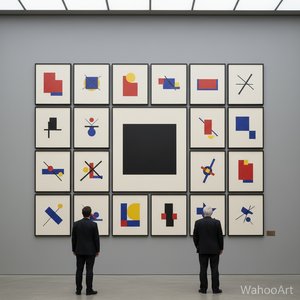
Kazimir Malevich: Top 25 dielo pre milovníkov moderného umenia a interiérový dizajn
Ponorte sa do sveta Kazimir Maleвича a jeho 25 ikonických diel. Objavte príbeh suprematizmu, abstraktného umenia a geometrických foriem. Reprodukcie obrazov pre váš interiér na OriginalUniqueArt.com – kvalita múzejnej úrovne.

Wassily Kandinsky: Top 25 diel pre milovníkov umenia a dokonalý dizajn interiéru
Ponorte sa do sveta Wassilyho Kandinského s OriginalUniqueArt.com! Objavte top 25 diel abstraktného umenia, expresionizmu a farebných kompozícií. Kúpiť reprodukcie obrazov pre dokonalý dizajn interiéru. Explore the full collection online.

Top 10 majstrovských diel abstraktného expresionizmu pre váš domov | OriginalUniqueArt.com
Ponorte sa do sveta abstraktného expresionizmu s Pollockom, Rothkom a ďalšími majstrami. Objavte príbehy za 10 ikonických diel, techniky a farby, ktoré definovali toto revolučné umenie. Kvalitné reprodukcie na OriginalUniqueArt.com.