Prepnúť na tlač
 Zobraziť viac







































 V prípade umeleckých diel alebo reprodukcií, ktorých ktorákoľvek strana je väčšia ako 105 cm (cca 41 palcov), sa rám dodáva v rozloženom stave ako sada. Táto metóda zabezpečuje bezpečnú доставu a chráni pred poškodením počas prepravy.


Brushstrokes: A Fragment of Expressionism Revisited
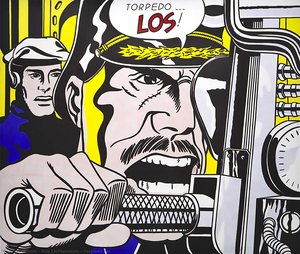
Roy Lichtenstein’s “Brushstrokes,” created in 1967, stands as a deceptively simple yet profoundly resonant testament to the artist's masterful manipulation of visual language. Initially conceived as a reaction against the dominant Abstract Expressionist movement—particularly Jackson Pollock’s drip paintings—this monochrome illustration embodies Lichtenstein’s signature style: expressive realism infused with the deliberate illusionistic techniques borrowed from comic strips.
- Composition & Perspective: The artwork employs a dynamic diagonal composition, guiding the viewer's gaze from the upper left to the lower right. This imbalance subtly underscores the precariousness of the depicted figure, emphasizing vulnerability within an expansive watery environment. Limited perspective contributes to depth perception, achieved primarily through overlapping lines that suggest volume and create a sense of immersion.
- Color Palette & Line Work: Strikingly devoid of color—a deliberate choice mirroring Lichtenstein’s fascination with commercial printing—the piece relies on high contrast to heighten visual impact. Thick, flowing lines dominate the composition, defining both the turbulent water surface and the submerged man's form. These bold lines convey movement and energy, mimicking the halftone dots characteristic of comic book illustrations.
- Technique & Materials: Lichtenstein’s meticulous line work—likely executed using pen and ink—demonstrates an unwavering commitment to precision and detail. The texture is skillfully achieved through variations in line thickness and density, simulating the surface of water and conveying a palpable sense of materiality. The technique reflects Lichtenstein's fascination with replicating photographic images, albeit transformed into stylized representations.
- Symbolism & Emotional Impact: “Brushstrokes” transcends mere visual depiction; it speaks to themes of isolation and struggle—mirroring anxieties prevalent during the Cold War era. The solitary figure submerged beneath the surface embodies vulnerability against overwhelming forces, prompting contemplation on resilience and confronting uncertainty. Lichtenstein’s deliberate simplification serves to amplify emotional resonance.
- Historical Context: Produced in 1967, amidst the burgeoning Pop Art movement, “Brushstrokes” represents a pivotal moment in redefining artistic boundaries. It challenged the seriousness of Abstract Expressionism by appropriating familiar visual motifs—the halftone dot—and injecting them with humor and irony. The artwork’s influence extends beyond its immediate stylistic context, shaping subsequent explorations of graphic abstraction.
This evocative piece exemplifies Lichtenstein's genius in distilling complex emotions into visually arresting forms. Its enduring appeal lies in its ability to capture a fleeting moment of vulnerability within a grander narrative—a captivating reminder that beauty can emerge from unexpected juxtapositions and deliberate stylistic choices.
Otázky a odpovede
Aké sýte farby má dielo „Brushstrokes“?
Farby diela „Brushstrokes“ od Roy Lichtenstein vykazujú Muted saturáciu s intenzitou Monochromatic.
Kde sa dielo „Brushstrokes“ zaradí do doterajšieho tvoru umelca Roy Lichtenstein?
V rámci tvorby umelca Roy Lichtenstein sa dielo „Brushstrokes“ radí do štýlu Pop Art, pričom sprevádzajú ho témy ako comic book aesthetics, consumerism critique, advertising imagery, american iconography, existential struggle, fragmented narrative, pop art disruption, exploring vulnerability.
Aké využitie a priestor sa odporúčajú pre „Brushstrokes“ od Roy Lichtenstein?
„Brushstrokes“ sa odporúča pre Accent, ideálnym priestorom je však Living Room.
 Náhľad v interiéri
 Odoslať ako digitálnu kartu
 Zdieľať
 Podrobnosti o dielo
 Príručka

 Stiahnuť obraz
 Podobné položky
 RTG skúška
 Prehliadanie diapozoje
 Otázky a odpovede
 Štatistiky