Zobraziť v interiéri
 Odoslať
 Zdieľať
 Podrobnosti
 Príručka

 Stiahnuť
 Podobné položky
 RTG skúška
 Prehliadanie diapo\]
 Štatistiky
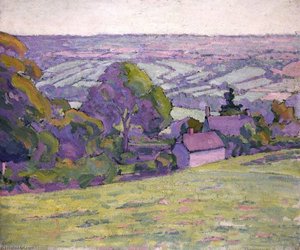
Maples at Cuckfield
 Oil On Canvas
- WallArt
- Pioneering British Post-Impressionism
 1914
1914 52.0 x 61.0 cm
 National Museum Cardiff
 Prečítať si viac
Giclée / Umenotlač
Giclée tlač alebo plátno múzeálnej kvality s rýchlou výrobou a rôznymi možnosťami povrchovej úpravy. ( Objednať ručne maľovanú reprodukciu Prepnúť na digitálnu verziu obrazu)




P118B €10

P118H €10

P118W €10

P438Z €10

P508JH €12

P508YH €12

P805H €10

P805Z €10

P919BZ €10

P919G €10

P919XJ €10

P959ZH €10

P968JZ €12

W106C €8

W218G €10

W218JH €8

W218Y €10

W307PJ €10

W316G €10

W316PJ €8

W316Y €10

W398PJ €8

W4111J €10

W500HY €15

W500JH €15

W692G €12

W849H €8

W940BG €15

W953PJ €8




Vyberte si z našich preddefinovaných rozmerov, ktoré zodpovedajú pôvodným pomeroḿ diela.

Zadajte šírku a výšku, ktoré potrebujete, aby sa reprodukcia hodila k vášmu rámu alebo stene. Print možno len orezávať, nikdy však nemennú veľkosť zvětšiť oproti pôvodnému obrázku, preto pri inom formáte stráca časť obrazu. Pred samotným vytlačiacím procesom vám pošleme digitálny náhľad na schválenie. Obrázok zobrazený na tejto stránke nezobrazuje reálny rez — len digitálny náhľad ukazuje presný výsledok.
Celosvetová doprava () do 2 týždňov namiesto štandardných 4 až 5 týždňov. (21 október)

Bezplatná expresná doprava po celom svete

Vysokokvalitné lnianske plátno

Úplné poistenie prepravy

Záruka vrátenia colného poplatku

Záruka presného farebného zhodnutia

100-dená politika vrátenia tovaru (iba pri vadách)

100% záruka vrátenia peňazí

Ponuka množstevnej zľavy
 Možnosť skla je dostupná len pri rozmeroch pod 110 cm

Maples at Cuckfield
Giclée / Umenotlač
Veľkosť reprodukcie
-


Celková cena
€ 70
A Moment Frozen in Time: Robert Bevan’s ‘Maples at Cuckfield’
Robert Bevan's “Maples at Cuckfield,” painted in 1914, isn’t merely a landscape; it’s an immersion into the heart of early 20th-century British art and a poignant reflection on rural England. More than just depicting trees and fields, this oil painting captures a fleeting moment – a sunlit afternoon where light dances through foliage, illuminating a quiet scene of domestic tranquility. Bevan, a key figure in the Camden Town Group, masterfully blends elements of realism with an Impressionistic sensibility, creating a work that is both meticulously observed and imbued with a palpable sense of atmosphere.
The painting immediately draws the eye to the foreground, dominated by two cows grazing peacefully amidst the vibrant greens and browns of the field. Their presence anchors the scene, grounding it in the everyday realities of rural life – a theme prevalent throughout Bevan’s work. A solitary figure stands near the center, seemingly observing this pastoral tableau, adding a subtle layer of human connection to the natural world. The composition is carefully balanced, with the fence acting as a visual frame that directs the eye through the scene and establishes depth. Notice how the artist uses a slightly off-center placement of the horse on the right, creating a dynamic counterpoint to the stillness of the cows.
The Language of Light: Bevan’s Impressionistic Technique
Bevan's skill lies not just in his subject matter but also in his masterful manipulation of light and color. He employs broken brushstrokes – a hallmark of Impressionism – to capture the shifting qualities of sunlight filtering through the maple trees. The colors aren’t blended smoothly; instead, they are applied in distinct patches, creating a shimmering effect that mimics the dappled light on the leaves. The artist uses a vibrant palette, favoring rich greens and yellows alongside earthy browns and blues, resulting in a luminous and dynamic composition. This technique wasn't simply about replicating what he saw; it was about conveying how he *felt* looking at the scene – the warmth of the sun, the freshness of the air, the quiet beauty of the countryside.
The painting’s style is deeply rooted in the artistic currents of its time. Bevan's work reflects the influence of Post-Impressionism and particularly the techniques pioneered by Paul Gauguin and Vincent van Gogh. However, unlike these artists, Bevan retains a certain restraint, avoiding the overtly expressive brushwork that characterized some of their later works. Instead, he focuses on capturing the subtle nuances of light and color with remarkable precision.
A Window into a Changing England
“Maples at Cuckfield” was painted during a period of significant social and political change in Britain. The early 20th century witnessed rapid industrialization, urbanization, and the decline of traditional rural life. Bevan’s paintings often served as a poignant reminder of this disappearing world – a celebration of the beauty and tranquility that were threatened by progress. The painting can be interpreted as a meditation on the relationship between humanity and nature, suggesting a longing for simpler times and a connection to the land.
Beyond its aesthetic qualities, “Maples at Cuckfield” offers a valuable glimpse into the artistic landscape of early 20th-century Britain. It’s a testament to Bevan's innovative spirit and his ability to capture the essence of a moment in time with remarkable skill and sensitivity. Reproductions of this captivating artwork offer a beautiful way to bring a touch of rural serenity into any space, connecting viewers to the timeless beauty of the English countryside.
Otázky a odpovede
Patrí „Maples at Cuckfield“ od Robert Polhill Bevan do verejnej domény?
Informácia o autorských právach pre „Maples at Cuckfield“ od Robert Polhill Bevan: dielo je v stave v verejnom vlastníctve – autorské práva vypršali. To určuje, či je možné voľne vytvárať reprodukcie tohto obrazu.
Môžem si objednať olejную reprodukciu diela "Maples at Cuckfield"?
Ručne maľované kópie diela „Maples at Cuckfield“ od Robert Polhill Bevan sa predávajú na stránke táto webstránka: ručne maľovaná olejná reprodukcia na plátne z ľanu, pričom objednávka sa realizuje prostredníctvom ich stránky Ručne maľovaná reprodukcia.
Kto vytvoril "Maples at Cuckfield" a v akom štýle je ladené?
Robert Polhill Bevan vytvoril/a „Maples at Cuckfield“ v rámci smeru Pioneering British Post-Impressionism.
Biografia umelca
Robert Polhill Bevan (1865–1925): British painter & Camden Town Group founder
Robert Polhill Bevan, born in Hove in 1865, occupies a pivotal yet often understated position within the narrative of early 20th-century British art. Emerging from a Quaker background steeped in banking connections – his parents were Richard Alexander Bevan and Laura Maria Polhill – he defied conventional expectations to become a daring innovator, a key figure in the transition from Impressionism towards more radical explorations of color and form. His journey was one of constant experimentation, absorbing influences from across Europe while forging a distinctly personal artistic vision that would profoundly impact the development of modern art in Britain. Bevan’s early education at Westminster School of Art under Fred Brown provided a solid foundation, but it was his subsequent studies at the Académie Julian in Paris that truly ignited his creative spark. There, he encountered a constellation of rising stars – Paul Sérusier, Pierre Bonnard, Édouard Vuillard, and Maurice Denis – artists who were challenging academic conventions and embracing new approaches to painting. These encounters proved formative, exposing Bevan to the principles of synthetism and laying the groundwork for his future explorations.Early Influences & Parisian Awakening
Bevan’s artistic sensibilities were profoundly shaped by his formative years in Paris. The Académie Julian served as a crucible for innovation, immersing him in the vibrant intellectual atmosphere of the Belle Époque and fostering connections with artists who championed groundbreaking ideas. He was particularly captivated by the work of Gauguin and Cézanne, whose expressive use of color and simplified forms resonated deeply within his artistic sensibilities. These encounters instilled in Bevan a conviction that art should transcend mere representation, prioritizing emotional impact and conveying subjective experience—a stance that would become central to his subsequent artistic endeavors. The influence of Brittany is undeniable; two significant journeys undertaken between 1890 and 1891 cemented his fascination with the region’s dramatic landscapes and bold chromatic palette. Observing Gauguin's pioneering approach to depicting indigenous cultures and simplifying forms captivated Bevan, prompting him to translate these principles into his own artistic practice. His sketchbook pages from this period—now housed in the Ashmolean Museum—offer invaluable insight into the genesis of his distinctive visual language.The Fauvist Breakthrough & Divisionist Technique
Around 1904 Bevan embarked on a transformative path of experimentation with pure color, anticipating the emergence of Fauvism on the continent and marking a decisive break from Impressionistic conventions. His painting “Courtyard” exemplifies this audacious stylistic choice—a deliberate rejection of naturalistic hues in favor of vibrant, emotionally charged pigments—demonstrating a willingness to prioritize expressive intensity over accurate depiction. This bold move wasn’t merely aesthetic; it reflected Bevan's belief that color possessed inherent power to communicate emotion and convey psychological states—a conviction that would inform his artistic vision throughout his career. Furthermore, Bevan honed his technique by adopting divisionist or pointillist principles, evident in masterpieces such as “Ploughing on the Downs” and “The Chestnut Tree.” This meticulous method involved applying tiny dots of color onto a canvas surface, allowing for subtle blending effects and creating luminous textures—a stylistic innovation that distinguished Bevan from many of his contemporaries. He drew inspiration from masters like Velázquez and Goya, recognizing their masterful use of chiaroscuro and capturing the essence of human emotion through nuanced tonal variations.Collective Artistic Endeavors & Recognition
Bevan’s artistic pursuits weren't confined to solitary contemplation; he actively engaged in collaborative projects that propelled him into the forefront of British modern art. He was a founding member of the Camden Town Group, alongside artists like Walter Sickert and Frank Auerbach, who sought to depict urban life with uncompromising honesty and expressive fervor—challenging academic traditions and forging a new visual language rooted in direct observation. This collective spirit extended to his involvement with the London Group and the Cumberland Market Group, fostering an exchange of ideas that enriched his artistic repertoire. Notably, Bevan joined Walter Sickert’s Fitzroy Street group in 1908, where he encountered encouragement from Sickert to explore themes of everyday life—a pivotal moment that steered Bevan towards a more socially conscious aesthetic. His membership in the New English Art Club and participation in exhibitions underscored his commitment to disseminating innovative artistic concepts and engaging with broader cultural dialogues.Legacy & Enduring Influence
Robert Polhill Bevan’s contribution to British art history is undeniable, securing his place as a pioneer of Fauvist principles and shaping the trajectory of modern British painting. His landscapes—particularly those depicting Sussex and Brittany—remain celebrated for their luminous color palettes and expressive brushwork—capturing the spirit of rural life with remarkable sensitivity. Works like “In the Downs near Lewes” and “The Chestnut Tree” exemplify Bevan’s ability to convey both visual beauty and emotional resonance—a testament to his artistic mastery and enduring influence on subsequent generations of painters. A retrospective exhibition at Colnaghi’s in 1961 served as a crucial moment of recognition, solidifying Bevan's legacy and ensuring that his innovative spirit continues to inspire artists today. His unwavering dedication to experimentation and his profound engagement with the visual arts cemented his position as one of Britain’s foremost artistic figures—a visionary who dared to challenge conventions and forge a path toward a radically new aesthetic horizon.
Robert Polhill Bevan
1865 - 1925 , Spojené kráľovskosti
Rýchle fakty
- Artistic Movement Or Style: Fauvizmus, Divizionizmus
- Artists Or Movements Influenced By This Artist: ['Modern Británska umenie']
- Artists Who Influenced This Artist:
- Paul Gauguin
- Velázquez
- Goya
- Renoir
- Date Of Birth: 1865
- Date Of Death: 1925
- Full Name: Robert Polhill Bevan
- Nationality: Británia
- Notable Artworks:
- The Farmhouse
- Ploughing on the Downs
- Queen's Grove
- The Cab Horse
- Place Of Birth: Hove, Veľká Británia
Súvisiace články

Hubert Robert: Picturing Ruins, Preserving Memory – A Study of Romantic Antiquarianism & Artistic Innovation
Explore the captivating world of Hubert Robert, master of Romantic landscape painting & 'capriccio' ruins. Discover his historical context, artistic innovations, and collecting insights with OriginalUniqueArt.

Evocations of Place: A Historical Journey Through Landscape Art
Explore the rich history of landscape art with OriginalUniqueArt. Discover renowned artists, movements like Impressionism & Romanticism, and expert guidance for collecting timeless pieces. Find your perfect serene escape today!
Robert Bevan: Pioneering British Post-Impressionism & the Camden Town Group's Intimate Vision
Explore the life & work of Robert Bevan, a pioneer of British Post-Impressionism and founding member of the Camden Town Group. Discover his vibrant landscapes and lasting impact on early 20th-century art.

John Constable: Top 25 Majstrovských Diel pre Váš Domov | OriginalUniqueArt.sk
Ponorte sa do sveta Johna Constabla s OriginalUniqueArt.sk! Objavte top 25 majstrovských diel anglického romantizmu – od ikonického Hay Wain až po krajinárske motívy Suffolku. Kvalitné reprodukcie obrazov pre váš domov. Preskúmajte celú kolekciu online!

Top 10 Majstrov Romantickej Krajinomaľby: Obrazy, ktoré zmenili svet umenia
Ponorte sa do sveta romantickej krajinomaľby! Objavte top 10 majstrovských diel od Friedricha, Turnera a ďalších. Historické obrazy prírody s nádychom emócií. Reprodukcie obrazov pre váš interiér na OriginalUniqueArt.com.