 Náhľad v interiéri
 Odoslať ako digitálnu kartu
 Zdieľať
 Podrobnosti o dielo
 Príručka

 Stiahnuť obraz
 Podobné položky
 RTG skúška
 Prehliadanie diapozoje
 Otázky a odpovede
 Štatistiky
Kathleen


 Zobraziť viac
Giclée / Umenotlač
Giclée tlač alebo plátno múzeálnej kvality s rýchlou výrobou a rôznymi možnosťami povrchovej úpravy. ( Kúpiť ručne maľovaný obraz Prepnúť na digitálny obraz)




P118B €10

P118H €10

P118W €10

P438Z €10

P508JH €12

P508YH €12

P805H €10

P805Z €10

P919BZ €10

P919G €10

P919XJ €10

P959ZH €10

P968JZ €12

W106C €8

W218G €10

W218JH €8

W218Y €10

W307PJ €10

W316G €10

W316PJ €8

W316Y €10

W398PJ €8

W4111J €10

W500HY €15

W500JH €15

W692G €12

W849H €8

W940BG €15

W953PJ €8




Vyberte si z našich preddefinovaných rozmerov, ktoré zodpovedajú pôvodným pomeroḿ diela.

Zadajte šírku a výšku, ktoré potrebujete, aby sa reprodukcia hodila k vášmu rámu alebo stene. Print možno len orezávať, nikdy však nemennú veľkosť zvětšiť oproti pôvodnému obrázku, preto pri inom formáte stráca časť obrazu. Pred samotným vytlačiacím procesom vám pošleme digitálny náhľad na schválenie. Obrázok zobrazený na tejto stránke nezobrazuje reálny rez — len digitálny náhľad ukazuje presný výsledok.
Celosvetová doprava () do 2 týždňov namiesto štandardných 4 až 5 týždňov. (14 november)

Bezplatná expresná doprava po celom svete

Vysokokvalitné lnianske plátno

Kompletné poistenie prepravy

Záruka vrátenia colného poplatku

Záruka presného farebného zhodnutia

100-dená politika vrátenia tovaru (iba pri vadách)

100% záruka vrátenia peňazí

Zľava pri väčšom množstve
 Možnosť skla je dostupná len pri rozmeroch pod 110 cm

Kathleen
Giclée / Umenotlač
Veľkosť reprodukcie
-


Celková cena
€ 72
Identification of Kathleen by Robert Henri
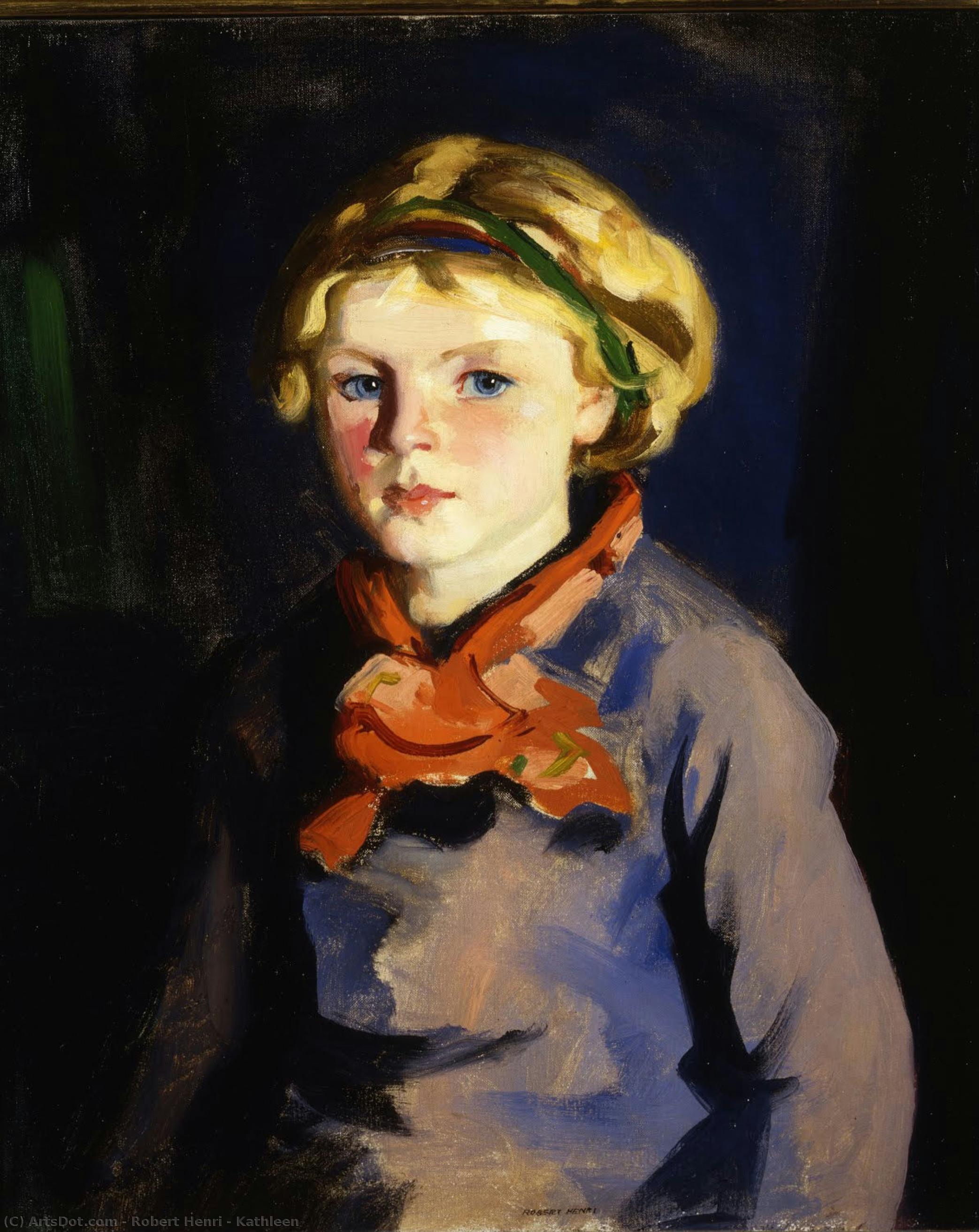
In 1924, Robert Henri turned his brush toward the quietude of Ireland's Achill Island. It was during one of his many summer visits to this rugged landscape that he captured Kathleen. The portrait depicts a young girl named Kathleen Gallagher, a subject who emerged from the salt air and the light of the Atlantic coast. This oil on canvas measures w20 x h24 in. (60.96 x 50.8 cm).
The work is a study of a single presence. Henri sought the innocence of the children he encountered during his time residing at Corrymore. Through the medium of oil, he fixed her likeness against a dark, indistinct background. The girl's features are defined by a steady, contemplative gaze. A green ribbon rests in her hair, paired with an orange tie that catches the light. She remains still, a small figure held within the frame of the canvas.
Composition and Visual Details
The portrait presents a young girl at half length, emerging from a dark, indistinct background. Her yellow blond hair catches the light, creating a bright focal point against the shadows. A green ribbon secures her hair, providing a sharp contrast to the pale tones of her skin. Below, an orange tie adds a sudden pulse of color to her attire. These pigments emerge through rapid brushwork and bold applications of paint.
The composition centers on the subject's quiet presence. Light falls across her features, defining the contours of her face and the drape of her clothing. The dark space behind her pushes her forward, emphasizing the physical presence of the child. Every stroke of the oil paint seeks to capture a specific moment of stillness. The colors remain grounded and direct.
The History and Collection of the Work
The portrait arrived at its current home through the generosity of Ruth Woods Dayton. It remains a permanent part of the Huntington Museum of Art collection. This piece is cataloged under the accession number 1967.1.127. It rests within the quiet halls of the museum in Huntington, United States of America.
The oil on canvas captures a specific moment from 1924. The pigments hold their place within the museum's holdings, preserved as a fragment of the artist's time spent on Achill Island. The work exists as a quiet presence among the other treasures held in the Huntington galleries.
Where to See This Artwork Today
The portrait resides within the Huntington Museum of Art. This institution sits in Huntington, United States of America. It holds a collection of American and European paintings. The museum was established in 1947.
Visitors may find this oil on canvas among the many works preserved in the galleries. The museum's halls contain various pieces from different eras. It remains a quiet place for observation. The light falls softly on the subjects held within these walls.
Otázky a odpovede
Do ktorého umeleckého smeru patrí „Kathleen“ od Robert Henri?
„Kathleen“ od Robert Henri patrí do smeru Impressionism. Tento smer poskytuje štylistický kontext diela.
Kde si môžem kúpiť digitálnu podobu diela „Kathleen“ od Robert Henri?
Ak si chcete kúpiť digitálnu verziu diela „Kathleen“ od Robert Henri, objednajte si stiahnutie digitálneho obrázka vo vysokom rozlíšení na jeho stránke Digitálna fotografia.
Sú farby diela „Kathleen“ od Robert Henri sýte alebo tlmené?
Farby diela „Kathleen“ od Robert Henri majú Muted saturáciu. Saturácia určuje, ako sú farby živé alebo tlmené.
Biografia umelca
A Turbulent Genesis: The Early Life of Robert Henri
Robert Henri, born Robert Henry Cozad in Spence’s Station (later changed to Cozaddale), Ohio, in 1865, carried within him from the outset a sense of displacement and reinvention that would profoundly shape both his life and art. His childhood was far from idyllic; shadowed by the volatile relationship between his father, John Jackson Cozad—a man of ambition and risk as a gambler and real estate developer—and his mother, Theresa Gatewood Cozad. This instability culminated in a dramatic event in 1882: a fatal shooting over a land dispute that forced the family into flight, adopting new identities to escape retribution. Young Robert became Robert Henri, a deliberate severing from a past fraught with conflict and a symbolic rebirth as an artist. The westward journey through Nebraska and Colorado, culminating in a settling in New York City and then Atlantic City, instilled within him a deep empathy for those living on the fringes of society—an empathy that would become a defining characteristic of his artistic vision. This early experience of upheaval and reinvention fostered a spirit of independence and a commitment to portraying life as it truly was, unburdened by convention or societal expectation. His father’s involvement in a shooting incident prompted the family to change their names, seeking anonymity amidst the turmoil.Forging a New Vision: Artistic Development and Influences
Henri’s formal artistic education began at the Pennsylvania Academy of the Fine Arts in Philadelphia under Thomas Anshutz, where he honed his technical skills. However, it was his subsequent journey to Paris in 1888 that truly ignited his artistic awakening. Initially drawn to the academic tradition at the Académie Julian and influenced by masters like William-Adolphe Bouguereau and François Millet, Henri gradually gravitated towards Impressionism. Yet, he wasn’t content with merely replicating what he saw; he sought a more profound engagement with reality—a way to capture not just the fleeting effects of light but also the raw emotion and vitality of modern life. This quest led him to embrace a bolder, more direct approach, influenced by the Dutch Realist Franz Hals, whose loose brushwork and psychological insight resonated deeply with Henri’s own artistic sensibilities. He began experimenting with *pochades*, small wood panels used for quick sketches, encouraging spontaneity and immediacy in his work. Returning to America, he became a dedicated teacher, imparting not just technique but also a philosophy of art rooted in observation, honesty, and individual expression. His early works reflected this shift, moving away from idealized landscapes towards portraits capturing the essence of ordinary people.Championing the Real: The Ashcan School and “The Eight”
Robert Henri’s impact on American art extended far beyond his own canvases; he became a catalyst for change, challenging the conservative norms of the established art world. He was a central figure in the emergence of the Ashcan School—a group of artists who dared to depict the gritty realities of urban life, from bustling city streets to crowded tenements. Henri’s commitment to realism and his rejection of academic pretension led him to organize “The Eight” in 1908—a collective of like-minded artists including William Glackens, George Luks, Everett Shinn, and John Sloan—who staged an independent exhibition as a direct protest against the restrictive policies of the National Academy of Design. This act of defiance was a watershed moment in American art history, signaling a shift away from European dominance and towards a uniquely American artistic voice. Henri’s paintings during this period, such as “Woman in Manteau” (1899) and his evocative portraits, captured the dignity and resilience of ordinary people, offering a powerful counterpoint to the idealized representations favored by the establishment. The group's work was often characterized by its unflinching portrayal of urban poverty, immigrant life, and the everyday struggles of working-class Americans.Legacy and Enduring Influence
Robert Henri’s influence on subsequent generations of American artists is immeasurable. As a teacher, he mentored a remarkable roster of talent, including Joseph Stella, Edward Hopper, Rockwell Kent, George Bellows, Norman Raeben, Louis D. Fancher, and Stuart Davis—artists who would go on to shape the course of 20th-century art. His book, *The Art Spirit*, published posthumously in 1923, remains a seminal text for aspiring artists, offering timeless wisdom on observation, technique, and the importance of artistic integrity. *Henri’s commitment to portraying life with honesty and empathy*, his rejection of convention, and his unwavering belief in the power of art to connect with audiences continue to inspire artists today. His paintings are not merely representations of reality; they are windows into the human condition—testaments to the beauty, struggle, and resilience of the human spirit. He left an indelible mark on American Realism, paving the way for a more democratic and inclusive art world that celebrated the everyday experiences of ordinary people. His legacy endures not only through his own masterful works but also through the countless artists he inspired to find their own voices and tell their own stories.
Robert Henri
1865 - 1929 , Spojené štáty americké
Základné informácie
- Artistic Movement Or Style: Ashcan School, Realizmus
- Artists Or Movements Influenced By This Artist:
- Edward Hopper
- The Eight
- Artists Who Influenced This Artist:
- William-Adolphe Bouguereau
- François Millet
- Date Of Birth: 24. jún 1865
- Date Of Death: 12. júl 1929
- Full Name: Robert Henry Cozad
- Nationality: Amerikanec
- Notable Artworks:
- Žena v mantlu
- Nežná snaha
- Sissy v žlto
- Place Of Birth: Cincinnati, USA
Súvisiace články

Capturing a Vanishing World: The Top 25 George Catlin Artworks
Explore George Catlin's iconic Indian Gallery. Discover 25 masterpieces of Native American life. Explore the full collection on OriginalUniqueArt.com.

Mastering Light: The 25 Most Iconic Landscapes by Jean-Baptiste-Camille Corot
Immerse yourself in the tranquil beauty of Jean-Baptiste-Camille Corot. Explore 25 iconic landscapes that defined the Barbizon school through light and atmosphere. Find inspiration for museum-quality art reproductions and decor. Discover all masterpieces on OriginalUniqueArt.com.

Capturing a Vanishing World: The 25 Best Artworks by George Catlin
Explore George Catlin's iconic Indian Gallery portraits. Discover these timeless masterpieces on OriginalUniqueArt.com.
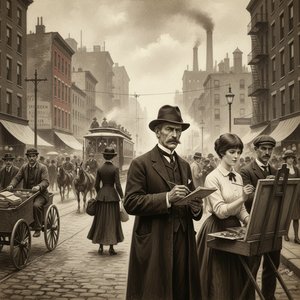
Robert Henri & the Spirit of American Realism: A Legacy of Urban Life and Artistic Independence
Explore the life & legacy of Robert Henri, a pivotal figure in American Realism. Discover his captivating portraits, influence on the Ashcan School, and enduring impact on art history. Learn more at OriginalUniqueArt.

25 Must-See Masterpieces at the Arkhangelsk Regional Museum of Fine Arts
Journey through the Museum of Fine Arts, Boston, exploring 25 iconic masterpieces. From Renaissance classics to Impressionist gems, discover the stories and techniques behind these timeless works. Find museum-quality art inspiration for your decor at OriginalUniqueArt.com. Explore the full collection online.
